
WA Bill aiming to lower interest rates on medical debt clears Senate floor
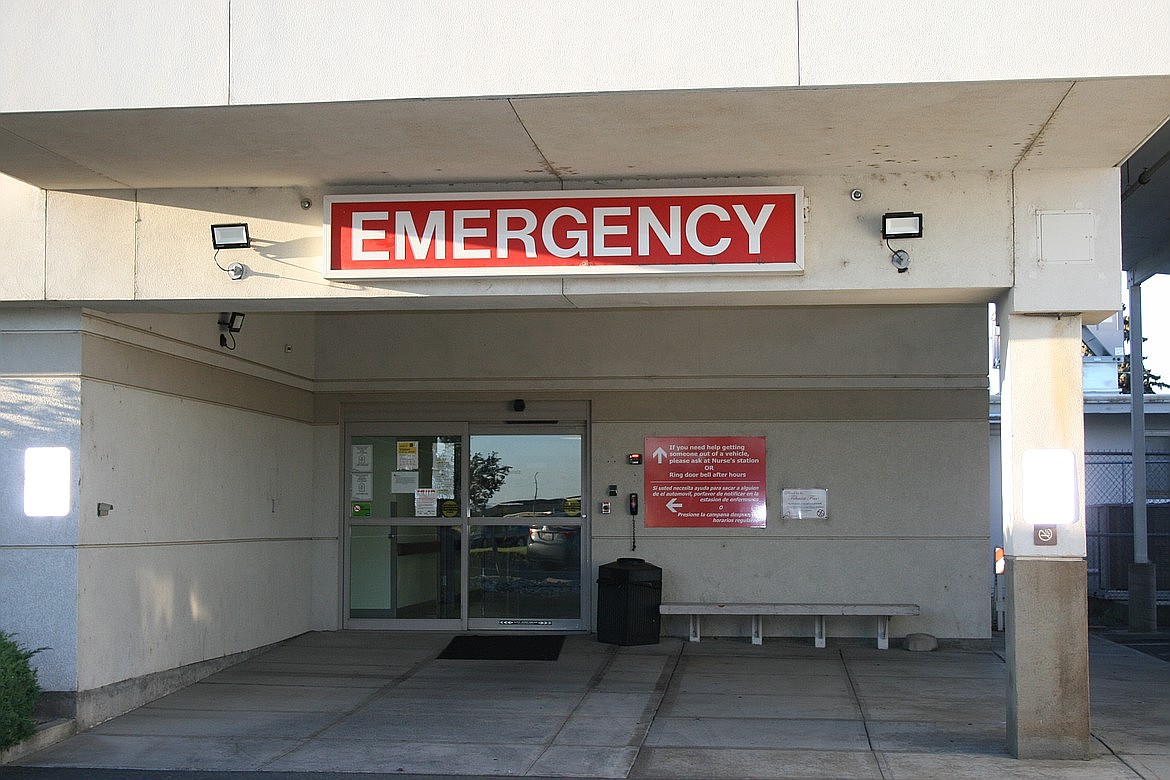
A medical emergency can lead to unexpected expenses, but when those are coupled with interest on debt sold by hospitals, they can be financially crippling as well. On the other hand, bad debt and charity care are sinkholes for providers who want to provide quality services to patients.
FILE PHOTO
“I am not just a schmuck who decided not to pay any debt or refused to pay, but how was I being penalized for beating cancer?” — Kristopher Shook, Washington resident and cancer survivor
OLYMPIA — Kristopher Shook was 42 years old when he was diagnosed with two different types of Stage 4 cancer and a 15% chance to live. As he fought for his life, medical bills were the last thing on his mind. Now, 13 years later, he faces a “financial nightmare” with hundreds of thousands of dollars of medical debt.
“No one should have endured this financial ruin simply for seeking life-saving medical help,” Shook said in a public hearing.
Shook testified in support of Senate Bill 5993 at the Senate Law and Justice Committee last month. The bill, in its current form, would limit the interest rate charged on new medical debt to 1% per year, altering the current state law, which allows for a rate up to 9%. The legislation cleared the Senate floor Friday, Feb. 6, receiving a majority vote with no Republican support.
Shook was first diagnosed in 2013 and was unable to pay off his medical debt within the two-year repayment period, forcing the debt to be sold to a law firm that charged him a 12% interest rate on top of the thousands of dollars he already owed. State law did not drop the interest rate from 12% to 9% until 2019.
“I am not just a schmuck who decided not to pay any debt or refused to pay,” Shook said. “But how was I being penalized for beating cancer?”
Prime sponsor Sen. Emily Alvarado, D-West Seattle, said the bill aims to improve affordable access to care as families continue to grapple with the state’s affordability crisis. If enacted, Washington would follow other states, including Virginia, New Jersey, North Dakota, Arizona and Colorado, that also capped their interest rates on medical debt between 1% and 3%.
On the floor, Alvarado emphasized that one in five Washingtonian families has outstanding medical payments, with many delaying or foregoing care completely because of high costs. She said the goal of the legislation would make payments more manageable and that higher interest rates don’t always incentivize payments.
“We're not getting rid of the underlying debt,” Alvarado said. “Families still need to pay, but we give a little relief.”
The original bill eliminated all interest on new and unpaid medical debt, but was later amended in committee to include a 1% interest rate for hospital administrative costs.
Sen. Judy Warnick, R-Moses Lake, proposed an approved amendment that would apply the interest only to new medical debt accrued after Dec. 31, 2026, striking out unpaid debt.
Republicans continued to push back, arguing that the legislation would not only disincentivize debt payments but also disproportionately affect rural and smaller hospitals that often operate on thin margins.
Sen. Keith Wagoner, R-Sedro Woolley, proposed an amendment that would raise the interest rate to 4% for smaller hospitals and a 2% rate for larger urban facilities. He argued the amendment would help save rural hospitals while ensuring the interest rate is manageable for both patients and healthcare providers.
“This amendment hopes to get a more nuanced approach that really reflects the realities of what's happening and the differences between the hospital systems that we have,” Wagoner said.
Alvarado disagreed, claiming that differing rates would be difficult to administer while setting different rates based on where one receives care.
“People shouldn't pay more just because they went to a rural hospital,” Alvarado said.
The amendment was ultimately not adopted.
Last month, Lisa Thatcher with the Washington State Hospital Association testified in opposition to the bill, echoing Republican concerns. She explained that medical debt, particularly for smaller hospitals, operates as a loan that is later paid for the already rendered services. She emphasized that interest is necessary to account for how long it takes to repay as the value of money decreases over time.
Brian Giles, Chief Financial Officer of Othello Community Hospital, said that costs of services simply do not disappear.
“Whether it's bad debt or charity care, it still falls on the hospital to write off,” Giles said.
Charity care is hospital financial assistance that provides discounted or free services to low-income, uninsured, or underinsured patients. According to the Attorney General's Office, about 4 million Washingtonians qualify for charity care.
Thatcher warned that any effort that allows more people to not pay off their medical debt could result in “socializing” costs, causing higher premiums for others or ultimately reducing services.
Sen. John Braun, R-Centralia, closed the floor debate, empathizing with those grappling with medical debt, and urged that both sides of the aisle understand the struggle. However, he argued that the interest rate is not about penalizing people but ensuring hospitals are able to cover the cost of their services.
“You know what's worse than struggling to pay for medical (care)?” Braun said. “It's not having access at all.”
The bill passed its first legislative hurdle and was referred to the House Civil Rights and Judiciary Committee for further consideration.