Soap Lake Food Bank volunteering a rewarding experience
SOAP LAKE — The Soap Lake Food Bank is only open for five and a half hours, one day a week, but it stays pretty busy during that time.
“We average about 230, 240 (families) month in, month out,” said volunteer Fred Wright. “(There were) 350 for Thanksgiving, 300 for Christmas and New Year’s.”
Soap Lake itself has only 1,600-1,700 people, but the food bank there serves a pretty sizable swath of territory: Coulee City, Almira, Hartline, Wilson Creek and Marlin as well. The food bank serves 15-20 families in the Marlin area alone, Wright said.
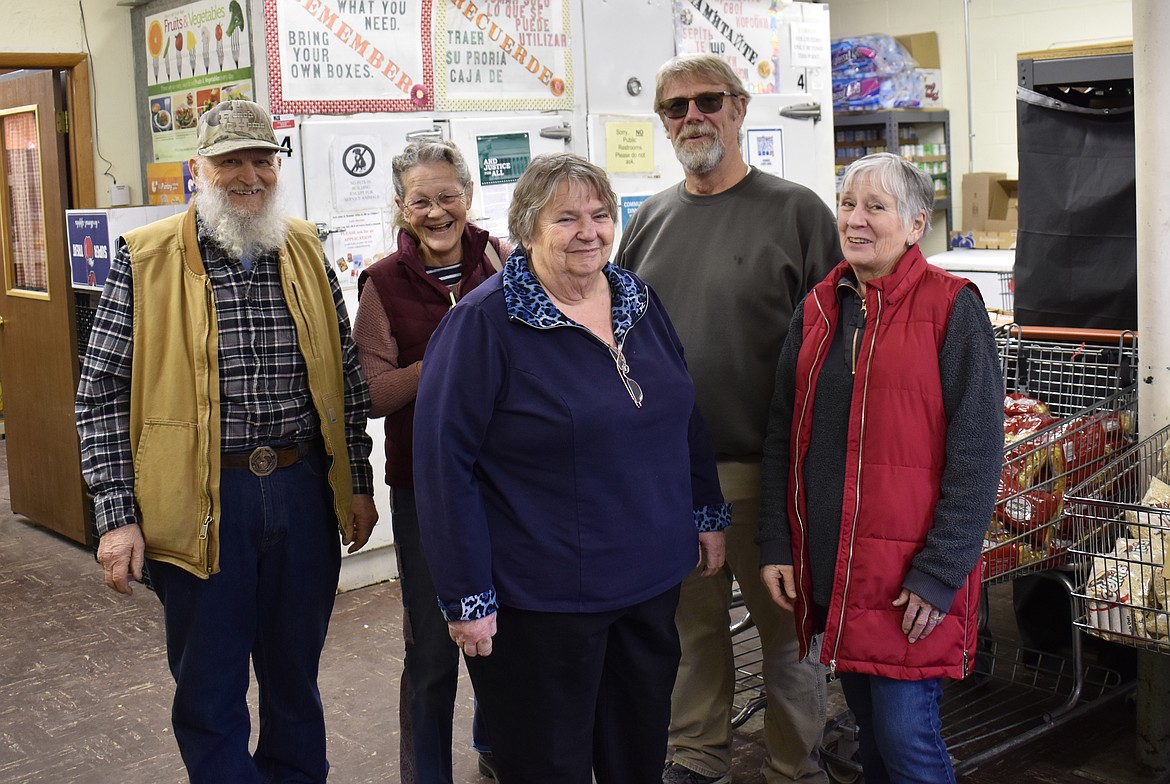
One thing that’s not in short supply is volunteers. The food bank has 20-25 volunteers all together, and as many as 35 in the summer, Wright said. The Church of Jesus Christ of Latter-day Saints sends missionaries to help sometimes as well, volunteer Cheryl Bensch said.
“There’s a dozen of us who are here every week,” Wright said. “I’ve been a volunteer since 2010.
Bensch began volunteering at the food bank thirteen years ago, she said, when she retired from Safeway.
“I missed the people,” she said. “I did 40 years in that business. And my friend said ‘Well, try the food bank. Go down there and volunteer.’ I’d never been to one, but it’s one of the best moves I’ve made. It’s been a good thing.”
The need for food shifts around seasonally in Soap Lake a lot, Wright said, partly due to the demographics of the town.
“A lot of the older people in the area, they go south at that time,” he said. “During the wintertime the farm workers are still here, and they need to come in and get assistance. During the summertime they’re busy working, they’ve got money and they don’t come in.”
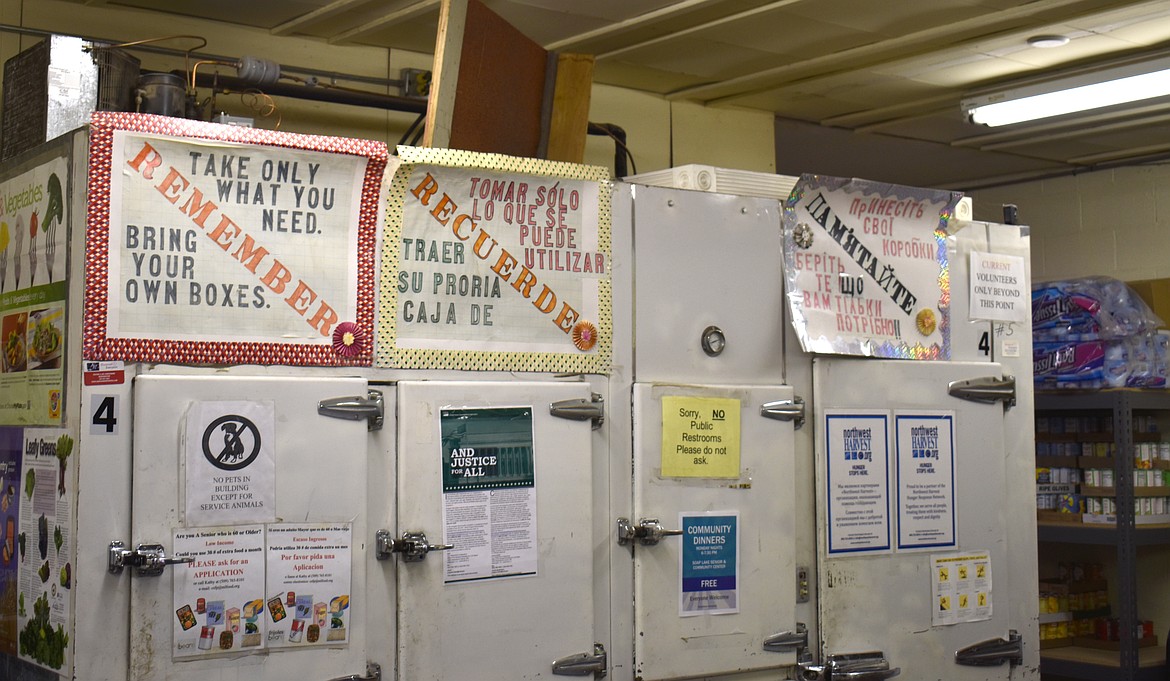
Soap Lake also boasts a large Eastern European immigrant community, Wright said, and those folks patronize the food bank as well, but usually only temporarily.
“We’ll sign up probably an average of three families a week, but we might only see them less than three or four times and they're gone,” he said. “They get a job somewhere and they move on. A number of the people here sponsor somebody to come in from Ukraine or Russia and then once they get a job, they don't need assistance. But in that time of turnover, they need help. And that's what we're here for.”
Many in that community who used to receive assistance now volunteer at the food bank, Wright added.
“One of our main volunteers came over to the United States in 1990, and he’s now retired,” Wright said. “He's been here for six years now, volunteering here at the food bank to work all the time. I think we have probably five volunteers right now are Ukrainian (or) Russian.”
Most of what the Soap Lake Food Bank gets from the government comes from Moses Lake, which is the distribution hub for most of the food banks in the area, Wright said. Akins Fresh Foods in Soap Lake and Safeway in Ephrata both donate to the food bank as well, he said, and local farmers do too.
“A lot of times I’ll go to Jones Produce in Quincy for potatoes … the Hutterites out toward Odessa, we’ve gotten stuff from them,” Wright said.
Government grants to the food bank have decreased since the COVID-19 pandemic, he said, but private donors have kept up.
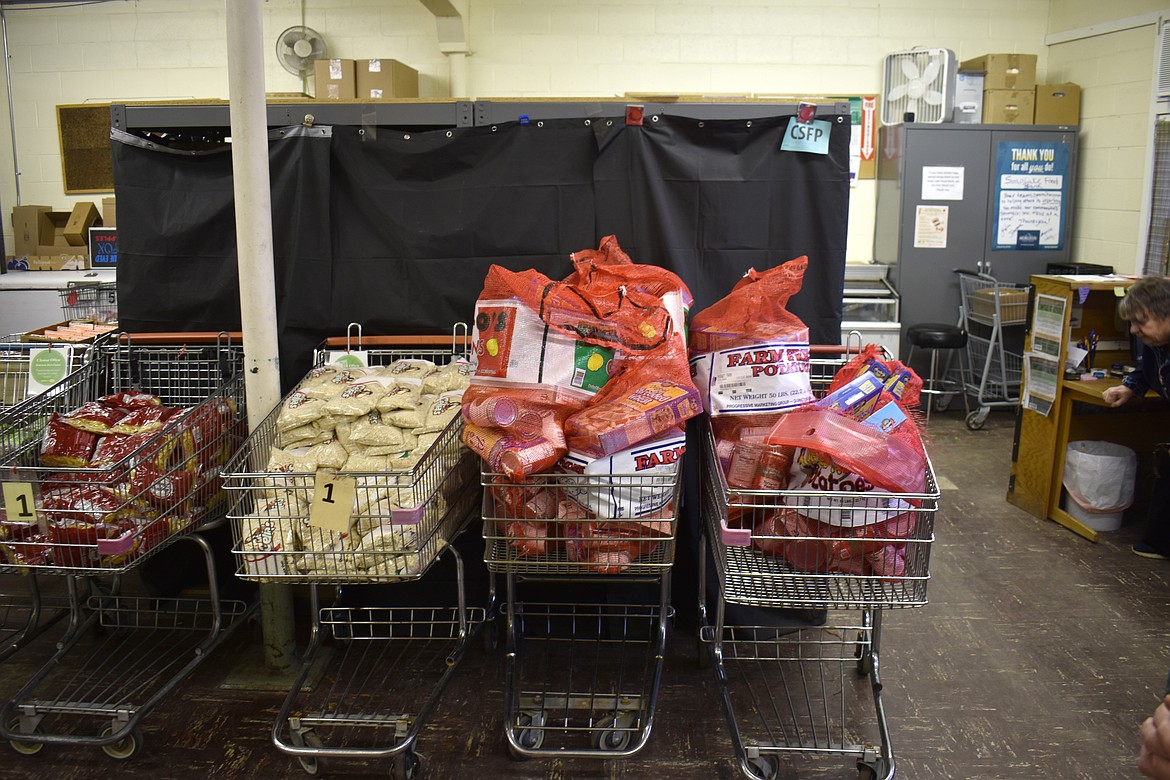
Each family that comes to the food bank makes the rounds of shopping carts filled with food, with signs indicating how many of each item they can take. For larger families there’s a special card that allows them to double up on some items.
“We’re handing out about 65 pounds of food per family a week,” Wright said. “During the summertime when we get watermelon and stuff, we’re giving out 75, 80 pounds a week. Last month we had a lot of apples, and I’m getting oranges coming in this week.”
Things like beans and tuna are pretty easy to keep in stock, Wright said, but other things come and go in cycles.
“Oatmeal used to be a pretty stable thing that we had all the time,” he said. “There was probably three months that we had hardly any oatmeal at all. Now we've had oatmeal for the last month, and I’ve got a bunch more coming in. There are certain things that you just run out of and you can't find at times.”
Rising costs are a factor as well, Wright said.
“We used to buy mac and cheese for 34 cents a box,” he said. “Now it's a dollar a box or close to it. And they don't have it at that price all the time because they can't get it in. You can buy $1.50- or $2-a box mac and cheese all the time. But feeding a lot of people, that's hard for us to spend that type of money on a budget.”
Soap Lake Food Bank
325 E. Main Ave.
Open Tuesdays
10 a.m.-3:30 p.m.
509-246-0164