
Millionaires tax proposed in Olympia, spurring debate
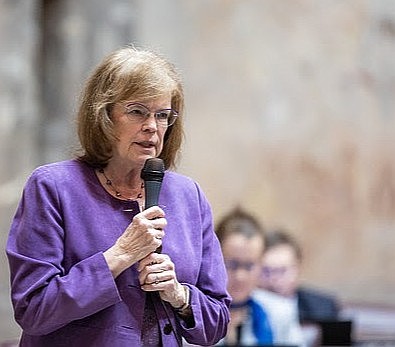
Sen. Judy Warnick, R-Moses Lake, has expressed concern about a proposed tax on millionaires.
FILE PHOTO
OLYMPIA — Washington’s Democratic lawmakers revealed their anticipated “Millionaires Tax” on Tuesday, receiving pushback from Gov. Bob Ferguson and stern opposition from Republican legislators.
Senate Bill 6346 and House Bill 2724 were filed late Monday. The Senate version, sponsored by Senate Majority Leader Jamie Pedersen, D-Seattle, is scheduled for a public hearing at the Ways and Means Committee on Friday, Feb. 6.
If enacted, the bill would require a 9.9% tax on annual adjusted gross income for those who make more than $1 million. The tax would begin Jan. 1, 2028, with first payments due in April 2029. Democrats say it would generate approximately $3.7 billion annually with revenues going toward tax relief and public services.
“We have a broken, upside-down tax system that we have been stuck with for 90 years,” Pedeseren said in a press conference. “We have a generational opportunity in front of us to change that trajectory and to make the whole system fairer.”
Washington’s current tax structure relies on excise and consumption taxes. If passed, the bill would challenge state precedent as one of the nine states without an income tax, raising legality concerns from Republicans.
Ferguson, despite expressing initial support for the tax, said Tuesday in a press conference that he cannot support the proposal in its current form because it does not provide enough tax relief.
“I said significant percentages of these revenues must go back to the pocket of Washingtonians,” Ferguson said. “The current proposal is not close to achieving that important objective.”
The current proposal includes a sales tax exemption for hygiene products such as soaps, shampoo, toothpaste, and deodorant. It also exempts businesses from paying the state’s business and occupation tax if they gross less than $250,000 a year while eliminating the 0.5% tax surcharge on large companies with more than $250 million in annual revenue.
Additionally, the bill would expand age eligibility to those 18 and older for the Working Families Tax Credit program, which offers sales tax rebates to lower-and-moderate income households.
Although Pedersen said about 20% of expected revenue would go to tax relief measures, Ferguson estimated that the proposal totals to 7% or $230 million, asserting that the share is not enough.
The governor proposed devoting $1 billion in tax relief for small businesses, continuing the elimination of sales tax for essential products such as diapers, and expanding the Working Families Tax Credit program even further.
Republicans slammed the proposal, arguing it opens the door for an income tax for those who are not millionaires.
“It’s only a millionaires tax this session, it will quickly become a tax on regular people like you and me,” House Minority Leader Drew Stokesbary, R-Auburn, said.
Sen. Warnick, R-Moses Lake, echoed similar concerns, stating that not only has the state Supreme Court ruled against an income tax in 1933 but voters have repeatedly rejected similar efforts, the latest being in 2010. Lawmakers also overwhelmingly passed Initiative 2111 in 2024, prohibiting the state and local jurisdictions from levying income taxes.
“I’m not sure what part of no the leadership and the Democrat side understand,” Warnick said in an interview.
Both Ferguson and Democratic leaders said they do not support an income tax on working-class people but did not decline its future possibility.
“We're not going to bind future legislatures, but that's not a proposal that we support,” House Majority Leader Joe Fitzgibbon, D-West Seattle, said.
Republicans also expressed concern regarding the bill’s “marriage penalty” as it does not lower the $1 million threshold for married couples, requiring those who make $500,000 or more each to be subject to the tax.
Pedersen pushed back on the argument, stating that the bill follows the structure of the state’s capital gains tax which considers married couples as a combined entity.
“Voters have now by an almost two-thirds majority approved the structure of the capital gains tax, which includes this same treatment of married couples,” Pedersen said.
Warnick expressed frustration for the bill’s quick turnaround, allowing lawmakers less than five days' notice ahead of its first public hearing Friday at 1:30 pm.
She said that despite Republican opposition, the Democrats hold the majority in both the House and Senate with the fate of the bill contingent on the governor's approval.
“There is much that we agree on and the Senate's proposal is a good start,” Ferguson said. “But we still have a long way to go.”