
WA lawmakers introduce bipartisan bill to preserve the state’s historic apples
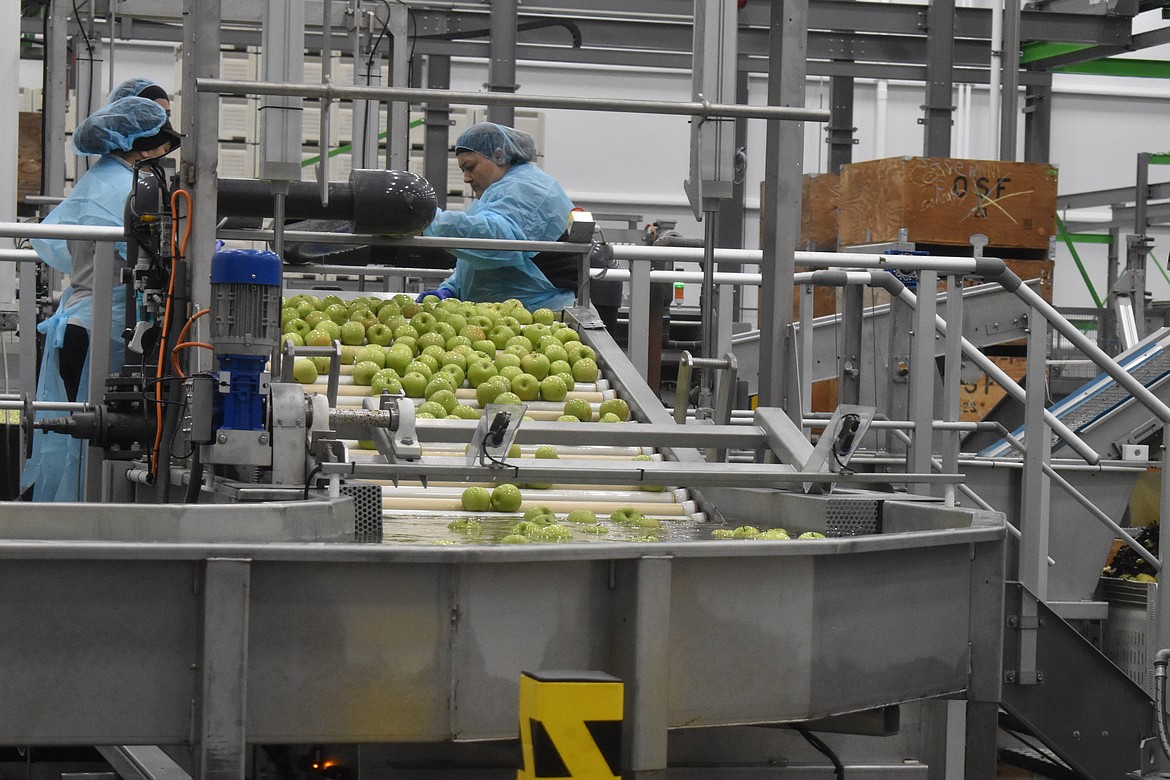
Workers at Okanogan Specialty Fruit process apples for market. Apples are a top crop for the state and a large symbol of the state's heritage.
FILE PHOTO
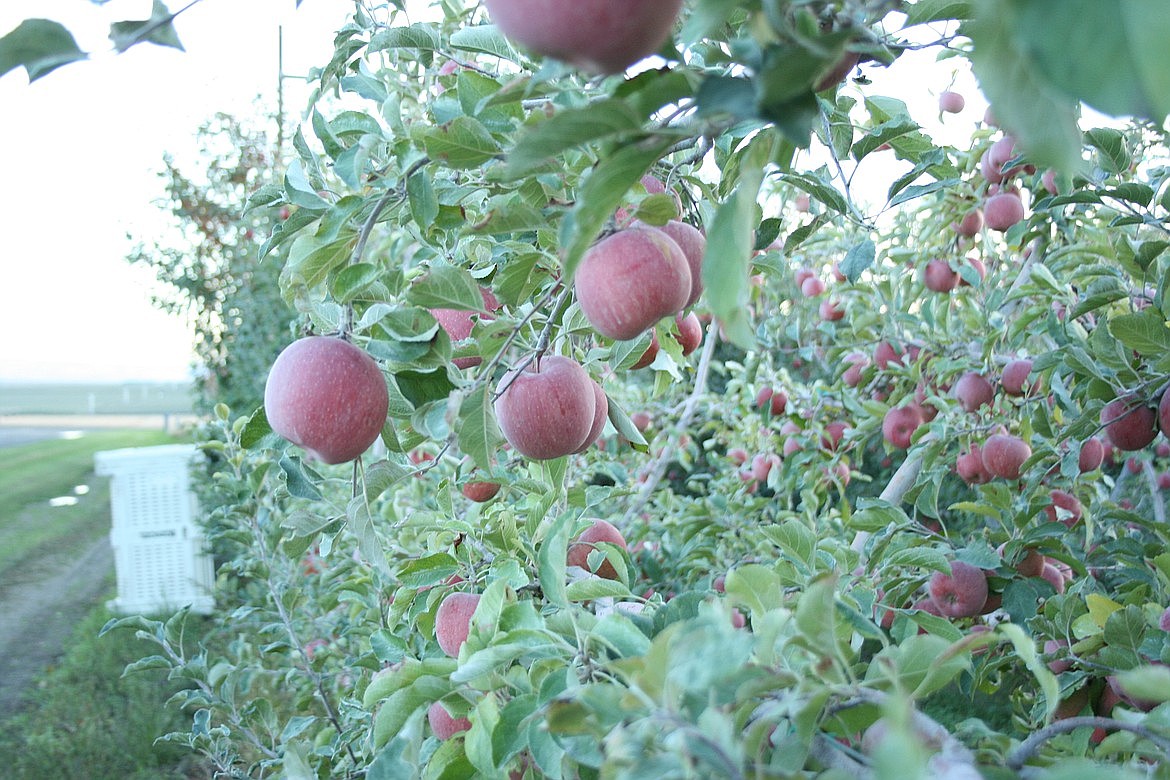
Apples hang from a tree in an orchard near Mattawa. Preserving the older types of apples that helped Washington get its start as an apple-producing powerhouse is the subject of a bill being considered by the Washington Legislature.
OLYMPIA — As the nation’s top apple producer, Washington is best known for varieties such as Gala, Honeycrisp, Granny Smith, Fuji, and Red Delicious. But across small orchards and family homesteads, antique apples – some short and stout, covered with yellowish russets, with names like Winter Banana – grow quietly, preserving pieces of state history that were never truly gone.
House Bill 2525 aims to protect and preserve historically significant apples by establishing a Heritage Orchard Program at Washington State University. The bill would direct WSU to create a statewide registry of heritage orchards, provide resources to help preserve qualifying trees, propagate rare and lost apple varieties, and develop a list of rare and lost apples.
Primary sponsor, Rep. Gloria Mendoza, R-Grandview, introduced the bipartisan bill in the House Postsecondary Education and Workforce Committee on Tuesday, Jan. 27.
“Apples are not just an industry for our state,” Mendoza said in public testimony. “They are part of our identity, our history and our rural communities.”
Nicknamed the “Apple State,” Washington produces more than 60% of the nation's apples, producing a record-breaking 8 billion pounds in 2025, according to the United States Department of Agriculture.
There are currently 7,500 apple varieties worldwide, with some experts estimating there were once more than 20,000 in the early 1900s. Many of these varieties were undocumented and considered less commercially viable due to their unique textures, taste, colors, and cultivation process.
According to the WSU Tree Fruit Research and Extension Center, many of these heirloom apples can be occasionally found in overgrown farmyards, homesteads, and even backyards where orchard sites were converted to residential areas.
Mike Burgess from the Washington State Tree Fruit Association testified in support of the bill, emphasizing the importance of preserving heritage apples for future research purposes. He explained that the genetic makeup of these heirloom apples can be used to crossbreed, creating desirable traits such as disease resistance.
Burgess also said that the bill would pose an educational opportunity that allows the greater public to better understand the state’s agricultural landscape.
“It's important that the public knows where their food comes from and where it's grown,” Burgess said in testimony.
Chris Mulick, senior director of state relations at WSU, expressed concern over the program’s costs amid significant state budget cuts to the university.
According to the published fiscal note, the program would cost more than $427,000 in its first year, including a one-time $170,000 construction cost. Then about $207,000 in the next year, and $182,000 recurring costs to maintain orchard operations.
Last month in Gov. Bob Ferguson’s supplement budget proposal, he outlined a series of spending reductions including a 3.2% or $11.1 million cut to WSU’s state appropriation.
“WSU has already cut its budget by $52 million over the last four years,” Mulick said. “It touches virtually every corner of the university, including the College of Agriculture.”
Mulick said that although the program would add to the significant role WSU has played for the state’s apple industry, the dollars are limited.
“This bill would be a nice-to-have, but we've got a lot of need-to-have,” Mulick said.
The bill is scheduled for an executive session at the House Postsecondary Education and Workforce Committee, Tuesday, Feb. 3.
 Apples hang from a tree in an orchard near Mattawa. Preserving the older types of apples that helped Washington get its start as an apple-producing powerhouse is the subject of a bill being considered by the Washington Legislature.