
WA House holds hearing on aircraft tax
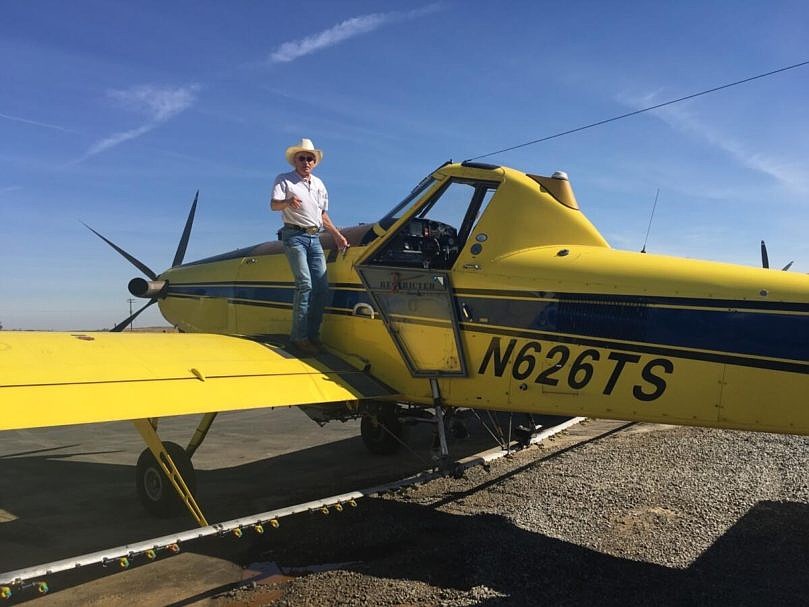
The House Transportation Committee held its first public hearing on House Bill 2347, which would repeal the sales tax on non-commercial aircraft. Rep. Tom Dent, R-Moses Lake, said he is concerned the tax will deter the aviation industry from Washington. Other stakeholders said the tax shouldn’t be abandoned without alternatives.
COURTESTY PHOTO/TOM DENT
OLYMPIA — The House Transportation Committee held a public hearing Thursday on House Bill 2347, which would repeal the 10% sales and use tax on non‑commercial aircraft valued above $500,000 before the tax takes effect April 1. The measure had testimony from aviation businesses, airport officials and industry groups warning of economic repercussions. In contrast, a few stakeholders urged lawmakers not to abandon the tax without identifying alternative funding options.
The tax, passed during the 2025 session, directs revenue into the state’s Sustainable Aviation Fuel account. SAF supports research, development, environmental review and infrastructure for sustainable aviation fuel production.
The repeal bill was introduced by Rep. Tom Dent, R‑Moses Lake, who told lawmakers the industry is already reacting to the coming tax.
“Purchases are being delayed, redirected or moved out of state,” Dent said. “Once that business leaves Washington, it’s extremely difficult to bring it back.”
Dent, who has worked in aviation for nearly 50 years, said the role aircraft play in agriculture, medical transport, wildfire response and rural accessibility is important.
Industry representatives, including corporate aviation directors, airport managers and business leaders, described the tax as “devastating.” They said it would drive aircraft to Idaho, Oregon, and other states with lower aviation costs.
Several cited immediate consequences despite the tax not yet taking effect, including corporate and business aircraft already relocated out of Washington; canceled aircraft purchases and halted upgrades; lost fuel sales, hangar leases and maintenance jobs; and airport infrastructure projects placed on hold.
Airport managers warned that losing based aircraft also jeopardizes local airports’ ability to fund maintenance and leverage federal matching dollars. Business owners testified that the tax structure, applying only to aircraft, while yachts and boats were exempted in the original bill in 2025, created a sense of unfairness.
While the majority of testimony supported repeal, some stakeholders urged the committee not to eliminate the tax outright.
The Port of Seattle, speaking as “other,” said it agreed the tax in its current form may have unintended consequences, but asked lawmakers to avoid a full repeal without establishing a replacement funding source for sustainable aviation fuel infrastructure.
“We want to fix the impact on small businesses and emergency services,” said John Flanagan, government relations representative for the Port. “But eliminating the tax entirely jeopardizes SAF development, which requires public investment to support long‑term fuel supply, redundancy and environmental goals.”
Flanagan noted that the last SAF blending infrastructure project the Port completed cost roughly $50 million, and future projects on both sides of the Cascades would require substantial state and federal participation.
A fiscal note from the Department of Revenue estimates the repeal would cost the state $700,000 beginning April 1 and more than $4 million by fiscal year 2027, all revenue that would otherwise support the state’s sustainable aviation fuel program.
Other lawmakers also raised questions about whether modifications, such as exemptions for emergency, agricultural, or rural‑service aircraft, could address industry concerns without eliminating revenue for clean‑fuel investments.
Committee members also asked whether the tax would apply to aircraft that enter the state temporarily for wildfire suppression or emergency services.
Lily Smith, committee staff, said aircraft owned and registered in other states, or used exclusively for government operations, would not be subject to the tax as currently written. However, industry representatives said the language remains unclear for certain operational scenarios.
Multiple speakers talked about the disproportionate effect on rural communities, where aviation supports agricultural spraying, patient transport, wildfire detection and freight and backcountry access.
Companies testified that if they were to relocate aircraft, it would likely result in relocating pilots, mechanics, dispatchers and support staff as well.
“These are good‑paying jobs,” said Eric Schneider, regional vice president for Modern Aviation. “When aircraft leave, people leave with them.”
Dent closed the hearing by reiterating that he believes the tax will backfire.