'It never goes away’
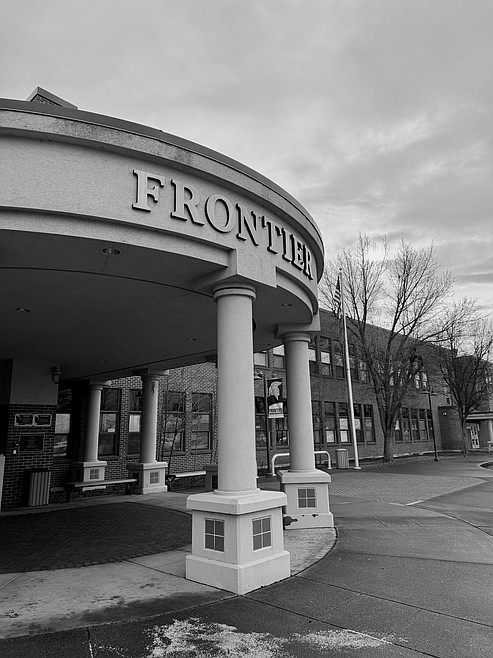
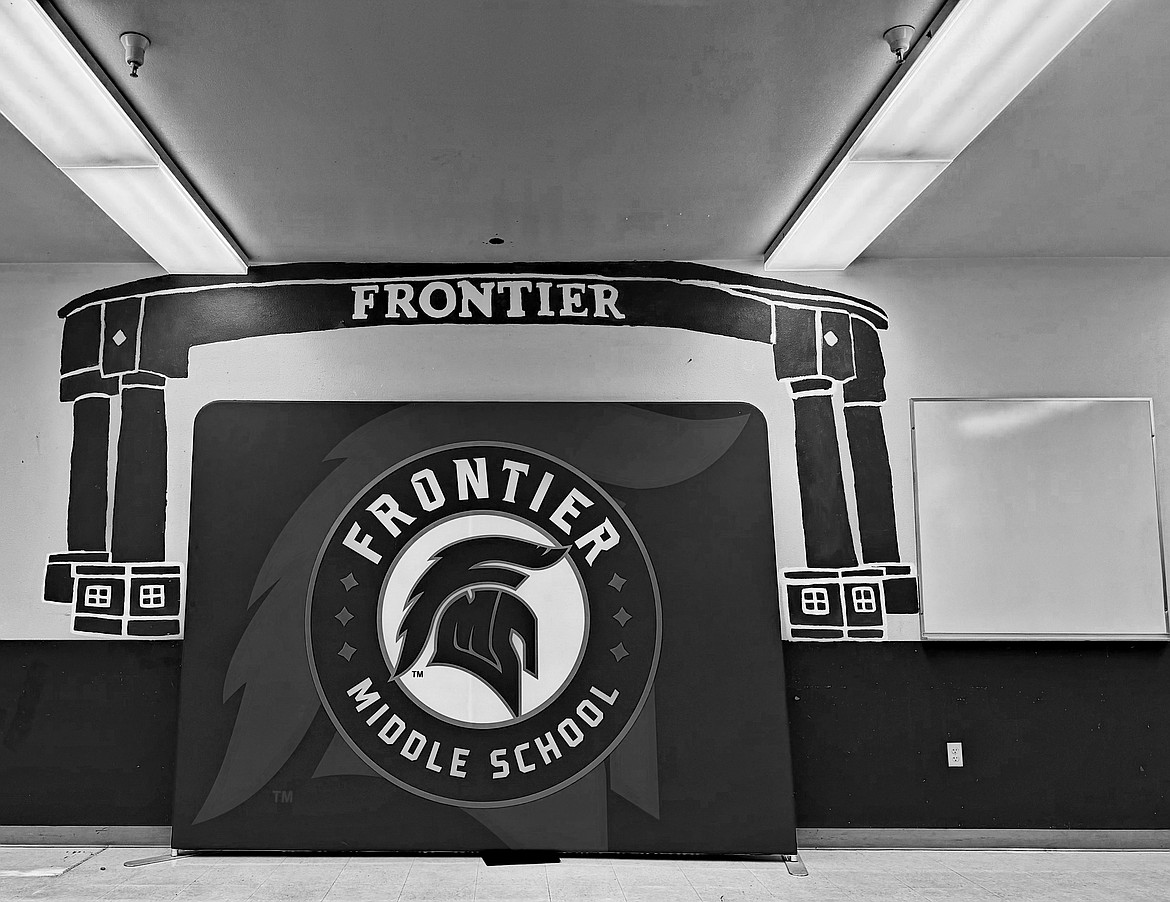
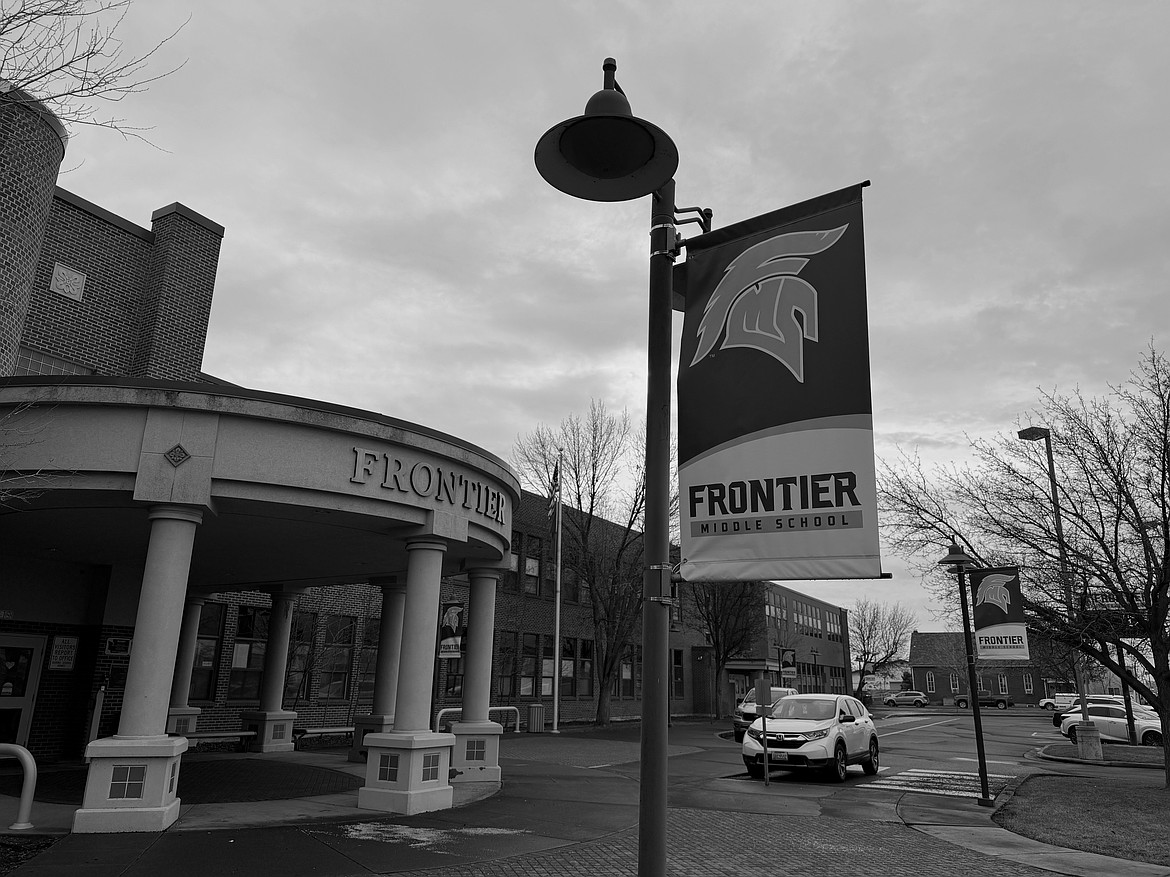
MOSES LAKE — Three decades after the tragedy at Frontier Middle School on Feb. 2, 1996, Moses Lake is still healing — quietly, together and steadily. Sunday the community gathered for “We Remember,” a 30‑year commemoration at Frontier Middle School, not to relive the trauma, but to honor the strength, unity and continued care that followed it.
Organizers stressed the event was about healing, not headlines — an invitation to stand with those still carrying grief, and acknowledge the compassion that has carried Moses Lake through the years.
“It doesn't seem like 30 years, because we live it every day and I am sure the other families that were affected like ours, feel the same way,” said Shannon Hintz, mother of Natalie Hintz, who was injured in the incident. “It never goes away.”
Feb. 2, 1996
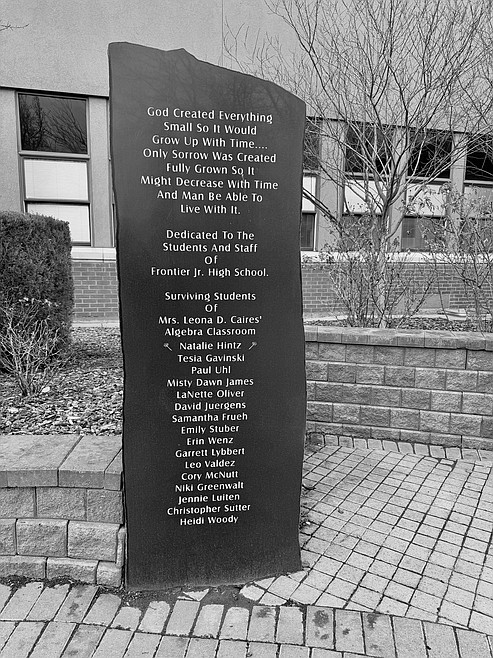
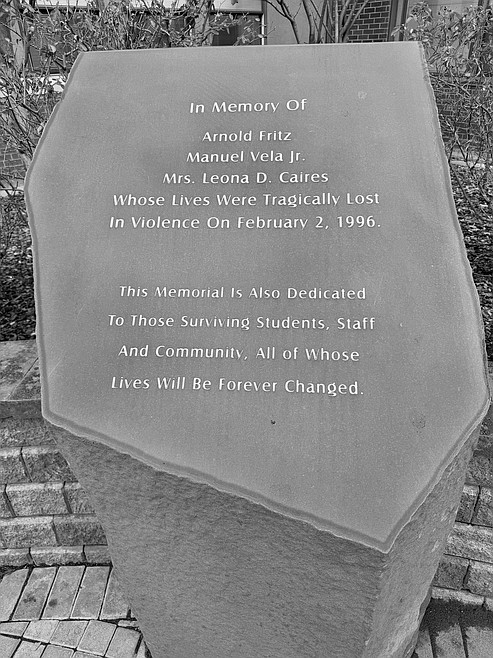
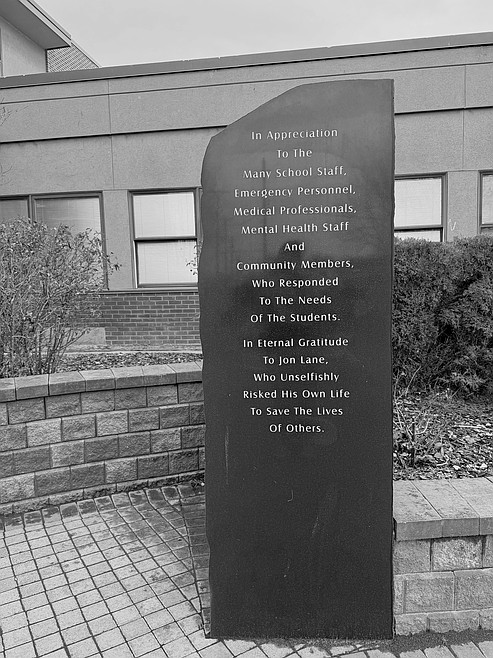
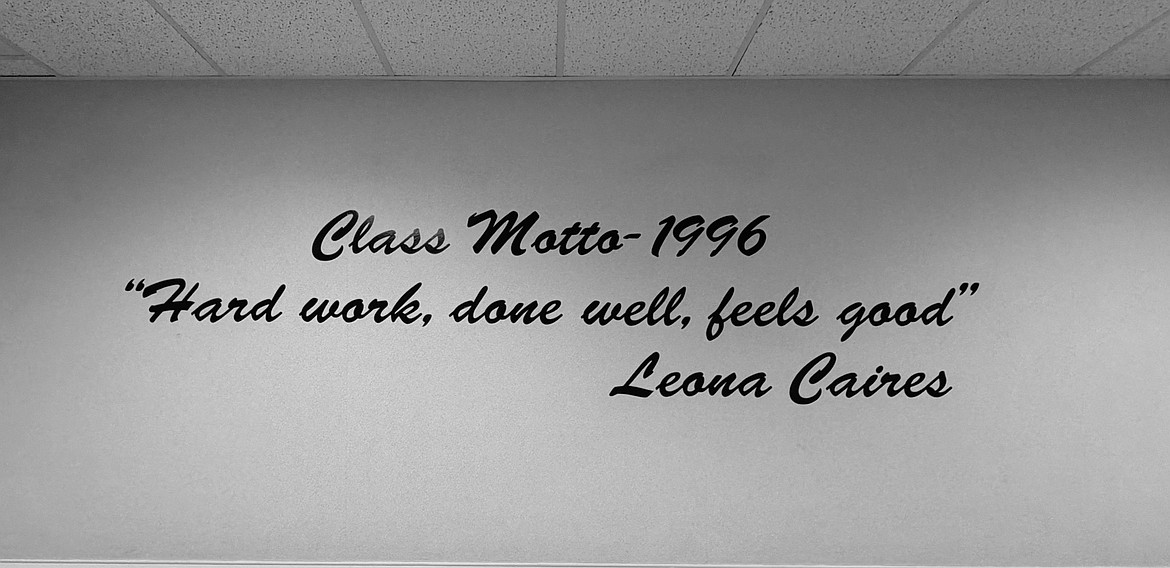
On a freezing Friday afternoon, a 14‑year‑old student entered his fifth‑period algebra class and opened fire, killing teacher Leona Caires and students Manuel Vela, and Arnold “Arnie” Fritz, and critically wounding Natalie Hintz. Physical education and math teacher Jon Lane intervened, disarmed the shooter and helped get students to safety.
“It was a random act of violence,” Police Sgt. Dennis Duke told attendees of an interfaith forum two days later. “Everybody wants to know why … we may never have the answer. But maybe this happened for a reason. The reason is to bring the community together.”
Reclaiming space
Sunday, Feb. 4, 1996 — just two days after the incident — counselors met with students who had been in the room. With mental health professionals and Lane beside them, they walked back into the classroom, reclaimed their seats, and then stood to walk the space — deciding together to hold class there for the rest of the year.
“In my mind, they psychologically took back their classroom, and they voted to have their class in that classroom the rest of the year,” Lane said in a recent interview. “It wasn't a bad room, but something bad happened.”
Monday morning, the district reopened schools with a two‑hour delay, placing counselors on every campus and police officers in the halls, not for protection, then-Police Chief Fred Haynes said, but so students would feel safe.
“Good things happened today,” Lane told reporters after that first day back. “There were a lot of hugs. I needed those, and the kids did too. We took back our building.”
David Rawls, the superintendent at the time of the incident, told families that professional counselors had guided the decision to reopen, advising to return to a normal routine as soon as possible.
“The children are going through a rough time now,” said Bill Fode of Grant County Mental Health in a 1996 article. “But getting with friends in the normal routine is very important.”
Turning to faith, each other
That same weekend, ministers fanned out across town — to the school, hospital and living rooms — while the Moses Lake Ministerial Association convened a community forum at Immanuel Lutheran Church. During the forum, Rawls referred to the words his minister spoke at his church service that morning.
“It would be easy to insulate ourselves. But then we’ll be afraid. Fear will come in, and we’ll fall — one by one to fear. All the metal detectors in the world won’t help,” Rawls said. “Only acting together as a community can help us.”
Rawls also complimented the school staff for their compassion following the incident. He said those actions told the children, “We care a lot about you, and you are safe in our hands.”
For Shannon Hintz, faith became central to her family’s ability to move forward.
“Hold on to your faith,” she said. “And if you don’t have one, reach out and find it. That’s really what got us through — our relationship with Christ, and the strength we pulled from our Christian community.”
She remembers the community’s overwhelming kindness.
“There was more kindness than anything else,” she said. “People didn’t know what to do — nothing like this had happened before — but they tried. Our churches were amazing.”
Public farewells
Over the next week, Moses Lake attended three funerals — Manuel, Arnie and Mrs. Caires. About a week after the incident, the community gathered. About 2,000 people at Big Bend Community College came together for a citywide memorial. The service, co‑hosted by the Ministerial Association, the school district, the Hispanic Forum, the City of Moses Lake and BBCC, blended prayer, poetry and a 150‑voice choir. Organizers framed it as the beginning of a long healing rather than its endpoint.
“Bad things do happen to good people,” Rev. Rod Ashley told the Columbia Basin Herald at the time. “Tragedies can be opportunities for triumph. Let us heal our wounds. Let us build a better community, better homes.”
Former Moses Lake Mayor Daryl Jackson said at the time that he hadn’t seen the community come together so well since the Mt. St. Helens eruption.
“Most clearly, the nation saw us grieve together, draw strength from each other and support each other in response to this dreadful tragedy,” Jackson told the attendees at BBCC.
A long road
From the first hours, mental‑health professionals cautioned that recovery would be nonlinear. People would cycle through shock, anger, blame, depression and acceptance, often revisiting stages months or years later.
“There’s no time clock,” Grant County Mental Health Clinical Director Patty Hill‑Voth said in a 1996 article.
She said the work begins by talking, not internalizing the pain.
That first year, clinicians organized countless one‑on‑ones and group sessions across homes, schools and churches so residents could “put the pieces back together,” Lane said.
At the same time, the community grappled with questions about ambulance response and interagency handoffs, hot‑button debates reported then in newspaper pages, but also a reminder of how many first responders carried related trauma forward.
“They were a big, important part of getting through that,” Lane recalls today. “It was so traumatic for them, too.”
Current MLSD Safety and Wellbeing Director Scott West said he could only imagine the challenges faced by first responders that Friday in 1996.
“This was really the first time this had happened; they didn’t have policies in place to handle this,” West said.
Ryan Shannon, the school district’s communications director, says the district drills lockdown and reunification procedures throughout the year and updates its plans with law enforcement to align with state policy changes.
“We’ve really done our homework… and we hope we never have to use it,” Shannon said.
Reclaiming space
Jason McLean — a Moses Lake graduate and young math teacher at the time — was asked to take over the algebra room after the loss of Mrs. Caires, and teach the students who chose to return there. He remembers the district’s plan, the counselors, the officers and the way safety had to be felt before learning could continue.
“I think having a connection with some of the students helped the other students make connections,” McLean said. “They developed some strong connections with each other. Making one feel safe meant they all felt safe, I believe. Subject matter — math — was not the most important thing that first week back.”
Weeks later, the students asked to paint a floor-to-ceiling rainbow on the wall — their way to remember and reclaim, McLean said. Lane said the day after the incident, a rainbow appeared in the sky.
“They would not be defeated,” McLean says. “They wanted to show respect for their fallen teacher.”
Firm community support
Moses Lake’s response took many forms — firefighters organizing a day‑long car‑wash that cleaned 250-300 cars and raised about $2,200 for families; musicians staging a nine‑hour benefit featuring country, Spanish and rock bands; and the Vela family completing the memorial bike ride a father and son had planned for Manuel’s fifteenth summer.
“I don’t want him forgotten,” Manuel Vela Sr. said in prior coverage, as relatives took turns riding his son's bicycle along the Redwood paths. “I want him to know he is remembered.”
Natalie Hintz returned home a month later, after complex surgeries and long rehabilitation. Cards, balloons and stuffed animals filled her room. Three decades later, Natalie is a mother and stepmother.
“She’s resilient,” her mom said. “She’s overcome a lot. She isn’t a victim. She helps others through their struggles.”
Verdict & accountability
In September 1997, a King County jury found the shooter, Barry Loukaitis, guilty of two counts of aggravated first‑degree murder, one count of second‑degree murder, 16 counts of kidnapping and additional assault counts for Natalie Hintz’s injuries.
Steve Chestnut, MLSD superintendent in 1997, called it “a great relief” for students and staff; students described it as a weight finally lifted.
In an Associated Press report that day, families on both sides of the aisle were seen consoling one another in the courtroom.
“Our hearts go out to them,” said Myrtle Hintz, Natalie’s grandmother, in a previous Herald article, describing how they embraced the shooter’s grieving parents and grandfather.
The families found comfort in the memories of their children.
“People talking about Arnold doesn’t remind us that he died — it reminds us that he lived, and was wonderful,” Alice Fritz said of her son in prior coverage.
Return to court
More than two decades after the Frontier shooting, the case returned to court when a series of U.S. Supreme Court rulings found that sentencing juveniles to life without the possibility of parole constituted cruel and unusual punishment. That decision triggered a resentencing hearing for Loukaitis in 2017. He had originally received a mandatory life‑without‑parole sentence.
The same judge who oversaw the original trial came out of retirement to preside over the resentencing.
For many families and former students, the proceedings reopened wounds that had not healed, Lane said.
As Lane recalls, it was “an opportunity for anybody who wanted to say anything … an opportunity to say some things they wanted to say publicly,” but the formality of the courtroom also made it difficult for many to view the hearing as healing, he said.
Loukaitis apologized from the defense table during resentencing proceedings.
“You have value. I hope that you can experience joy and purpose. I challenge you to do that,” Alice Fritz, Arnie's mother, told Loukaitis during the proceedings.
“If people forgive me, it’s because they are good. It is not anything I deserve,” he said.
Ultimately, the judge imposed a new 189-year sentence.
As Emilio Vela, Manuel’s uncle, said years earlier, following the original verdict: “You all will be gone tomorrow. We will live with this for the rest of our lives.”
30 years later
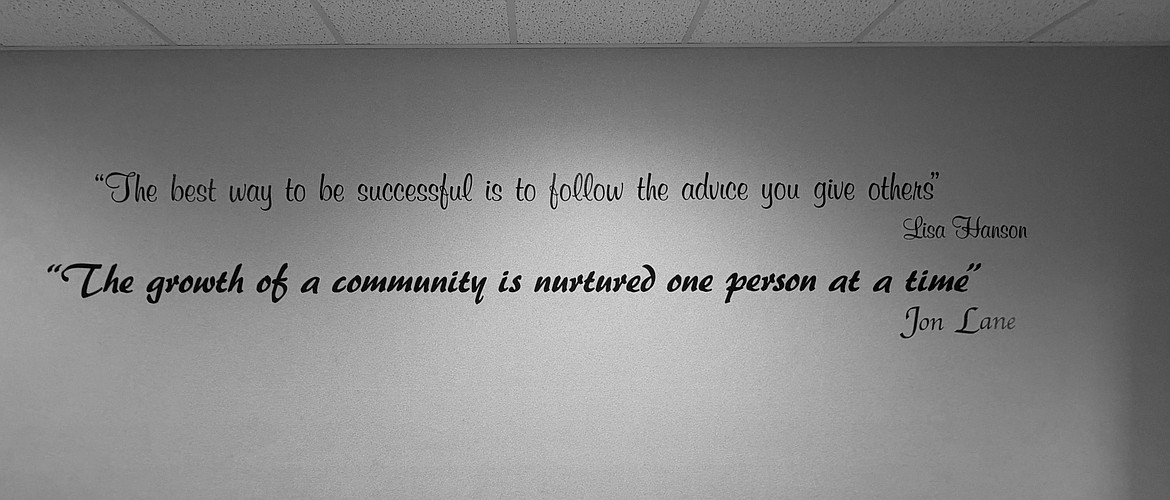
Lane says the story is not about him. He was slated to help open Sunday’s memorial, then step back so the district could shape it around healing, unity and care. He hopes it gives former students something many never had the chance to experience fully in 1996: a quiet room to grieve, to hug and to be together again.
“People always ask how you deal with it,” Lane said days before the memorial. “Every time a new shooting happens, it affects me — and it affects all those who were in the classroom. Some of them have done as well as they could. But some have really struggled … I’ve always said I’ll talk anytime if something good can come out of it. I want something good to come out of this.”
McLean says the lesson that sticks with him is simple.
“Sometimes teaching the textbook is not the most important thing in a child’s life. Make them feel safe and supported, and the learning begins,” he said.
For Shannon Hintz, who later served on the Moses Lake School District Board of Directors, healing is intertwined with memory and responsibility.
“I wish people would remember what happened here and decide to do better,” she said. “We can treat people better. We can be kinder.”
She worries that, as the town grows, many residents won’t know this history.
“People don’t even know there’s a memorial outside Frontier,” she said. “As our town grows, the memory gets lost.”
What gives her hope is simple, she said.
“People still remember. As soon as we get close to the date, the feelings come back — for everyone. It reminds people to be better,” she said.
More than trauma
After the mural was painted over and the trial concluded, Moses Lake didn’t forget; it grew. Youth programs expanded. School safety improved. Neighbors continued showing up without fanfare.
Moses Lake learned, Lane said, to keep both truths in view: the wounds that remain, and the ordinary kindness that mends them.
“Don’t hold it in,” Lane says to communities beginning their own healing. “Find your people — family, counselors, pastors, friends — and talk. There are people who will help.”
Lane encourages people to reach out for help if they need it.
“I went to a clinical psychologist, not because I was sick, but because I didn't want to be sick,” Lane said. “That's what professionals help you with.”
The Sunday memorial wasn’t about TV lights, speeches or soundbites. It was familiar halls, quiet chairs and the presence of those who remember.
Lane said healing is still happening — quietly, together and steadily — in a town that refuses to let trauma be the whole story.
Correction: The quotes in the "Return to Court" subheading were misattributed. This has been corrected above.
Resources:
National Suicide and Crisis Lifeline: 988
988 accepts phone calls and texts
Grant County Mental Health Crisis Line: 888-560-6027
New Hope: 509-764-8402
Renew Behavioral Health: 509-765-9239
Confluence Health Behavioral Health: 509-764-7474