
After decades of struggle, local man finds stability through Community Court
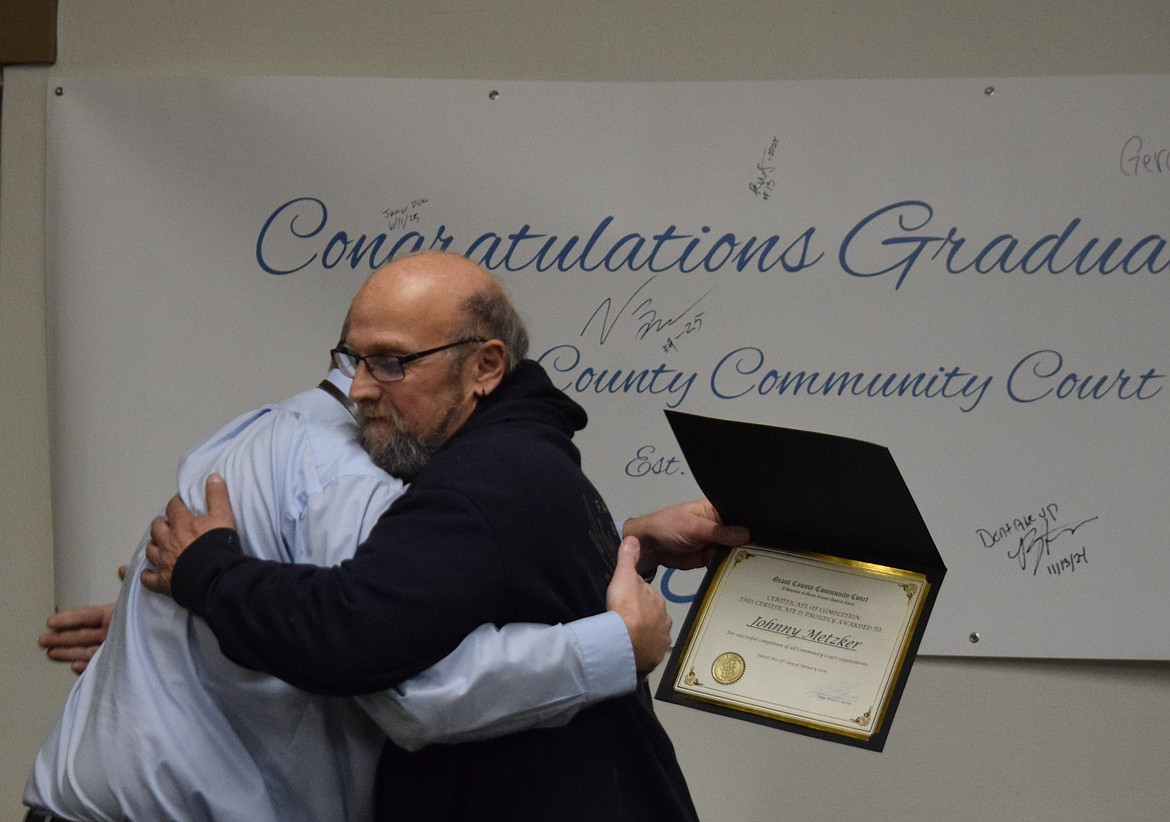
Judge David Gwinn hugs Community Court Graduate Johnny Metzker Wednesday. Metzker is the 15th graduate of the program.
NANCE BESTON/COLUMBIA BASIN HERALD
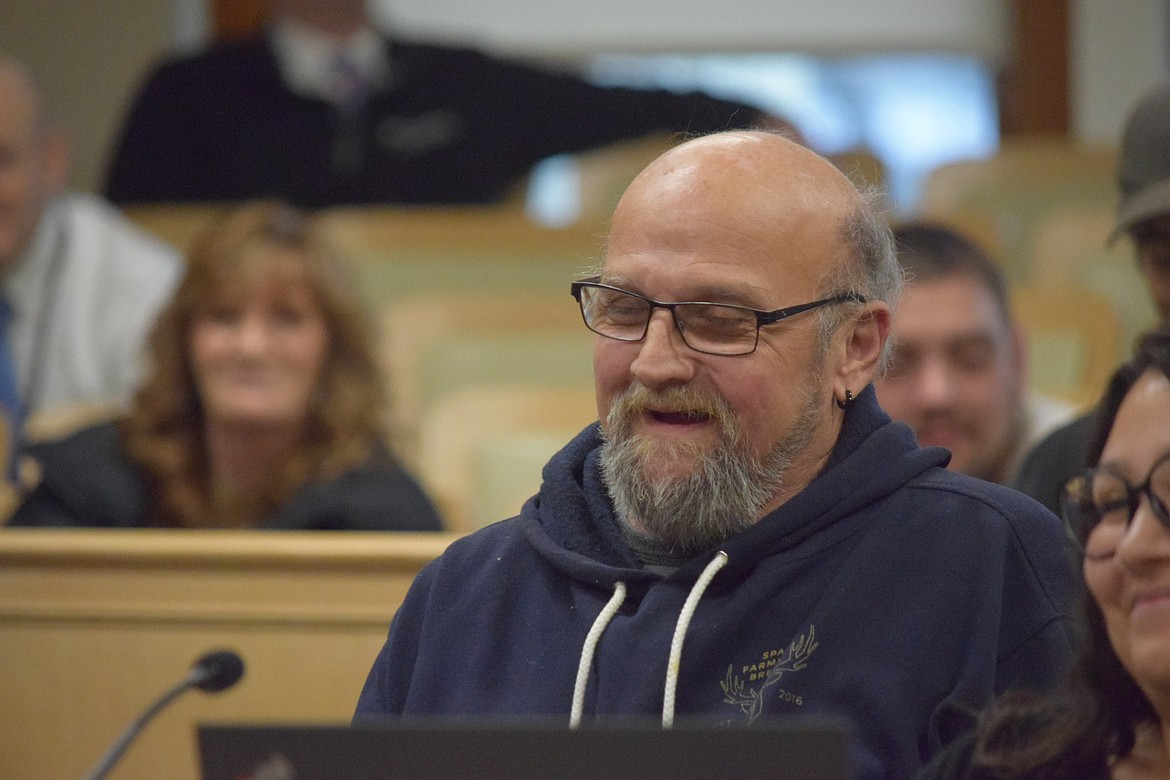
Community Court Graduate Johnny Metzker became the 15th graduate from the program Wednesday. For years, he struggled with addiction and mental health issues. Now, he is sober, off the streets and got his driver's license reinstated after nearly three decades.
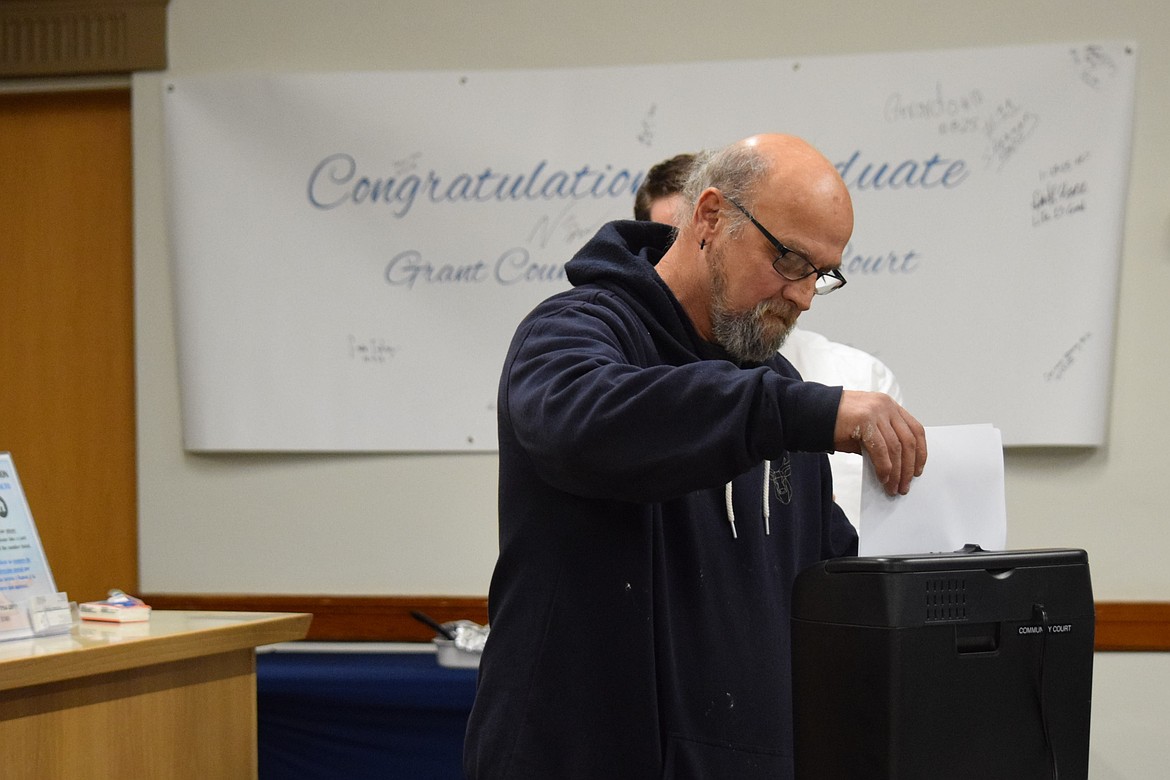
On Wednesday, Johnny Metzker became the 15th graduate of Grant County Community Court. The court dismissed three pending cases as part of his completion with Judge David Gwinn handing Metzker his paperwork to those cases to shred as part of the ceremony.
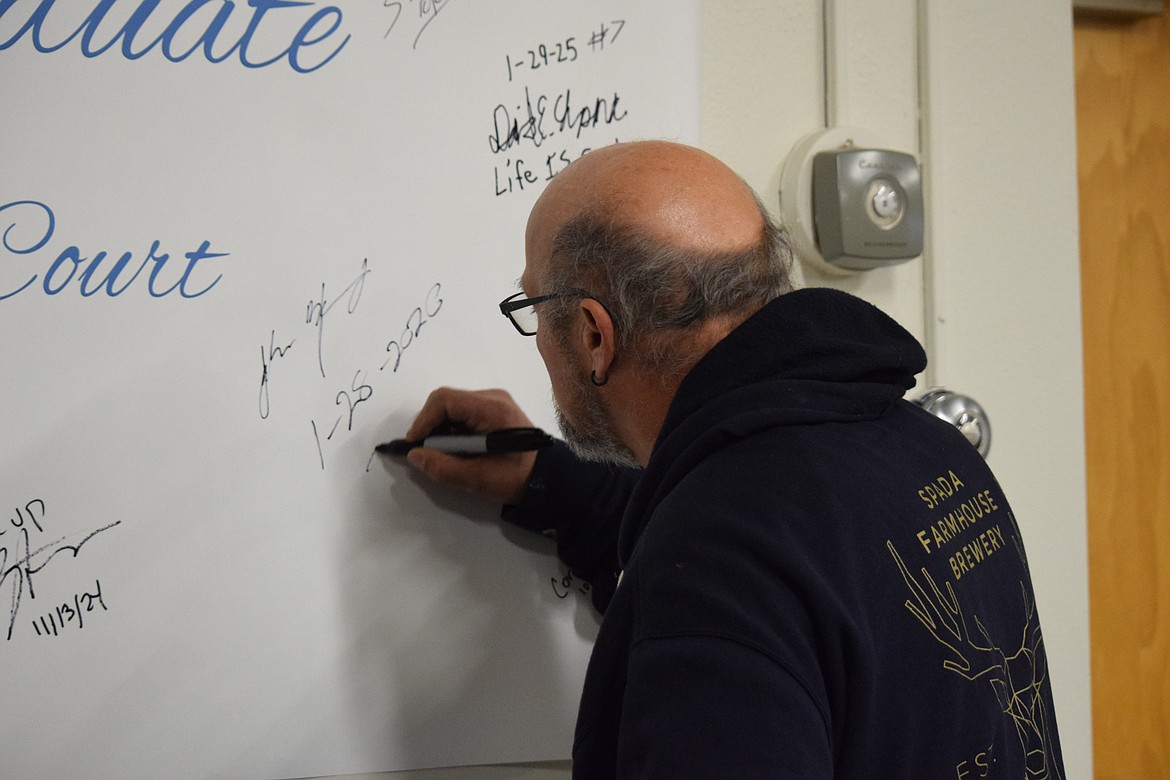
Johnny Metzer signs the Community Court banner as the 15th graduate of the program. He said the day was like any other because he has already decided he will be staying sober for the rest of his life.
EPHRATA — Wednesday afternoon, as supporters filled the Grant County Community Courtroom, 54‑year‑old Johnny Metzker walked to the front of the room to accept something he once thought impossible — graduation.
For decades, Metzker’s life was defined by addiction, homelessness and a long list of driving‑related offenses that began when he was 19. His record included multiple DUIs, habitual driving offenses and more than a dozen charges for driving while license suspended, dating back to 1989. For much of his adult life, the only constant was chaos, he said.
“I didn’t really care about most times,” Metzker said. “But (Community Court) changed my life. Now I’ve got a job; I’ve got a car, a license, insurance, a place to live — not living in the car, not living on the streets. And I’m not doing no drugs and alcohol either. So, it feels really good.”
Metzker entered Community Court in October 2024 after years of cycling through jail on misdemeanor driving charges. Judge David Gwinn said that when Metzker’s case was first screened for eligibility, his long record gave the team pause.
“There’s a lot of driving and driving under the influence,” Gwinn said during the ceremony. “If you look at all the things Johnny’s done, there should be no way in heck he should be driving.”
Gwinn said what he witnessed over the next year was a complete shift in mindset, though.
“His way of thinking completely reversed,” Gwinn said. “He came to us not caring about licenses or consequences, and then he flipped. Now he advises others in his sober living environment to focus on what matters and take care of themselves.”
That change began with treatment — something Metzker said he knew he desperately needed.
Community Court case manager Manny Garcia, who worked closely with Metzker throughout the program, said Metzker was committed from the first day.
“He said, ‘I just need to get the treatment. I don’t care where; I don’t care how long.’” Garcia said. “Each transition, he learned something new and took on new skills. He tackled the demon of addiction every step of the way.”
Metzker entered Oxford House, gained leadership roles there, completed multiple treatment phases, and worked hundreds of hours of community service — much of it at the Salvation Army. He also confronted the mental health struggles that had fueled his substance use.
Gwinn credited Metzker for helping the court strengthen its focus on mental‑health needs. Gwinn said thanks to Metzker, he has incorporated the mental health aspect into all of the Community Court participants.
“You were one of the first people that really recognized that,” Gwinn told him. “You realizing it — it’s night and day.”
Court Commissioner Tracey Poulos, who represented Metzker early in the process, recalled meeting him in jail as he faced significant mandatory time for driving while license suspended. At first, she negotiated a deal for electronic home monitoring. But Metzker asked about Community Court instead.
“‘I’m in a bad cycle and I can’t pull myself out,’” Poulos recalled him saying. “That recognition alone told me he was right for this program.”
Poulos said she never expected to see him earn back his license.
“Who would have thought that you would ever have a valid license? Yet here you are — a valid licensed driver and sober.”
In November 2025, after more than three decades without one, Metzker’s driver’s license was officially reinstated.
On Wednesday, he became the 15th graduate of Grant County Community Court. The court also dismissed three pending cases as part of his completion of the program. Community Court supervises defendants closely and works with them to ensure they meet standards set by the court and other stakeholders and slip-ups have consequences such as community service. Gwinn handed Metzker his three pending cases to shred as part of the ceremony.
During his graduation remarks, Metzker thanked the team who stood by him.
“It feels good, but it’s like another day, because I already knew I was going to be sober the rest of my life from now on,” he said. “It was the experience, meeting everybody, all the help and resources. They stick their hand out there to help you up.”
Gwinn said seeing Metzker’s transformation was “amazing.”
“I can tell how happy you are, how content you are, and how much this has meant to you,” the judge said.
As the room applauded, Metzker stood quietly, holding his graduation certificate. It was a moment that marked not just the end of a court program, but the beginning of a life he once doubted he would ever reach, he said.
“I refuse to go backwards,” he said. “I’m going to live my best life.”
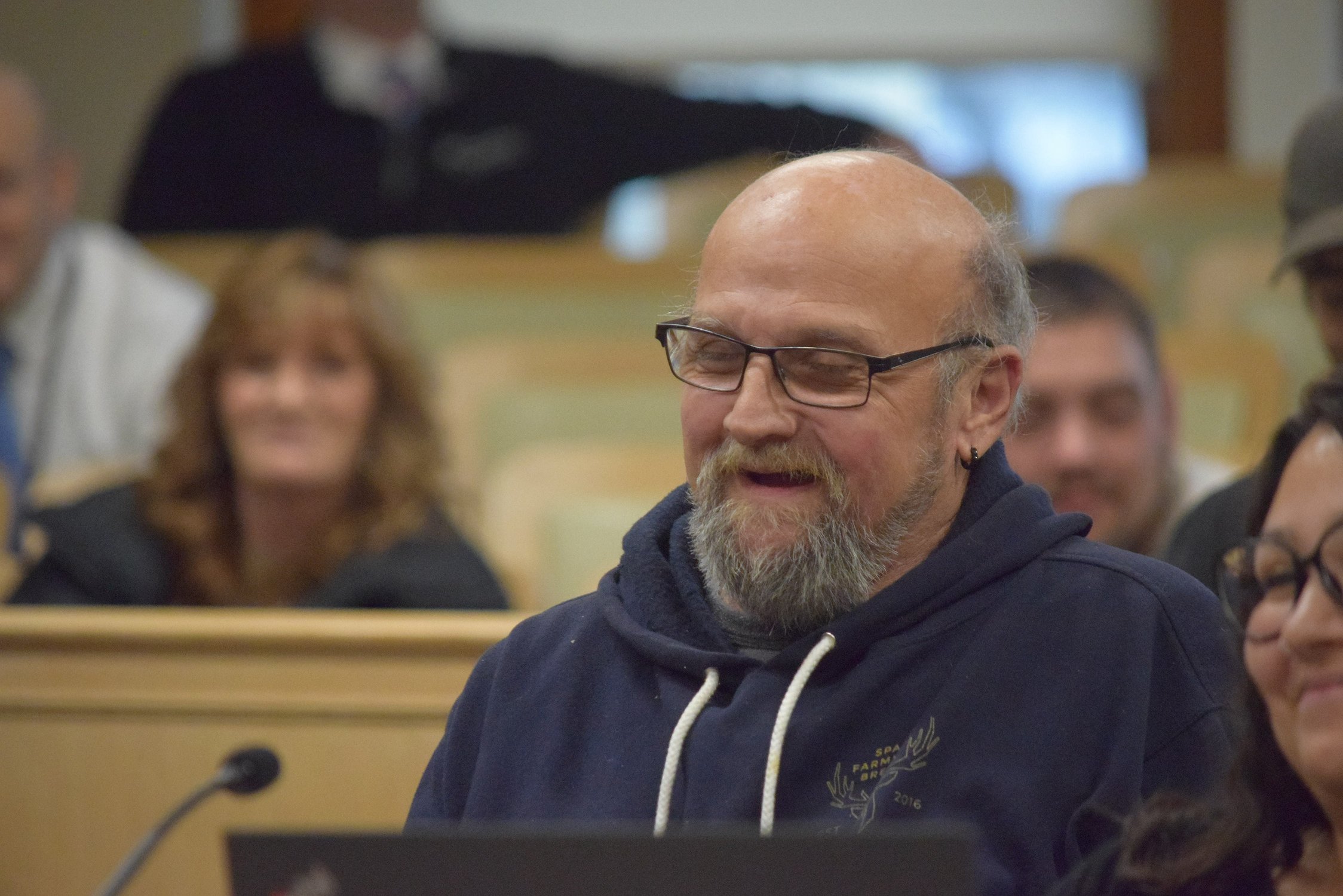 Community Court Graduate Johnny Metzker became the 15th graduate from the program Wednesday. For years, he struggled with addiction and mental health issues. Now, he is sober, off the streets and got his driver's license reinstated after nearly three decades.
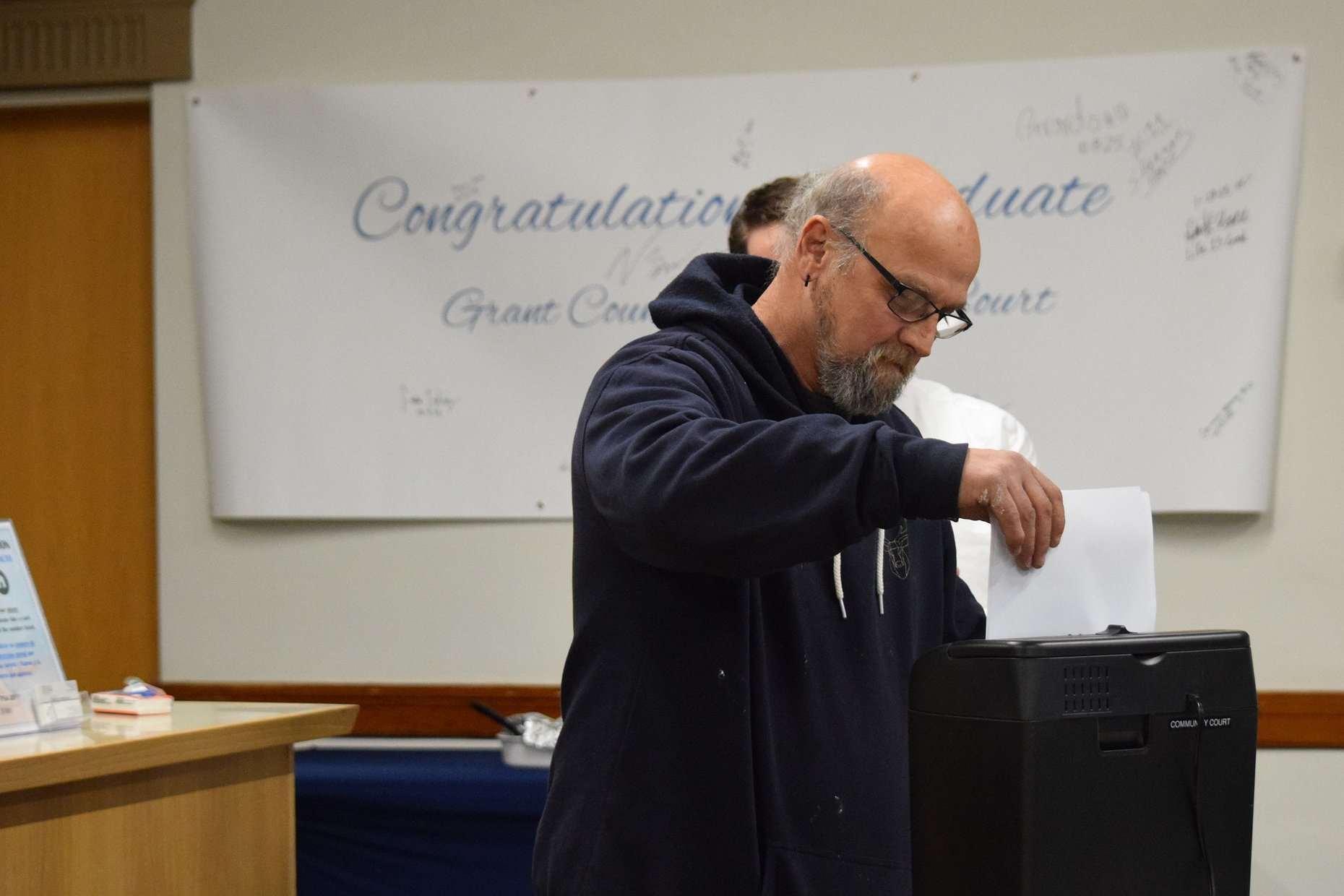 On Wednesday, Johnny Metzker became the 15th graduate of Grant County Community Court. The court dismissed three pending cases as part of his completion with Judge David Gwinn handing Metzker his paperwork to those cases to shred as part of the ceremony.
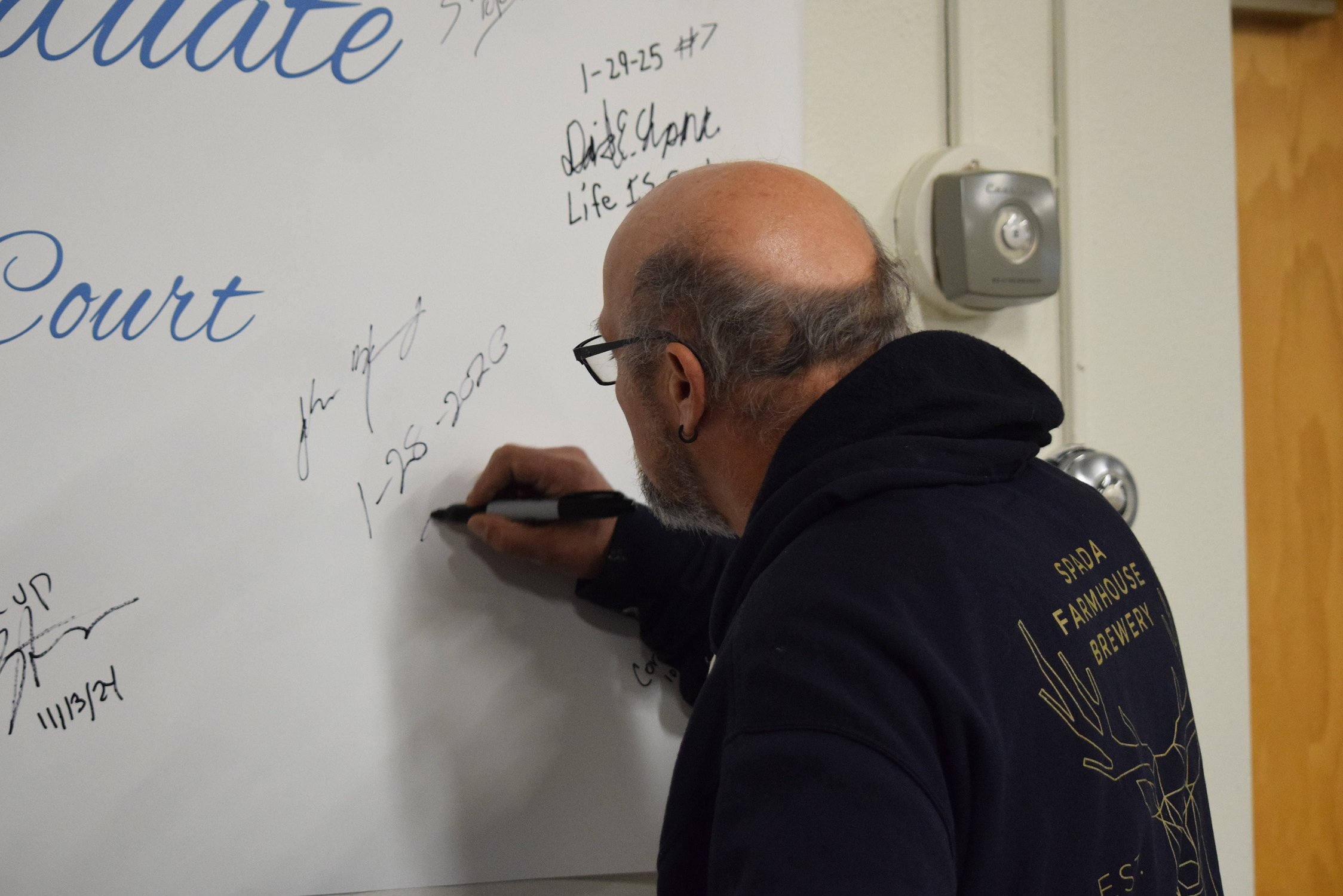 Johnny Metzer signs the Community Court banner as the 15th graduate of the program. He said the day was like any other because he has already decided he will be staying sober for the rest of his life.