
Watchdog data shows higher WA child welfare deaths than previously reported
Deaths and serious injuries of children involved with Washington’s child welfare system last year were even higher than record levels the state previously reported, according to new data.
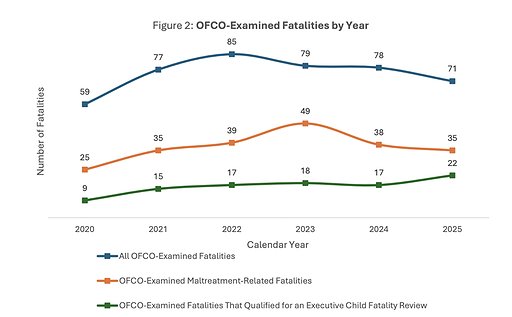
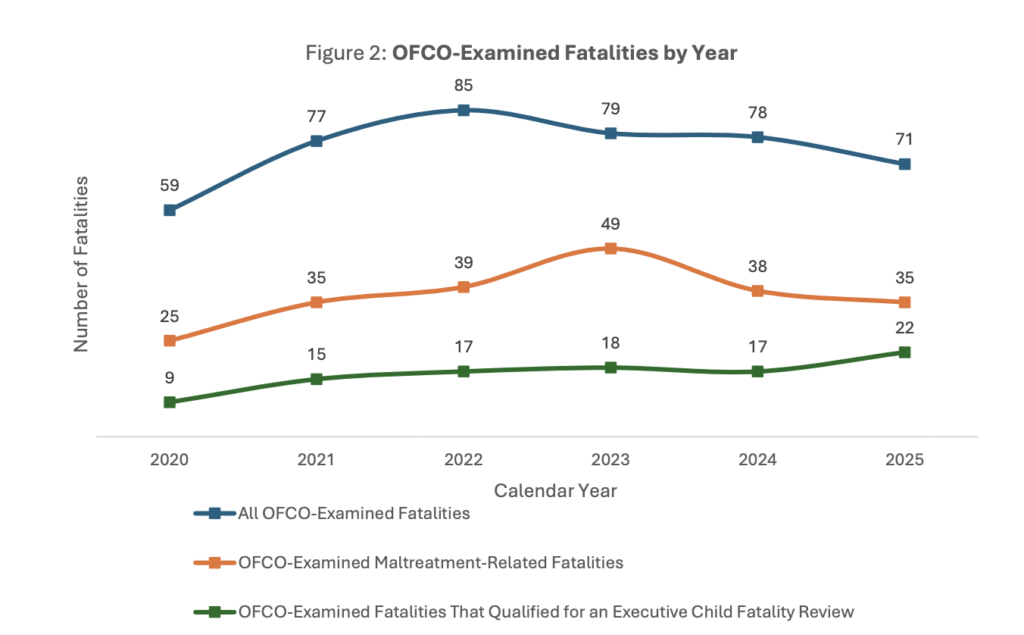
In 2025, 35 children died and 49 more nearly died either from abuse, neglect and other maltreatment, or amid these concerns, after having some connection to the child welfare system in the past year. This is according to a report from the state’s Office of the Family and Children’s Ombuds presented to an oversight board Thursday.
A few cases remain pending, so could add to the 2025 total.
Accidental drug ingestion by children fueled last year’s surge in deaths and injuries. Most incidents took place when children were in their parents’ care, and the majority of children who died were reportedly under one year old. Through the first half of this year, critical injuries have dropped significantly, as drug overdoses have declined statewide.
The Department of Children, Youth and Families, which runs the state’s child welfare system, reported 23 fatalities and 34 near fatalities last year. The ombuds office examines different cases than the department, accounting for the discrepancy between the two datasets.
State Rep. Tom Dent, R-Moses Lake, who sits on the Department of Children, Youth and Families oversight board, said it’s time for action.
“How do we put this data to use and make it happen?” he said. “We need to move forward and start finding some things. Take a risk. Let’s do something because I struggle with these deaths.”
The ombuds’ total of 84 incidents — counting both deaths and injuries — outpaced 82 in 2024. It is still under the watchdog’s 2023 figures.
When including cases not explicitly connected to maltreatment, 167 children died or nearly died in 2025, far more than previous years, according to the ombuds. This includes deaths from medical issues without clear links to abuse or neglect, if the family had involvement with child welfare.
Of the 35 fatalities, a quarter were determined to be homicide, while another 23% were accidental, with many others with unknown manners of death, according to the ombuds. Two others died in the hospital due to complications from prenatal drug exposure and one died while with foster parents.
Three died after being reunified with their families following a previous removal, according to the ombuds report. And three more were from families who had other children taken away.
The ombuds includes cases where the Department of Children, Youth and Families wasn’t directly involved, like referrals that didn’t lead to state staff opening a Child Protective Services response.
“Maybe someone says one of my students reported that their house is always dirty,” said Yordanos Gebreamlak, the director of the ombuds office. “It’s not meeting that definition of a CPS investigation needing to be opened, but that information nonetheless was received.”
These referrals made up 17% of the maltreatment deaths and 14% of the near fatalities. Others had open Child Protective Services cases or ones that were closed in the year before the incident, according to the ombuds office.
The Department of Children, Youth and Families and ombuds office do not review cases if the family had no child welfare history in the past year.
The watchdog office also identifies cases as related to maltreatment if there had been abuse or neglect concerns, not just if this was the direct cause, which is a requirement for the state agency’s review, according to a department spokesperson.
Gebreamlak recommended the department install a specialized roving unit that can travel around the state when certain regions are beset with limited child welfare staff. Jenny Heddin, the agency’s chief programming officer, said officials “had been having that conversation in-house” about a similar team.
Funding for this staff could be tough as the state continues to face budget struggles.
The ombuds also encouraged the department to establish an accountability process to evaluate its own reviews of these incidents to assess progress on strategies to avoid them in the future.
Coming into 2026, there was some bipartisan momentum to revamp state law to stem the rise of deaths and injuries, as a policy passed in recent years had made it harder to remove kids from their parents. But no proposals became law this year. The budget instead included some new money for caseworkers, public health nurses and programs to help
The current budget also funded a new workgroup focused on addressing injuries and deaths through increased drug treatment options.
“It’ll take all of us to come up with the solutions and support of what kids and families across our state need,” said Sen. Claire Wilson, D-Federal Way, and co-chair of the agency oversight board.
In the first six months of 2026, 10 children have died and eight more suffered critical injuries, half of what was reported in the same period in 2025, according to agency data. The ombuds office hasn’t published 2026 numbers.