


Port of Quincy electrical project hoping to start generation in 2029
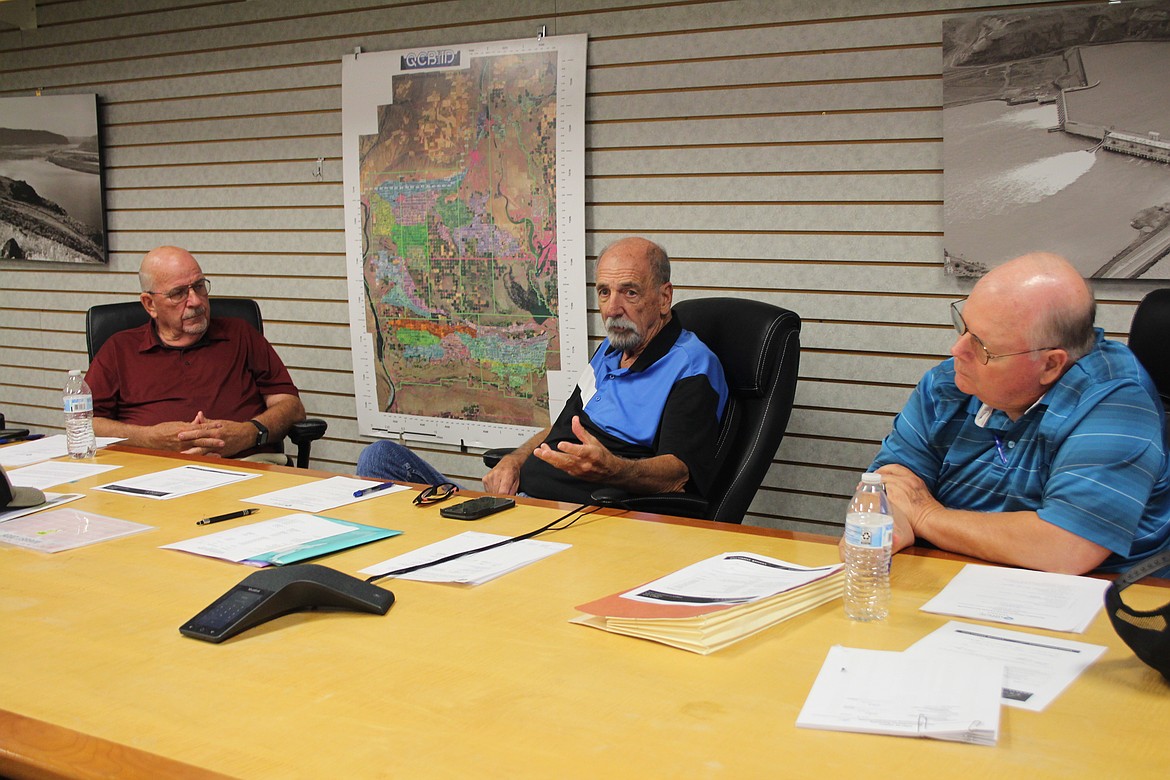
Port of Quincy commissioners from left: Patric Connolly, Curt Morris and Brian Kuest discuss water, power and rail connections at the commission meeting Wednesday.
CHERYL SCHWEIZER/COLUMBIA BASIN HERALD
QUINCY — A project to bring a standalone energy source to the Quincy area could be in the testing phase by 2029.
Port of Quincy Commissioner Brian Kuest said Wednesday that Colusa Indian Energy has completed a first draft of a proposal that eventually will be submitted to state and federal agencies.
“It's basically a project that's going to take biomass, create synthetic energy, and use that as a basis to start the power project,” Kuest said. “The synthetic energy would come from wood biomass to start with.”
Kuest said the goal is to start with 10 megawatts of power and scale up from there, diversifying into other fuels as it expands. The goal is to start construction in late 2027 or early 2028, he said.
“They wanted to start with 10 megs, to show the process would work, and then build up to 345 megs,” he said.
Port officials announced the collaboration with Colusa in February. When it’s built, the facility will be located on port-owned property in the section of Quincy zoned for industrial uses.
Commission Chair Curt Morris said one customer was interested in building on port property but put that project on hold because the infrastructure wasn’t available. The property also lacks a water supply; Kuest said commissioners are working with the Quincy-Columbia Basin Irrigation District to divert water from a nearby irrigation canal.
Kuest said the port has applied for water and has completed some of the studies needed for the application to the U.S. Bureau of Reclamation, which operates the irrigation system. If the application is approved, the port would eventually pump water from the canal in the spring and fall, called the shoulder seasons, when there’s not as much demand from irrigators.
“We need to have enough time to engineer that point of withdrawal, so we can start thinking about getting that in place and think about what we’re going to do with the water,” Kuest said.
The property could be connected to the port’s rail network, but the tracks would have to cross a city street. Port officials have finished a traffic study, which is part of the process of determining what kind of railroad crossing will be needed.
The decision will be up to Quincy city officials, Morris said. The city could ask for warning lights and crossing arms that block the traffic lanes, or signs with warning lights, or just crossing signs.
The port has applied for and received federal funds for the rail project, and the city’s requirements will be reviewed by federal rail officials.
“They’ll come back with whatever their comments are, and we will adjust it accordingly,” Morris said.