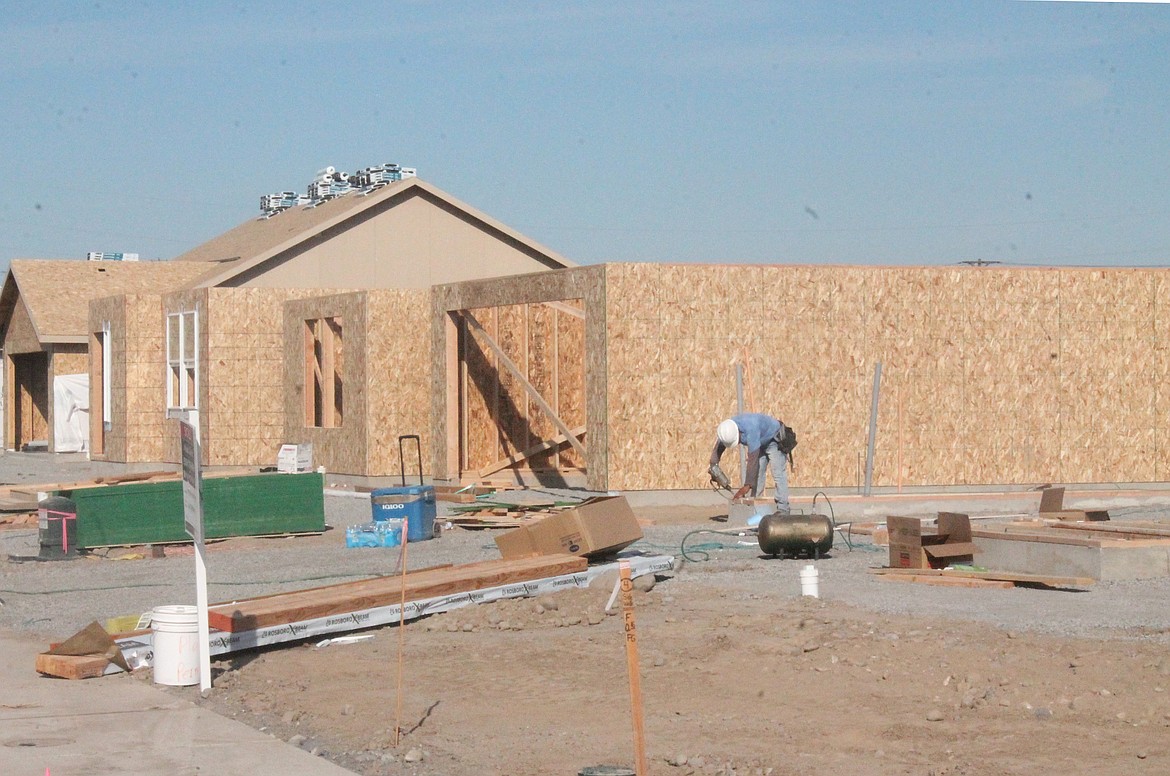

Parking part of discussion on new Moses Lake development standards
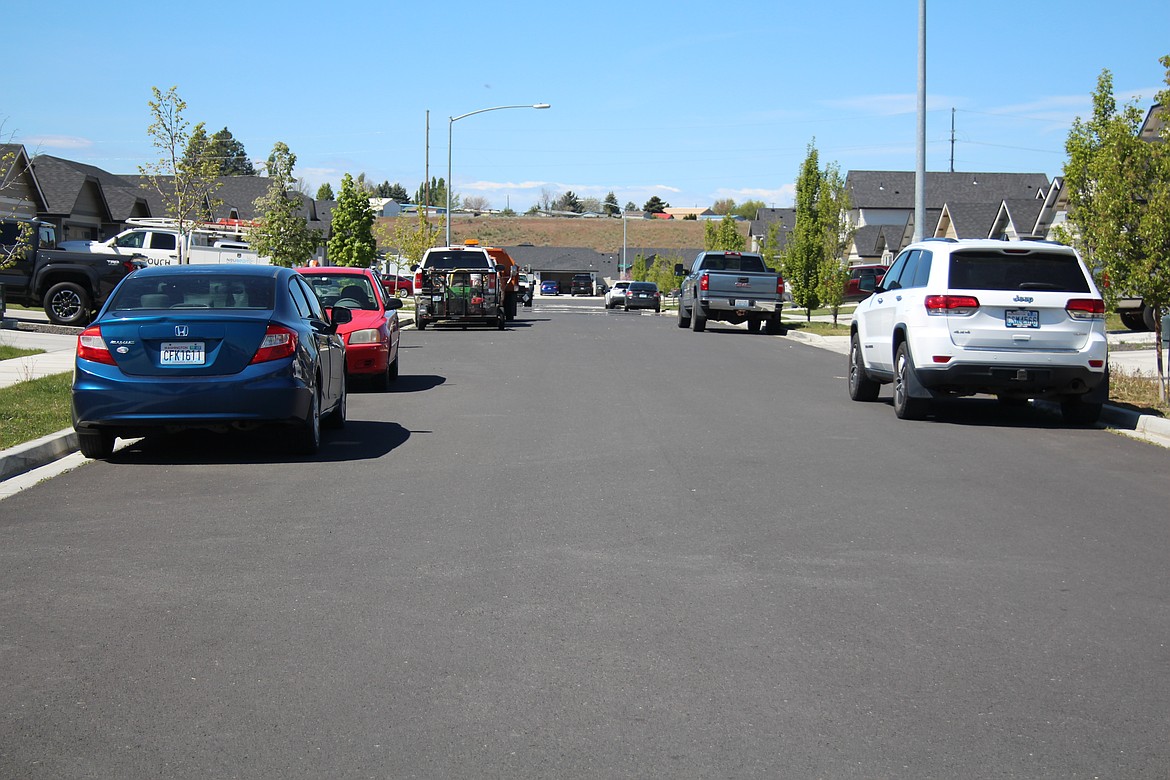
MOSES LAKE — A substantial discussion among Moses Lake City Council members about street widths in new residential developments also was a discussion about residential parking and stormwater collection. Council members are considering new development street widths as part of updates to the city’s development standards, discussed at a special council meeting April 21.
Neil Mickelson, one of the city’s engineers, said the current standard is 28 feet for new streets. Council members asked about widening that to 35 feet.
Previous changes in development standards allow for individual home lots that are 50 feet wide, and council member Mark Fancher said narrower lots and narrow streets have added up to parking problems. He cited a development with that combination.
“There’s parking on one side of the street (and) people are not enamored with that. So, they don’t follow the rules right now,” Fancher said.
A 35-foot-wide street would allow parking on both sides of the street with room for traffic in each direction, Fancher said. Mickelson said a wider street does ease traffic restrictions.
“With a 35, you could have parking on either side and still have two-way traffic either way,” Mickelson said. “Whereas if you have two cars parked on a 28, you’re going to have to take turns.”
Council member Joel Graves cited the situation at a different development in town.
“It is pretty narrow in certain spots where there are cars parked on both sides,” Graves said.
However, wider streets seem to encourage speeding, he said.
“Narrower streets generally lead to lower speeds in residential areas. Wider streets would generally give people the view that they could go faster,” he said.
Community Development Director Leigh Ramsey said standards have gone back and forth over time.
“It does appear to be cyclical,” she said.
Fancher said the allowance for smaller lots has changed the way houses are built.
“When you had an 80-foot lot, there were a lot of people who could (build) three-car garages, and three-car driveways,” he said. “The theory was there weren’t going to be as many cars on the road. A 50-foot-wide lot – you don’t get a three-car garage. That’s just where we’re at.”
Deputy Mayor Don Myers asked if the size of the lots could be a factor in the width of the streets. If developers opted for smaller lots, they would be required to have a wider street, Myers said.
Mickelson said that is a possibility. Mayor Dustin Swartz said he thought that kind of choice would have to be restricted to one or two options.
Handling stormwater also affects street design, and City Engineer Richard Law said state regulations are more forgiving for some stormwater designs than others. Aboveground collectors called swales are subject to less regulation than underground drains.
Council member David Skaug expressed concern about swales that he thought might be too big. Council member Jeremy Davis said his experience convinced him they worked. Davis said he has property on a street that was developed recently.
“I was super-skeptical,” Davis said. “To be honest, the swale handles the water spectacularly.”