
A glimpse of history
QUINCY — The Quincy Valley Historical Society is going all-out for America’s 250th year.
“I’ve been talking with people in the last six months about this, (and) some people will say, ‘Why do you want to celebrate America at 250?’” said Harriet Weber, director of operations for the Quincy Valley Historical Society and Museum. “And I said, ‘You know, no matter what your political stance is, (we’ve had) 250 years of freedom, which I believe we take for granted.”
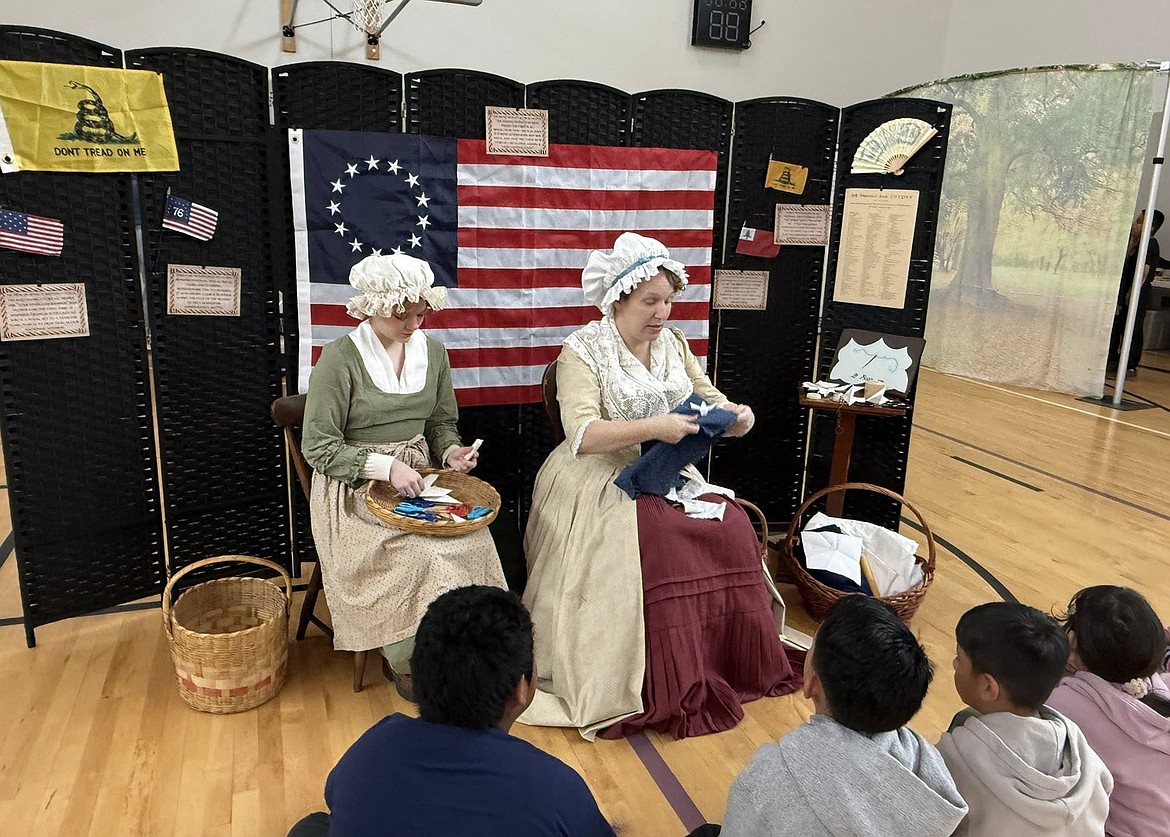
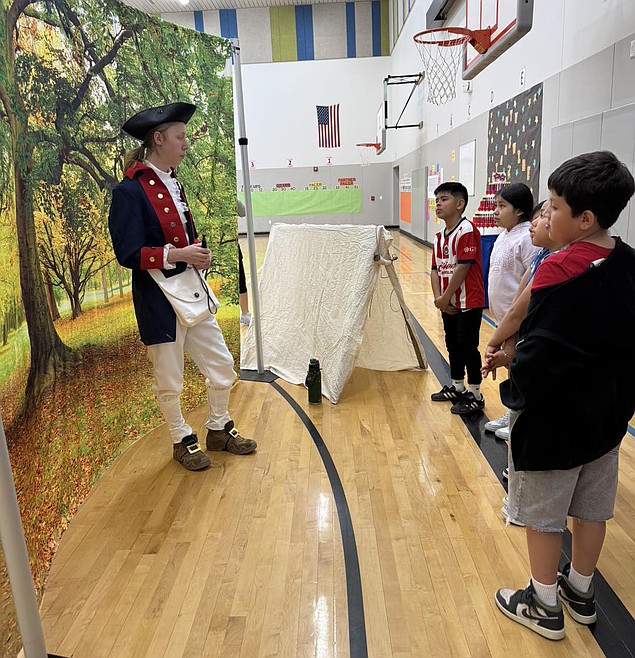
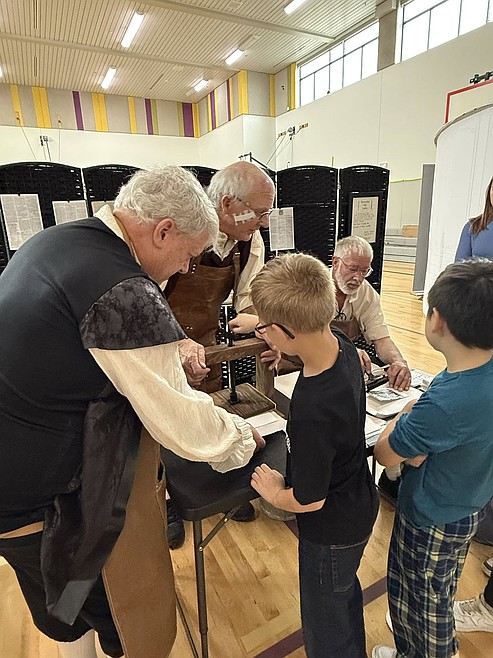
One way the museum is celebrating is with its first-ever traveling exhibit, “Journey to Philadelphia 1776.” Volunteers are making the rounds of Quincy’s five elementary schools, one a week, with a sixth session at the museum for New Life Christian School in Ephrata and homeschool students, Weber said. “Journey to Philadelphia 1776” features 12 volunteer interpreters in costume, who lead the students through some of the high points of America’s founding.
“They come through a time portal,” Weber said. “We have an assembly with a gigantic birthday cake that was 3D printed for us with 250 candles on it. They meet Betsy Ross and they make a five-pointed star, and she tells them about that, and then they meet Joseph Plumb Martin.”
Joseph Plumb Martin, portrayed by a teenage museum volunteer, entered the Revolutionary War at the age of 15 as a drummer boy and served with the Continental army, until the end of the war in 1781, through battles, a mutiny and the famously cruel winter at Valley Forge according to the National Museum of the United States Army. Plumb’s memoirs, written in his 70s, present a rare picture of what life was like for rank-and-file soldiers in that war. The Quincy presentation gives the students a taste of his experience, Weber said.
“There’s a table with headphones and a video where they get to play along with Yankee Doodle on a drum,” she said.
The students also meet Benjamin Franklin and try their hands at printing on a small press, Weber said, and finish up by meeting the architect of the Declaration of Independence, Thomas Jefferson.
“We gave them a big piece of art paper that says, ‘Our Class Declaration’ on the top,” she said. “Then in class they come up with a class declaration, and afterward they talk with Thomas Jefferson about what was in the declaration, then they sign (it) with ink and quill pen.”
The traveling exhibit will also be at George’s Fourth of July celebration, Weber said, and every day of the Grant County Fair in August.
The Quincy Valley Historical Society and Museum has traditionally held a multi-day historical or cultural event in late September, and this year it will Sept. 25-27 and focused on America’s origins.
Re-enactors playing George Washington and John Hancock will come and speak to school groups the Thursday before that weekend. On Saturday, those Founding Fathers will be joined by the Seattle-based Spirit of 76 Living History Association for a reenacted encampment of soldiers and civilians with military demonstrations. Jacie Sites, a five-time National Fiddle Champion, and her band will be there too to present the history of American music, and there will be apple cider pressing and other historical displays.
“That night, we’re going to have a barn dance in our Heritage Barn,” Weber said. “We’ll be having a caller and they will lead us through everything from an early minuet to a Virginia reel, all the way to modern ‘Footloose’ where our high school kids just did (as a stage musical). Two hundred fifty years of American music.”
The weekend will wrap up Sunday morning with an all-faith church service, Weber said, with hymns spanning the quarter-millennium of American history.
Finally, the QVHS will host an exhibit from the beginning of October through Veterans Day celebrating generations of American wartime heroes, called “America 250 in Uniform."
“We’ll have uniforms from every major conflict that the United States has participated in, as well as personal stories and photographs from Quincy and area veterans,” Weber said.
The celebration is all paid for through private donations to the museum, Weber said.
“I just felt like there’s not a lot really going on,” she said. “Our state really hasn’t set aside money … so it’s up to local communities, and I felt like it was the museum’s responsibility to make something big happen.”