Tuesday, April 21, 2026
75.0°F

Soap Lake sees large uptick of public records requests
by NANCE BESTON
Staff Writer | April 21, 2026 4:28 PM

SOAP LAKE — The City of Soap Lake is experiencing a upsurge in public records requests this spring, with dozens of inquiries pouring in from residents, reporters and outside agencies as the city navigates ongoing investigations, staffing changes and questions about financial oversight. 

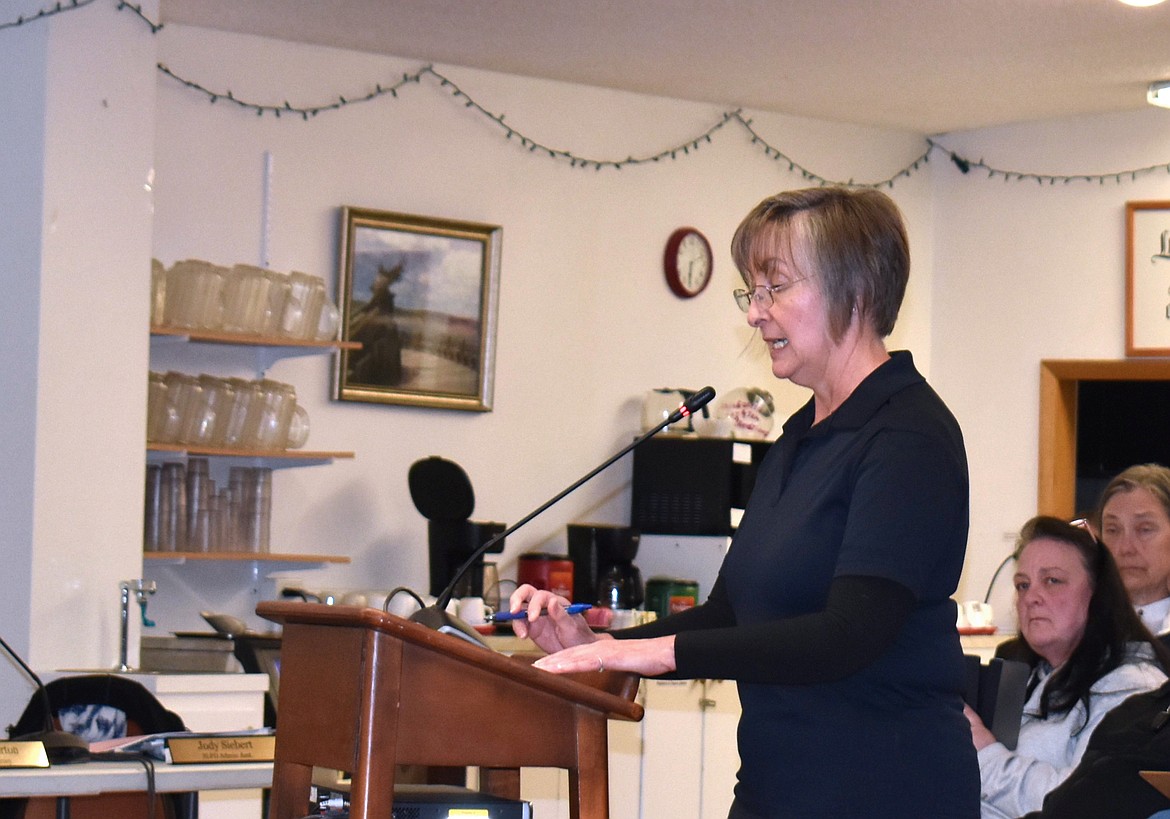
Records Clerk Jody Siebert told the City Council on April 15 that she had logged around 160 public record requests so far this year, an unusually heavy workload for the small city.  

“It’s a very high volume,” she said, noting that the pace has accelerated compared to recent years.  

She encouraged residents to check out the Washington State Archives for ordinances, resolutions, minutes and agenda packets. The City of Soap Lake website also has minutes archived to 2017.   

“This may help some of you attempting to do research on some items,” Siebert said.  

A newly released response to a Columbia Basin Herald request shows that 61 public records requests were filed between March 18 and April 17 alone, reflecting a broad range of concerns from the public. 

Many of the requests center on the city’s ongoing administrative challenges.  

Several citizens sought documents related to Mayor Peter Sharp, including emails between the mayor and the Washington State Auditor’s Office, the Grant County Sheriff’s Office and the Grant County Prosecutor’s Office.  

One request asked for information about Ring Doorbell devices that were removed from city buildings after allegations surfaced that staff were being recorded without consent.  

Others sought copies of no-confidence vote documents and statements read aloud by staff at council meetings. There were also requests for emails from Council Member Susan Carson and the city attorney. 

Financial oversight has also been a recurring theme.  

Multiple residents requested invoices, contracts and correspondence involving the city’s legal counsel, Kenyon Disend PLLC, along with records tied to the resignations of Finance Director Jeff Balentine and City Attorney Julie Norton.  

Tourism and lodging tax spending drew attention as well, with one request seeking a detailed breakdown of “the approximately 50k in tourism/lodging funds approved or allocated for festivals and events in 2024–2026,” including receipts, applications and economic impact analyses. 

Police activity accounted for another significant portion of the month’s requests.  

State agencies and private citizens asked for incident reports, arrest narratives, body camera footage and 911 audio spanning from early 2024 through April 2026. Several Department of Children, Youth and Families caseworkers requested law enforcement reports tied to ongoing child welfare investigations, while others sought police records involving specific individuals or addresses. 

The Columbia Basin Herald submitted eight requests during the one month period, while another news outlet submitted six. The remaining 47 came from Soap Lake residents and outside requestors. 

Siebert doing her best to keep up 

Behind the scenes, Siebert is working to manage the unprecedented volume while staying within the state’s five-day response requirement. She said she is doing everything she can to keep requests moving, even as the workload grows more complex. 

“When I first started here, in 2018, in the first year I worked here, I had 26 record requests,” she said. “Right now, I have 165 logged to date,” she said.  

She added, at the current pace, “I could be at 600 or more” by the end of the year. 

Siebert said email requests are among the most time-consuming, especially when residents ask for all emails sent or received by a particular official over a long period.  

One request for a single week of the mayor’s emails resulted in a three‑inch stack of paper, she said. Some requests require review by the city attorney, which adds more time. 

She also noted that some residents request records the city does not actually possess.  

“I get that you think the city has records, but maybe we don’t,” she said.  

She encouraged residents to check out the State Archives, which holds older minutes and agenda packets, and the city's website, which includes minutes dating back to 2017. 

Despite the strain, Siebert said she tries to avoid issuing extension letters unless absolutely necessary.  

“I don’t like to extend,” she said. “It doesn’t look good.”  

But with the current volume, some requests are being scheduled out as far as mid‑June. 

She praised city staff – including Clerk Coley Olson, Deputy Clerk Tania Babak and Public Works Director Eli Olson – for helping her locate documents quickly.  

“Eli was able to get that documentation to me within a couple of hours,” she said of one outstanding request. 

How to file, common mistakes  

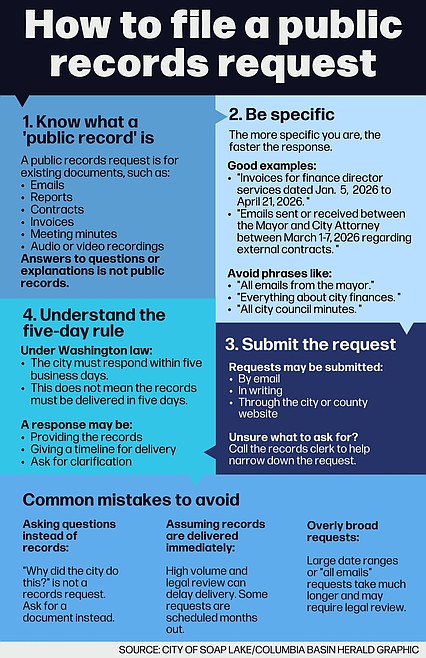
Siebert said many residents are unfamiliar with the formal process of requesting public records, which can lead to confusion or delays. She emphasized that the five‑day requirement under state law refers to the city’s obligation to respond, not to provide the records themselves. 

“I don’t give you your record in five days,” she said. “I have to respond to you in five days.”  

That response may include the records, a timeline for when they will be available, or a clarification request if the submission is unclear. 

One of the most common mistakes, she said, is that people submit questions rather than asking for specific documents.  

“People don’t ask for a record; they want to ask a question,” she said. “A record request is for a document … something physical I can get you.” 

She encouraged residents to call or email her before filing if they are unsure what they need.  

“Just call me and talk to me and say, ‘Hey, this is what I’m looking for,’” she said. “Let’s narrow it down.” 

Siebert said she hopes the volume will eventually stabilize, but for now she is focused on keeping up with the demand.  

“It can be a daunting process,” she said, “but I try to have open communication.”