
Tuesday, April 14, 2026
53.0°F

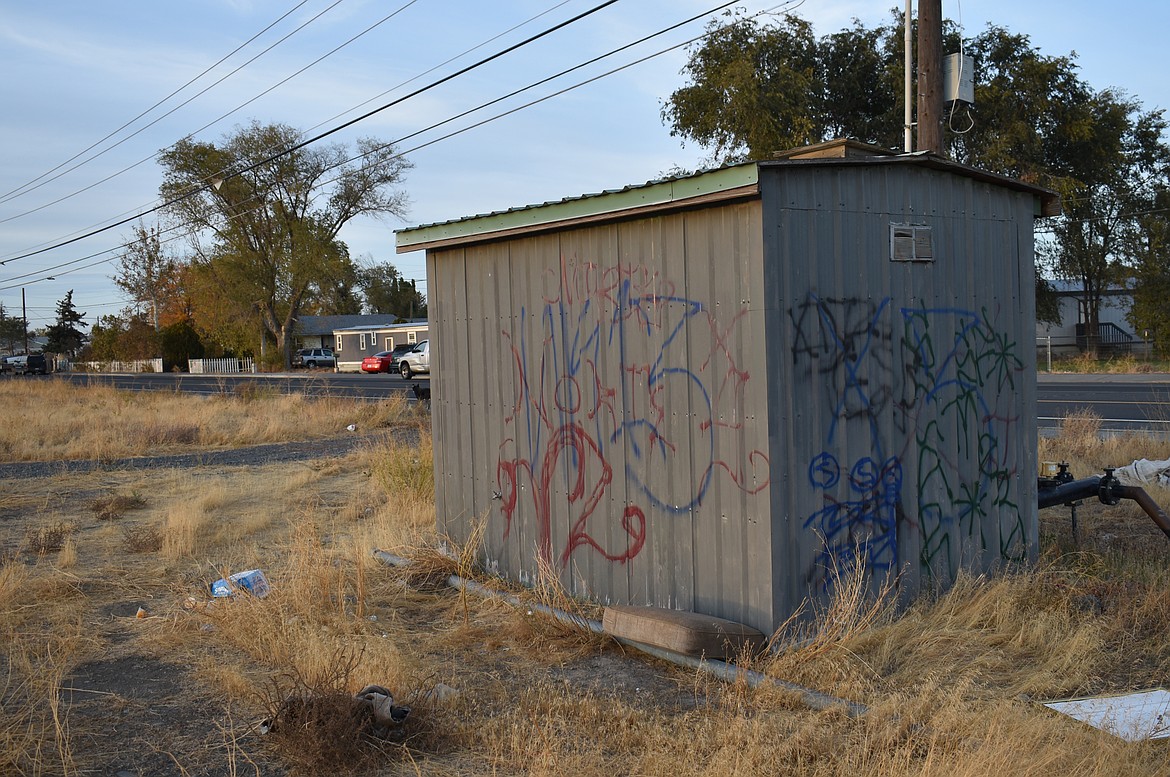
Graffiti is seeing uptick in Grant County, how to help

by NANCE BESTON
Staff Writer | April 14, 2026 5:53 PM

“We want a clean, safe community for everyone to enjoy. Our citizens aren’t going to stand for it, and neither are we.” 

Quincy Police Department Chief Ryan Green 


QUINCY — Law enforcement agencies across Grant County say graffiti vandalism is rising with the spring weather, prompting renewed requests for community vigilance, quick cleanup and better reporting as officers work to curb a crime that is easy to commit and difficult to catch. 

Graffiti uptick 

Police in Moses Lake, Quincy and the Grant County Sheriff’s Office all report similar trends: more tags appearing as temperatures warm, with offenders striking fences, mailboxes, alleys and businesses. 

Moses Lake Police Capt. Jeff Sursely said the department has seen graffiti “ebb and flow” throughout his 30‑year career, but the pattern is consistent. 

“You’ll go through periods where there’ll be a lot more graffiti around town,” Sursely said. “It can correspond with somebody moving into a neighborhood and marking it up, or somebody leaving and activity dropping off.” 

Quincy Police Chief Ryan Green said his city is seeing a clear increase this spring, particularly in the growing northeast part of town. 

“Graffiti is one of those nuisance crimes that everybody notices and nobody likes,” Green said. “It doesn’t take but a few seconds to mark up a wall and be on your way.” 

The Warden Police Department said they are investigating a “rash of vandalism,” which they are working on, according to a statement from the department.  

The Grant County Sheriff’s Office said they are not seeing the same increase, but they deal with a lot of graffiti especially near population centers and areas with known gang activity. 

“Graffiti continues to be an issue all across Grant County,” GCSO Public Information Officer Kyle Foreman said. 

The Ephrata Police Department also said they have not noticed an increase of graffiti. 

“With warmer weather though, we usually start to see more calls, including for graffiti,” EPD Chief Erik Koch said.  

What each department is doing 

The MLPD has increased nighttime patrols and neighborhood checks, especially in areas where tagging has recently appeared. Officers will also be on bicycles this summer to make more direct contact with residents.  

The department recently partnered with Key Club students for a graffiti cleanup project, led by Cpl. Omar Ramirez and clerical staff Cristina Valdez, the first time MLPD has participated in such an effort. Officers also track gang monikers and tagging styles to link cases when possible. 

The QPD is responding quickly to calls about suspicious activity and in‑progress vandalism. Officers are working with residents who volunteer to help elderly property owners clean graffiti, and they regularly review security footage submitted by the public.  

Green said the department is emphasizing rapid cleanup and encouraging residents to call 911 immediately if they see tagging happening. 

The sheriff's office is focusing on prevention through visibility.  

Deputies encourage residents to improve lighting, install cameras and stay alert to activity around their property. Foreman said deputies respond to reports throughout rural areas and stress the importance of removing graffiti quickly to prevent rival gangs from layering tags over one another. 

How residents can prevent becoming a victim

Officers across the county emphasized that while no method guarantees protection, several steps can significantly reduce the likelihood of being targeted. 

Keeping properties well‑lit is one of the most effective deterrents. Vandals prefer dark, unobserved areas, and lighting makes it harder for them to work unnoticed. Security cameras can help identify suspects, though officers caution that cameras alone do not stop determined offenders. 

Quick removal is crucial  

Sursely said painting over graffiti as soon as possible prevents it from becoming a magnet for additional tagging. Green said some surfaces can stain if paint sits too long, making immediate cleanup even more important. 

Residents can also apply anti‑graffiti coatings, clear sealants that make spray paint easier to wash off. Paint stores carry several options, and officers say they can save homeowners time and money in the long run. 

Green encouraged parents and neighbors to pay attention to youth behavior. If someone suspects a child may be involved in tagging or gang activity, early reporting can help officers intervene and connect the youth with resources. 

Koch said situational awareness is also very important. 

“Just keep your eye out for anything suspicious,” Koch said. “And if you see something suspicious, call 911.”  

How to help law enforcement 

Because graffiti can be applied in seconds, officers say catching someone in the act is rare without community reporting. 

Residents who see vandalism happening should call 911 immediately and provide descriptions of people, clothing, vehicles or direction of travel.  

“If they see what they believe to be malicious graffiti occurring, call 911,” Sursely said.  

For vandalism discovered after the fact, residents should call the non‑emergency line and provide as much detail as possible.  

Green said even small pieces of information – a partial license plate, a short video clip or a description of people seen in the area – can help build a case.  

“Your little piece of the puzzle may add to it,” he said. 

Foreman said observant neighbors are one of law enforcement’s strongest tools.  

“We can’t be everywhere,” he said. “Citizens being fantastic partners is what makes us successful.” 

A shared message 

Across agencies, officers say the community’s response: quick reporting, fast cleanup and willingness to share information will determine how quickly the problem fades. 

“We want a clean, safe community for everyone to enjoy,” Green said. “Our citizens aren’t going to stand for it, and neither are we.”