Tuesday, April 14, 2026
53.0°F

‘A real concern for our youth’

by NANCE BESTON
Staff Writer | April 14, 2026 4:27 PM

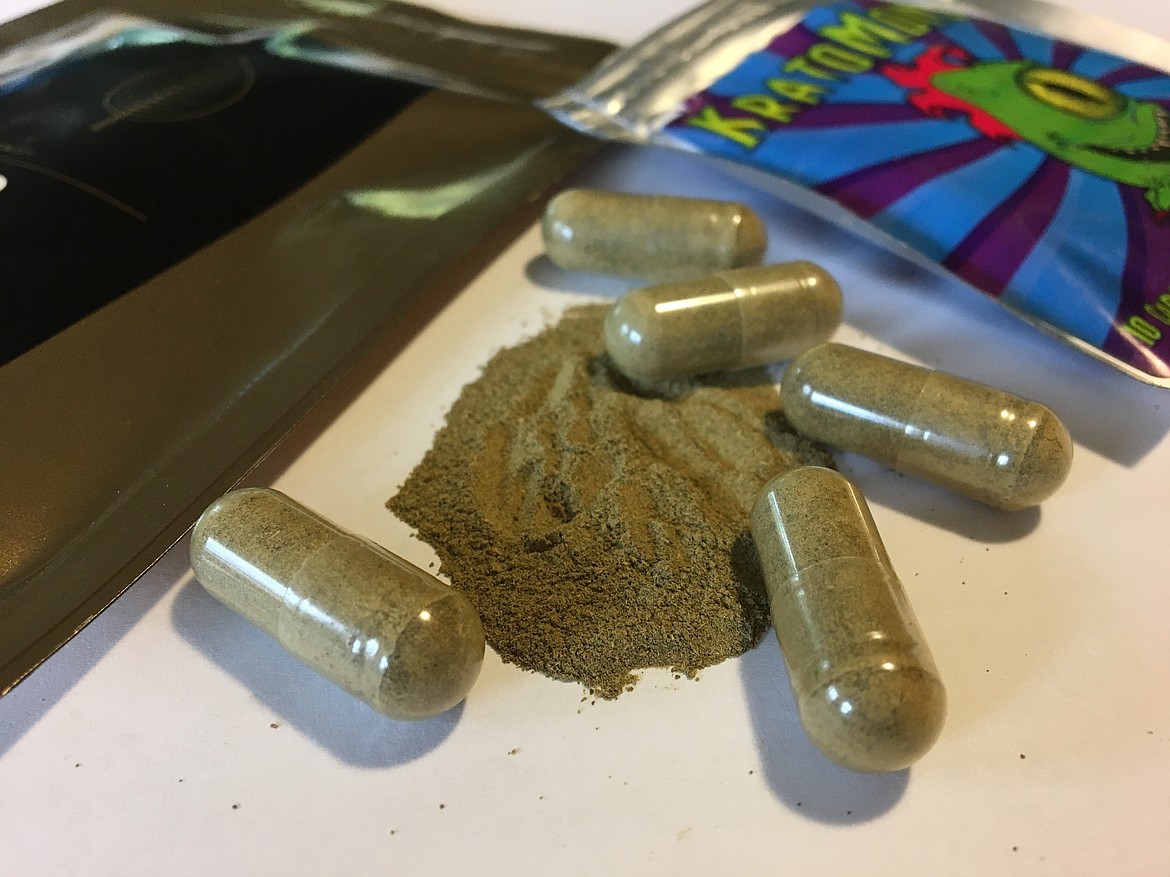
OTHELLO — The city of Othello is weighing whether to outlaw the sale of kratom and concentrated 7‑hydroxymitragynine products, citing rising safety concerns, unregulated access for youth and new federal data showing the compound behaves like a potent opioid.

The proposal, introduced during the April 13 council meeting, would prohibit the sale, advertisement and distribution of any kratom or kratom-derived product within city limits.

Police Chief Aaron Garza told council members the products are already being sold locally in gummies, shots and teas, with no age restrictions.

“There’s no regulation on it. There’s no restrictions on how old you have to be to buy it, or how much you can buy,” Garza said. “That’s a real concern for our youth.”

A potent opioid, FDA says

According to a recent U.S. Food and Drug Administration assessment, included in Othello’s agenda packet, 7‑hydroxymitragynine, or 7‑OH, activates the same neural pathway activated by morphine, fentanyl and oxycodone. 7-OH occurs naturally in trace amounts in the leaves of the kratom plant, but the FDA reports that many products now sold in the U.S. contain “enhanced or concentrated” levels of 7‑OH, often produced synthetically.

According to the FDA, 7-OH produces respiratory depression, physical dependence and opioid‑like withdrawal. It has also been shown to be more potent than morphine in animal studies.

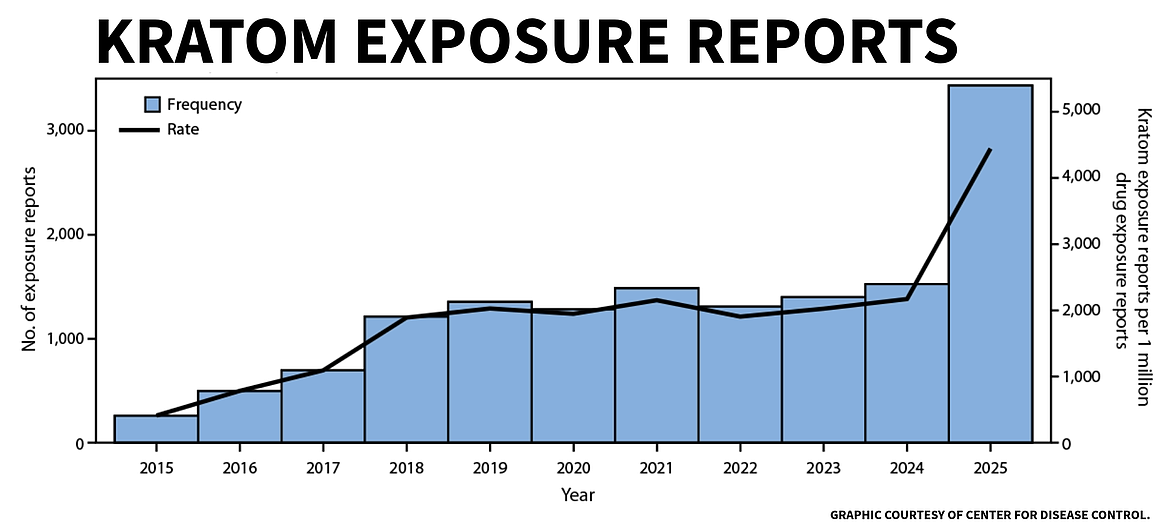
Poison center data shows an increase in human exposure to 7-OH and many products are marketed as candies, shots or gummies which raise the risk of overuse.

“These data sources indicate that 7‑OH is a potent opioid that poses an emerging public health threat,” the FDA report states.

Local advocate

The issue reached Othello after Amy Dalluge, owner of The Green Seed in Moses Lake, began warning regional officials about the rise of 7‑OH products in gas stations and vape shops, often marketed as kratom but far more potent.

Dalluge told the Columbia Basin Herald she has seen the products sold to minors and said even local law enforcement was unaware of what 7‑OH was when she first raised concerns.

“You can be 5 years old or 50 years old, you can walk into a gas station and buy it,” Dalluge said. “There’s no age limit, and people don’t know what they’re taking.”

Dalluge said she spoke at the March 24 Moses Lake City Council meeting, but no action has been taken there.

“I would have liked to see that type of action in Moses Lake,” she said. “But I didn’t get that.”

The City of Warden is also set to have a discussion on the matter at its regularly scheduled council meeting Tuesday.

Bans

Othello officials said they were alarmed by the lack of state or federal regulation. Washington has no age limits or testing requirements for kratom or 7‑OH products and recent bills in Olympia to regulate it failed to advance.

Mayor Ken Johnson told the council he personally knows someone who unintentionally consumed a kratom-derived product and spent three days hospitalized.

“It is a very addictive drug,” Johnson said. “I don’t want to wait around and find out we were late to it.”

Council members also noted that the cities of Spokane, Spokane Valley and Cle Elum have already enacted bans.

Some states have fully banned the substance including Alabama, Arkansas, Connecticut, Indiana, Vermont and Wisconsin. Others have restricted the sale of kratom including Utah and California. Idaho and Michigan both attempted to pass bills to restrict or ban the product, with both bills dying on the legislative floor.

Law enforcement

Grant County Sheriff’s Office Public Information Officer Kyle Foreman said GCSO is aware that 7-OH exists; however, they have not answered any overdose calls where an autopsy showed 7-OH as the cause or contributor to the person’s death. Foreman said he confirmed with coroner’s investigators that they have not dealt with any 7-OH-related overdose deaths.

“What we do recognize is that because 7-OH is synthetically manipulated, scientists don’t fully understand it,” Foreman said. “Most concerning is that part of the drug’s makeup is pure opioid, making it more similar to prescription opioids like morphine, oxycodone, or hydrocodone than it is to being kratom. The best and safest advice we can offer is to avoid ...  new drugs that emerge and are of questionable origin and purpose.”

Washington legislature

Three kratom-related bills died in the Washington State Legislature this year.

House Bill 2291 would have established a kratom consumer protection act. If it had passed, it would have prohibited 7-OH sales to anyone under the age of 21 and required contaminant testing. The bill was prefiled and had one public hearing before the end of the session.

Senate Bill 6287 would have restricted the sale of kratom products containing more than 2% of 7-OH or any synthetic 7-OH derivative. It would have also banned the product for anyone under 21 and required the full list of ingredients to be listed on products. The bill had a public hearing in the Senate Committee on Labor & Commerce with the recommendation to pass. It was referred to the Senate Ways & Means and had one public hearing, with no further action.

Senate Bill 6196 would have placed a 95% tax on kratom products at the distributor level. The funding would go towards youth drug prevention programs. It also would have required distributors to obtain licensing from the Washington Liquor and Cannabis Board. The bill had a public hearing in the Senate Committee on Labor & Commerce with the recommendation to pass. It was then referred to the Senate Ways & Means, where it had no further action.

Debate over urgency

Some council members urged an immediate vote, arguing that publicizing the issue without restricting sales could unintentionally increase experimentation.

“I am completely sympathetic with wanting to get input from the public on this, and in most cases, I would definitely err that way,” Council Member Chris Dorow said. “My concern today is, after we have this meeting, we are now going to be putting a big focus on our community, on Kratom, and there’s going to be a lot of people who are now going to be looking at it. I really do not want to allow a month of experimentation to happen in this city while we get that information.”

Others pushed to allow public comment first.

“I’m also comfortable with tabling this till our next meeting to allow the public to have an opportunity to come and speak during public comment, whether it’s a business owner or whether it’s somebody that uses this every day as a low dose as a stimulant, to allow them to have an opportunity to speak before we move forward with a complete ban,” Council Member Kelli Camp said.

Ultimately, the council delayed a vote until its next meeting, where the ordinance will return for possible adoption.

What the ordinance would do

If approved, Othello’s ordinance would ban the selling of all kratom and kratom‑derived products, including 7‑OH. Further, it would prohibit advertising or distribution of kratom or related products.

For violators, there will be a $250 per infraction, with each day counting as a separate violation. Repeat offenses would allow the city to revoke business licenses.

The ordinance cites FDA and DEA findings that kratom and 7‑OH pose risks of addiction, psychosis, cardiovascular issues and overdose, especially in unregulated markets where potency varies widely.

Chain reaction

Dalluge said she hopes Othello’s action will push other cities to follow.

“This is bigger than anybody realizes,” Dalluge said. “It’s already in our schools. Kids are buying it. It’s going to start really hurting people, fast, if we don’t act.”

The Othello City Council is expected to revisit the ordinance at its next regular meeting April 27 at 6 p.m.