
A sea of color
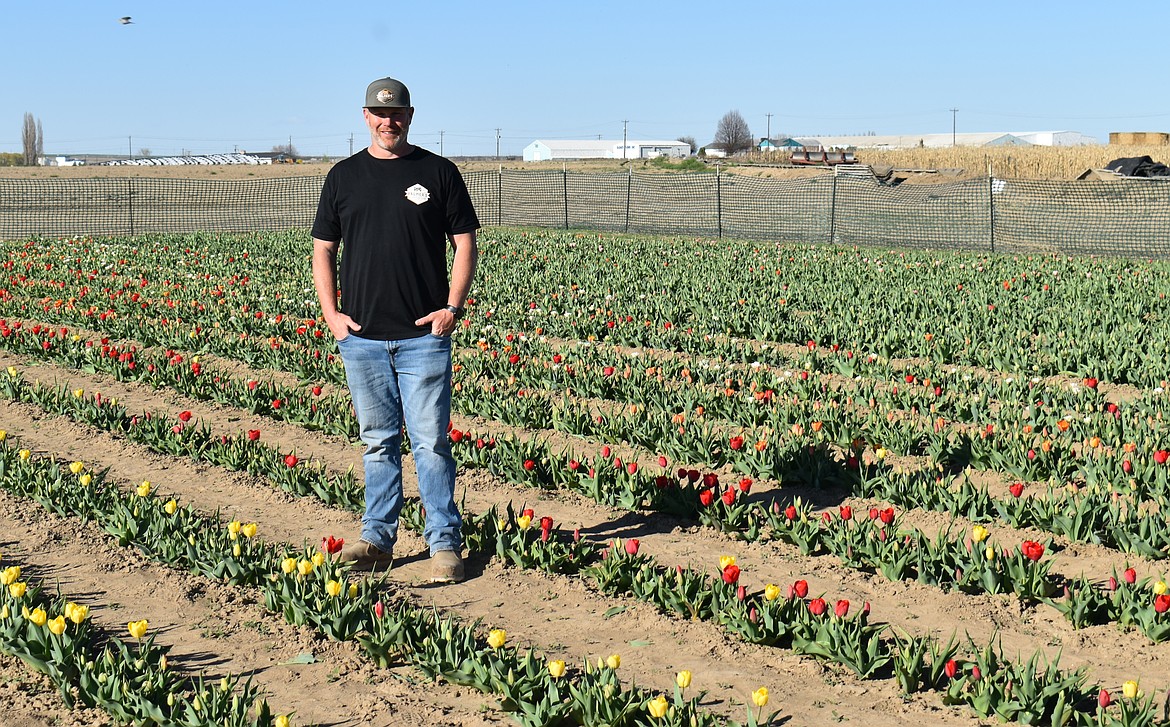
Palmer’s Adventure Farm owner Shane Palmer stands in a field of tulips planted for the farm’s first annual Tulip Festival. Palmer and his family have planted around 300,000 tulips in 36 different varieties.
JOEL MARTIN/COLUMBIA BASIN HERALD
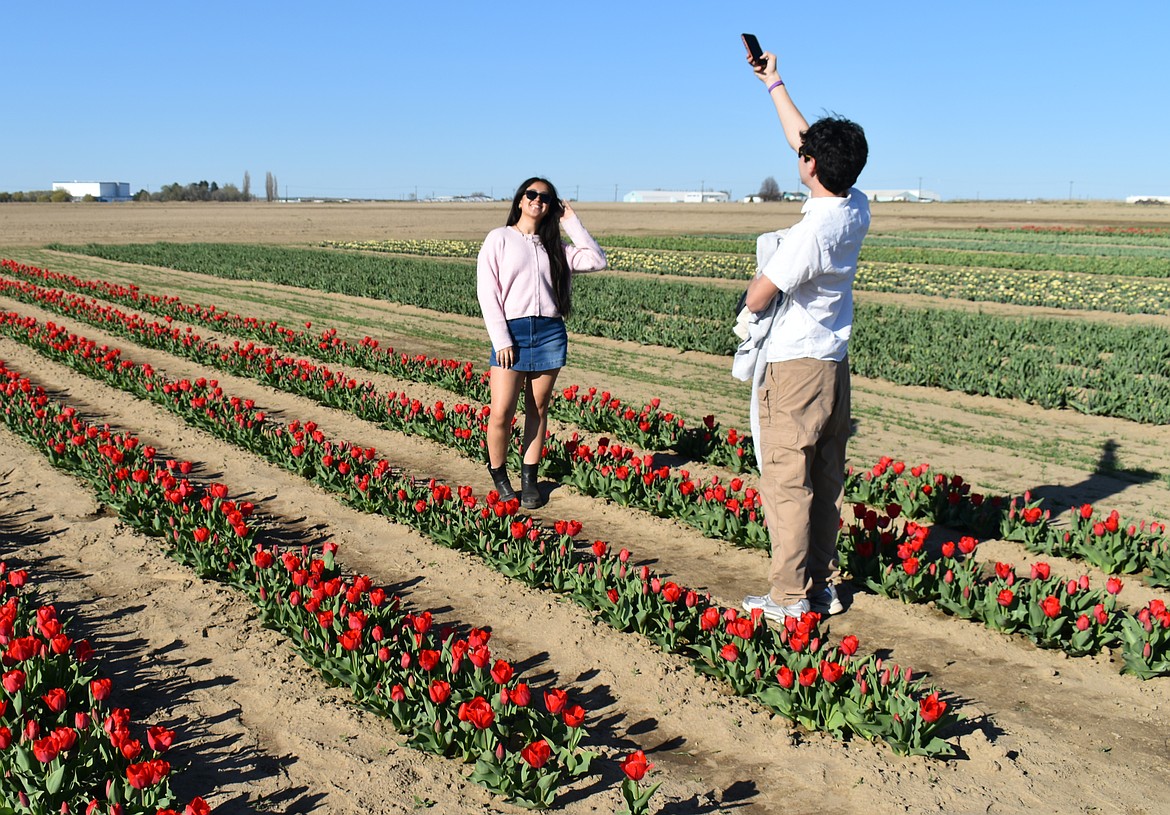
Jaelin Mendoza of Royal City poses for a photo taken by Kevin Ramirez, also of Royal City, between rows of red Van Eijk tulips at Palmer's Adventure Farm Tuesday.
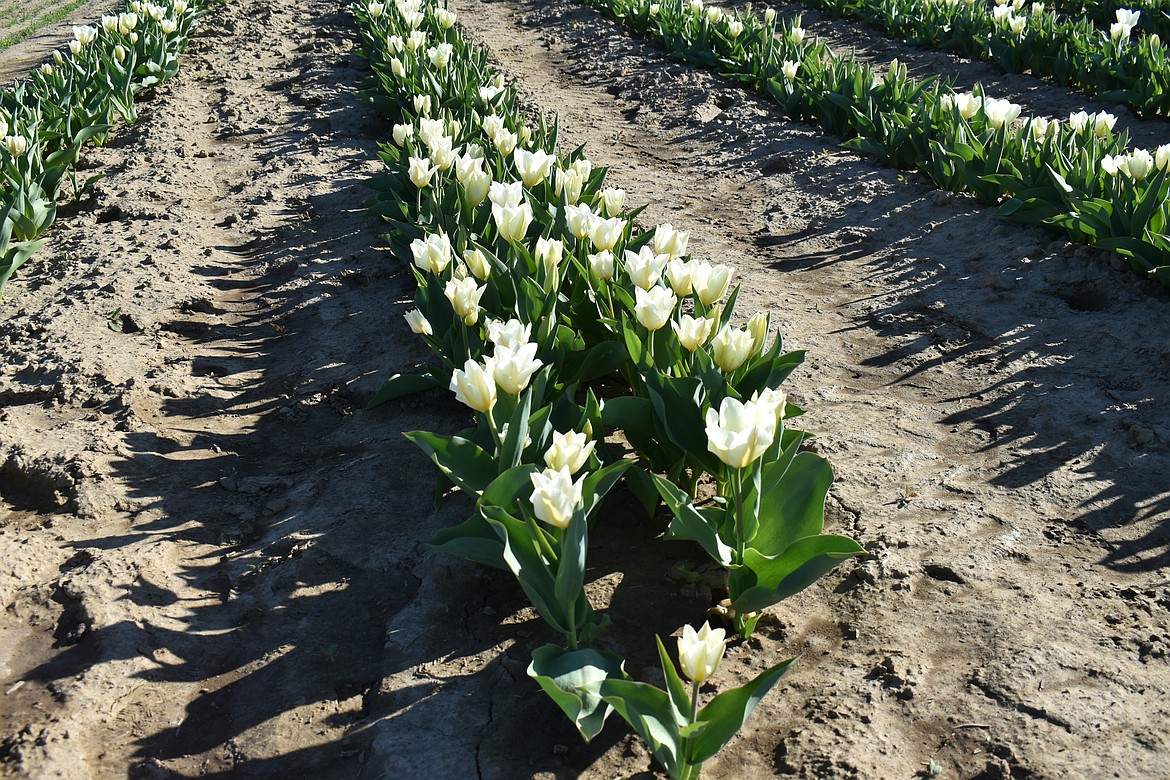
The Purissima tulip is one of the earliest-blooming varieties.
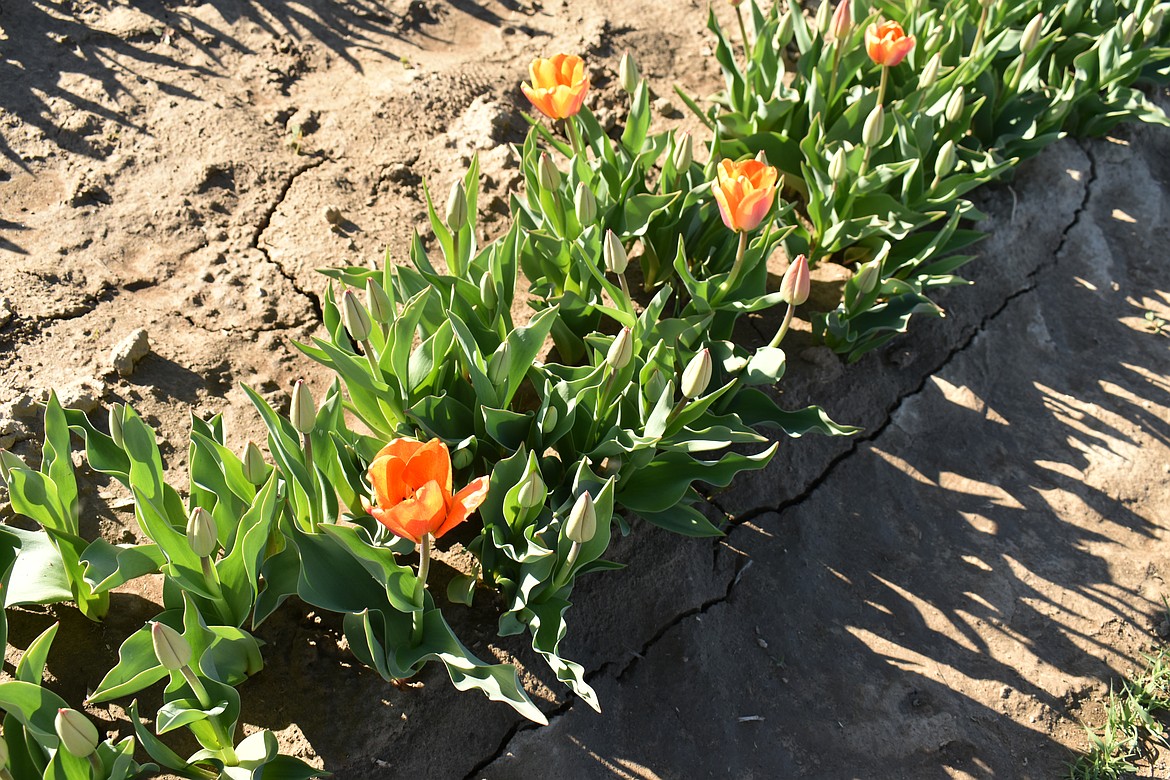
The Apeldoorn tulip blooms with red streaks through the yellow petals, giving the flower a warm, even fiery look.
MOSES LAKE — Palmer’s Adventure Farm has begun its first annual Inland Northwest Tulip Fest.
“We've got 36 different varieties,” said Shane Palmer, who owns Palmer’s Adventure Farm, about five miles east of Moses Lake, with his brother Kyle Palmer. “Some of them are early (blooming) varieties, some are (mid-season) and some are late. “
The early-blooming varieties are already beginning to show bright, full flowers, and should be in full bloom this weekend, Palmer said. The last of them should begin to bloom in about 10 days.
“We're hoping it lasts for the next three weekends throughout April,” Palmer said.
There are more than 3,000 registered tulip varieties from about 150 species, according to the Michigan State University Extension. Tulips were first cultivated in central Asia as early as A.D. 1000, according to the WSU Extension; the name comes from the Turkish word for turban. They made their way to the Netherlands in the 17th century, becoming so popular that investors snapped them up and inflated the price beyond what a skilled worker could earn in a year. This led to the “Tulip Bubble” crash of 1637.
Tulips are best planted in October or November, according to Washington State University. When planting them, the soil should be cultivated to a depth of about 10 inches, and the bulbs should be planted 6-8 inches deep and about 4 inches apart, the WSU Extension advises. Don’t overwater them; wet soil can promote fungus and disease and can suffocate the bulbs. At the same time, if they’re dry, they’ll bloom prematurely and not grow as tall, Palmer said.
“If you keep them happy and wet, they’ll get taller and bloom slower with a better bloom,” he said.
The Palmers imported all their bulbs, about 300,000 of them, from the Netherlands, Palmer said. For gardeners shopping closer to home, the Iowa State University Extension recommends buying only firm, solid bulbs. Steer clear of shriveled or lightweight bulbs, or bulbs with mold or soft spots. The bigger the bulb, the better the display.
If you’re growing tulips outdoors, be aware of what’s in your soil. Palmer said when he and his brother went to plant their bulbs, they got a surprise.
“We had to fumigate for nematodes,” he said. “We weren’t ready for that. Luckily, we caught it, but we did a sample of the soil and found microscopic nematodes, which are a problem for potatoes (and also) for bulbs.”
Besides the tulips being grown for show, Palmer’s Adventure Farm has a field set aside for U-pick sales. That’s where this year’s show tulips will be planted next year, Palmer said.
“(We’ll) mow the plant off and then dig the bulb up with a digger, collect the bulbs, store them and then plant them for a bigger U-pick area next year,” he said. “You don’t want to use those bulbs again for the show. We’re told that if you leave them here or dig them up and replant them, they’re not going to come up as full and vibrant and big-bloomed as the ones from Holland.”
Palmer’s Adventure Farm is located at 576 Road O Northeast, just north of I-90 east of Moses Lake. The Inland Northwest Tulip Fest is open 11 a.m.-7:30 p.m. Saturday and Sunday as long as the tulips continue to bloom, estimated to be through late April.
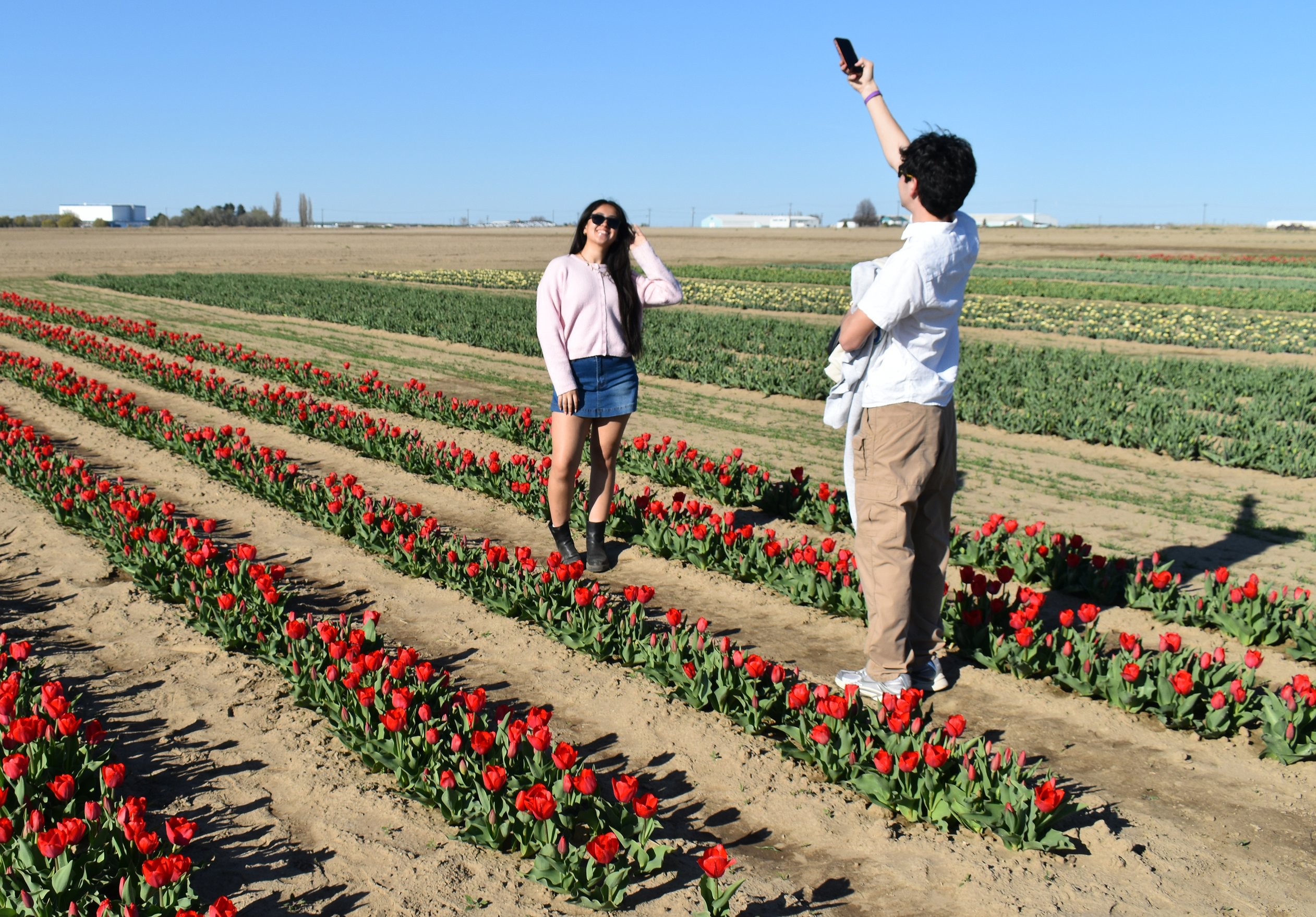 Jaelin Mendoza of Royal City poses for a photo taken by Kevin Ramirez, also of Royal City, between rows of red Van Eijk tulips at Palmer's Adventure Farm Tuesday.
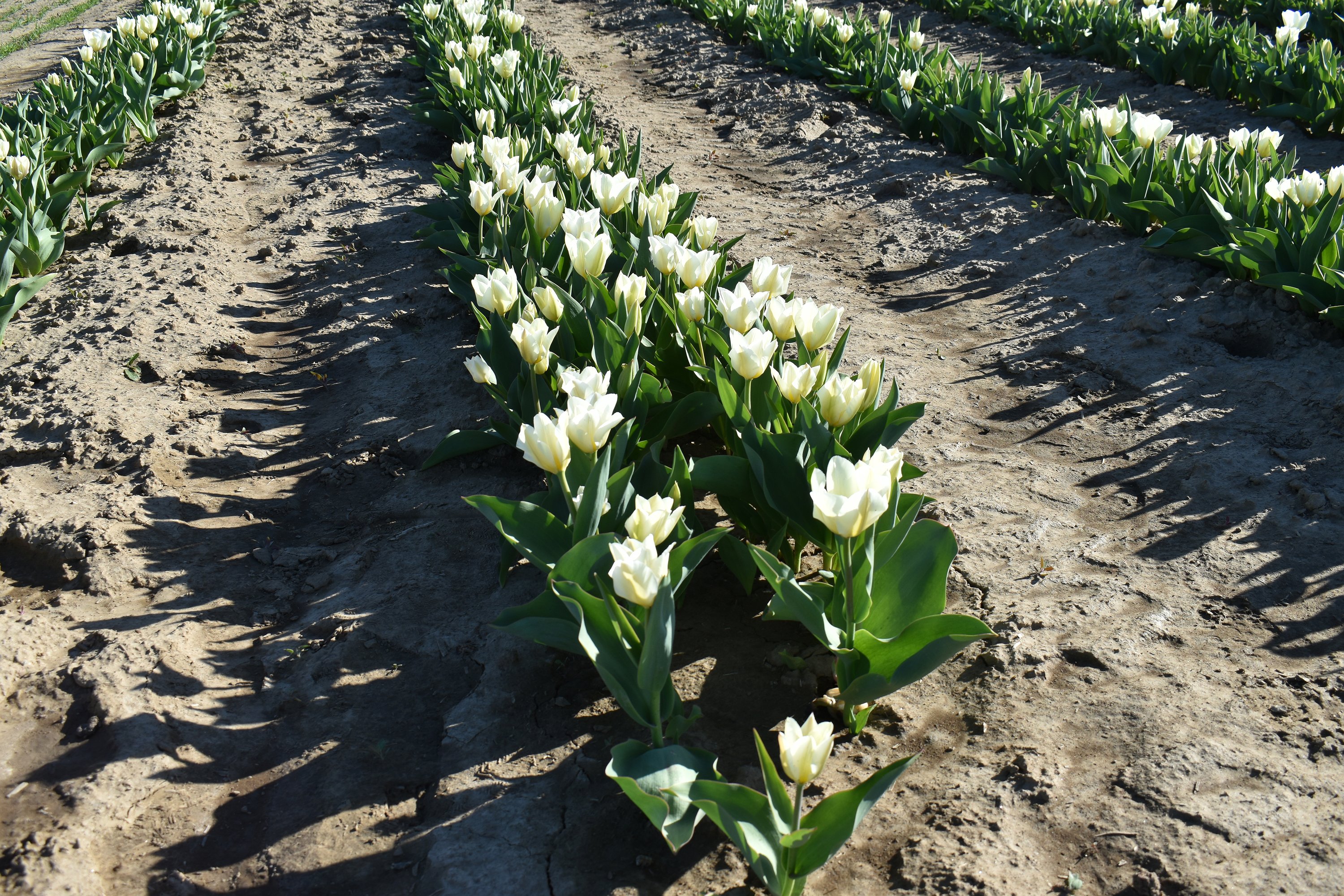 The Purissima tulip is one of the earliest-blooming varieties.
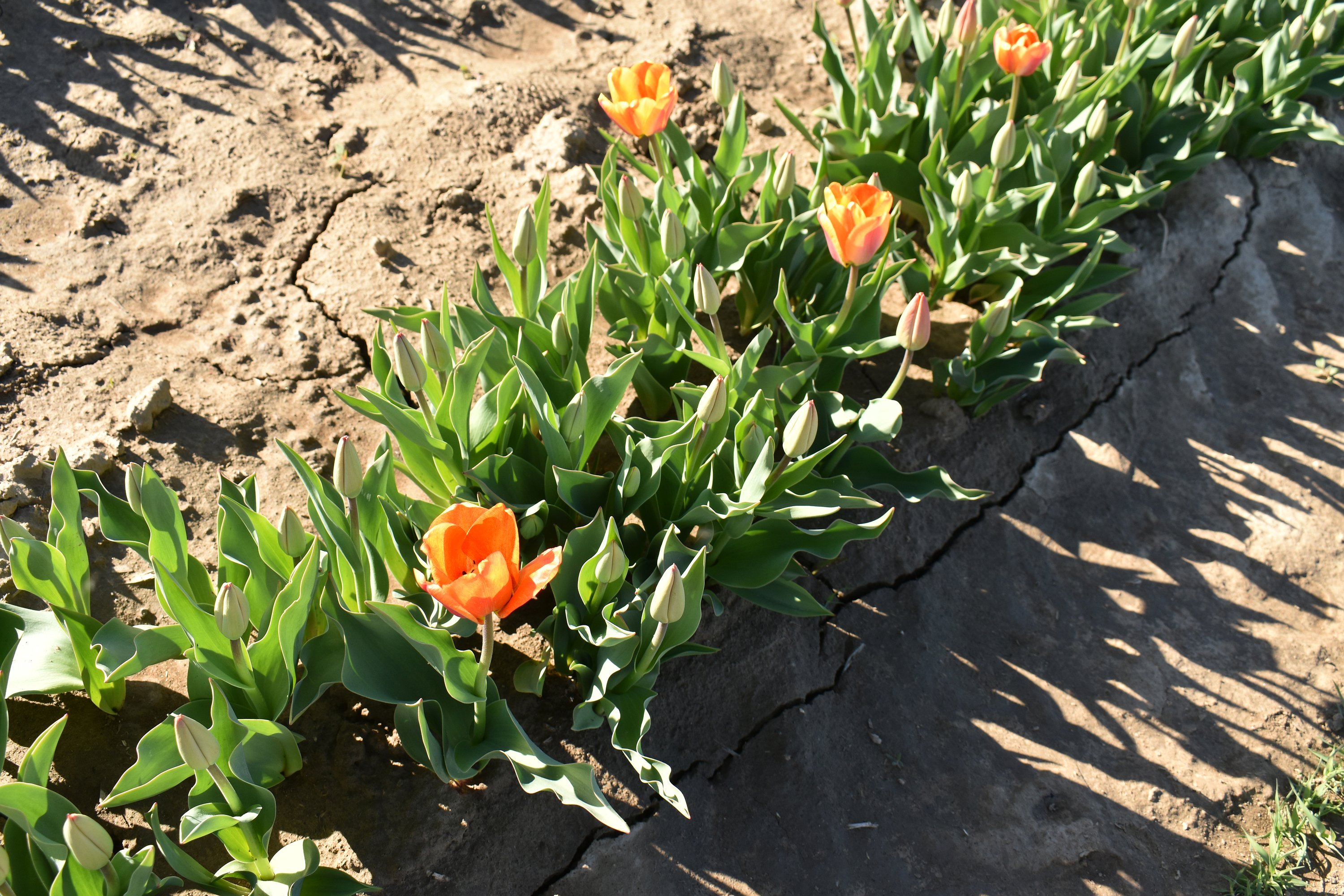 The Apeldoorn tulip blooms with red streaks through the yellow petals, giving the flower a warm, even fiery look.