
Cost of Hansen Road bridge to impact on other WSDOT projects
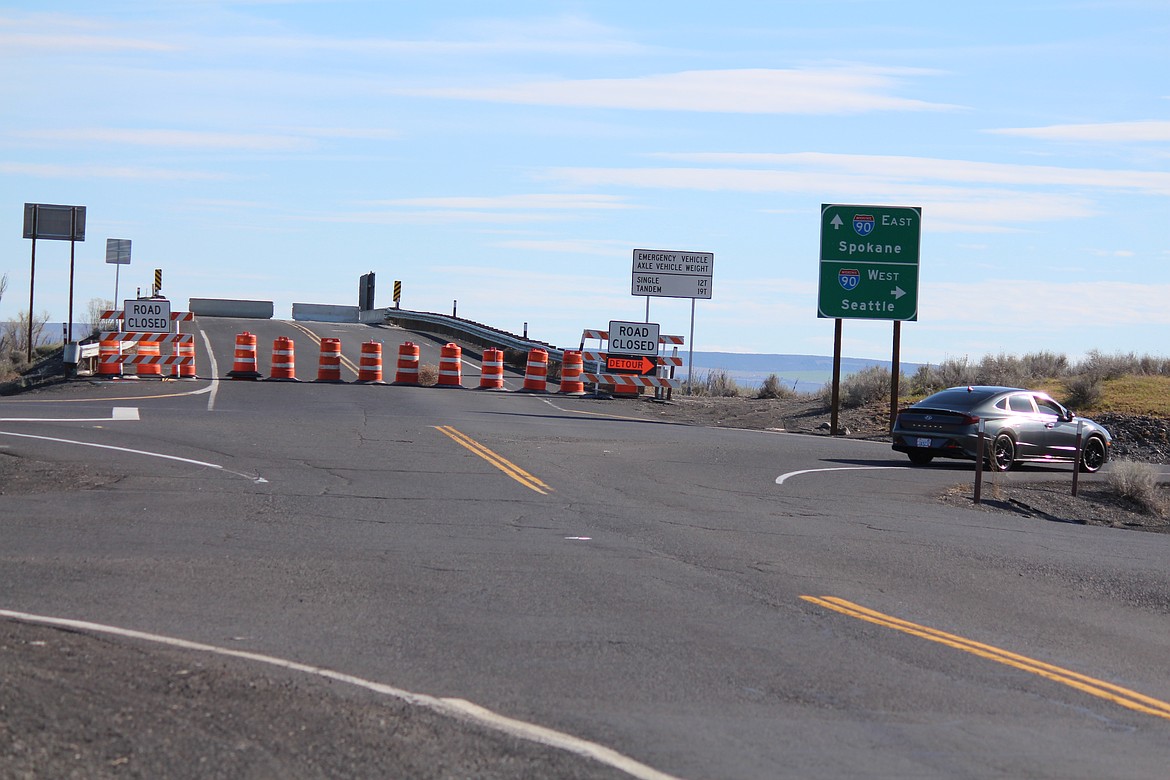

MOSES LAKE — Closing the overpass on Hansen Road was inconvenient to a lot of Moses Lake residents and travelers passing through town, not to mention the Washington Department of Transportation. Chris Keifenheim, North Central Regional administrator, estimated the cost would be $15 to $17 million to demolish the old bridge and build a new one, coming at a time when most of DOT’s money for repairs in the 2025-27 budget was already allocated.
Summer Derrey, public information officer for DOT’s South Central region, said Hansen Road could have an impact on roadwork statewide.
“The (Hansen Road) project pulls funding from future preservation projects,” she wrote in response to an email from the Columbia Basin Herald. “Some projects get delayed on their own due to unforeseen problems, so WSDOT will evaluate where we are on spending towards the end of the biennium to possibly slow down current projects or delay starting new projects.”
The overpass was closed in mid-January when an inspection uncovered significant damage, not only to the road surface but also to the bridge girders. It’s been closed since. Department of Transportation officials have opted to replace it rather than repair the existing bridge. Originally Keifenheim estimated replacing the bridge would take between 15 months to two years, but DOT officials decided on an accelerated construction schedule.
The contract is being advertised under emergency procedures, which allows DOT to shorten the design process and bidding period, he said.
“We're going to go out with three separate contracts to try and (reduce) the schedule a little bit. We'll have a contract out there to demolish the existing bridge,” Keifenheim said March 18. “We have another one to procure the girders, which are the long (span) under I-90. Those are what hold up the bridge deck. That's a critical timeline to build those in order to build the bridge, so we're going to do that separately. Then a final contract to erect the girders and the rest of the bridge.”
The first step, Derrey said, will be getting rid of the old bridge.
“The project will demolish the existing bridge, including removal of the superstructure, pier columns and foundations,” she said.
Keifenheim said that work is scheduled to start in late June or early July.
Derrey said the design of the new bridge could be substantially different than the existing bridge.
“The existing bridge sits on spread footing foundations, and is a four-span bridge, meaning there are three sets of columns and both bridge ends. The new bridge is anticipated to have different foundations and two spans with a set of columns in the median. The foundation type is anticipated to be drilled shafts. The advantage of the new bridge is that two columns will be gone, which will be fewer objects in the clear zone,” Derrey said.
Keifenheim said the design has some other advantages.
“That allows it to be a little more cost-effective and also a little bit easier to maintain,” he said.
The new structure, Derrey said, is going to be built with longevity in mind.
“The new bridge will be built to current design standards,” she said. “The current bridge lasted 68 years; the new bridge will have a lifespan of 75 years.”
 COURTESY PHOTO/GOOGLE MAPS/WASHINGTON DEPARTMENT OF TRANSPORTATION