
Wahluke showcases AVID program successes
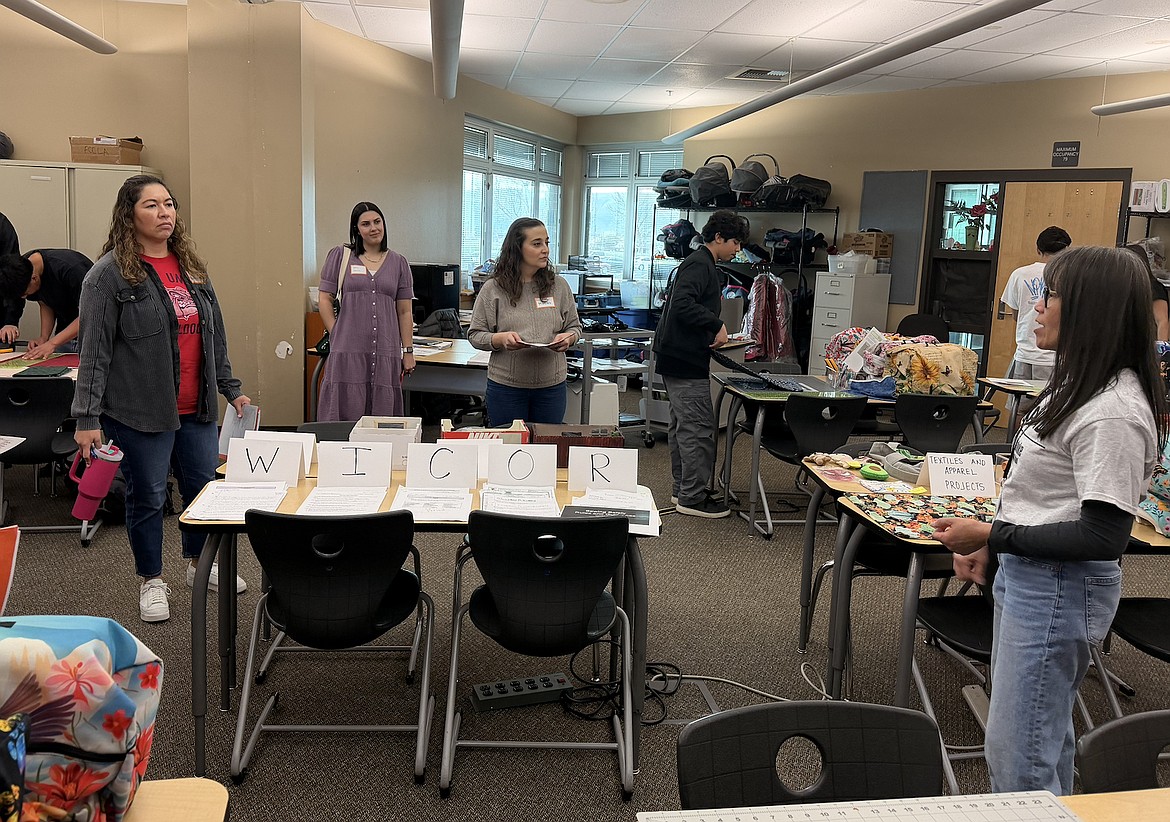
Wahluke High School held a showcase event March 19 to show how the AVID, or Advancement Via Individual Education, program has been implemented at the school.
COURTESY PHOTO/WAHLUKE HIGH SCHOOL
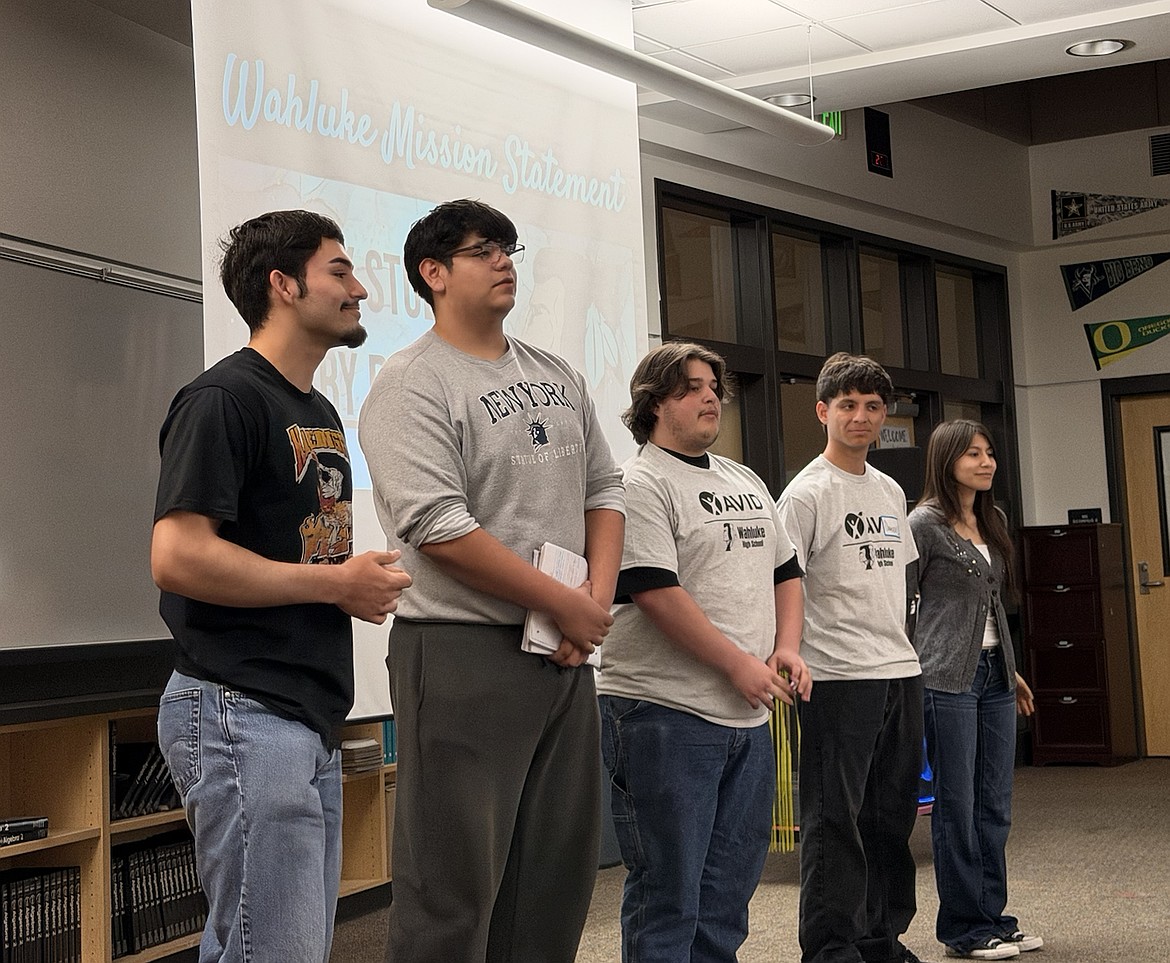
Wahluke High School students share their personal experiences with the AVID program at a district showcase March 19
MATTAWA — Wahluke High School hosted the district’s first-ever Advancement Via Individual Education, or AVID, showcase March 19, inviting the community and neighboring school districts to see the difference the program has made.
“It's a program that ... works with students to help them become more college- and career-ready,” said WHS Principal Cody Marlow.
Wahluke has implemented the AVID program in two ways, Marlow said. First, it’s an elective class that students can take from their freshman year all the way through graduation that equips them with the tools to succeed after high school.
“They're working on writing, they're working on reading, they're working on organization, they're working on inquiry skills, and they're constantly doing those types of activities,” Marlow said. “A lot of it is based around college and career exploration.”
At the same time, the AVID approach is applied to the whole school, Marlow said, focusing on the AVID program’s core principals of WICOR – writing, inquiry, collaboration, organization and reading – and applying them to the students’ regular class work.
“Writing, inquiry, collaboration, organization and reading; That is literally everything,” Marlow said “One of the biggest (aspects) that we have focused on here is honoring the work of the career and tech ed classrooms like business and construction and welding. They're still doing AVID strategies. They're still reading. It might be technical reading, but it's still reading. It might be technical writing, but it's still writing. It looks different in an ag class or a welding class versus an English class. It looks different in a math class than it does in a business class … (Students) may not have even known it but putting a name to what they're doing has been super helpful.”
Staff from across the district, members of the Mattawa community and representatives from school districts as far away as Walla Walla and Sunnyside came to see how the AVID program had affected learning at Wahluke, Marlow said. Mike Gobel, a representative of the national AVID program, was also in attendance.
The showcase began with an overview of how the AVID program is implemented in Wahluke High School, the district wrote in a release to the Columbia Basin Herald, including its history, student demographics, ongoing professional learning and alignment with AVID’s nationally recognized College and Career Readiness Framework. Then the guests visited classrooms to see the VID strategies in action, in both elective and core classes. That was followed by a “World Cafe” experience, with discussions facilitated by students, teachers and administrators. The finale was a panel of five WHS students sharing their personal stories of how AVID had improved their educational experience.
“One of the most powerful aspects of the Showcase was the district and school’s clear emphasis on student voice,” Gobel wrote in an email to Marlow the day after the event. “This priority was not only articulated but authentically brought to life throughout the day – creating strong alignment between vision and practice. That consistency is a hallmark of effective leadership and a key reason the Showcase resonated so strongly with participants.”
Marlow took the reins seven years ago as principal, he said, and one of his first goals was to expand AVID from a single elective into a schoolwide program.
“This is something we've been dedicated to for a long time,” Marlow said. “We're starting to see the fruits of our labor, commitment and dedication. It's super powerful to see and hear the messages that the kids have … and to see the work being done across the building, in every classroom.”
AVID is used in school districts in 25 of the 39 counties of Washington, according to the program’s website, with more than 37,000 students at more than 300 schools. Wahluke is smaller and more rural than many of the schools using the program in the region, Marlow said.
“One of the big shining points was, we are an extremely rural district,” he said. “We have put the time and effort into this to make it what it currently is with really limited resources. We don't have colleges (or) big businesses or anything else nearby. That's one of the things that I think really stands out for us is we're doing all this great work with our kids and our teachers and we're a really small community.”
 Wahluke High School students share their personal experiences with the AVID program at a district showcase March 19