
Grant Transit Authority to provide paratransit service for qualifying riders
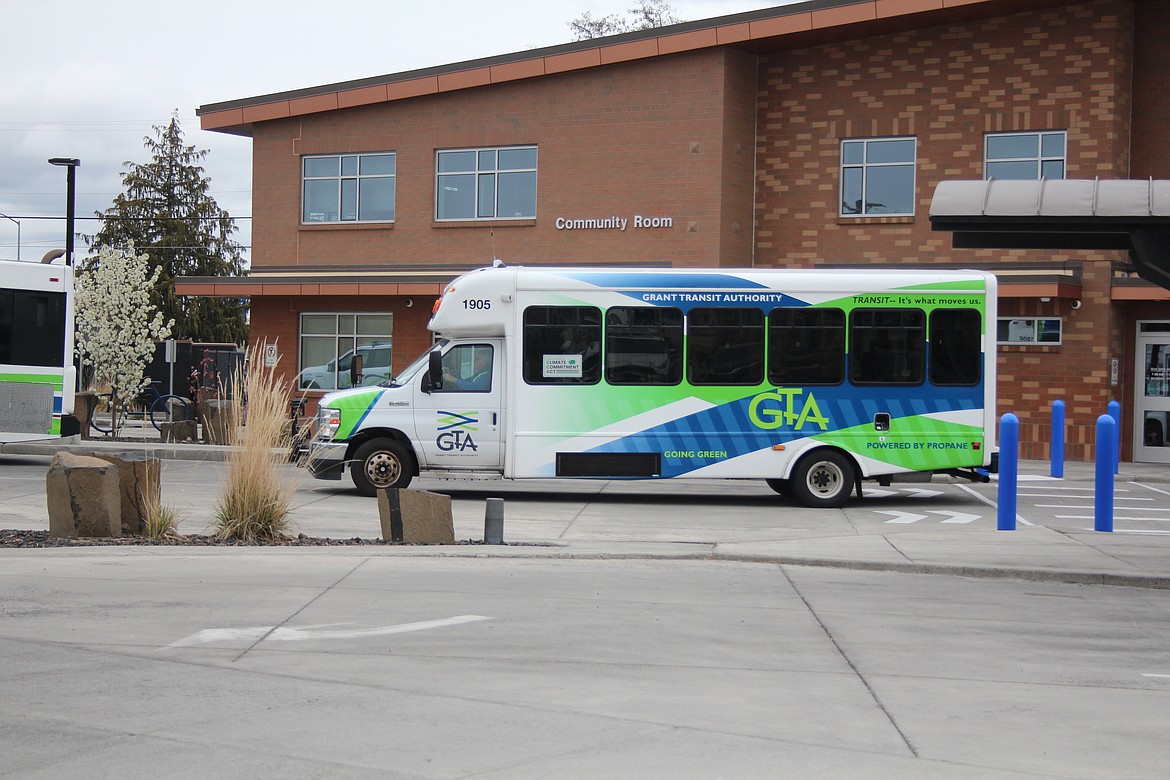
The Grant Transit Authority will start providing curb-to-curb “paratransit access” service for qualifying bus riders in July, after the expiration of contract for the service with People for People.
CHERYL SCHWEIZER/COLUMBIA BASIN HERALD
EPHRATA — The Grant Transit Authority will be providing curb-to-curb bus service for qualifying riders beginning July 1. Previously, GTA had a contract with People for People for that bus service.
“We decided not to renew or update (the contract),” said GTA General Manager Eric Loomis. “We have the ability to bring it in-house.”
The transit authority is hiring drivers and buying seven new buses to provide the service, he said.
Madelyn Carlson, People for People chief executive officer, said people who use the agency’s paratransit access service shouldn’t see much change, if any.
“(Riders) just will be calling a different number,” she said.
People for People will continue to provide paratransit service for residents of Adams and Lincoln counties, Carlson said.
Loomis said paratransit service is available to people who have access to a regular bus route within three-quarters of a mile, but who have trouble getting to the bus stop. People who qualify for the service are picked up and driven to their destination, then back home.
Prospective riders must meet a set of qualifications and fill out an application. Trips must be scheduled at least a day in advance. Loomis said people can schedule a trip up to two weeks in advance.
People for People offers regular bus route service to and from Grant and Adams counties, offering access to Wenatchee and Tri-Cities. Some are offered Monday through Friday, others on specific weekdays and others by reservation. Carlson said all those services will continue.
“There isn’t going to be any loss in service,” she said.
A report submitted to GTA’s board of directors in March said the People for People service made 2,870 trips in February, with 5,887 for the first two months of the year. In February, about 68% of riders were ambulatory, with about 32% requiring lift assistance.
About 78% of the trips were in or around Moses Lake. Ephrata accounted for about 14% of the trips, and Quincy and George for about 5%.
Riders used the bus mostly for medical appointments (34%) or conducting personal business (34%), like visiting the bank or grocery shopping. People also used the bus for a ride to work, school or training. About 11% of the trips in February were for dialysis appointments.