
Local Job Corps students keep wildfire crews functioning
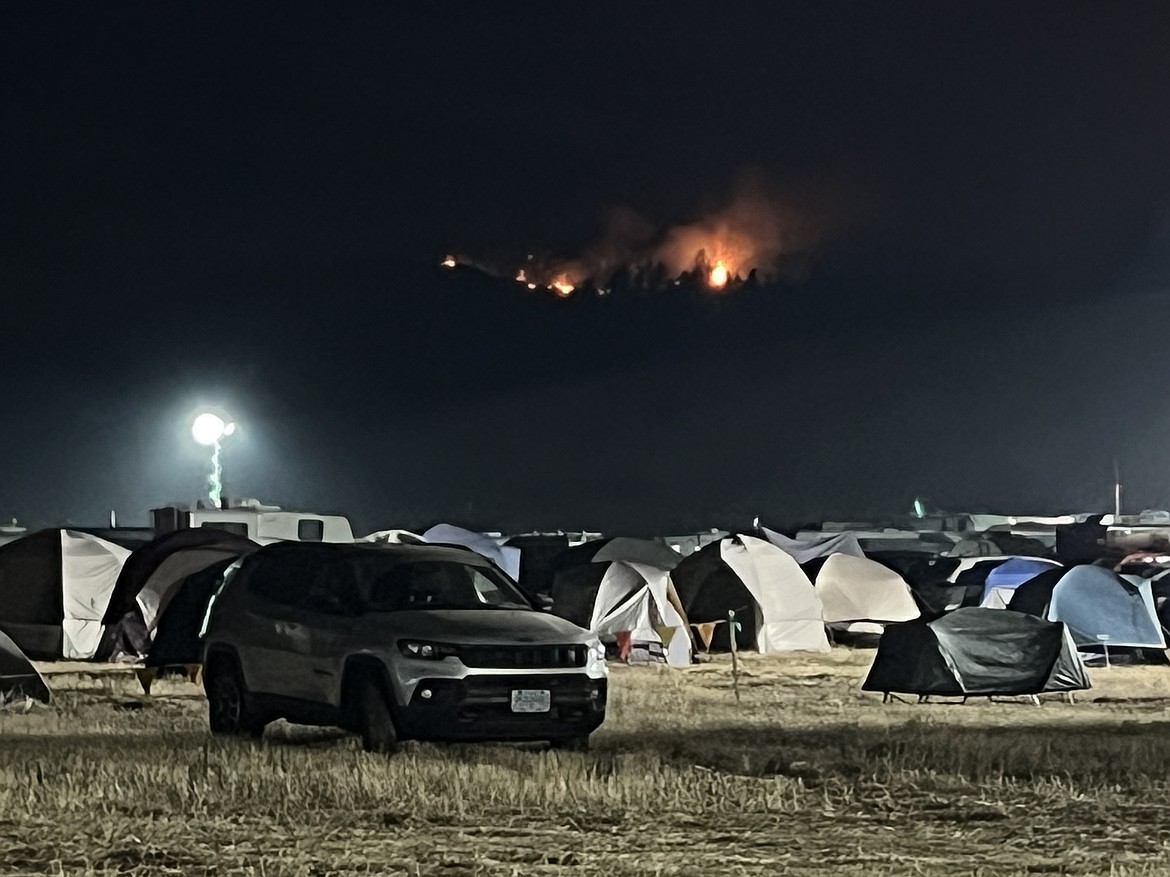
A fire blazed in the mountains behind a fire camp. Columbia Basin Job Corps students are a vital part of keeping those camps running.
COURTESY PHOTO/COLUMBIA BASIN JOB CORPS CCC
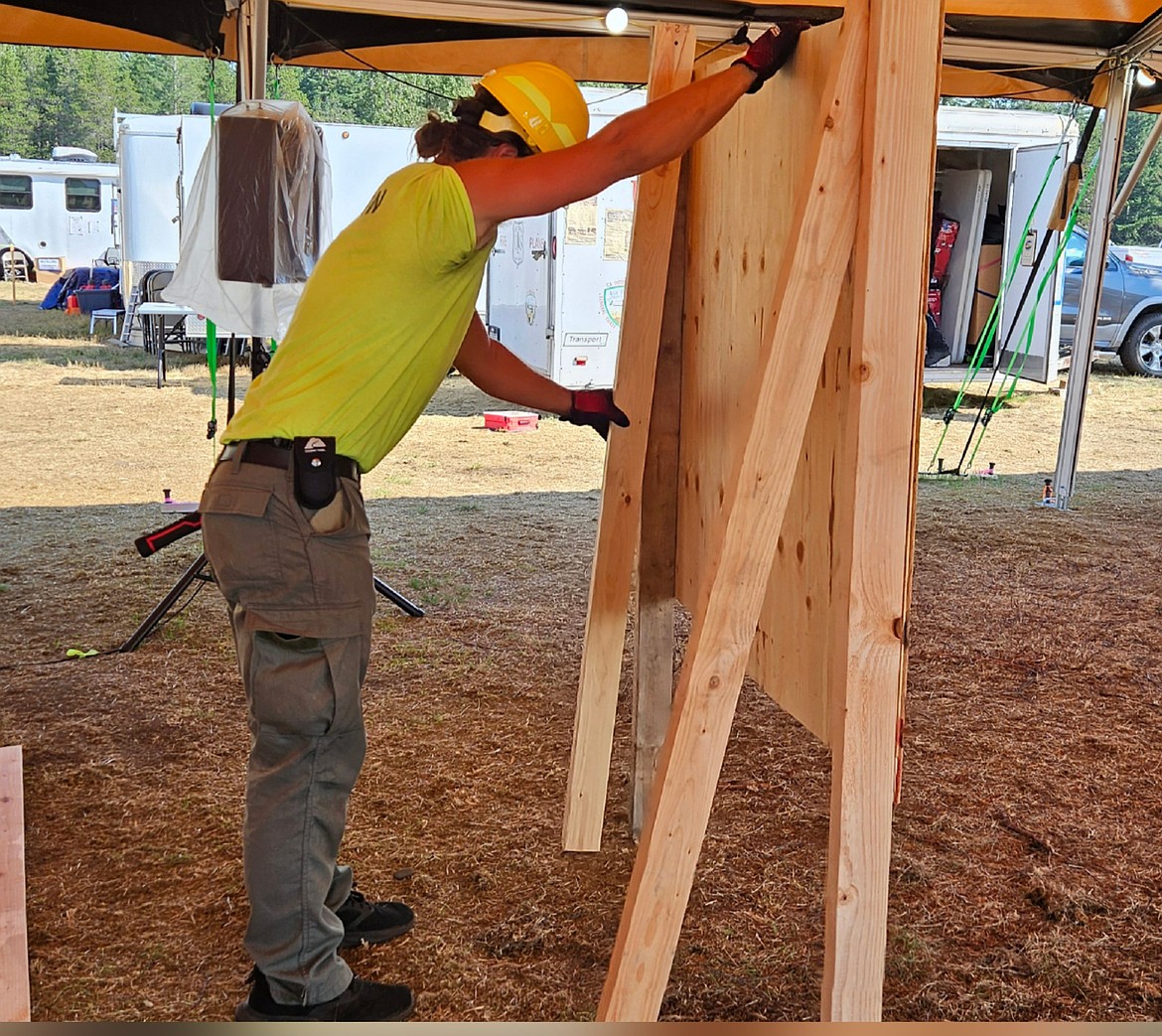
A Columbia Basin Job Corps student builds a signboard at the fire camp near the Bear Gulch Fire in the Olympic National Forest.
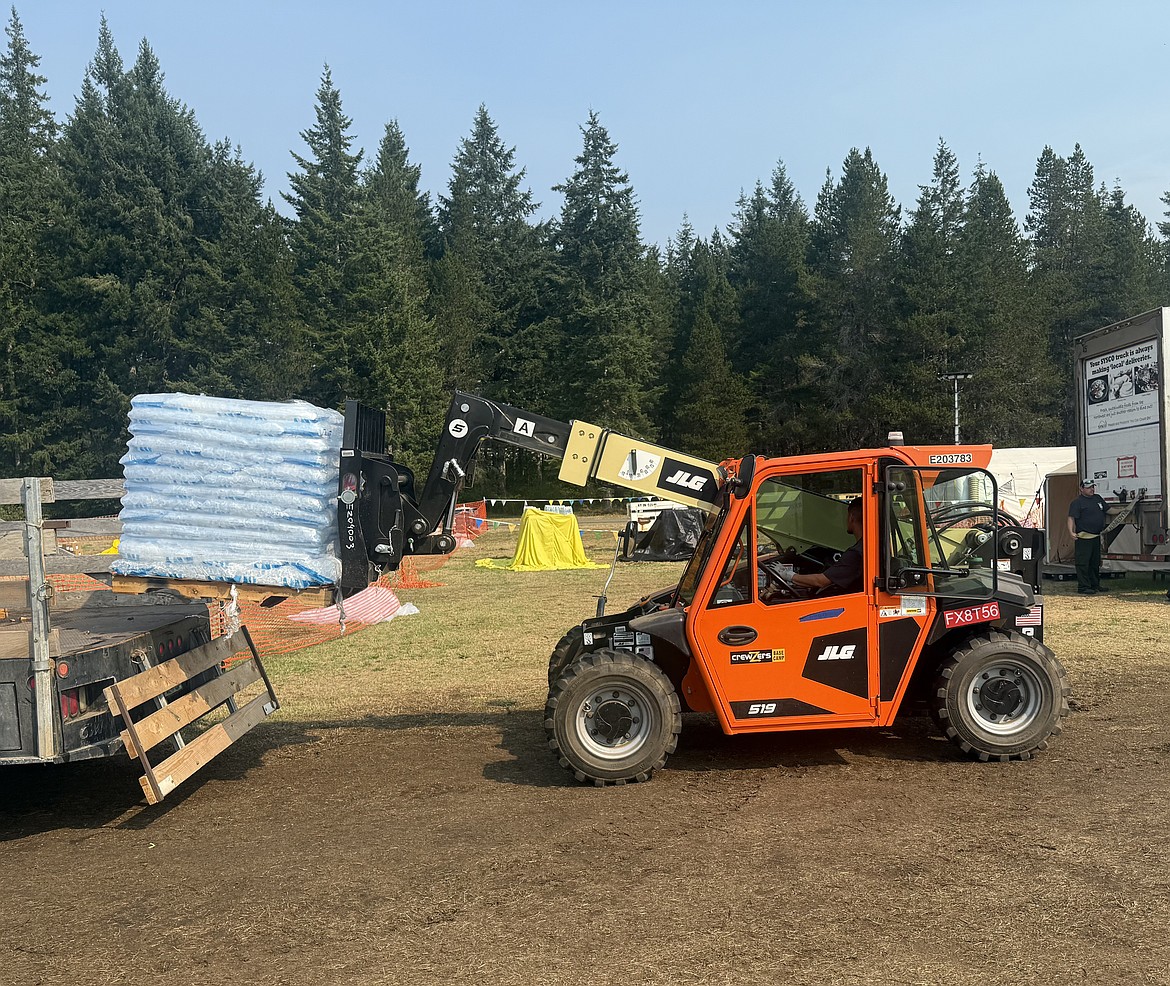
A Columbia Basin Job Corps student puts his forklift training to good use at a fire camp.
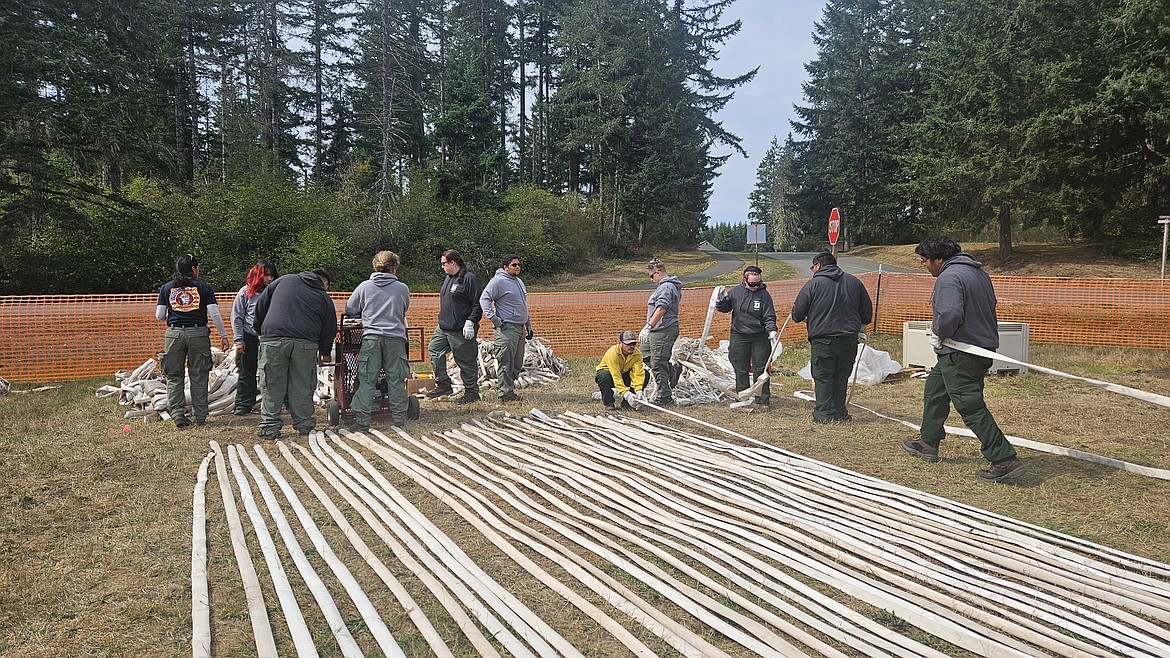
Job Corps students check and roll hoses for fire crews to use on a Washington wildfire.
MOSES LAKE — Firefighters are battling fires across Washington – 20 of them Tuesday morning – but they’re not doing it alone. Back at the fire camp, at a safe distance from the fire, Job Corps students are working to ensure the firefighters have everything they need.
“They're the ones who, like, keep everything running,” said Columbia Basin Job Corps CCC Liaison Specialist Susan Mann. “They order the supplies as they know what's needed for that fire. They organize them (and) get them out into the vehicles to get them out to the fire lines. They make sure that hydration and food and all of that is taken out to the fire line. Those firefighters don't often get to come back to camp, so those supplies are taken out to them.”
The U.S. Forest Service operates 24 Job Corps campuses nationwide, Mann said, one of which is the Columbia Basin center. Twelve of those offer training in forestry conservation and firefighting and five, including Columbia Basin, offer advanced fire management, according to the Job Corps website. The Columbia Basin center’s advanced fire management program welcomed its first students in April 2024. That program takes about a year to complete, and its graduates qualify as full-fledged firefighters, some of whom are out on the fire lines now.
In addition to that program, Mann said, students on other career tracks can opt to receive training in fire camp support services, as sort of an extracurricular activity. That’s offered at all 24 USFS Job Corps centers, according to the Forest Service website. Those are the ones operating the fire camps, Mann said, in crews of eight to 10 under the supervision of a specially-trained center staff member. At any given time, Columbia Basin Job Corps Center has at least one camp crew out, and often as many as three.
Running the camps is more than just keeping the coffee hot for the returning crews, Mann said. The students and staff are putting in 16-hour days for 14 days at a time. CBJCC has provided nearly 18,000 hours of fire camp support since June.
“There are no days off,” Mann said. “When they come back they’ll get three days of R-and-R and then they’re eligible to go back out again … Lots of students and lots of staff do it multiple times. In fact, I think almost all of our staff that are qualified to go out with students have done it at least twice since the fire season started.”
Besides getting credit for the things they’re learning at fire camp, the students are paid for their time as emergency hires through the Forest Service, Mann said. They also gain some benefits that are less tangible but more permanent.
“(They’re) learning a work ethic,” Mann said. “These students really, really get a taste of hard work when they go out on these fires. It's not training, it's not school anymore. It's the real world, and it's the real world in a very aggressive way.”
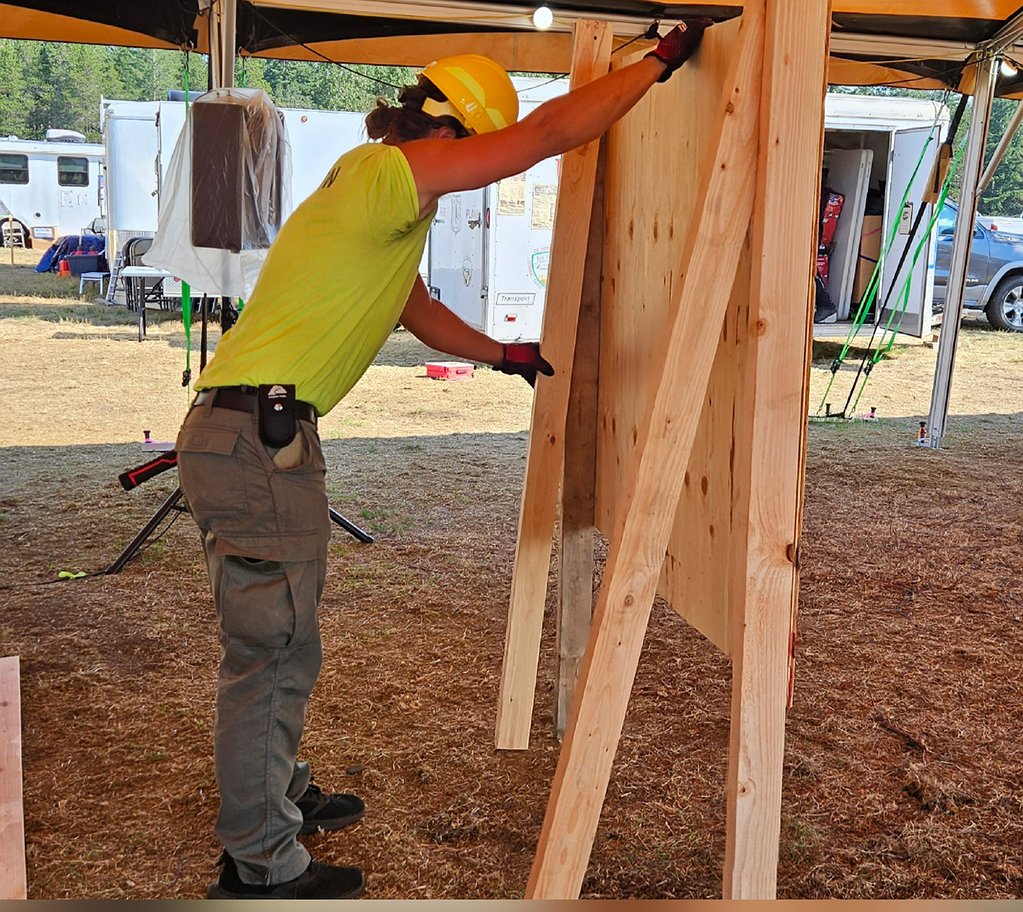 A Columbia Basin Job Corps student builds a signboard at the fire camp near the Bear Gulch Fire in the Olympic National Forest.
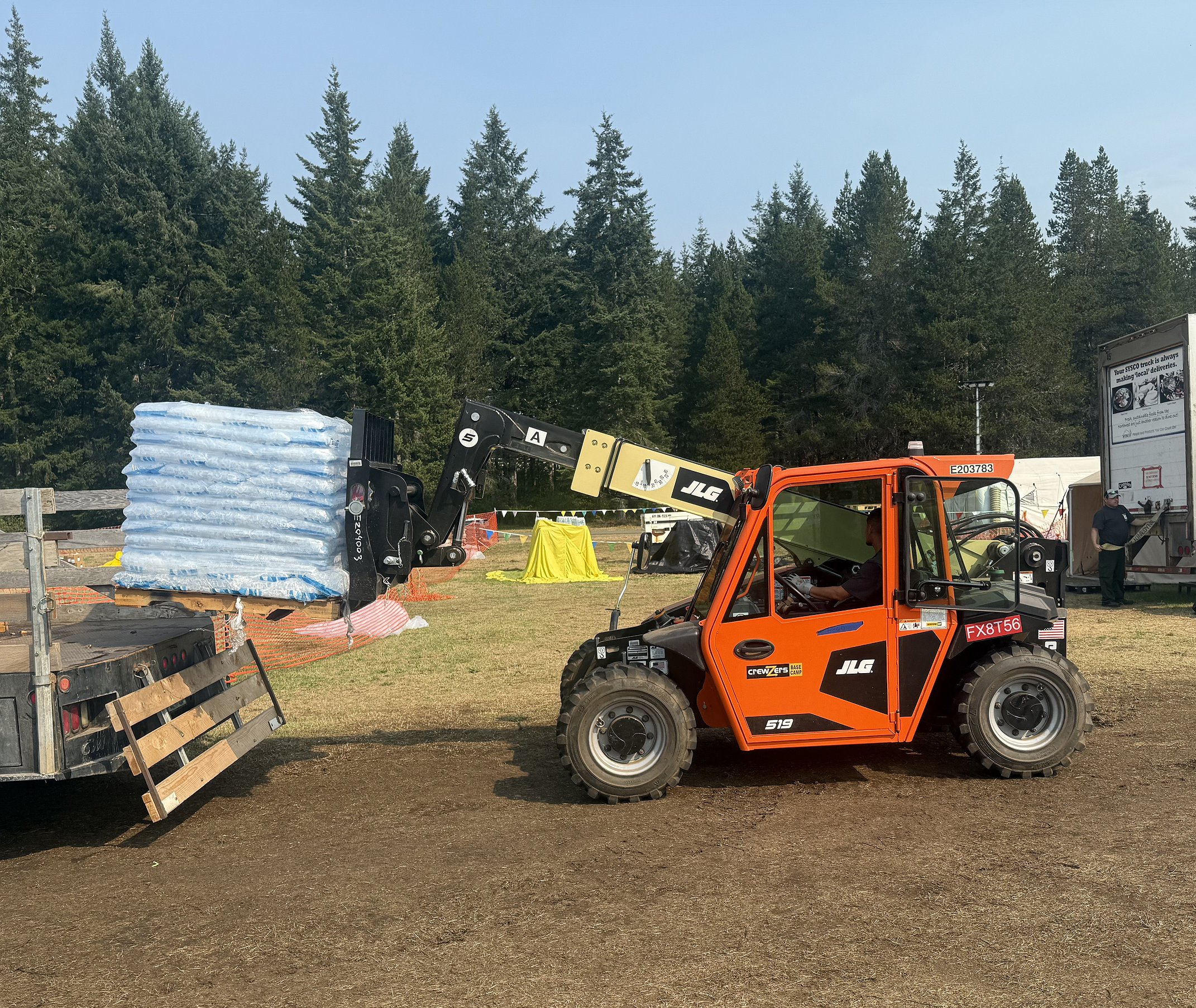 A Columbia Basin Job Corps student puts his forklift training to good use at a fire camp.
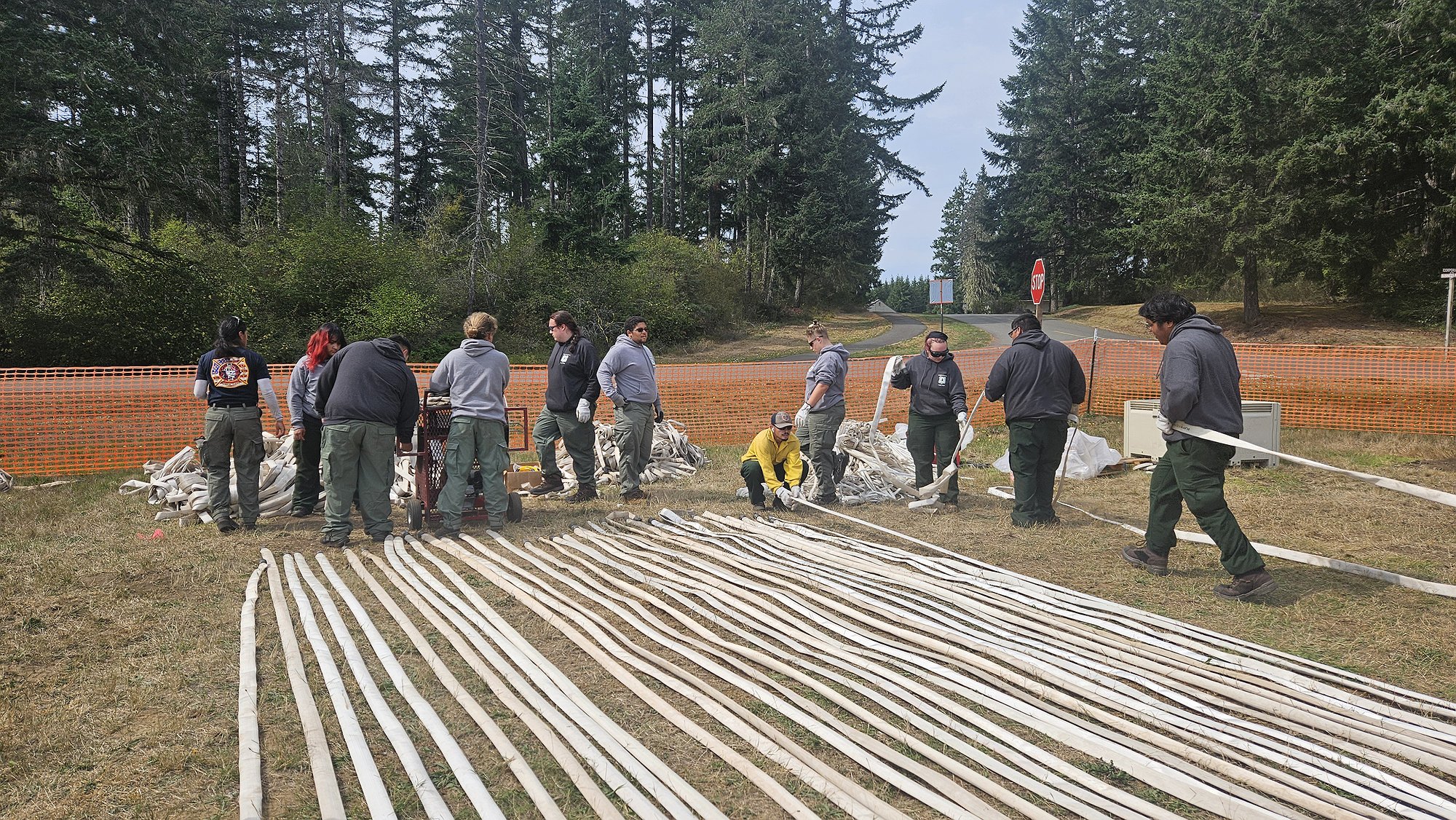 Job Corps students check and roll hoses for fire crews to use on a Washington wildfire.