
Tuesday, January 13, 2026
37.0°F

Edge Physical Therapy
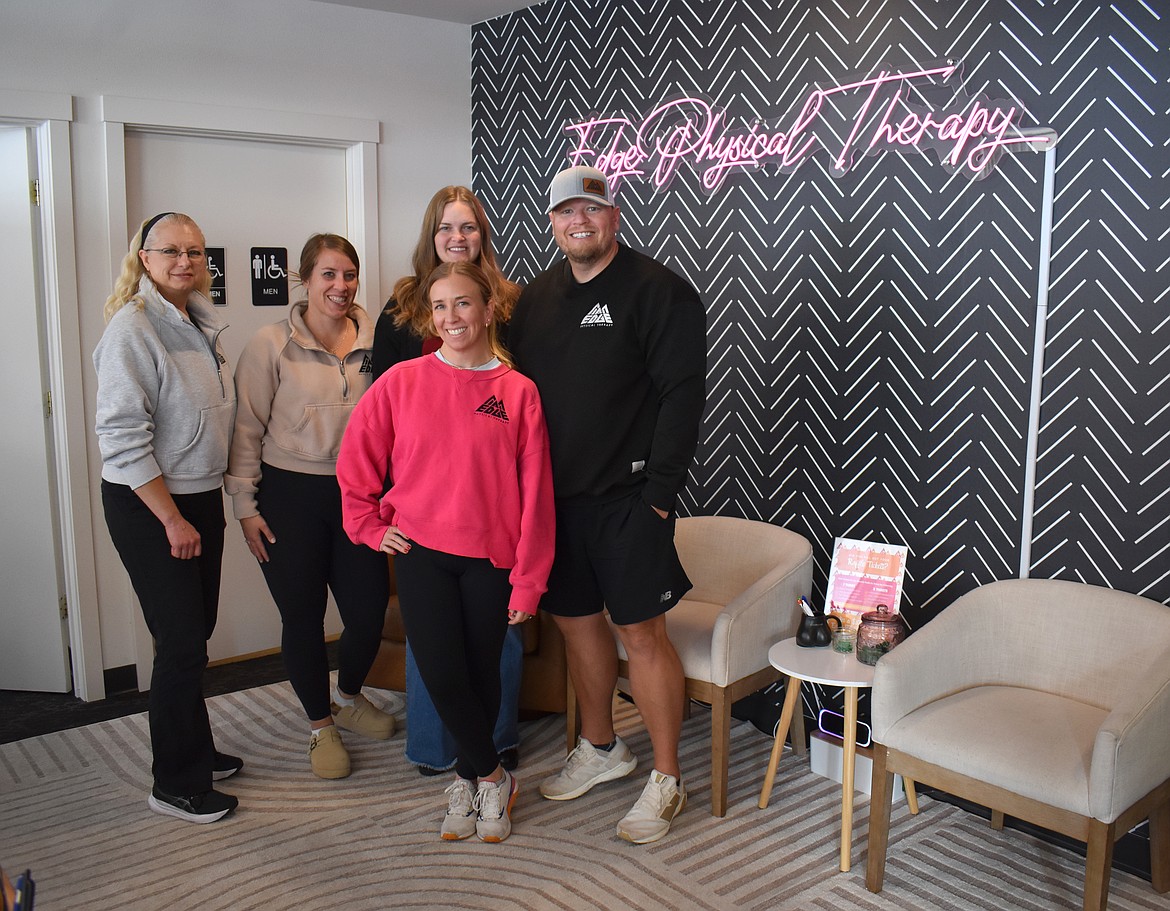
by JOEL MARTIN
Staff Writer | October 29, 2025 3:00 AM

MOSES LAKE — When it comes to health, sometimes you have to start in the middle. 

“We believe in treating the whole person because the pelvis is literally the middle of the body,” said Physical Therapist Erica Crafts, owner of Edge Physical Therapy. “Everything from top to bottom connects right in the center of our body.” 

Edge is the only clinic in a 60-plus-mile radius that provides comprehensive pelvic health care, according to Crafts. It’s not a common specialty; a study cited by the American Physical Therapy Association showed that rural communities like the Columbia Basin have fewer than two pelvic health specialists per million people. And yet it’s essential, particularly for women. Pelvic floor disorders affect about one in four women at some point in their lives, according to the Food and Drug Administration, resulting in prolapsed organs, incontinence and pain, as well as problems during and after pregnancy. 

Pelvic health isn’t just for women, Crafts said. Men often need help after prostate surgery, and therapy can help children with bedwetting as well. Because the pelvis is the central point, therapy includes a lot of work on the surrounding body parts. 

“We'll treat everything from their posture all the way to their foot position because it affects the function of the pelvis itself,” Crafts said. “We're going to address not just (the muscles) in your pelvic floor, but also the muscles that surround it: your back, your hips, your abdominal muscles, all of it is connected. It doesn't necessarily look like what people expect.” 

The key is strength, Crafts said. Therapists use movement to build muscle strength, and also techniques like cupping, a decompression therapy that takes the pressure off nerves and allows freer blood flow to the affected area. This decreases pain and improves mobility, she said. 

Building strength is also the focus for Chad Crafts, Erica Crafts’ husband and an orthopedic and sports therapist at Edge.  

“Strength is the single biggest determinant of pain,” Chad said. “The stronger you are, the less pain you have, and the stronger you are, the more you’re able to do. And the stronger you are, the longer you live. There's a big study out on longevity and strength (that shows) not only do you live longer, but you live a better quality of life because you're able to do the things that you would like to do.” 

Strength training can go a long way toward preventing the problems that physical therapy is often used to repair, Chad said. 

“We (have) a treatment-based medical system where something happens and we treat it, and it's not a very cost-effective model,” he said. “It is much easier and much more inexpensive to prevent something than it is to treat it … It's not just about coming back from an injury; it's coming back to life and enjoying the things that life is all about: hanging with kids and grandkids, sports, hiking, anything that you want to do, to get back to the things that you enjoy and live life to its fullest, not just endure.” 

Erica Crafts started Edge in 2018 as a one-woman clinic, she said. Today, she has two other therapists besides Chad. Ashley Roessler and Joanne Thomas both treat orthopedic and pelvic patients. Thomas also works in vestibular rehab, a specialty dealing with balance and dizziness disorders, and lymphedema, which is swelling in the lymph nodes that’s a common side effect of breast cancer treatment. 

Edge holds occasional educational events, Erica said. The clinic held a pelvic health event in February for mothers and daughters to explain some of the issues that girls in their teens and tweens face. There will also be a men’s health event on Nov. 18 in conjunction with Moses Lake Professional Pharmacy, covering mental health, hormone balance, heart and prostate health, and the muscle and bone loss that often comes with getting older. 

“Men don't always necessarily reach out on their own,” Erica said. “They’re like, ‘Oh, I’m fine, I’ll tough it out, and if it gets worse, maybe I’ll go in.’ Their wives are usually the ones dragging them to it. We're approaching it more like date night: Bring your spouse or your significant other and come learn together.”