
Grant Co. homeless plan update draft released
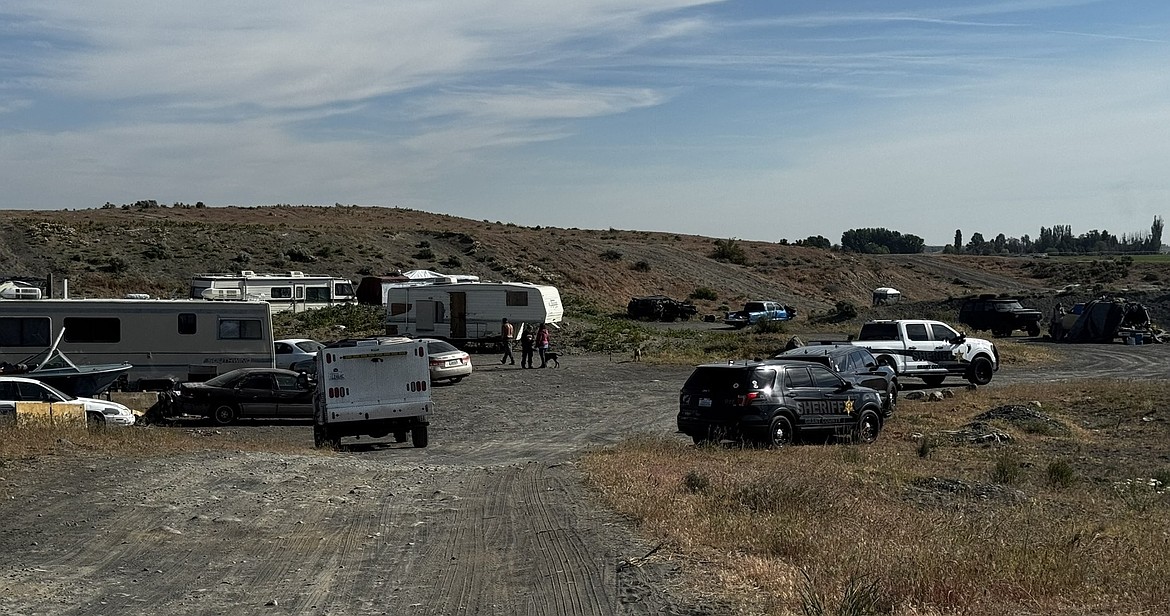
Grant County Sheriff’s Office deputies remove people from a homeless camp at Hiawatha Lake in May. Grant County residents are being invited to review a draft of the county’s homeless plan update.
FILE PHOTO
EPHRATA — Grant County residents are being invited to review a draft update to the county’s plan to address homeless issues. Part of the information county officials collected for the update included a survey, which Grant County Commissioner Rob Jones said highlighted one of the problems of dealing with the issues surrounding homelessness.
“You can’t afford it, but everybody wants you to do it,” Jones said.
A public survey was conducted over the summer, which received more than 1,000 responses.
“The survey results demonstrate that homelessness is a concern for Grant County residents, with strong support for expanding services to address it,” said the report from LDC, the company that conducted the survey.
The survey did not, however, ask respondents about their ideas for funding an expanded program. Jones said funding is a critical component, one that needs to be addressed.
“Everybody wants drug treatment, but who’s paying?” he said.
While many residents say they would support additional programs to address homeless issues, it’s unclear how people want to pay for them, he said.
The Washington Department of Commerce estimated there are about 1,925 people in Grant County who either don’t have a residence or who use emergency shelters. About 500 more don’t have stable housing, the report said. That’s slightly lower than the Washington state as a whole, it said.
Every January a survey is conducted to identify homeless people, called the Point in Time Count. The report said the survey isn’t comprehensive but is looking to establish a reliable estimate of the minimum number of homeless in a specific location.
For 2025, the PITC found 184 people who were homeless. That was fewer than 2024, when it found 207 homeless people.
Homelessness reached its lowest point in 2010; it has gone up and down since then. The PITC reached its highest point in 2022, when there were 286 people identified as homeless. The number has declined since then, the count indicated.
Survey respondents included both people who’ve been homeless or who know someone experiencing homelessness, as well as people who’ve never been homeless. That made some differences in how they answered questions about the reasons that people become homeless.
All respondents cited mental health and substance abuse issues as the biggest contributors to homelessness.
“Respondents who have experienced homelessness, or know someone who has, were notably more likely to identify housing-related causes,” the report said.
About 47% of people who’ve been homeless, or know someone who has, cited a lack of affordable housing. Another 35% in that category said rising rents and housing costs were important contributors.
The draft report’s authors analyzed the housing needs for people making up to 30% of the average median income in Grant County and determined that about 200 subsidized housing units were needed by 2030 to meet demand. They estimated at least 470 non-subsidized housing units for that income bracket would be needed in the same time frame, and at least 24 emergency housing or shelter beds.
The report includes recommendations to develop a better system to connect people with the support they need and make it easier for people to access it. Groups throughout Grant County should work to expand and support the organizations and people that provide help to the homeless.
Housing programs should be periodically evaluated to ensure their effectiveness, the report said, and county officials should work to coordinate efforts between organizations that provide support.
People who are homeless should be prioritized when deciding who should get services first, it said.