
Co-responders provide behavioral health assistance, support
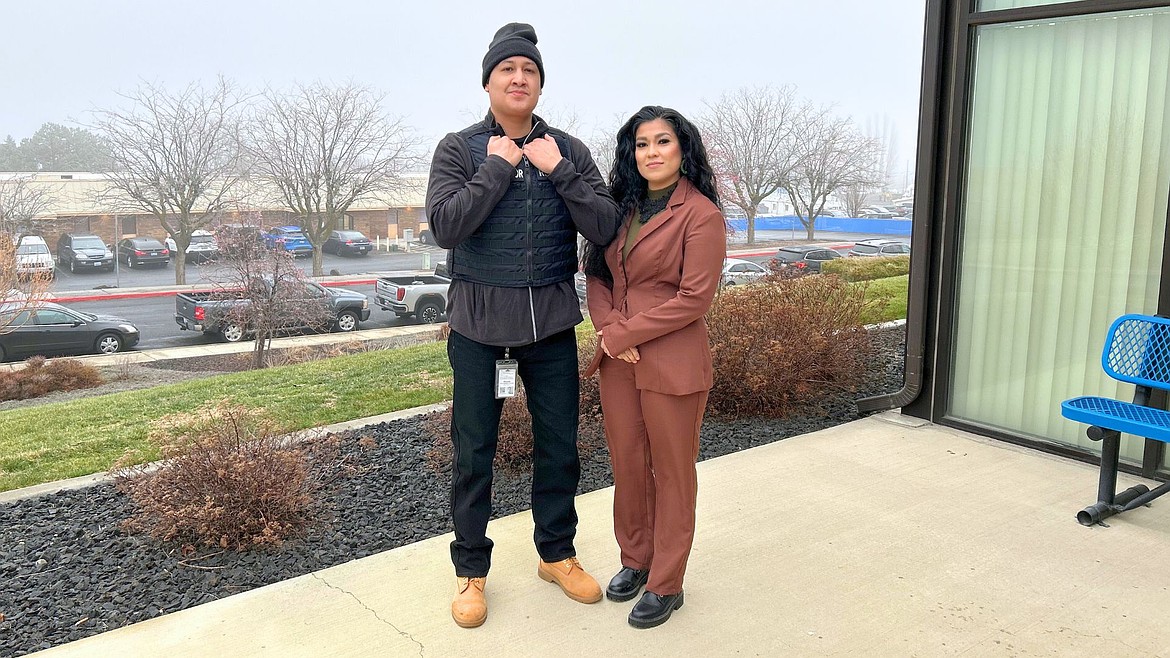
Co-responders Ricardo Gamez, left and Lanny Abundiz, right, work with the Moses Lake Police Department and the Grant County Sheriff’s Office when those agencies are dealing with behavioral health situations.
COURTESY PHOTO/RENEW
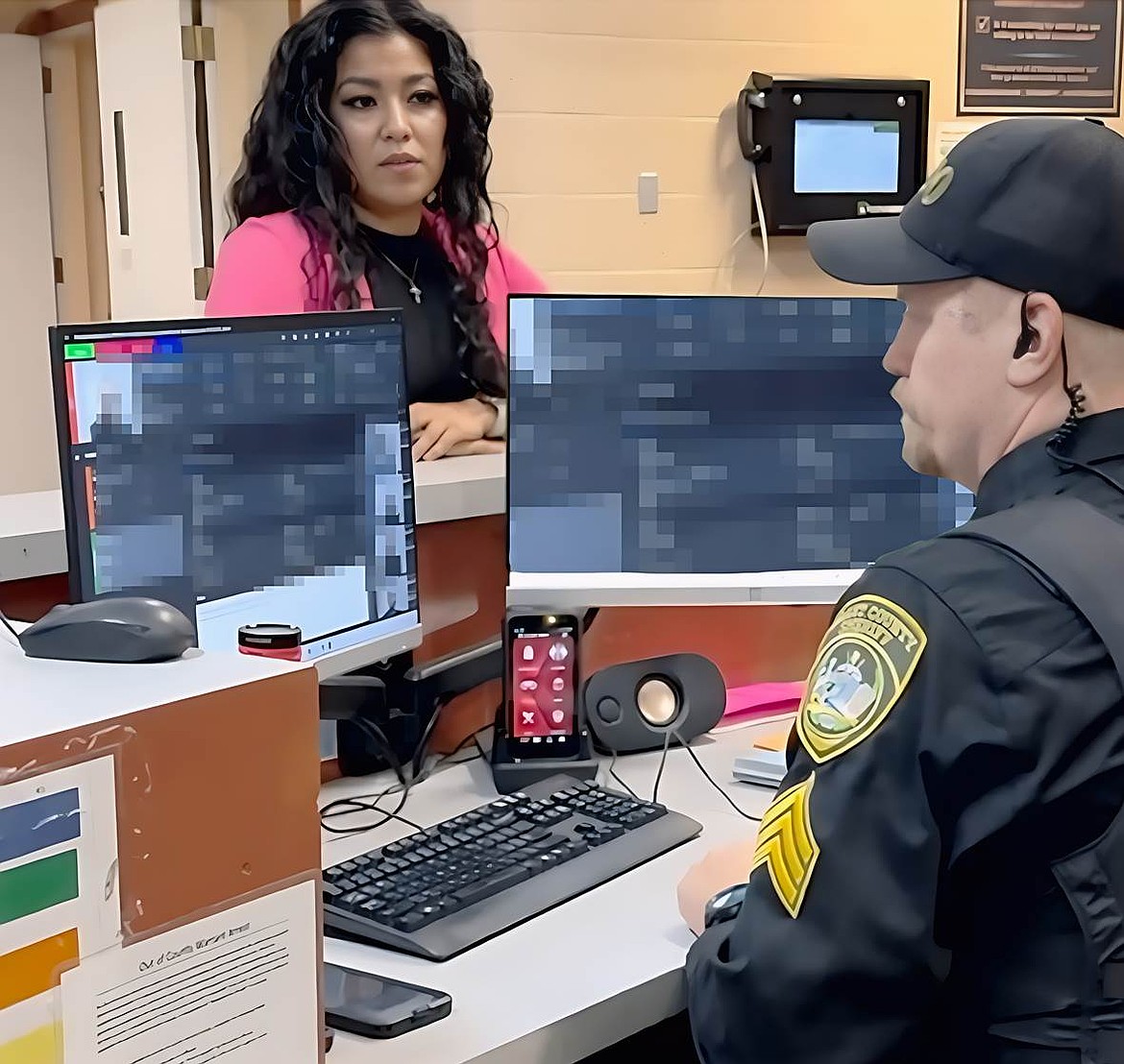
Lanny Abundiz is one of two co-responders working with Grant County law enforcement agencies when responding to situations where the help of a behavioral health professional is valuable.
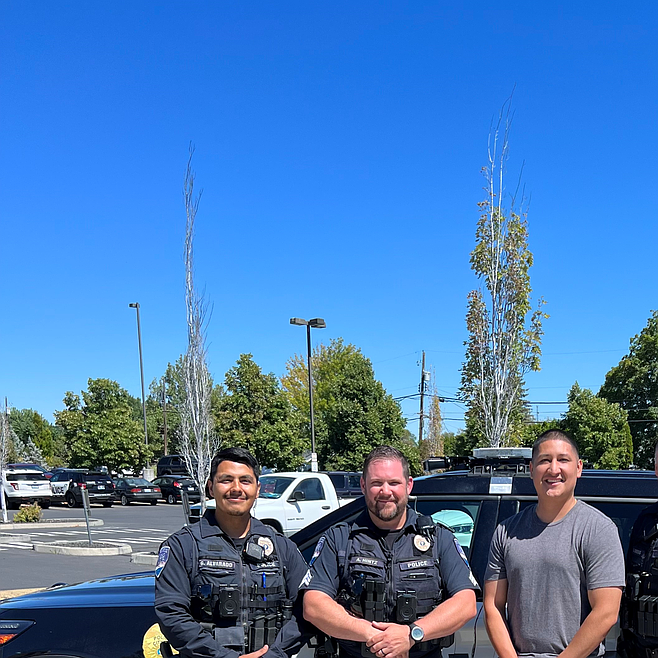
Co-responder Ricardo Gamez, right, with Moses Lake Police Department Officer Grigorio Alvarado and MLPD Sergeant Aaron Hintz.
MOSES LAKE — Sometimes a disturbance or a welfare check that requires a law enforcement response is also a mental health crisis. Renew, Grant County’s behavioral health organization, the Moses Lake Police Department and Grant County Sheriff’s Office are partnering on a program to make help available for people facing a crisis when it’s needed.
“The co-responder program pairs behavioral health professionals with law enforcement agencies,” said Traci Hunt, the initial services manager at Renew. “In our county, we have mental health professionals that are working alongside (MLPD) and (GCSO), so they’re there to provide behavioral health support during those emergent 911 calls. They’ll respond with the first responders.”
The two co-responders are one part of Renew’s overall crisis response program, said Dayana Ruiz, Renew public information officer. They work with law enforcement during an incident to help keep it from escalating and help people find treatment. Renew also provides follow-up support, Ruiz said, either from the co-responders or other members of the agency’s crisis team.
Ricardo Gamez has been working with the MLPD since 2022, and Lanny Abundiz with the GCSO since January 2025.
Kyle Foreman, GCSO public information officer, said the co-responder program has been a good addition.
“In a rural county, having co-responders is an enormous benefit,” Foreman wrote in response to an email from the Columbia Basin Herald. “The system can be hard to understand and can overwhelm someone who is already stressed. Lanny helps people find the resources they need.”
The people Abundiz meets have benefited from her help, Foreman said.
“Lanny deals with each situation with kindness, patience, and without judging, making people feel safe to share their feelings. Lanny de-escalates tense situations, connects people with the right resources, and provides comfort when they are very upset. Lanny’s help goes beyond the immediate moment,” Foreman said. “Lanny helps build trust, encourages people to get help, and makes them feel hopeful and respected.”
Jeff Sursely, MLPD public information officer, said it’s also a benefit to law enforcement and mental health professionals.
“It’s been amazing having, not only the basis of knowledge that they bring, but the ability to bridge the two organizations,” Sursely said.
Jonathan Muck, Renew crisis supervisor, said the co-responder's role depends on the need.
“That depends on the situation, because they really are riding around with law enforcement – that's kind of the whole program,” Muck said. “They can go to anything and everything that law enforcement essentially gets called out to. (Gamez) goes to all situations so that he’s able to provide that behavioral health lens, our perspective. It could be someone who has (experienced an escalation) and he can use some deescalating skills in that situation, or behavioral health or substance abuse crisis as well.”
Sursely said co-responders see what police officers see when they arrive on a scene, which helps both law enforcement and behavioral health professionals understand each other’s response.
“It allows for a lot more frank conversations on both sides,” he said.
The behavioral health expertise is very valuable, Sursely said; the co-responders are better able to identify the underlying conditions leading to the behavior.
“They’re able to define the situations we find ourselves in,” Sursely said.
Hunt said that when they can, the co-responders work to help people find the services and support they need once the immediate crisis has passed. If the co-respondent isn’t available, the person will be assisted by other people on Renew’s crisis team.
“We’re all one big crisis services umbrella, so we all work together,” Ruiz said. “We are all essentially the same crisis team.”
The work of the crisis teams is resulting in more referrals, she said. Hunt said that not only are more people aware of the help available, but more people seem to be in need of it.
“I think (people) are more aware that we are out there and they are taking advantage of it and sending referrals this way. But I also do think that the acuity that we've been seeing out there with individuals in crisis has significantly increased,” Hunt said. “People are struggling more with behavioral health and substance use as well. I do think we've been seeing higher acuity with our referrals and an increase in individuals just needing services.”
Sursely said the work of the co-responders has been appreciated.
“This has been very good for the department and our citizens. Very good,” he said.
 Lanny Abundiz is one of two co-responders working with Grant County law enforcement agencies when responding to situations where the help of a behavioral health professional is valuable.
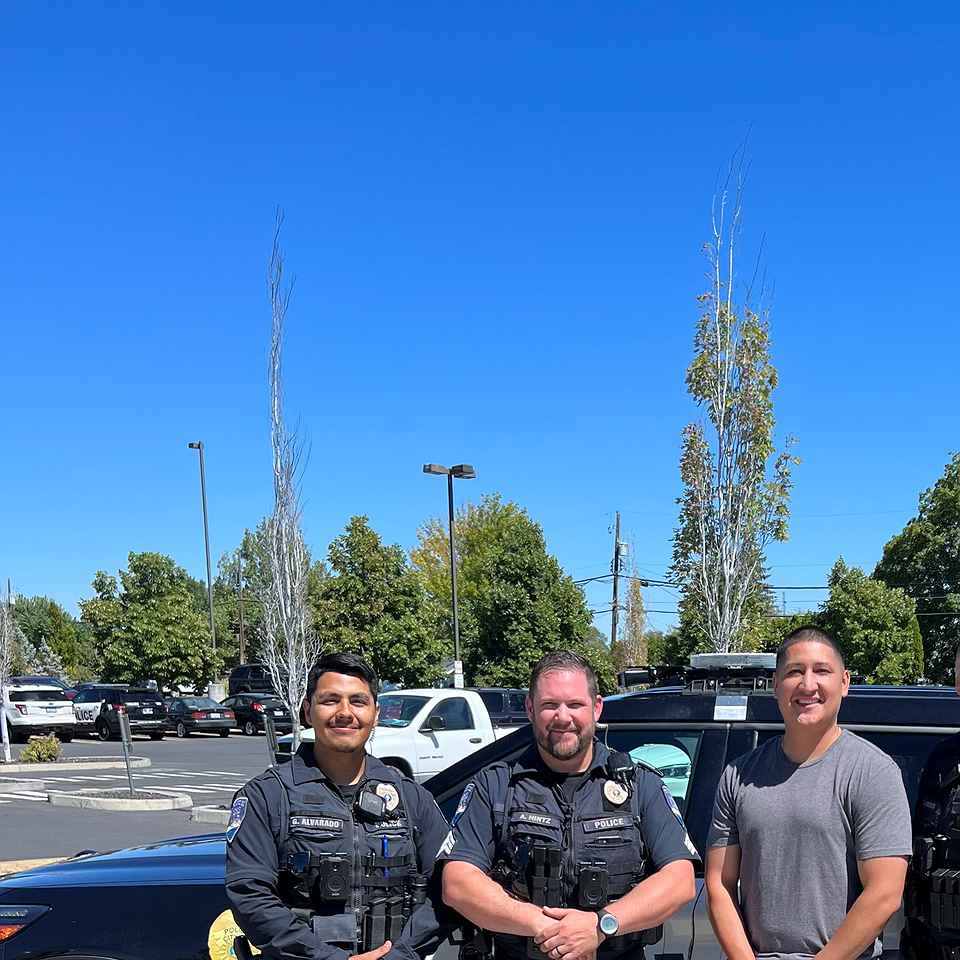 Co-responder Ricardo Gamez, right, with Moses Lake Police Department Officer Grigorio Alvarado and MLPD Sergeant Aaron Hintz.