
Assn. of Washington Businesses bus tour comes to Grant Co.
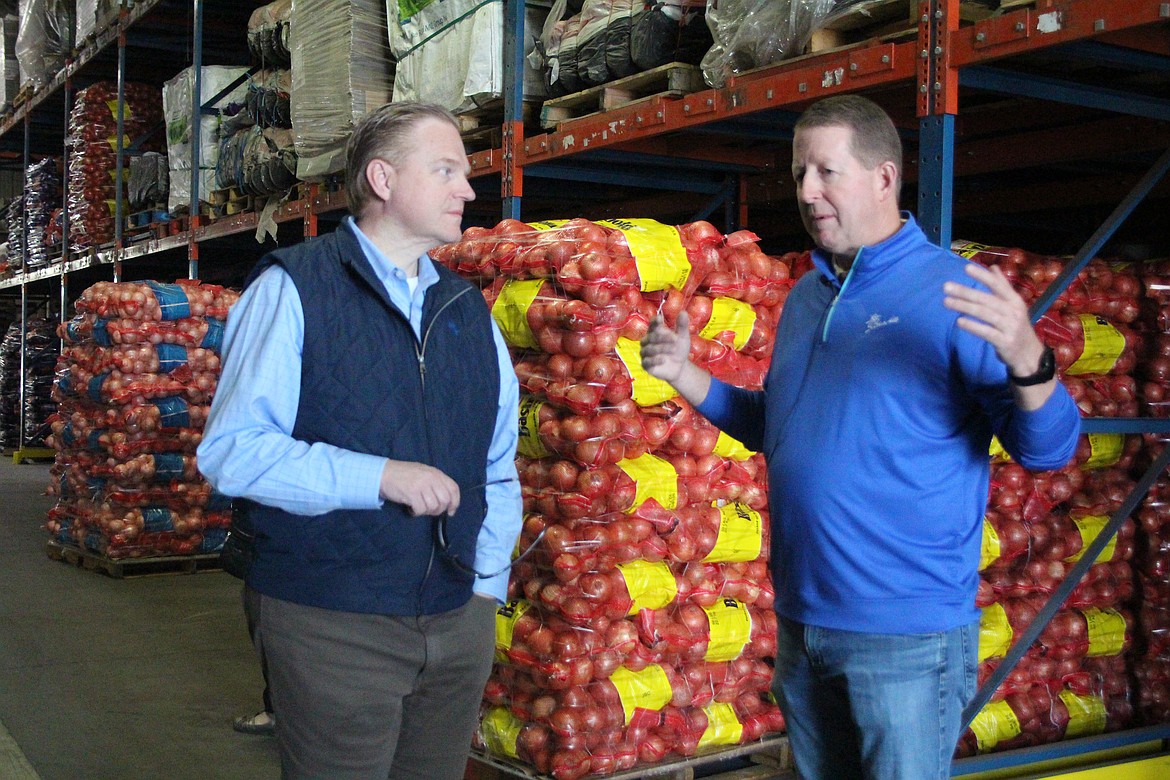
Bart Connors, right, talks to Association of Washington Business President Kris Johnson in the onion shipping room at the Skone & Connors facility in Warden.
CHERYL SCHWEIZER/COLUMBIA BASIN HERALD
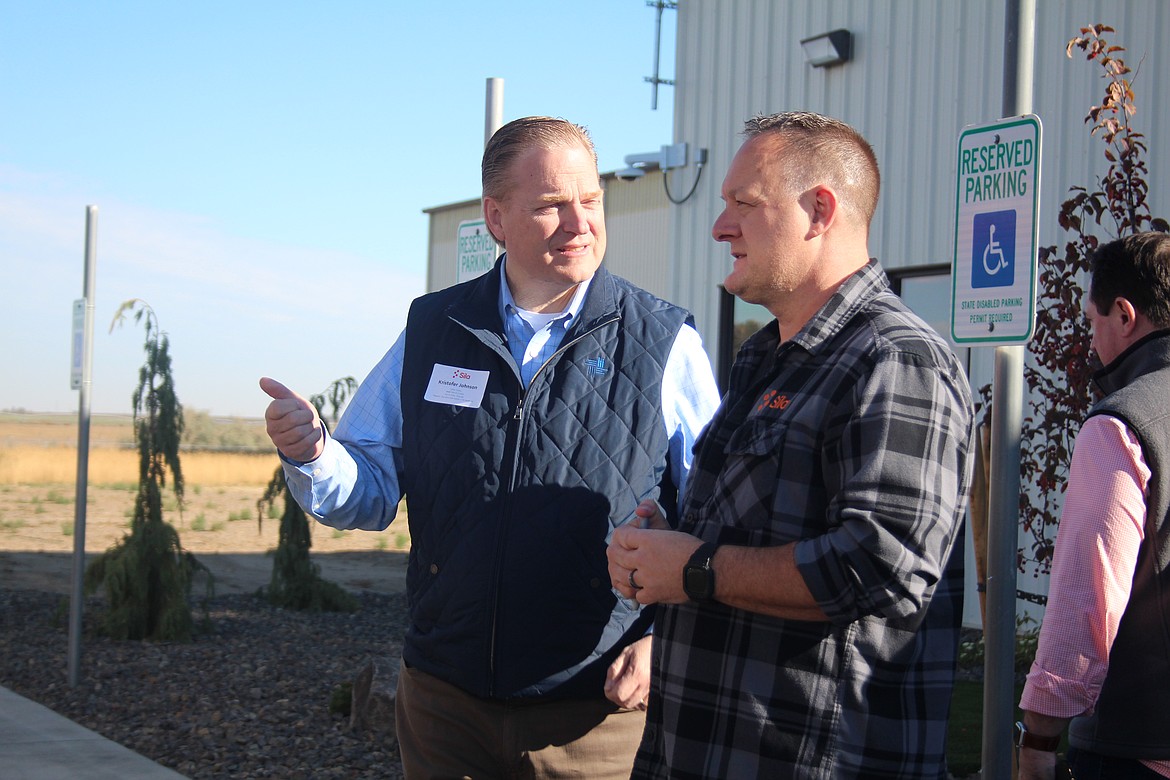
Association of Washington Business President Kris Johnson, left, and Sila Nanotechnologies Senior Operations Manager Kent Jones discuss company operations.
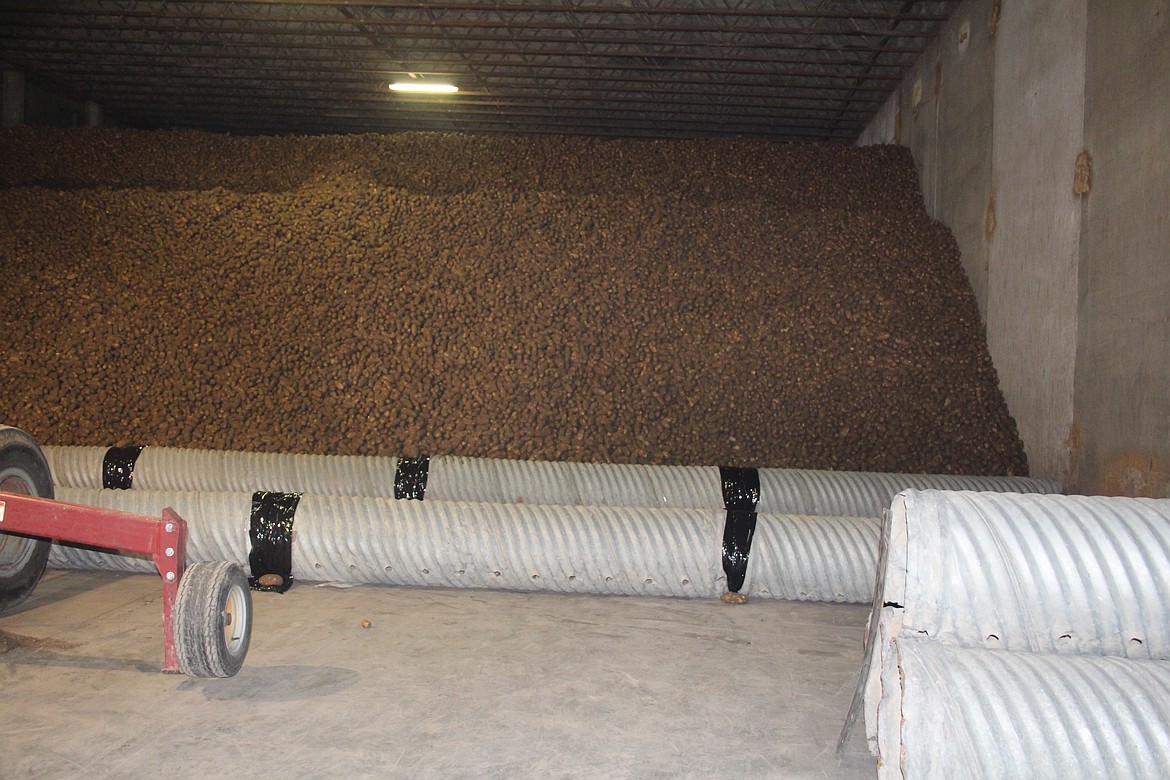
A mountain of potatoes awaits processing in the shed at Skone & Connors.
MOSES LAKE — Association of Washington Business President Kris Johnson said the organization’s annual Manufacturing Week tour is designed to give participants a look at businesses – and job opportunities – they may not have known existed.
“It’s to spotlight that we have some of the world’s best companies right here in Washington state,” Johnson said. “(About) 271,000 women and men go to work for a manufacturer in our state. We make best-of-class products. We want to expose young people to the amazing careers that exist in this sector and in these fields. And then we talk about, ‘Hey, we can’t take this industry for granted.’ It needs reliable tax and trade policy, it needs a reliable regulatory environment, and it needs a skilled educated workforce.”
Opportunities in Grant County are an example of the many options available for employees in the manufacturing sector, he said.
“Every day, there are about 4,600 women and men who wake up in Grant County to go to work for one of 90 manufacturing companies that are here in this region,” Johnson said. “Which most people don’t know, which is why we’re doing this tour. The other piece is, the average wage in a manufacturing job in Grant County is $75,000 a year. We’re talking about good family wage careers that exist right here.”
It’s the ninth year AWB has sponsored a tour of manufacturing companies around the state. For 2025, the tour took participants from Sequim to Spokane, touring businesses that covered an extensive range of manufacturing.
“I continue to be awed by the diversity and types of companies and where they’re located,” he said.
The first two stops in Grant County demonstrated the wide range of the manufacturing sector. Sila Nanotechnologies began production at its Moses Lake facility in September, with construction on some sections still ongoing. Skone & Connors have been growing potatoes and onions for three generations and processing them at their Warden facility for decades.
Sila Nanotechnologies uses a proprietary process to make silicon anodes for rechargeable batteries, so Senior Operations Manager Kent Jones couldn’t give a lot of details.
“Everything has a code name,” Jones said.
The process combines raw materials in liquid, solid and gaseous states to make battery components, the company says are faster and easier to charge than existing options. Since the facility is in its first phases of production, only about 25% of it is in use, Jones said.
The battery components are made up of volatile materials, he said, and the process involves encasing them. He compared it to making a piece of cheese, complete with holes, then filling the holes.
Josh Russell, one of the control room supervisors, said the facility doesn’t use a lot of robotics, but it is extensively automated. Jones said it takes about five people to oversee the current level of operation.
Russell was asked about the skillset required to work at Sila.
“The ability to learn and ask questions,” he said.
He had 10 years of experience in manufacturing when he started at Sila, he said, all in the oil and gas industry. He had no experience at all when he started in that industry, he said, but was trained by experienced operators who freely shared their knowledge.
Potato and onion harvest is in full swing, a fact visible at the busy Skone & Connors facility in Warden. Trucks unloaded potatoes and onions, crews sorted and packed, forklifts loaded other trucks for delivery.
Bart Connors said the business has been in Warden since 1950; about 12,000 acres are under cultivation, producing onions, potatoes and apples. The tour went on at the agricultural facility despite a fire Oct. 5 that destroyed one of the company’s storage sheds. Connors estimated the company lost 10 to 15% of its total production, mostly onions.
But the place was plenty busy Wednesday, and Connors said the company plans to rebuild what was destroyed.
“Oh, absolutely,” he said. “Absolutely.”
The Warden facility receives onions and potatoes direct from the field; they’re cleaned and sorted, pre-sized, go through multiple scans for grading, then are sent to the packing lines.
“All of this was dug this morning,” Connors said, while walking through the potato receiving building. “Half of what comes in today will be packed today.”
Skone & Connors sells to retail firms and wholesale customers, with most of its products going to the Pacific Northwest. Walmart is one of its longtime customers; the company provides potatoes and onions for most of its Pacific Northwest locations.
“We probably send most of our Walmart onions here (in the Northwest) or to Florida,” he said.
The market for locally grown produce is global, though.
“We ship onions everywhere,” he said.
Southeast Asia is a good market for the company’s products, he said. A whiteboard in the shipping area displayed information for onions destined for Mexico and South Korea.
“Most people don’t know that there are 90 manufacturers here in Grant County,” Johnson said. “I would make an argument that you have some pretty leading-edge companies, right here in Grant County.”
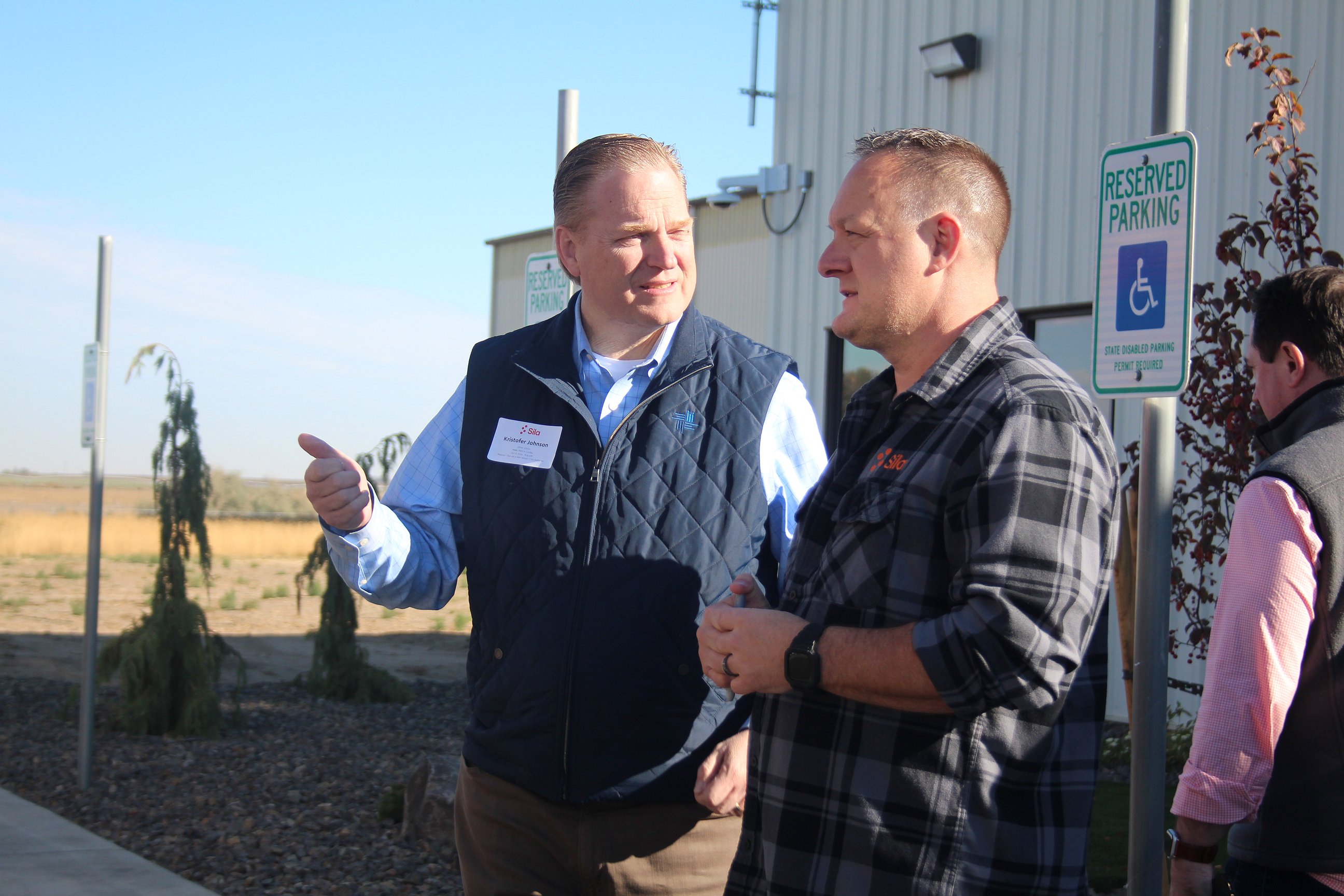 Association of Washington Business President Kris Johnson, left, and Sila Nanotechnologies Senior Operations Manager Kent Jones discuss company operations.
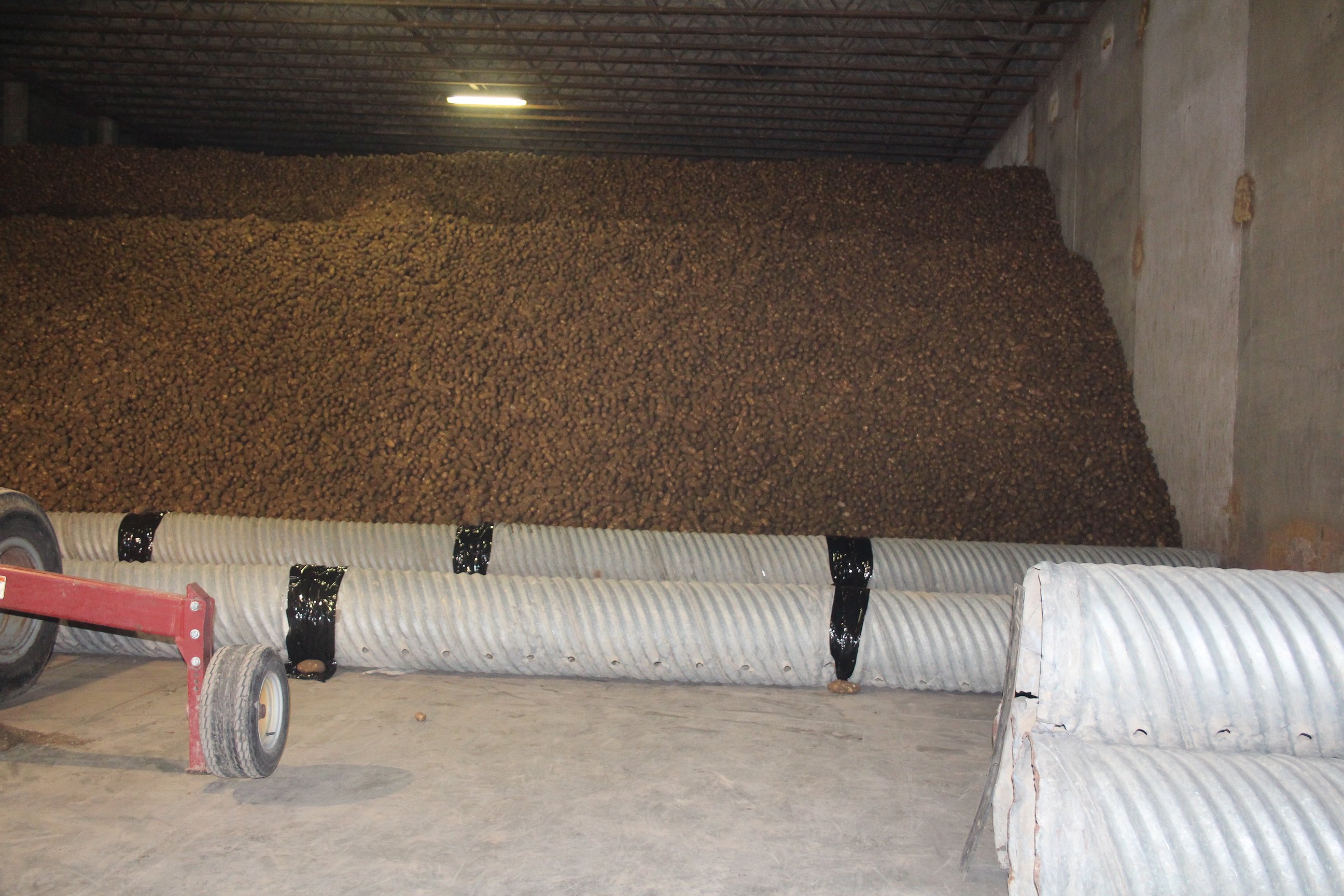 A mountain of potatoes awaits processing in the shed at Skone & Connors.