
Sunday, January 11, 2026
34.0°F

Budget cuts projected to reduce Moses Lake 2026 deficit
by CHERYL SCHWEIZER
Staff Writer | October 6, 2025 3:00 AM

MOSES LAKE — The city of Moses Lake’s general fund is projected to have a smaller deficit than it did in 2025, but still to have a deficit. While spending in the general fund is projected to decrease, the city’s overall preliminary budget includes an increase in capital projects. 

City Manager Rob Karlinsey said it’s a preliminary budget, and as such, it's subject to change. But city officials project $41.8 million in general fund and street fund expenses in 2026.  

“The general fund (pays for) the traditional city services that you think of, like police and fire and parks,” Karlinsey said. 

There’s a separate fund for street maintenance, but it’s also connected to the general fund.  

The total expenses for all city operations are projected at $127.44 million. That’s an increase from 2025, when council members adopted a $117.2 million budget. Karlinsey said the difference is mostly anticipated capital construction projects.  

The 2025 budget anticipated general fund expenditures of $46.9 million. But while the city will be spending less in its general fund, it will still be spending more than it’s taking in. Projected revenue for 2026 is about $40.8 million. 

“There is some good news, and that is, we still have a healthy fund balance in the combined general fund (and) street fund,” Karlinsey said. 

The city is projected to end 2026 with about $13.2 million in reserves, which is more than the target set by the council. But that reserve won’t last if the city keeps spending more than it’s generating in revenue, he said, and to address that, city officials will be working on a “financial stability plan” in 2026.  

That will include an online platform where people can take a look at Moses Lake’s expenditures and revenue and take that information to write their own budget.  

Some of the general fund cuts for 2026 didn’t require any work from the city at all, Karlinsey said. The Washington Legislature made some changes to the state retirement system, which also covers city workers. Those changes resulted in a reduction of about $1 million in the city’s contribution.  

“That’s a million dollars of savings we didn’t have to lift a finger for,” he said. 

A one-time equipment purchase in 2025 cost about $700,000; that expense won’t be there in 2026. Karlinsey said the goal is to make it so a separate fund is available for equipment purchases.

“Moving forward, we’re trying to avoid spikes like that by saving up for vehicle replacements,” Karlinsey said. “The street funds and other funds – and the general fund too – will all be contributing every year. So that when we need a dump truck or a fire truck or (other vehicle), we have that purchase come out of the equipment replacement fund.” 

Most of the rest of the reductions, however, were the result of a close look at expenditures by each city department, he said. Those start with reductions in city staff, some of them achieved by not replacing people who got other jobs or retired. 

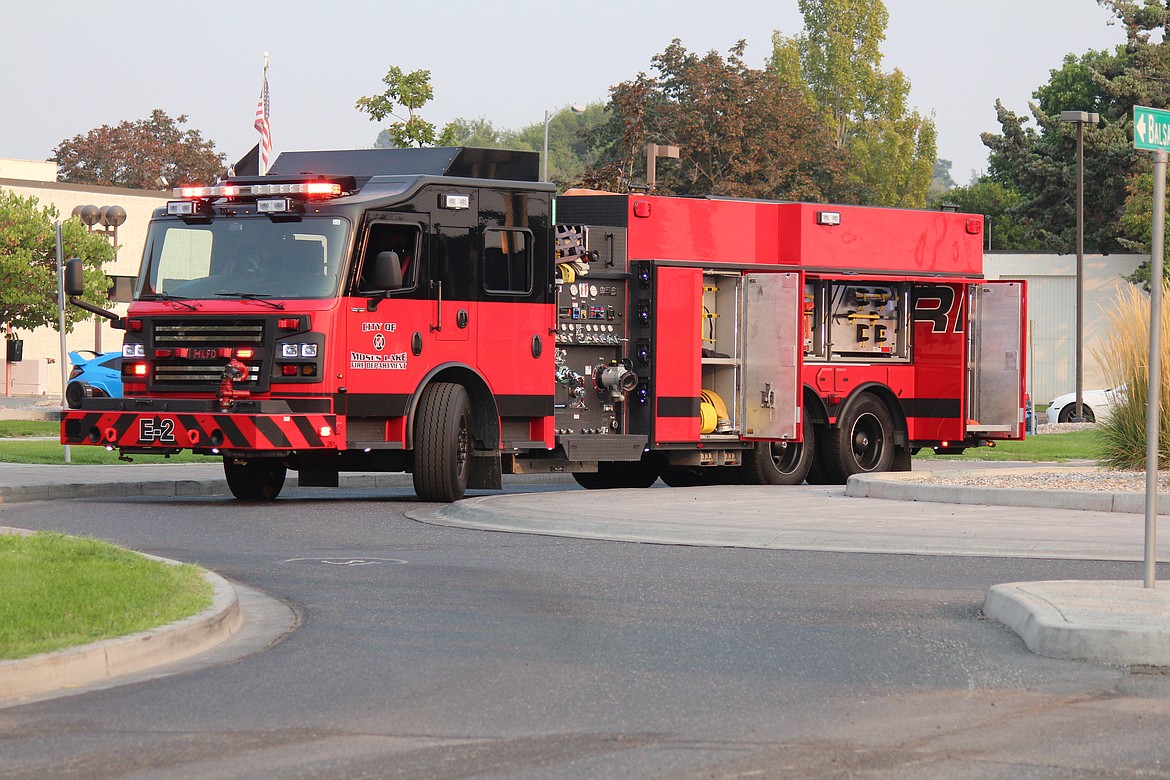
A grant that funded six firefighter jobs in the Moses Lake Fire Department will end in 2026, so city officials laid off some non-firefighter staff to help pay to retain the firefighters. There were open positions throughout city government, things like custodians and in the engineering department, that won’t be filled, he said. 

“I think it’s a net of about 10 or 11 positions that we’ll be down,” he said. “And then we just asked everybody to really trim their budgets.” 

But it won’t be possible to do that every year, he said. 

“You can only do that once,” he said. “The downside (of reductions) is that you don’t have as much flexibility in your budgets. There’s not much room for error in a budget like that.” 

Other city expenses, the water and sewer systems being examples, are funded by the fees paid by residents and businesses. Those funds have steady sources of funding as a result, Karlinsey said. 

How cities spend their money is restricted by state law. Karlinsey cited the example of the city’s water system – its funds can’t be spent on city parks.  

“Water is its own separate business,” he said. 

Construction on a roundabout at the intersection of Yonezawa Boulevard and South Pioneer Way is scheduled for 2026, and Karlinsey said that’s another example of designated funding. Most of the money for that project is coming from the Washington Department of Transportation. 

Budget Basics (Projected):  

Total projected expenses: $127.4 million
Total general fund/street fund projected expenses: $41.86 million
Total projected revenues: $118.2 million
Total general fund/street fund projected revenues: $40.8 million 

Total projected expenses include anticipated capital projects paid for with other revenue sources