Sunday, December 14, 2025
34.0°F

Sleep center's closure part of a more complex situation
by CHERYL SCHWEIZER
Staff Writer | May 1, 2025 3:45 AM

MOSES LAKE — The decision by the Moses Lake City Council to end support for the Open Doors sleep center has prompted a lot of discussion, from the April 22 council meeting to community members to the people who use the sleep center itself.  

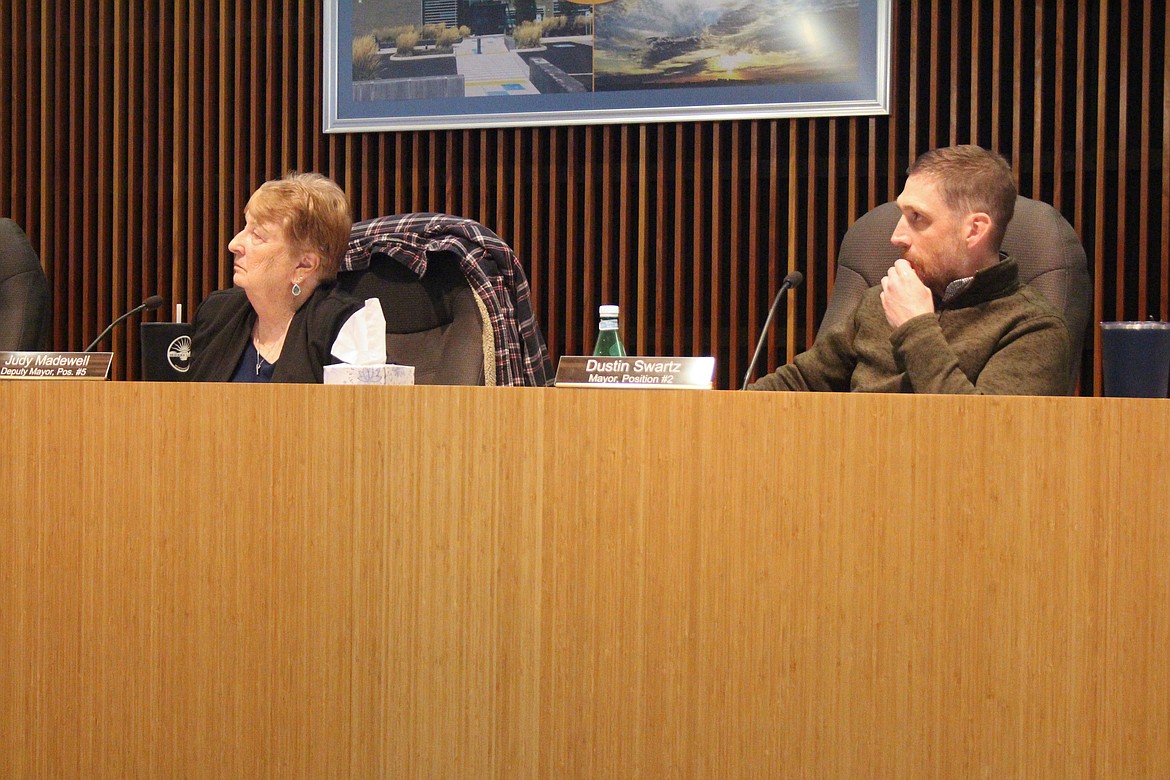
Moses Lake Mayor Dustin Swartz called it a very complicated issue after about an hour of public comment during the April 22 city council meeting.  

“It becomes frustrating for a lot of us because this issue has been wrapped into one thing. What’s become fairly obvious is that there are actually a myriad of issues that are going on in our community,” Swartz said. 

The sleep center will remain open through June 30, when the state grant that provides the bulk of the funding expires. The city contracts with HopeSource to operate it. HopeSource is a nonprofit organization based in Ellensburg that provides other housing services in and around Moses Lake.  

HopeSource officials issued a statement after the April 22 meeting, signed by Chief Executive Officer Susan Grindle.  

“As an organization, HopeSource understands the tough decisions our elected officials must face in meeting the needs of the community. HopeSource has worked with the city of Moses Lake for many years on programs that serve that community and looks forward to a continued positive relationship with the city in seeking to meet the residents’ needs,” Grindle said.  

Complex issue 

Jerome, who said he uses the sleep center regularly, said the people who use the sleep center are aware of the complexity.  

“The city’s dropping it; HopeSource is dropping it. (Another organization may) pick it up, but none of them wants to do it by themselves,” he said. 

The existing grant is administered by Grant County officials, but Commissioner Cindy Carter said the county’s involvement isn’t required. 

“The county does not have to apply for that money. Whoever wants to run it can just deal directly with (the Washington Department of Commerce),” Carter said.  

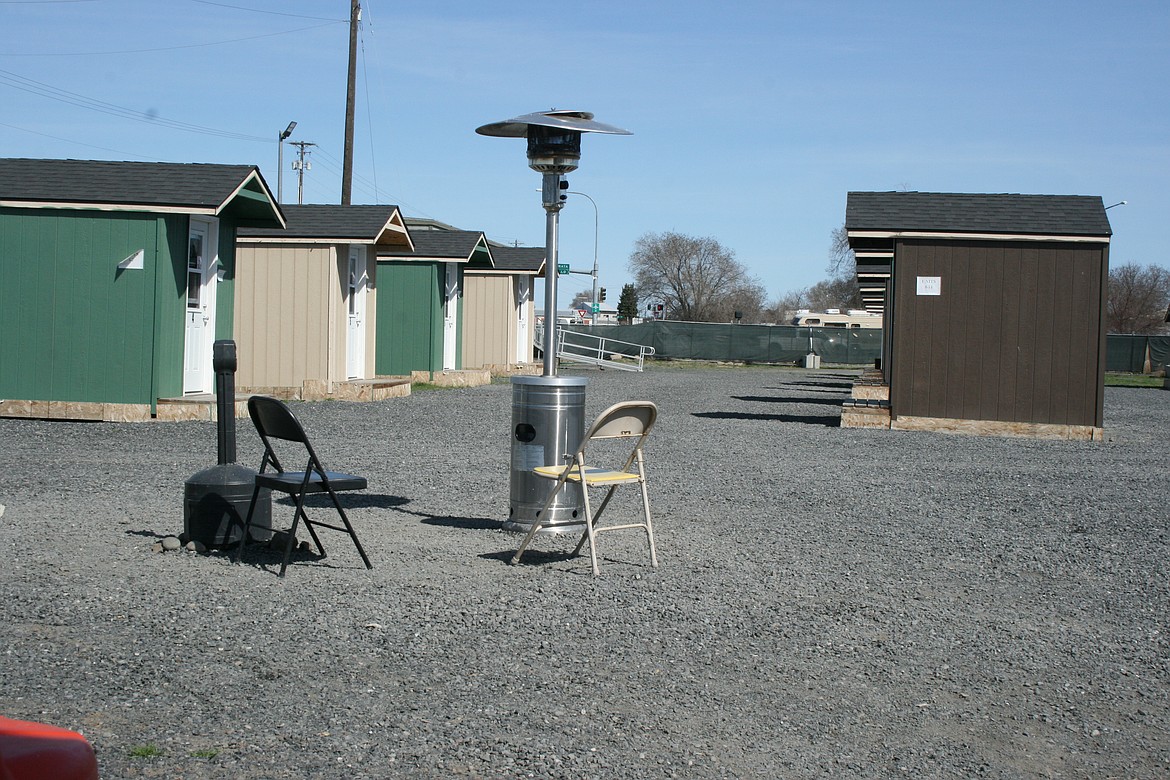
The sleep center provides overnight shelter but is closed during the day. There is room for a maximum of about 38 people.  

Jerome said that’s another problem.  

“There are about 20 of us that actually come here, and we stay,” he said. “There are other people out there that are just running around town. There are a lot more homeless people than 20.” 

That was one of the concerns cited by Debbie Doran-Martinez, executive director of the Moses Lake Chamber of Commerce. She presented a letter April 8 from the chamber’s board of directors to the council asking that the sleep center be closed. People who aren’t using the sleep center are having a direct effect on businesses throughout the community, she said. In a later interview, she said the discussion among business owners and community members about the sleep center predates 2025. 

“We have been discussing this for years,” she said. “It was supposed to be a temporary fix.” 

From the chamber’s perspective, the sleep center is not effective in addressing the problem, she said.  

“We are spending a lot of money on something that isn’t getting us any closer to fixing the problem,” Doran-Martinez said. 

Swartz said in an earlier interview that the sleep center originally was intended to be the first phase of a larger project that eventually would’ve offered a wider range of services. Council members and city managers have changed since then, though, and the current council doesn’t consider the larger facility to be an option. 

Different circumstances 

“I know why it’s closing – it's because the city doesn’t want to fund it anymore,” said a sleep center user who wanted to remain anonymous. “That’s because of all the messes and the drug use. But that leaves some of us out. We’re tied into a mix that doesn’t exactly have anything to do with us.” 

Not everybody who uses the sleep center is using drugs, he said.  

“People are here for different reasons,” he said. 

Steve and his wife also use the sleep center, and said that family members they had lived with were evicted from their residence. He said closing the sleep center would not, in his opinion, solve the problem. 

“I think everybody is just going to go back to camping on properties they’re not supposed to be on,” Steve said.  

Steve and his wife have some income, he said, but not enough to afford rent.  

Jerome also said the lack of affordable housing is a challenge. 

“I got income, but I don’t have that much to go out and get my own place,” he said. “A lot of us don’t have the resources to actually get into a place, so this place is actually helping us not do the criminal activities.”  

Looking for solutions 

Steve said people who use the sleep center could be involved in the solution, among other things, by working on city beautification.  

“A lot of the businesses are complaining about the trash,” he said. “I heard one of the churches is trying to come up with the idea to pay the homeless people to pick up trash, which I think if they did something along those lines. I’ll walk through the town and pick up everything,” he said. “It’d be cheaper on the city, and then I don’t think they’d make a mess again.” 

Jerome said a solution may lie in Samaritan Hospital, which is scheduled to move into a new building in spring 2026. 

“I heard they’re building a new hospital. The old hospital would be ideal for real low-income, or even homeless people, to actually go. They have the facility, they have multiple floors, they can do multiple services. They could do rehab; they could do intake; they could do counseling; all in one building, and not too far from other health services like Renew,” he said.  

Recent interviews with Samaritan staff indicate that no plan has been established for the old hospital building, once the new one is established. A variety of options are on the table, but nothing is yet set in stone. Staff have said a behavioral or mental health facility may be an option, but no plans have been set. 

City Manager Robert Karlinsey said after the April 22 morning that city officials are working on a plan to address what comes next, what he called a “multi-pronged approach.” The city’s tentative strategy is expected to be discussed at one of the upcoming May Moses Lake City Council meetings. 

“This is not an easy decision. Nor is this the end of this discussion, and we understand that,” Swartz said during the council meeting. 

“Some people asked the question tonight, ‘What are the answers?’ And we should be working with other people to discuss those and figure out solutions. I do believe (Grant County) has some responsibility in this. We have the health district, we have Renew, we have the justice department here in the county. I would absolutely love to have a chat with all of those people about some of these issues,” he said. 

Editor’s note: Columbia Basin Herald journalists spoke with unsheltered people who utilize the Moses Lake Sleep Center on Friday, April 25. Those they spoke with asked to have their names held or to only use their first names for a variety of reasons, including personal safety.  

    Moses Lake City Council members have voted to cease city support of the Open Doors sleep center. The facility is state funded through a grant and operated by HopeSource through a contract with the city.