
CCA Ag exemption bill moves through Senate
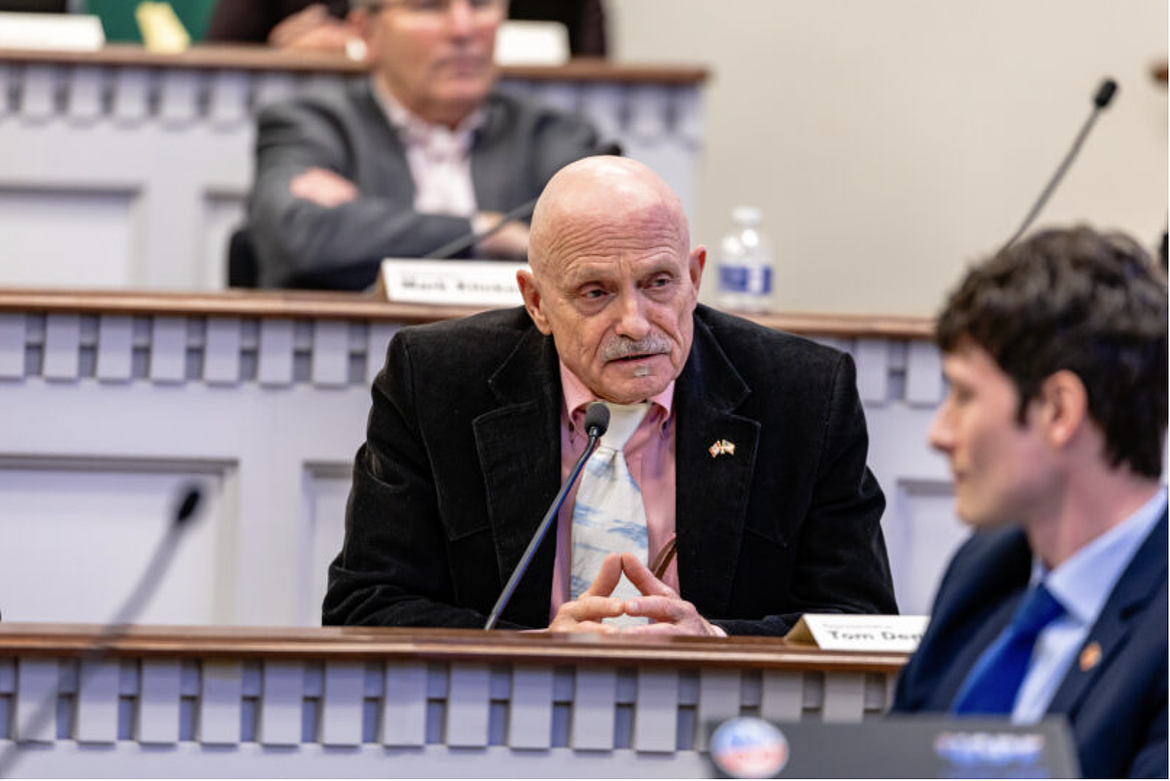
Rep. Tom Dent, R-Moses Lake, participates in a hearing earlier this legislative session. Dent is working on a variety of fronts to pass bills that favor farmers and other ag professionals.
COURTESY PHOTO/OFFICE OF TOM DENT
OLYMPIA – The Washington House of Representatives has approved a bill aiming to help farmers receive cap-and-trade tax exemptions promised under the Climate Commitment Act. The legislation passed the floor with a 94-4 vote and was heard in the Senate on Wednesday, March 26, for further consideration.
“There was a promise made, and we're going to try to keep that promise,” main sponsor, Rep. Tom Dent, R-Moses Lake, said in a public hearing.
House Bill 1912, in its current form, would require the Department of Ecology to create an online directory of locations where agricultural tax-exempt fuels are available for purchase. It would also direct the Department of Commerce to provide financial incentives, such as card or membership systems, to retail fuel sellers to encourage the sale of tax-exempt fuel.
While various farm groups expressed support for the bill, the Washington Farm Bureau testified in opposition, arguing, “It needs to do more.”
Bridget Coon, vice president of the Washington Farm Bureau, said small farmers who buy fuel solely at retail stations will still have to pay the cap-and-trade tax or incur additional card systems fees that are not transparent at the pump.
“We're concerned that the bill would just codify what's happening today,” Coon said.
Jay Gordon of the Washington State Dairy Federation and Mark Strueli of the Washington Potato & Onion Association noted that private fuel distributors have already developed methods to navigate the complex supply chain and are willing to provide tax-exempt fuel through cardlock or fuel card systems.
“It was a market-driven solution,” Streuli said.
Dent argued that adopting card systems would not impose additional charges on consumers. He said that transaction fees between the retailer and supplier usually range from 1% to 1.5% compared to the usual 2% to 3%, making it a more cost-effective option for retail stations to implement.
“It's going to make fuel available to the small farmer who doesn't have fuel storage on his farm,” he said. “It's going to make it easier for him to accomplish once we get a network out there.”
Dent said he is working on an amendment to clarify the definition of exempted special fuels to include natural gas. He also highlights that the bill would continue the rebate program, allowing farmers to apply for partial refunds on the cap-and-trade tax, and extend the exemptions for fuel used in transporting agricultural goods from 2027 to 2029.
Coon urged for the legislation to require fuel suppliers and retailers to honor the agricultural exemption through their own systems, relieving small farmers of undergoing the process to receive reimbursement and exemptions later.
“If we're going to pass a bill on it, we want it to truly be a fix,” Coon said.
Dent shared that although the bill is not perfect, he strongly believes it is headed in the right direction.
“There's a lot of folks engaged in this and from all different political persuasions. It's not just as easy as a couple of like-minded folks coming up with a solution, right?” he said. “It's bigger than that, and I think that we've done very, very well.”
The legislation is scheduled for an executive hearing Tuesday, April 1, in the Senate Environment, Energy and Technology Committee.