Friday, December 05, 2025
33.0°F

Solid Grounds: Fairgrounds staff works behind the scenes year-round
by JOEL MARTIN
Staff Writer | June 27, 2025 1:00 AM

MOSES LAKE — Having a great fairgrounds doesn’t happen by accident.

“It all comes down to having a great crew,” said Grant County Fairgrounds Manager Jim McKiernan. “I would put our crew up against anybody’s … People have a tendency to stereotype county workers (as) standing on the side of a road with a shovel underneath them. That is not our crew at all. They’re slamming all the time, doing stuff as it needs to be.”

That crew consists of 10 full-time staff besides McKiernan: four in maintenance, four in events, one for accounting and a fairgrounds coordinator who keeps all the rest running smoothly. That number is supplemented by six seasonal workers brought on during the busy season, McKiernan said.

Many people don’t really think about the fairgrounds except for one week in August. But the other 51 weeks are busy as well. 

“It’s 130-plus events a year, and that’s not including the free FFA, 4-H livestock events, 4-H meetings and stuff that we allow to be hosted,” said Events Coordinator Shayla Anderson. “A couple of weeks ago we hosted the (Washington State High School Equestrian Teams) state championship. We host that every year. This year it was very busy. We had just about all 456 RV sites completely filled (and) we had about 1,500 people out here that entire weekend.”

“What people don’t realize about the fairgrounds is how many events we do out here,” said Fairgrounds Coordinator Rebecca Martinez. “(There are) equine events that are renting our facilities. We’re constantly renting out our buildings for quinceañeras and weddings and fundraising banquets. We have some conventions that come out here as well.”

Besides the Grant County Fair itself, the fairgrounds hosts two special events every fall: the 1990s music extravaganza Flannel Fest and Moravida, a Hispanic celebration based on Day of the Dead traditions.

“We’re the 17th busiest venue in the state as far as events go,” McKiernan said. “The reason we know that is we have (an AI product) that tells us … how many people are here at any given event. (compared to) some of the event centers (in) Spokane, Seattle, Tri-Cities, I think that’s pretty good.”

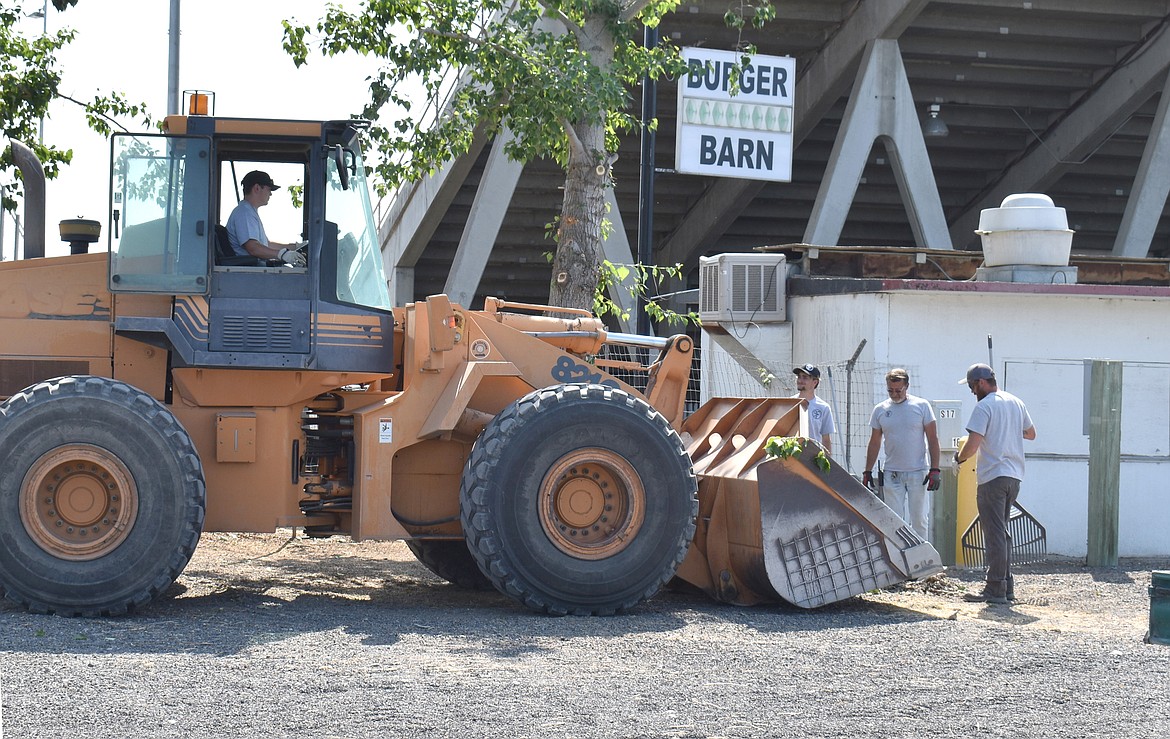
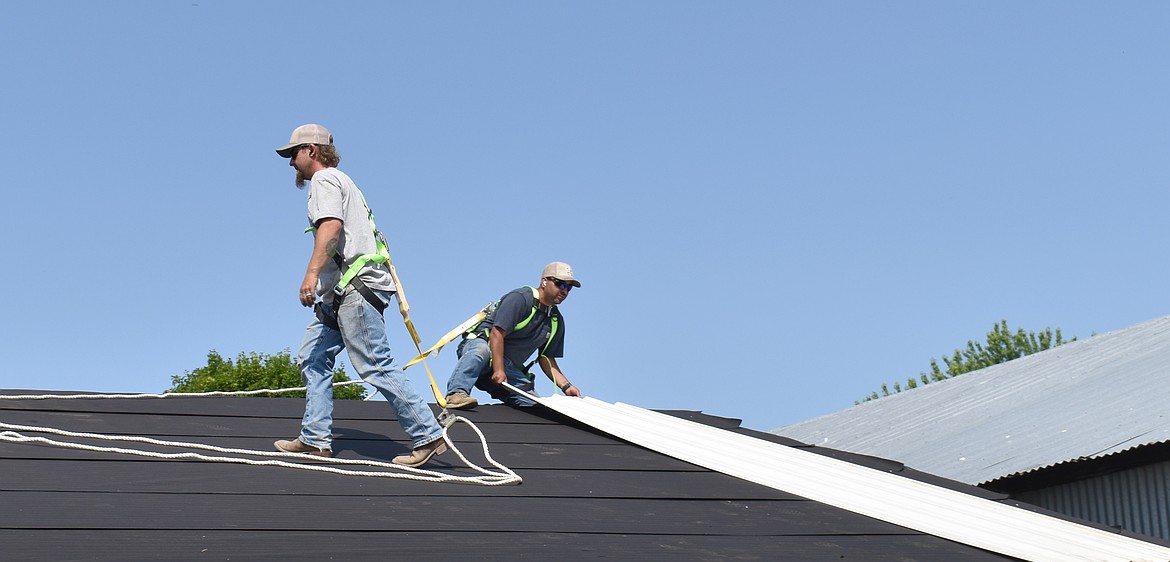
All that use means a lot of upkeep. Those thousands of people, no matter how courteous they may be, are going to leave a certain amount of mess and generate wear and tear on the grass, the buildings, the parking lots. Add the improvements that are needed to keep buildings up to code – no small task, given that many of them date to the 1950s – and the maintenance crew has its work cut out for it.

“Our barns, when I first got here (12 years ago), the flooring was really bad,” said events staffer Ken White. “They’ve all been fixed where they’re real nice. The customers love them. And then we put water at all the stalls so the customers don’t have to walk all the way down to the end of the barn to get water (and) electricity by the barns, because in the summer they’ll need electricity to blow dry them or to keep a fan on them or whatever.”

The maintenance team is constantly making improvements, said Maintenance Supervisor Chris Turner, like adding lighting in the south field where the carnival sets up and more stalls in the rodeo grounds.

“I have two maintenance (workers) that do all the maintenance repairs and remodeling what we can of the buildings,” Turner said. “And then I have one guy that his strict duty is water and fertilizer and sterilants and sprays, and he helps out when he’s not busy with that.”

Having a lot of community support helps. Every July, a few weeks before the fair, the fairgrounds holds a Community Service Day, where local residents are invited in to help with tidying up the grounds. That call doesn’t go unanswered, White said.

“We’ll get 100 or 150 people that’ll come in and volunteer their time,” he said. “They’ll just go out and do all kinds of painting and cleaning and raking and trimming and you name it. (In) one day they knock a lot out. They’ll paint 50 picnic tables. They’ll paint four or five barns. They’ll go along all the trees and trim them all, get all the brush out and put it in the dumpster. It really helps clean us up.”

All that work pays off for the community, McKiernan said. An economic impact study done in 2021 showed that the fairgrounds brought in $14-15 million into the county. By now that figure is probably closer to $20 million, he said.

“The nice thing about the facility is that it’s drawing people from outside the area, bringing their money in,” McKiernan said. “Tourists are great, because they come here, they spend their money and then they leave. It doesn’t impact housing, it doesn’t impact schools, social services much, because they’re coming here and then they leave and they go back to wherever they’re from … and that’s not a bad thing.”

In the end, though, the purpose of the fairgrounds is to be a gathering place for Grant County, a purpose it’s served for more than 70 years.

“What drew me to work here was being a part of something bigger,” Martinez said. “The fair especially. It’s a lot of tradition that goes down different generations. Grandparents grew up coming to the fair and showing at the fair, and now their grandkids or great-grandkids are showing at the fair.” 


    Maintenance workers at the Grant County Fairgrounds never lack for things to do. From left: Colby Carvo driving the loader, Brodie Holland, Ken White and Zach Russell.
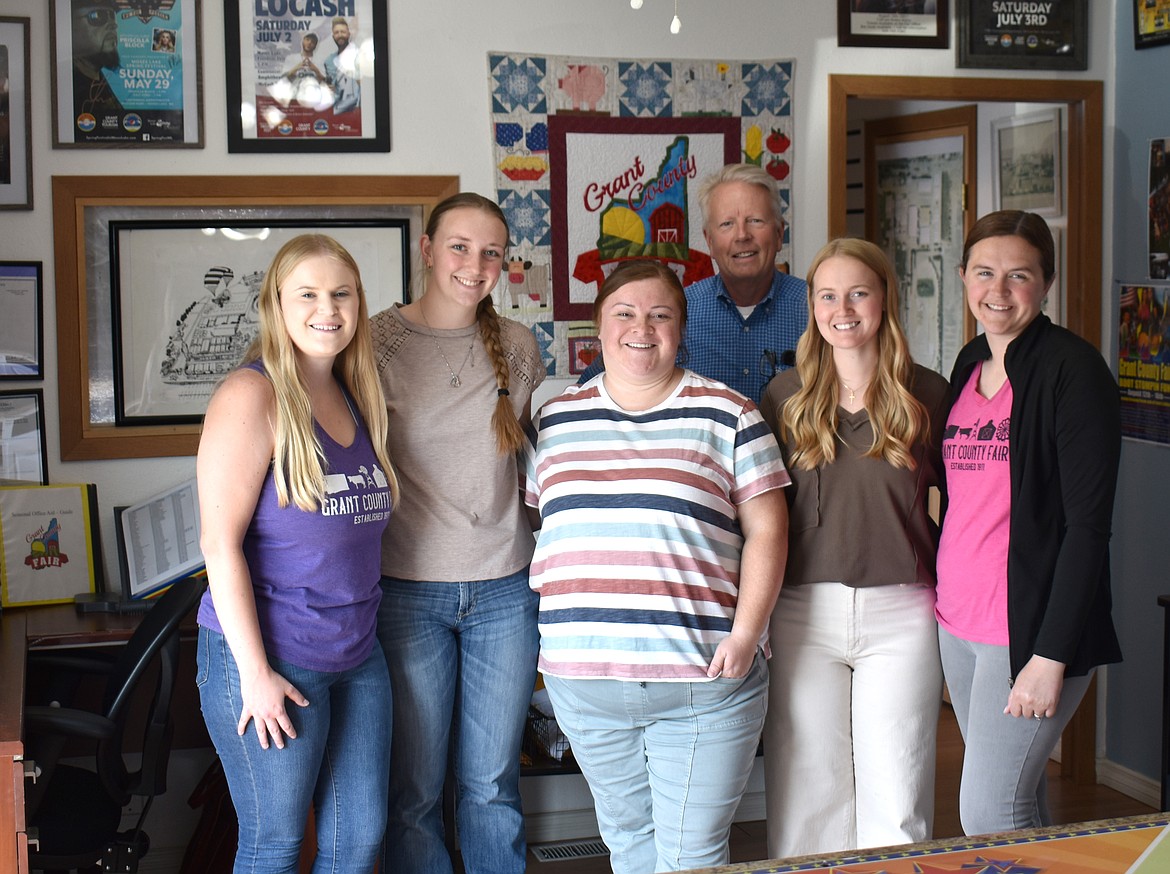


    The office staff at the Grant County Fairgrounds may not get out in the elements as much, but they keep things running smoothly. From left: Shayla Anderson, Molly Sackmann, Rebecca Martinez, Jim McKiernan, Kendel Dowers and Roslyn Russell.