Whooping cough cases surge in 2024 in WA
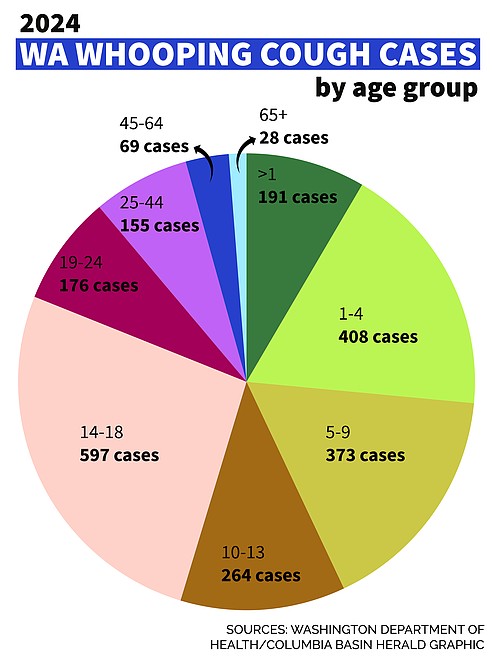
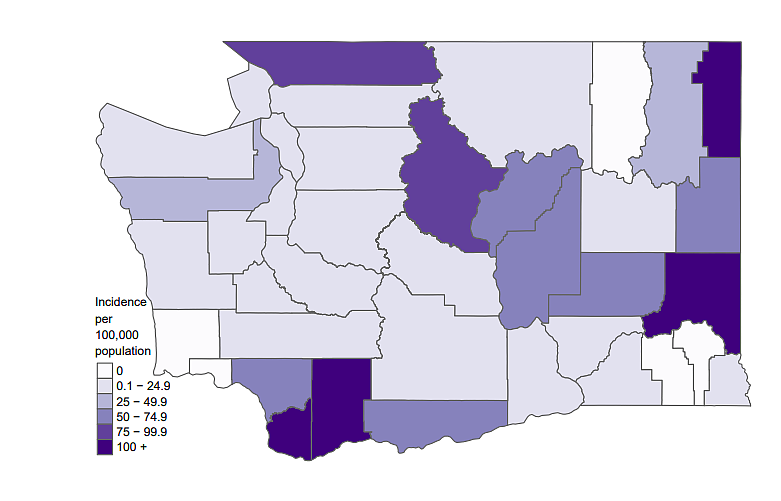
OLYMPIA – Washington state saw a rise in whooping cough cases in 2024, with 2,261 confirmed and probable cases reported in preliminary figures.
This marks an increase from 87 cases reported in the previous year, creating a 25-fold surge in incidences of this highly contagious disease, according to the Washington State Department of Health.
The data indicates that as of May 31, there have already been 1,314 cases statewide this year, according to DOH.
In 2024, Grant County saw around 67 cases and Adams County saw 13, according to preliminary data from the Washington State Pertussis Summary.
The Centers for Disease Control is reporting a similar trend to Washington’s, with preliminary data for the nation showing six times more cases in 2024 as in 2023. According to the end of the year report there were around 35,000 cases in U.S. residents, excluding U.S. territories. In 2023, there were only about 7,000 cases.
Pertussis, commonly known as whooping cough, is caused by the bacteria Bordetella pertussis, and can lead to severe respiratory complications, especially in infants under one year old.
The disease is transmitted through respiratory droplets and can cause coughing spells that make it difficult for individuals to breathe. In vulnerable populations such as young children and pregnant individuals, complications can be severe, including pneumonia, seizures and even death.
Washington reported its first whooping cough-related death since 2011 this year, according to the DOH.
The DOH urges families to ensure that their children are fully vaccinated against whooping cough to mitigate the disease. Vaccination is especially crucial for pregnant women, who can pass protective antibodies to their unborn children, and for caregivers, family members, and anyone frequently in close contact with infants.
Health officials emphasize that maintaining high vaccination rates is key to controlling the spread of whooping cough.
The DOH recommends that individuals, especially those at higher risk of severe illness, stay informed about vaccination schedules and seek immediate medical attention when exhibiting symptoms of whooping cough, which may resemble those of a common cold initially.
For further information on whooping cough prevention and vaccination resources, residents can visit the DOH’s official website or consult with healthcare providers.