
Civil Air Patrol cadets take to the skies over Ephrata
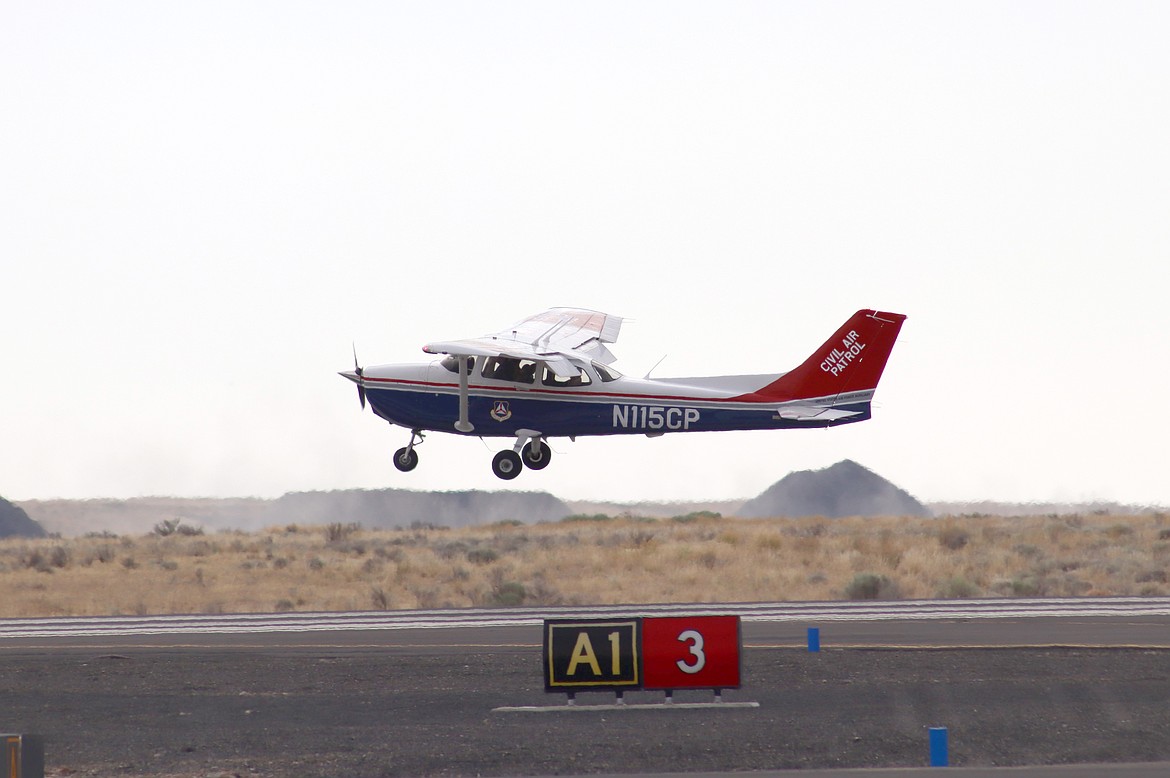
A Civil Air Patrol cadet prepares to land at Camp Boucher in Ephrata as part of the Desert Eagle Flight Academy, wrapping up this week.
COURTESY PHOTO/CIVIL AIR PATROL
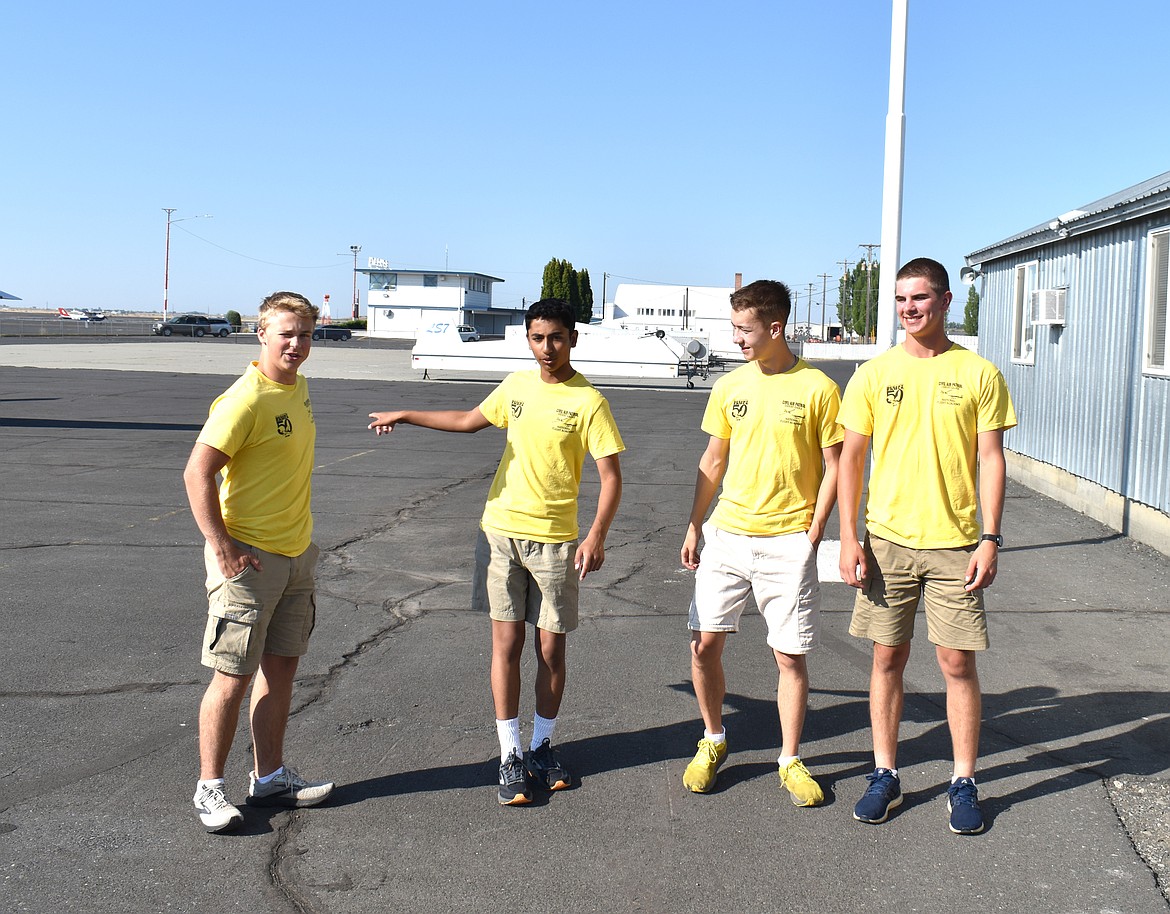
From left: Civil Air Patrol cadets Brenton Natale, Aneesh Tak, Simon Callihan and Andrew Poole stand on the tarmac at Camp Boucher at the Port of Ephrata Wednesday. All four had just completed their solos for the Desert Eagle Flight Academy.
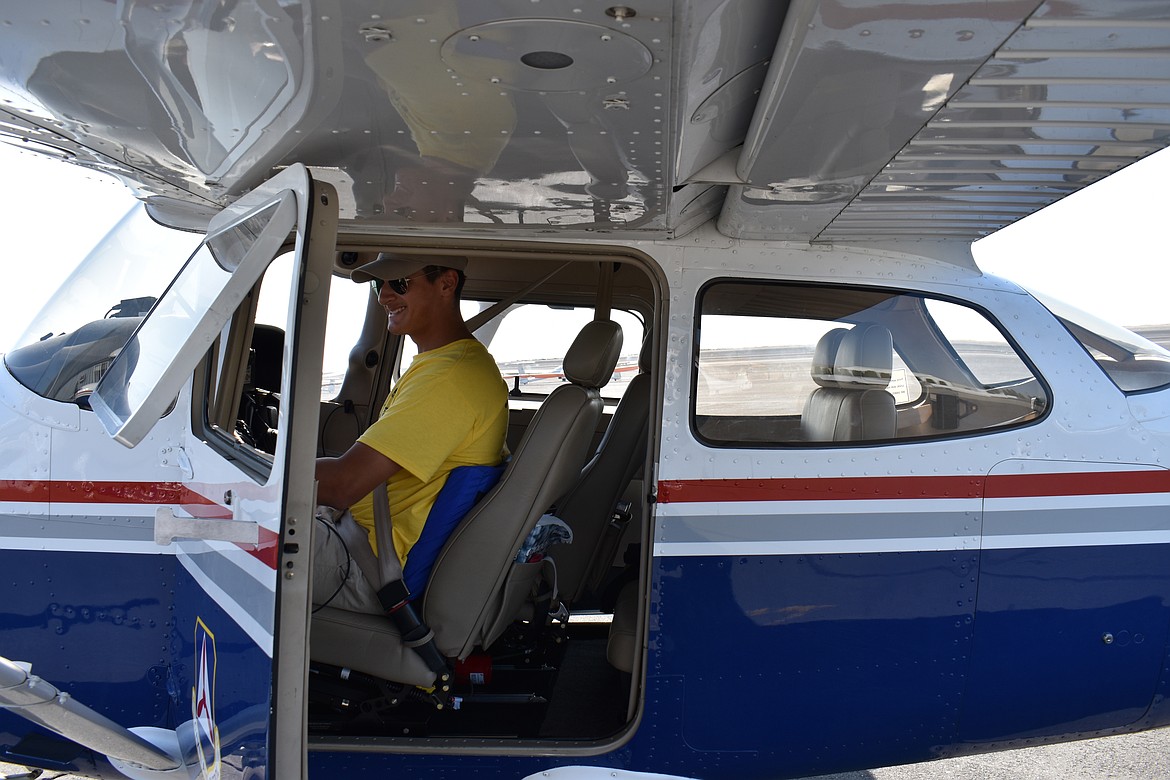
Civil Air Patrol cadet Alex Nouripour prepares for his solo Wednesday morning.
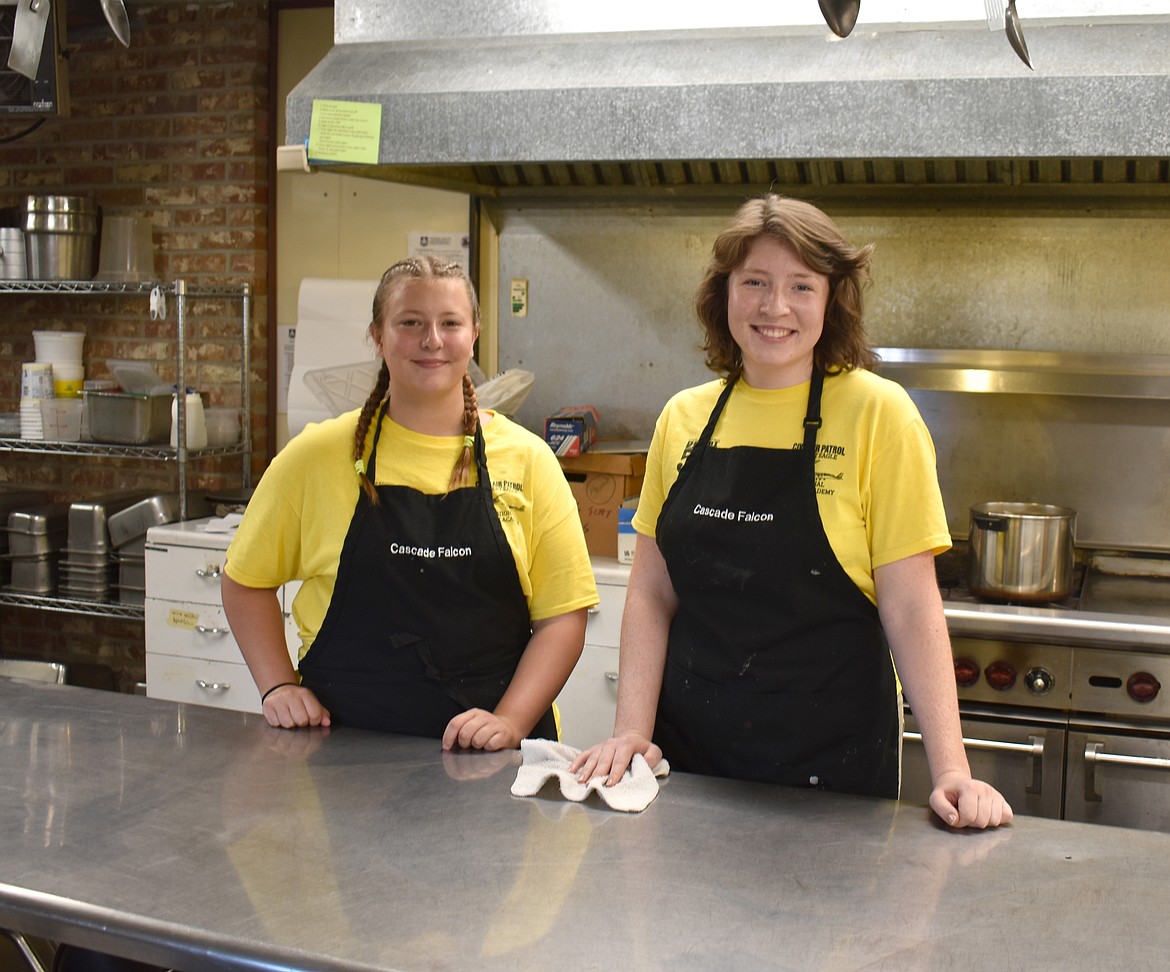
Cadet MSgt. Maddie Drake, left, and Cadet Commander Lydia Breidenthal stand in the kitchen at Camp Boucher. The two have been spending long hours behind the scenes at the Desert Eagle Flight Academy, making sure the cadets are fed and the facilities are in good order.
EPHRATA — There couldn’t have been a better climate to teach teenagers to fly in.
“We’ve had really good weather,” said Civil Air Patrol Lt. Col. Kathy Maxwell. “Usually by now we’ve had a smoke day or a windy day, or an overcast day.”
The CAP cadets are wrapping up the second week of this year’s Desert Eagle National Flight Academy, held every year at Camp Boucher at the Port of Ephrata. Nineteen cadets from around the country, plus one from Japan, came to Ephrata to learn the basics of flying: airplane systems, pre- and post-flight procedures, navigation. In between they’re flying around the Ephrata Airport, first with instructors, then finally solo. The skies between Ephrata and Moses Lake are pretty mellow for flying, but that doesn’t mean there will be no surprises, cadets said.
“(There was) a thermal, so when I was coming in for the landing I had to cut the power, and my plane turned basically into a glider,” said Cadet Lt. Simon Callihan, 16, of Renton. “I’d flown the pattern a couple of times before that, so I was ready for it. It’s just a little bit disorienting; it’s different from what we trained for.”
The pattern, explained Cadet Capt. Alex Nouripour, of Dublin, Calif., is a circuit the cadets fly from the airport, navigating by dead reckoning from landmarks on the ground, including the Ephrata Gun Club and a house on the other side of SR 282. If they get too close to Grant County International Airport, then things get complicated and they have to contend with flights from Big Bend Community College, so the pattern sticks close to Ephrata, explained Major Jim Davis, one of the instructors for the academy.
Soloing wasn’t as intimidating as it might sound, said Cadet Capt. Brenton Natale, 16, of Redmond.
“I was nervous at the start, like when I did my first radio call. Then once I got into the groove I was ready to go,” he said. “With the instructor it’s a little more stressful, so that during the solo, if anything went wrong, it would be routine and you’d be used to it. So, if anything, the solo was less stressful.”
Natale is planning to go into the military and learn to fly helicopters, he said.
“It just seems like more fun than sticking with cargo,” he said.
Cadet Capt. Andrew Poole, also of Redmond, also had military ambitions.
“Hopefully I’ll be at the Air Force Academy next year and then fly after that,” Poole, 17, said. “I wanted to do this for a few years for fun, to get used to flying, see what it’s like, make sure it’s really what I want to do.”
Not all the cadets had military plans. Cadet Commander Lydia Breidenthal of Dallas got her private pilot’s license through Civil Air Patrol and now plans to get certified to work as a flight instructor and has started building hours toward becoming an airline pilot.
A cadet commander’s job is mostly to make sure things get done, Breidenthal said.
“It entails a lot of cooking and helping out in the (dining facility),” she said, “making sure the cadets are focused on their studies and making sure the logistical needs of the building get done. Cleaning bathrooms, things like that.”
It actually takes a lot of behind-the-scenes work to pull off a flight academy, Maxwell said. Nineteen staff members, all unpaid volunteers, came from as far away as Texas to help bring off the two-week course. One of these was Ron Wheeler of San Diego.
“I’m the operations guy,” Wheeler said. “I’m in charge of … getting all the paperwork done. And as simple as that sounds, that’s pretty time-consuming for 20 students.”
“There’s a lot of information we have to put in for each individual flight,” said Public Information Officer Austin McCoy. Each flight a cadet makes has to have its own file, with documentation of a safety officer’s inspection and approval, and then a record of the flight being completed. It’s the same procedure they go through when a CAP pilot goes out on a real-world mission, whether it be search and rescue, disaster relief or aerial photography.
Cadet Master Sgt. Maddie Drake of Ephrata was also content to serve in the background. She was working in the kitchen at the impressive task of keeping 20 teenagers fed. That takes some time and commitment, she said.
“I go to bed at 8:30 and wake up at 4,” she said. “I work with it and I overcome. There’s a lot of flexibility (that’s needed).”
Drake is going to be a freshman at Ephrata High School in the fall, she said. She’s not really thinking about flying herself but thought she might like to be a public information officer.
Ephrata hosted the first CAP flight academy in Washington state 50 years ago, said Col. Dave Lehman, the director of the program. Lehman was in charge of that first academy, which involved six cadets, two instructors and a cook, he said.
“One of the six cadets has retired from Alaska Airlines as a pilot,” Lehman said. “One of the instructors has retired from United Airlines. I went into the FAA as an air traffic controller and safety inspector.”
One of the cadets at that first academy had planned to fly helicopters in the National Guard, Lehman said, but died young in a motorcycle accident.
“I always tell the parents, airplanes are safe, motorcycles are not,” he said.
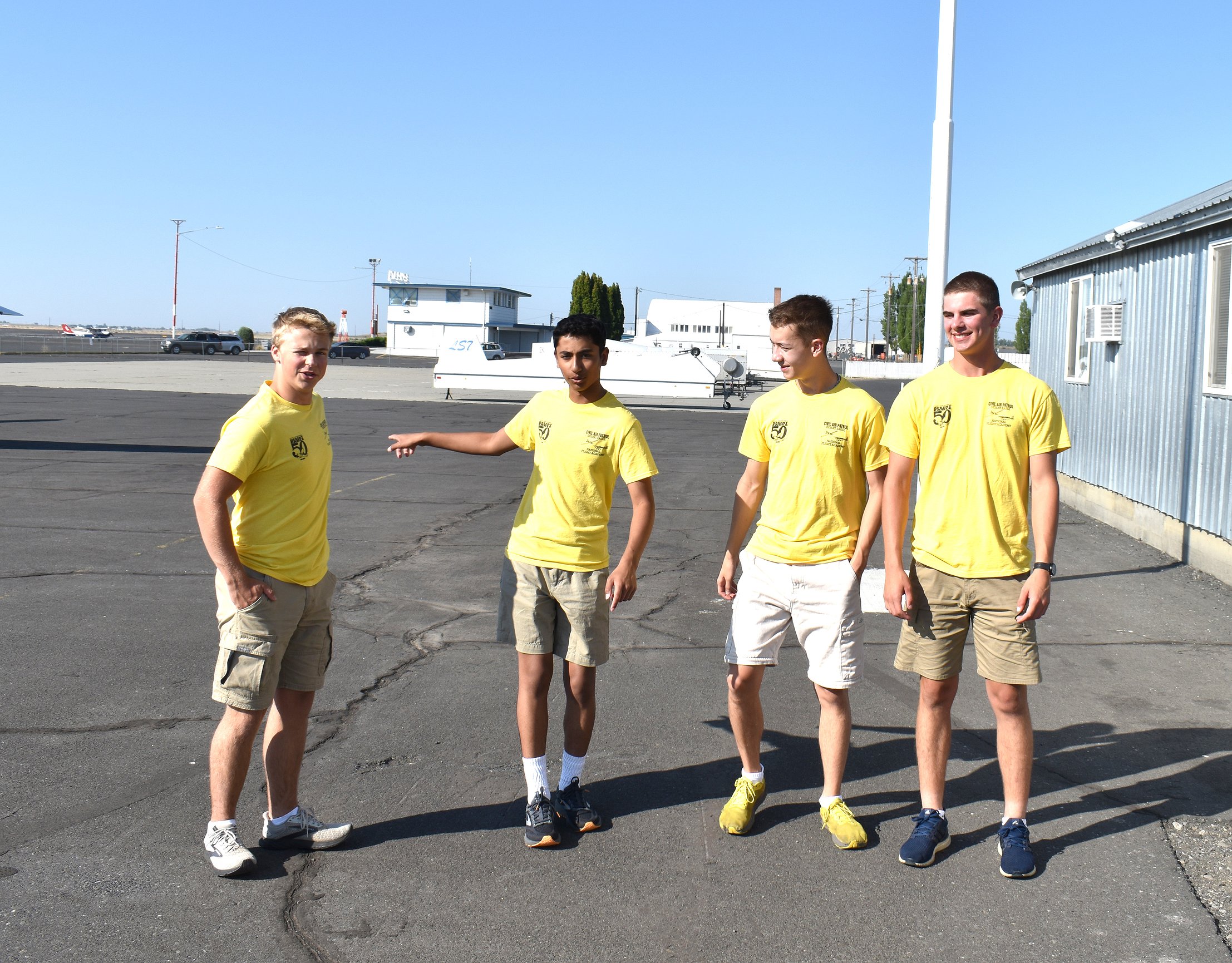 From left: Civil Air Patrol cadets Brenton Natale, Aneesh Tak, Simon Callihan and Andrew Poole stand on the tarmac at Camp Boucher at the Port of Ephrata Wednesday. All four had just completed their solos for the Desert Eagle Flight Academy.
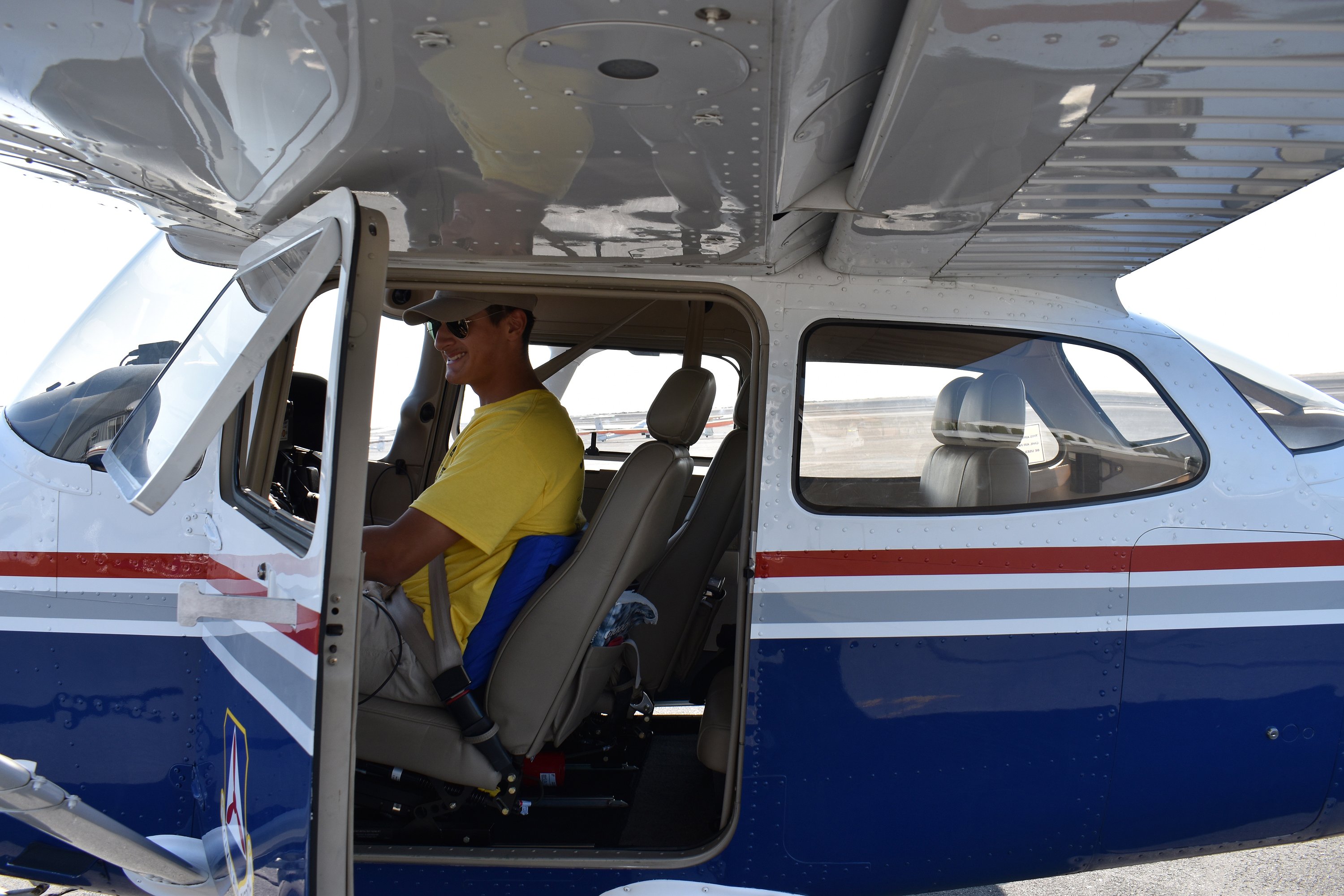 Civil Air Patrol cadet Alex Nouripour prepares for his solo Wednesday morning.
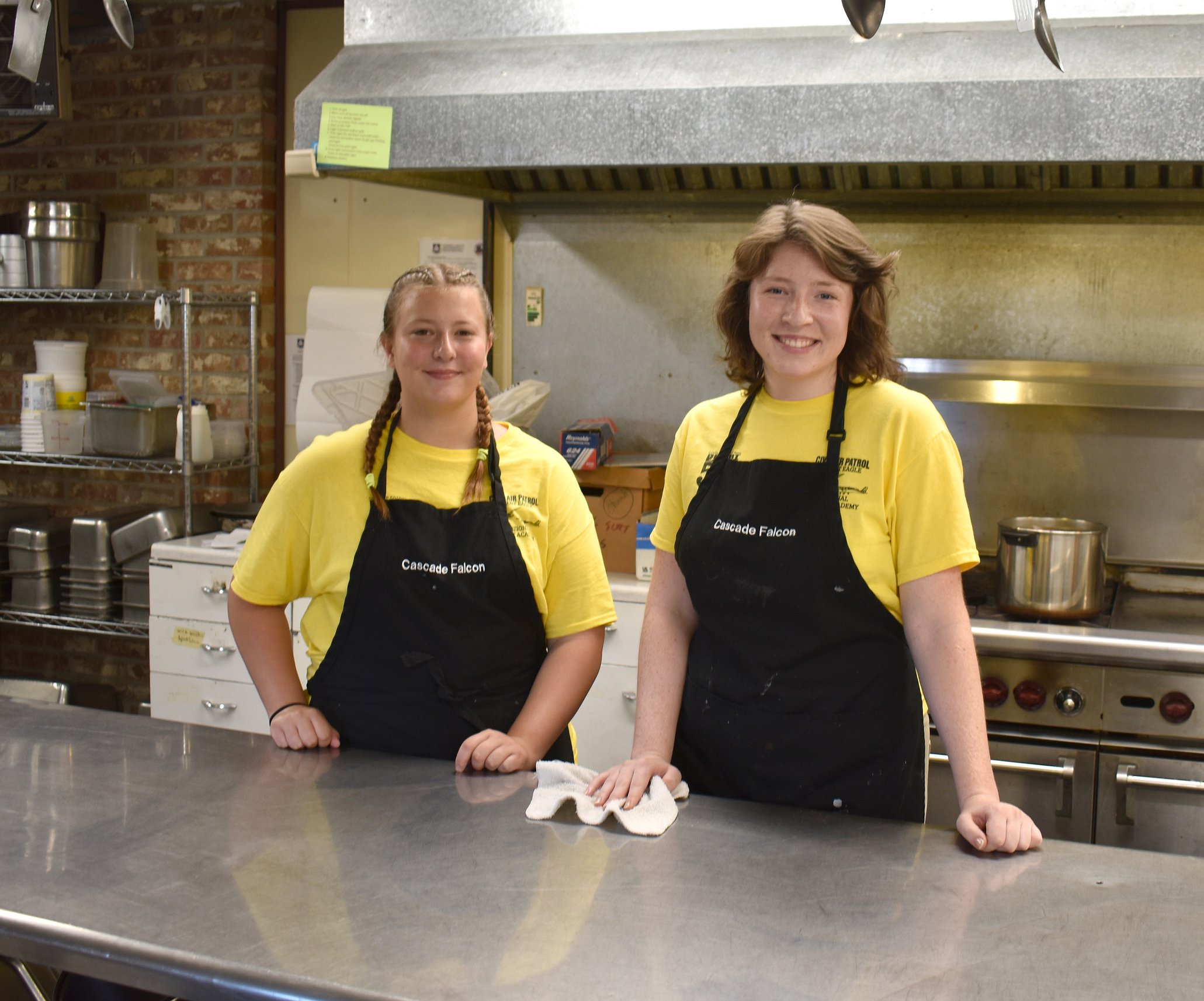 Cadet MSgt. Maddie Drake, left, and Cadet Commander Lydia Breidenthal stand in the kitchen at Camp Boucher. The two have been spending long hours behind the scenes at the Desert Eagle Flight Academy, making sure the cadets are fed and the facilities are in good order.