
COLUMN: Name, image and likeness is good for college sports, just mismanaged
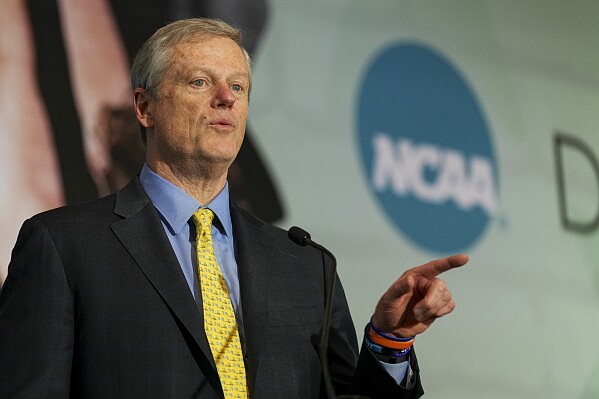
NCAA President Charlie Baker speaking at an annual convention for the Division one Business Session. Baker has been involved in many discussions around NIL compensation and has called for regulation on NIL deals.
AP Photo/George Walker IV, File
In the last few years of collegiate sports, we have seen name, image and likeness, NIL, completely flip the sports world on its head. Many fans across social media and in discussions have made claims that it has ruined the sports they love.
While it has changed the way teams function, mainly in football, NIL is an important fundamental right of college athletes. Up until 2019, when California passed the Fair Pay to Play Act, allowing college athletes to earn money from their NILs, the NCAA profited off their names.
However, anytime players or coaches were involved in a situation where they profited from the same thing, they would be punished through suspensions and award reductions. So, it was great to see this glaring hole in the system addressed at the time.
The brand that is the NCAA and the brands that many schools have are built off the production and hard work of college athletes. Not to be compensated for that and reap the same benefits that top brands like SEC schools and Big Ten schools do is a major shortfall for college athletes.
It's been interesting to see the number of 18- and 19-year-olds becoming millionaires before even touching the field or court. NIL has reshaped recruitment, and many arguments are made that it has destroyed program loyalty. It is a fair case to make; former Tennessee Volunteers quarterback Nico Iamaleava is a perfect example of it.
Over the course of the offseason, Iamaleava looked to renegotiate his NIL deals with Tennessee by seeking more money to stay with the school. This created a heated mainstream media debate and ultimately led to him transferring to the UCLA Bruins after Tennessee wouldn't come to the table with him.
Program loyalty has been negatively impacted by the rise of NIL deals and the use of the transfer portal. The portal has created the collegiate version of free agency. While both concepts are important to the function of college sports, they must be regulated.
With NIL deals driving recruitment at the high school level and in the portal, players should not be able to force programs into renegotiations with ultimatums of jumping into the transfer portal.
The best place to start is the NCAA, finding ways to collaborate with state governments to standardize rules, preventing bigger athletic programs from abusing these resources. As of now, states make their own laws around NIL compensation, most of which allow booster collectives to influence recruits to commit to their schools with NIL money. The NCAA has clashed with these laws on several occasions, but it is often ignored and rendered powerless.
It would be a complicated road to finding common ground on a universal rule, but all parties should work not to compromise an athlete’s right to profit from their name, image and likeness. What comes to my mind is how beneficial NIL deals are to young athletes who come from difficult economic backgrounds.
Until NIL money was allowed, many athletes from challenging environments had to bank everything they could on making it to the professional level. The probability of making it to the professional level of any sport is low, and even if some make it, not all experience the necessary longevity to benefit financially.
With NIL money, these athletes now have a leg up, and it’s not the end of the world if they don't make the NFL or NBA. They still receive an opportunity to create financial opportunity without having to wager their whole lives on their sport of choice.
As the era of NIL continues, programs and organizations will only continue to challenge the boundaries of the NCAA’s rules around NIL compensation. The sooner regulation can be made to give athletes and schools a balanced playing field, the sooner tradition and pageantry can be preserved in this modern era of collegiate sports.