
13th district lawmakers discuss session
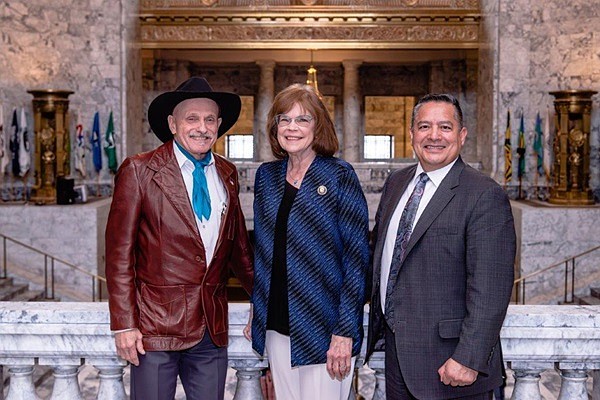
Rep. Tom Dent, R-Moses Lake, Sen. Judy Warnick, R-Moses Lake, and Rep. Alex Ybarra, R-Quincy, represent Washington's 13th legislative district in Olympia. The trio held a virtual town hall to update constituents regarding the 2025 Washington Legislative Session.
FILE PHOTO
OLYMPIA — Residents of Washington’s 13th legislative district gathered virtually Wednesday evening with lawmakers to discuss key legislative topics and address constituent concerns.
The webinar began with lawmakers highlighting their recent legislative activities. Sen. Judy Warnick, R-Moses Lake, discussed her bills promoting agro-tourism and livestock identification while Rep. Alex Ybarra, R-Quincy, spoke about HB 1253 which expands the types of joint agreements public utilities can make with private entities regarding energy resources. Ybarra’s bill recently passed through the House and is now under Senate consideration.
“We already have more than 1,000 bills. I think 1,020-some have been dropped,” said Rep. Tom Dent, R-Moses Lake, in opening statements. “That's more than we've seen since I've been here in one session.”
More than 150 constituents attended, raising questions about lawmakers’ accessibility, the clergy report mandate, and the mileage usage tax.
Michael Hendricks of Kittitas County expressed frustration over Warnick’s voting record on various Human Services bills. He claimed he emailed Warnick but never received a response, questioning her accessibility.
Warnick replied, saying she believes some proposed Human Services bills do not necessarily work to help constituents but instead increase costs for taxpayers.
Dent added that lawmakers receive a high influx of emails daily, often with only one staff member available to assist. Despite the challenges of timely responses, he emphasized that legislators are dedicated to being present and engaged with their constituents
“We go to dinners, we go to parades, we go to fairs, we try to be out there all the time. It's really important,” said Dent.
District resident Mitch Melin questioned legislators about their opposition to SB 5375, which would require clergy members to report child abuse or neglect, even when disclosed during confession.
“Children get lost in the discussions, committees and on the floor over this issue, and it's not all about the Catholic Church,” stressed Melin.
Ybarra and Warnick, who are both Catholic, argued that the bill would change the nature of their religion, as priests are bound by confidentiality in confessional settings.
Dent, who is not Catholic, also expressed skepticism about the bill’s effectiveness. He questioned whether the bill would help children as he does not think individuals would confess to something they could be charged for.
“We need to make sure that we're not going to have unintended consequences come out of this before we can move something like this along,” said Dent.
The discussion shifted to the Climate Commitment Act and the proposed pay-by-mile tax.
Washington’s gas tax under state law is currently 49.4 cents per gallon, according to the Washington Department of Revenue.
Dent explained that as vehicles become more fuel efficient and electric cars become more popular, tax revenue to build infrastructure is declining. A recent hearing in the Transportation Committee proposed to replace that lost revenue with a mileage usage charge.
According to the bill, the mileage usage charge would require drivers to pay 2.6 cents per mile with all paid gas taxes written off the charge.
“Twenty thousand said no, and a little over 200 agreed with it,” said Dent. “I don't think that will go anywhere at the moment.”
Dent suggested that money from the CCA could be allocated into the transportation budget, however; he was met with stern opposition as well.
He also said he is working to ensure farmers receive the exemption benefits originally outlined in the CCA, allowing them to buy gas at a reduced price.
“It's a very complex, complicated formula, but we're trying to find an answer here so we can have a little more clarity and a little bit more accountability,” said Dent.
The town hall concluded with legislators encouraging the audience to stay engaged and to provide feedback in their legislative decisions.
“Keep giving us your comments. We listen to all of them,” said Ybarra. “That's how we usually adjust our votes by listening to you.”