Ephrata students give insight into proposed EP&O levy
EPHRATA – On Feb. 11, the Ephrata School District will have results from the proposed Education Programs and Operations levy on the ballot. The levy is seeking to collect approximately $11.5 million over the next four years at a proposed rate of $1.85 per $1,000 of assessed property value. The funding is intended to address gaps between state funding and the actual costs of operating the school district.
Superintendent Ken Murray emphasized that approving the levy would unlock over $13 million in state funds from Local Effort Assistance. The LEA funding is provided to districts who are considered “property-poor” on the condition a local levy was passed by voters.
“When voters approve a levy in the range of $1.50 to $2.50 per $1,000, it allows us to access state funds,” Murray stated.
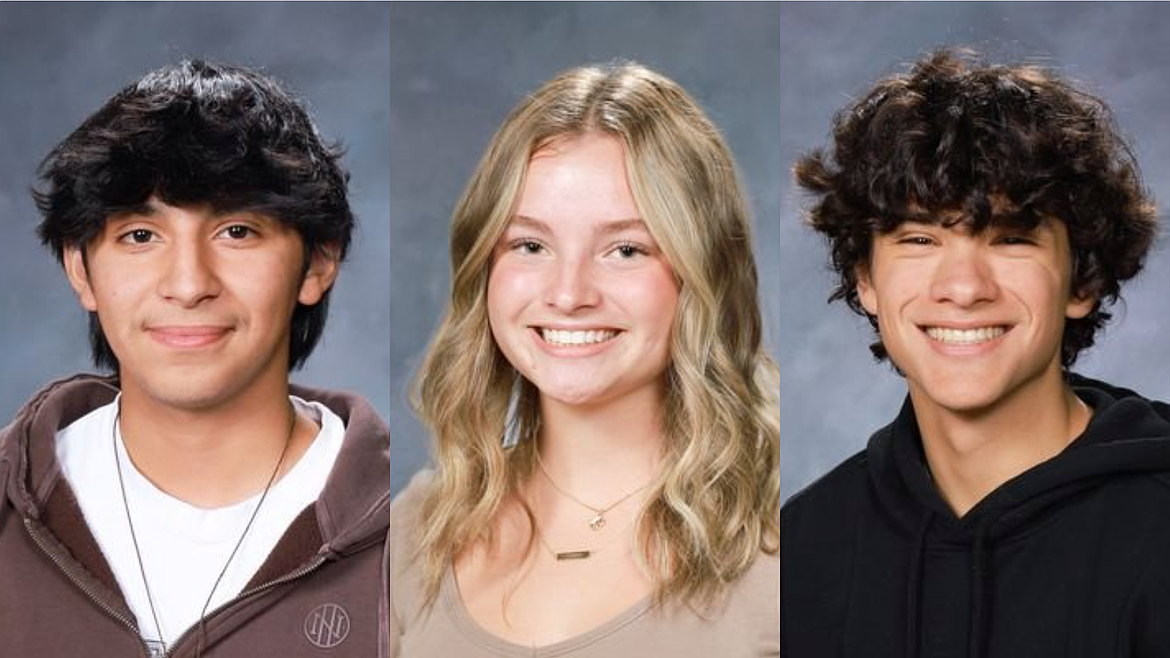
Students at Ephrata High School shared their perspectives on how the levy impacts their educational experience. Payton Canfield, a sophomore and active participant in various extracurriculars, underscored the importance of safe and productive learning environments.
"It's important to have a safe environment, and students perform better when they feel safe and they can focus on their academics without fear or anxiety of their safety in the classroom,” Canfield said.
Similarly, senior Charles Flynn noted the correlation between safety and security funding and students' academic focus.
“If students don't feel safe, then they can't concentrate on their learning, and they can be in danger, obviously, but if we have good security and safety, then students can feel safe, and by feeling safe, they can actually focus on their learning,” Flynn said. “So it plays a big role.”
Roberto Araujo, an 11th-grade student involved in multiple extracurricular activities, recognized that these programs are essential in fostering personal growth and community connection.
“I get to learn so many new skills and meet many new people,” Araujo said.
Flynn is the Associated Student Body president, and he said that has provided him with a lot of opportunities. He said he enjoys advocating for better, more positive environments in school and his role in ASB has allowed him to do so.
“As for the other things, such as choir and tennis, they just make me want to come to school, and by me wanting to come to school, and it makes me value my education more and provides for a more positive school experience in general,” Flynn said. “Same thing with sports, you need to have passing grades to play. So again, it just leads to a more positive learning environment.”
Canfield is a cheerleader at EHS, and she said it has helped her improve in her schooling, particularly with memorizing content for classes.
“With cheer it helps me remember things super well,” Canfield said. “I think it's really impacted me with even things like math, because I feel like, ever since I started cheering, it has helped me remember formulas and stuff like that, because you're constantly having to remember things in cheer. So, it's really great for your brain.”
If passed, the levy funds will be allocated across several key areas, including athletics, educational programs, facility maintenance, safety and security and technology. Technology has been a significant topic among the three students.
“Working technology is essential today, especially since COVID,” Flynn said. “We were sent home, and we were issued school Chromebooks, and since that, a lot of our schoolwork has been online, and so working technology is basically an essential in today's school environment.”
Canfield reiterated a similar sentiment saying around 90% of her schoolwork is on her Chromebook.
“It plays a huge role in our academics, because that's how we get our assignments, how we take our tests, how we have online books, so I'd say it's probably one of the most important things at our school,” Canfield said.
In the discussions surrounding the levy, students also highlighted potential negative consequences should it fail. Canfield expressed concern about decreased access to necessary resources.
“If it doesn’t pass, we may have a reduction in student services, which could limit technology and learning materials,” Canfield said.
She pointed out that families might face increased fees related to sports and extracurricular activities, which would disproportionately affect those already struggling financially.
Students also discussed their thoughts on community support for the levy. Flynn observed that while there are visible signs of support, such as pro-levy posters, some community members harbor mixed feelings rooted in misconceptions about the funding's implications.
"I think a lot of what people think is based on just their misconceptions," he said.
One misconception Flynn mentioned is the idea that this levy is a new tax, however, it is just a replacement levy as the 2021 levy is set to expire this year.
Araujo reiterated these sentiments, emphasizing that education is vital not only to the district but also to the broader community.
"Learning is not only important for this community, but for the rest of the world," he said.
As community members prepare to cast their votes, understanding the nuances of the levy proposal remains critical, according to the three students.
The Ephrata School District has established a website, TigersVote.org, to answer frequently asked questions and clarify misconceptions about the levy.
From left to right: Roberto Araujo, 17, is a junior at Ephrata high School. he is involved in tennis, the Superintendent Advisory Board and Key Club. Payton Canfield, 16 is a sophomore at Ephrata High and is a varsity cheerleader who is also involved in Hope Squad, student council and choir. Charles Flynn, 17, is the Associated Student Body president at the school and is involved in National honor Society, Cabaret, tennis and choir.