
Qualifying irrigation-only wells approved by Moses Lake council
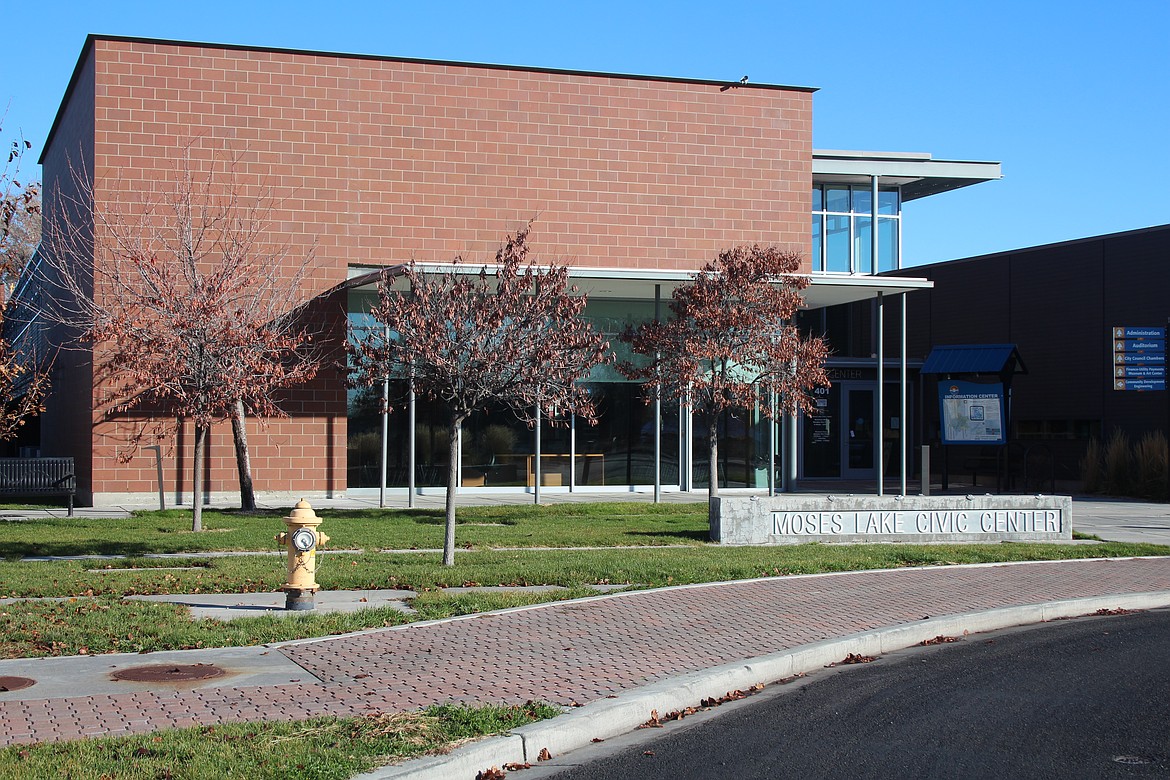
Moses Lake City Council members approved an ordinance allowing qualifying public agencies and semi-public organizations to drill their own irrigation wells.
CHERYL SCHWEIZER/COLUMBIA BASIN HERALD
MOSES LAKE — Public agencies and semi-public organizations will be allowed to drill individual wells to water fields and other publicly accessible green spaces under the terms of an ordinance approved by the Moses Lake City Council at the last meeting of 2025. Council members have been discussing the ordinance for about three months, following a meeting with Moses Lake School District officials.
“We recognize that public and semi-public entities with large green spaces are gathering places, and sports fields, and otherwise benefit our community,” said Leigh Ramsey, the assistant public works director. “So, we’re trying to come up with a way that they can use their shallow water rights to water with a non-potable source.”
The new ordinance follows a discussion between council members and Moses Lake School District officials about water rates. Superintendent Carol Lewis said the district might not be able to keep paying for city water, given the substantial amount of district property that needs water. In addition, spring and summer watering place major demand on the city’s system, which is under strain due to declining water levels in the deep aquifer that supplies the city. The ordinance will allow public agencies like MLSD or a semi-public organization like a private school or church to use their water rights to drill a well from aquifers closer to the surface.
Moses Lake uses water for all purposes that’s treated to drinking water standards. The new ordinance will give some qualifying organizations the option to drill irrigation-only wells, which would have to meet specific water quality standards that are different than drinking water standards.
To qualify, the property must be at least three acres and without access to other irrigation sources such as the Moses Lake Irrigation and Rehabilitation District.
In earlier discussions council members asked about the procedure if a property is sold and converted to a different use, such as housing development. Ramsey said the ordinance includes a clause that a review would be required if the city received a request to change the use of the property from what it was at the time the well permit was approved.
“We added a definition to explain what development is, which could be redevelopment, replatting, (or) subdivision,” Ramsey said.
The city would have the option to allow, or prohibit, continued use of the well.
“This gives us the opportunity to look at it, have those discussions and address it, possibly through a developer agreement at the time of redevelopment,” Ramsey said.