
Positive drama: High school theater gives students confidence, people skills
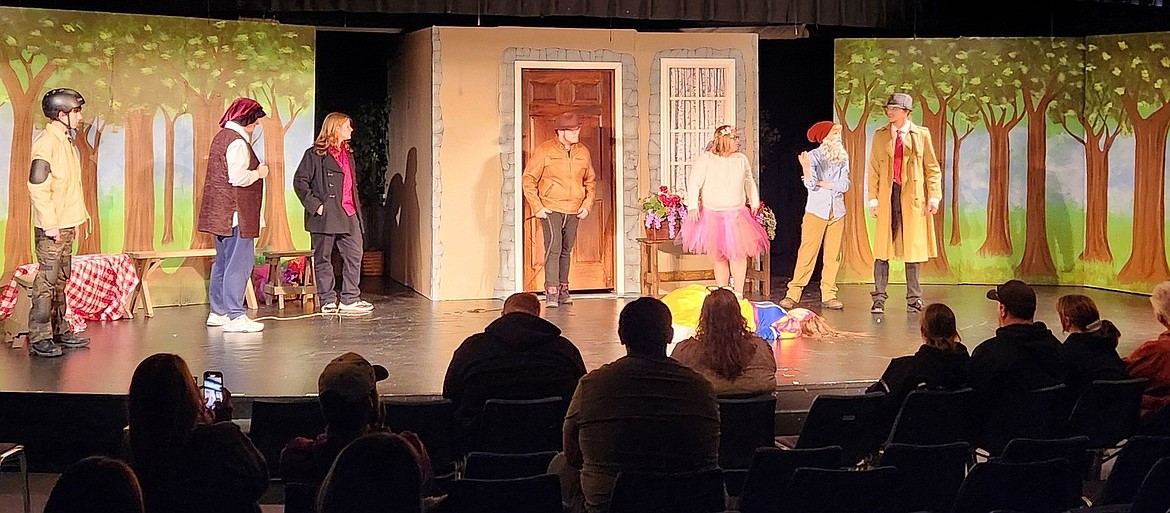
Ephrata High School drama students perform “Snow White and the Seven Endings” in February. High school drama programs give students a chance to build confidence and teamwork, according to EHS drama advisor Marla Allsopp.
FILE PHOTO
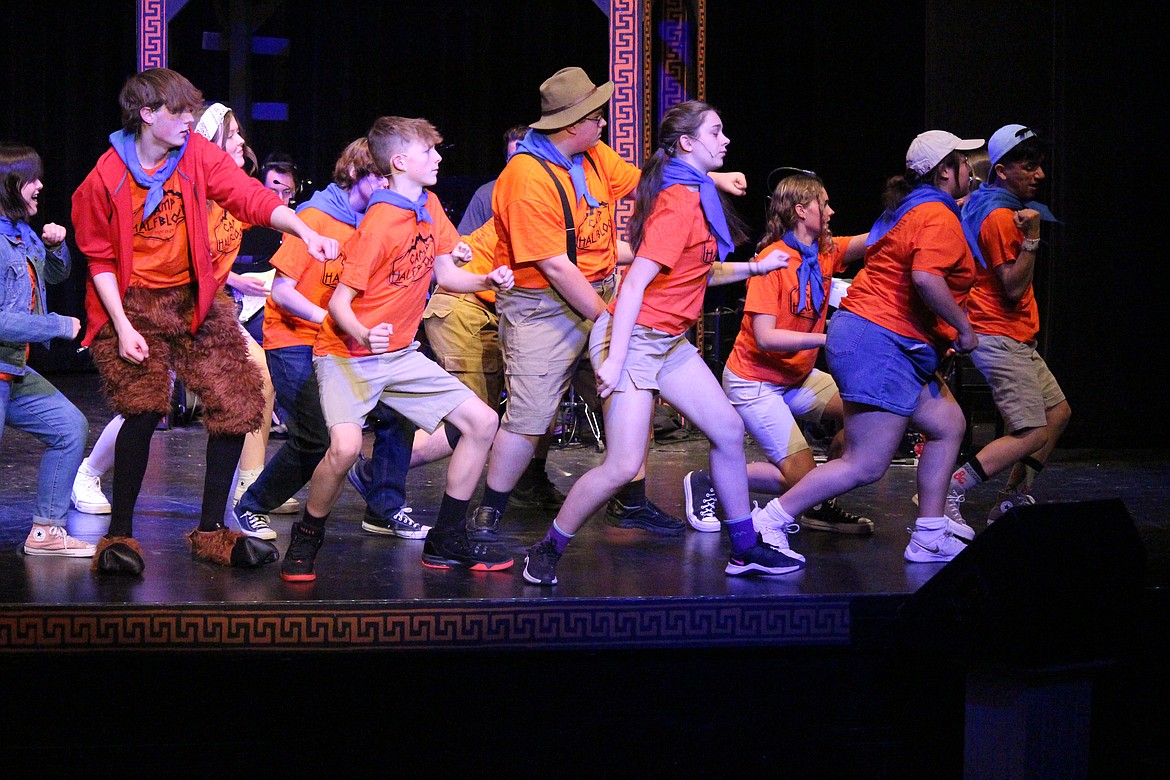
Moses Lake High School students perform in the MLHS production of “The Lightning Thief: The Percy Jackson Musical” last year.
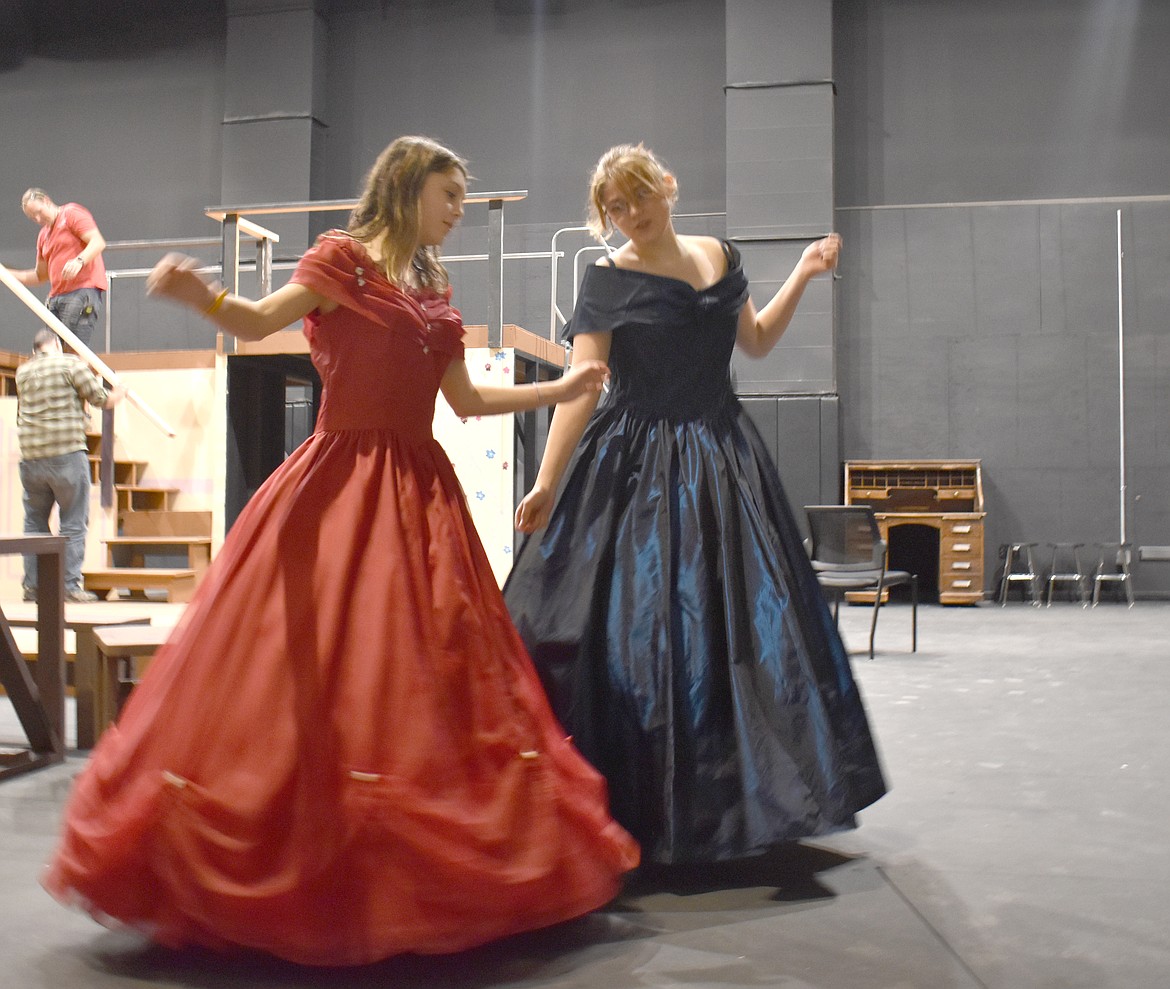
Amberlynn Godfrey, left, and Anjel Johnson demonstrate a dance from the Quincy High School production of “Little Women” last year.
MOSES LAKE — If, as Shakespeare wrote, all the world’s a stage, then a high school drama club must be the perfect place to prepare for life.
“(Students who participate in drama) have a place where doesn't matter what's going on in school,” said Marla Allsopp, drama advisor at Ephrata High School. “They might feel like they don't quite fit in, but when they come to the theater, they're part of that group.”
There’s a persistent stereotype of theater students as misfits, which couldn’t be further from the truth, according to the Educational Theatre Association. Students involved in theater learn critical thinking, teamwork and adaptability, as well as a sense of camaraderie, according to the ETA.
“I wish that people who think that theater kids are weird would give it a chance and see what the kids are really doing and who these kids are, because they're weird in the very best ways,” said Sharon Winningham, who teaches drama at Moses Lake High School and also advises the drama club. “They're such hard working kids who really want to put on a good show and have such a great time working together to do that. And what makes them weird is their willingness to be foolish and take risks. And that's a wonderful life skill.”
“I want to give them a place where they can be a part of something,” Allsopp said. “It's given them so much confidence. And it's kind of cool, too for other staff members to see kids involved in things that you’re like ‘I didn't even know that kid could do that.’ We've had that happen a lot.”
Students who participate don’t have to go whole hog, although many of them do,” Winningham said. She’ll have about 20 students who take it seriously enough to be in most or all of the shows, but sometimes for an individual show she’ll get 40 or more, she said. She started advertising for the fall musical “Mamma Mia” at the end of last school year, and is auditioning Sept. 3.
“I already have almost 40 kids signed up (who are) interested,” she said. “Not all of them will show up to auditions … but most of them will, so they have the summer to practice their music and bug their parents.”
“I've had some shows where I've had as many as 40-45 kids, and some shows I have 12,” Allsopp said. “It just depends on the time of year and type of show. Last year, I think we had 22 (including) stage crew and everybody for our winter play, and then for our spring play we had 15.”
She tries to make sure everybody who wants to participate gets to, Allsopp said.
“Not everybody gets the part that they like, the lead part that they wanted,” she said. “But I do try to include everyone if I possibly can. I feel like I’ve been pretty lucky that I haven't had to make a lot of cuts.”
Many of the students who get involved in school drama hadn’t planned to, Allsopp said. Sometimes they get hooked after seeing a performance, and sometimes they have a friend who does drama and they get swept up.
“That's how I got started in high school,” she said. “It was raining, and my friend was my ride and she (was) auditioning. And the director said, ‘Well, if you're here, you have to audition.’ So (I did) and I got a part. I was like, ‘Sweet. I didn't plan on that. But there you go.’”
The choice of shows is important, Allsopp said. Most students love to do comedy, she said, because if they can make an audience laugh, then they can forge a connection with them. But when it comes to serious drama, they have to work harder.
“We did ‘12 Angry Jurors,’ and they're like, ‘Oh my gosh, this is so hard,’ because you have to pull up a different set of emotions,” Allsopp said. “If it's funny and they get to act goofy, it's a safe place for them to kind of explore that people are actually laughing with them … If you can do dramatic roles, it really does help you in your comedic roles, because it’s about responsiveness. It creates a confidence in them as well, because they can't rely on the laughter. They have to have confidence that their audience is engaged just because of what they're doing.”
The audience is the key, Winningham said. Moses Lake is very supportive of the school drama department, to the point that ticket sales pay for most of the program. Audiences are sometimes skeptical at first, Allsopp said, but one performance often dispels that.
“If I can get them to show up, they're going to come back because they go, ‘Wow, this is not what I thought it was,’” she said. “Once they come in, they realize it is accessible and they can have fun.”
Theater goes a long way toward building the confidence of students who may not shine in athletics or academics, Allsopp said.
“It's hard when you're a teenager to realize that you're good at something,” she said. “So when you can find something like, ‘OK, people like me here, people think I'm good, I can achieve this,’ it really does help you do better in other areas, because you gain that belief that you can.”
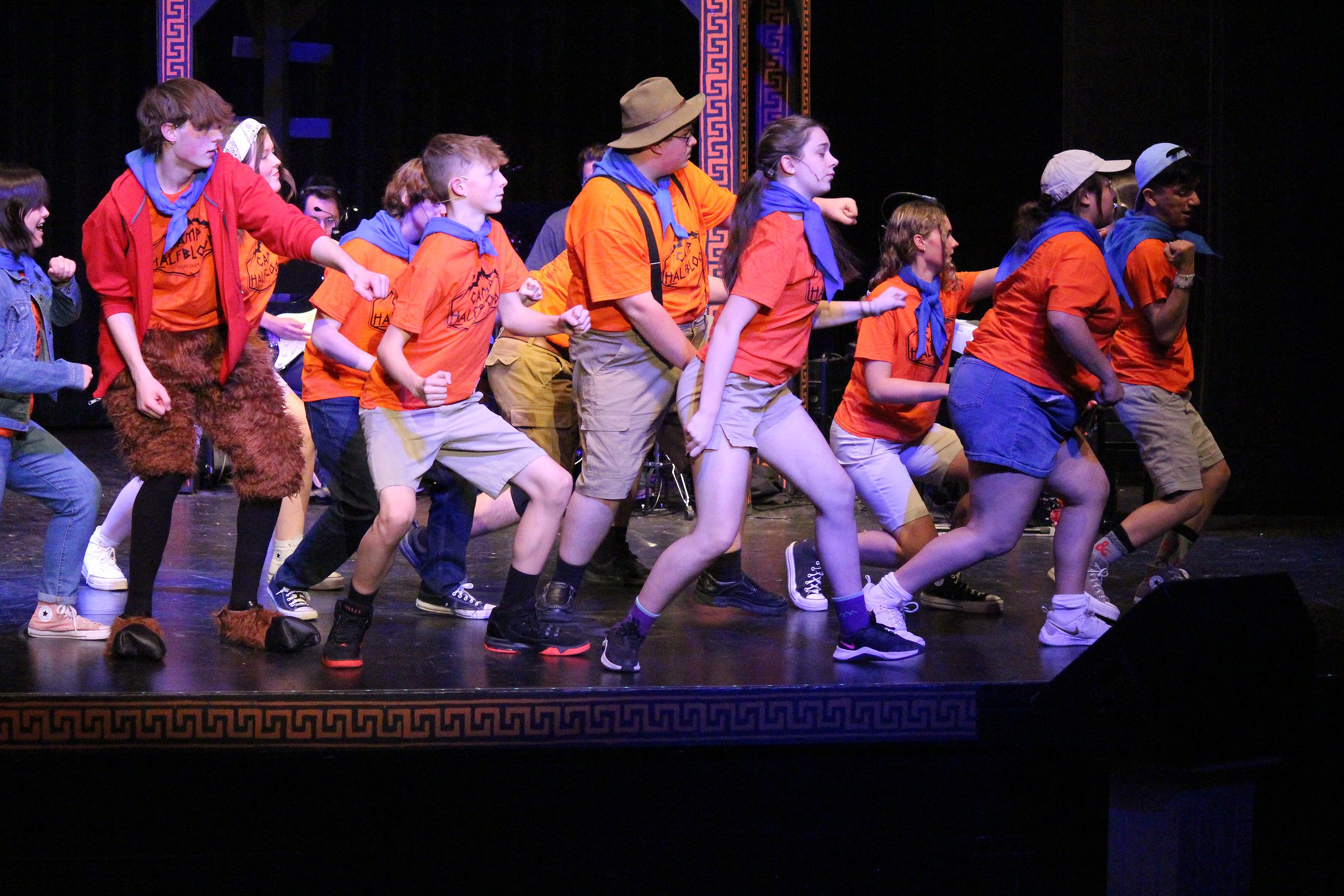 Moses Lake High School students perform in the MLHS production of “The Lightning Thief: The Percy Jackson Musical” last year.
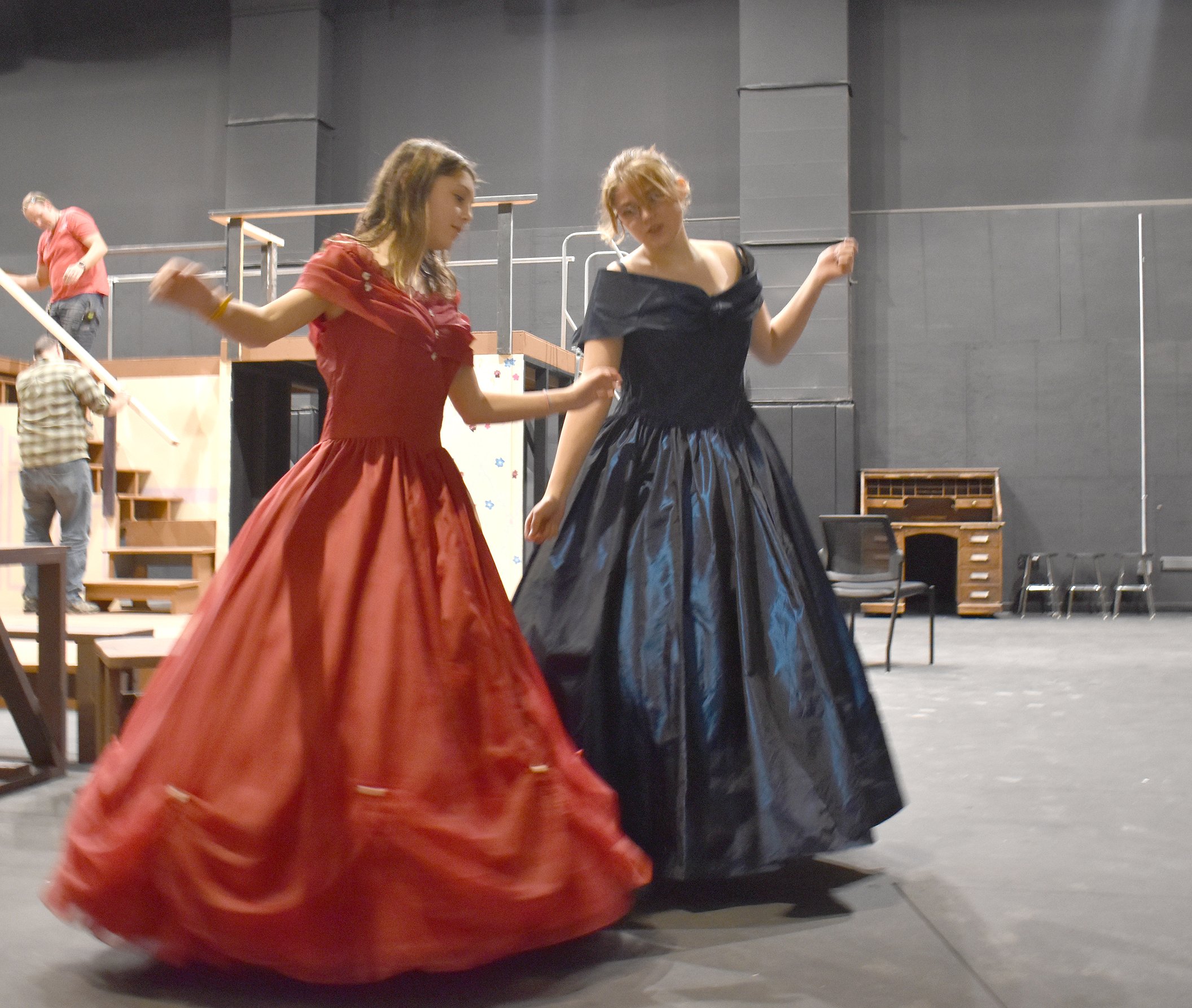 Amberlynn Godfrey, left, and Anjel Johnson demonstrate a dance from the Quincy High School production of “Little Women” last year.