
Planting the future
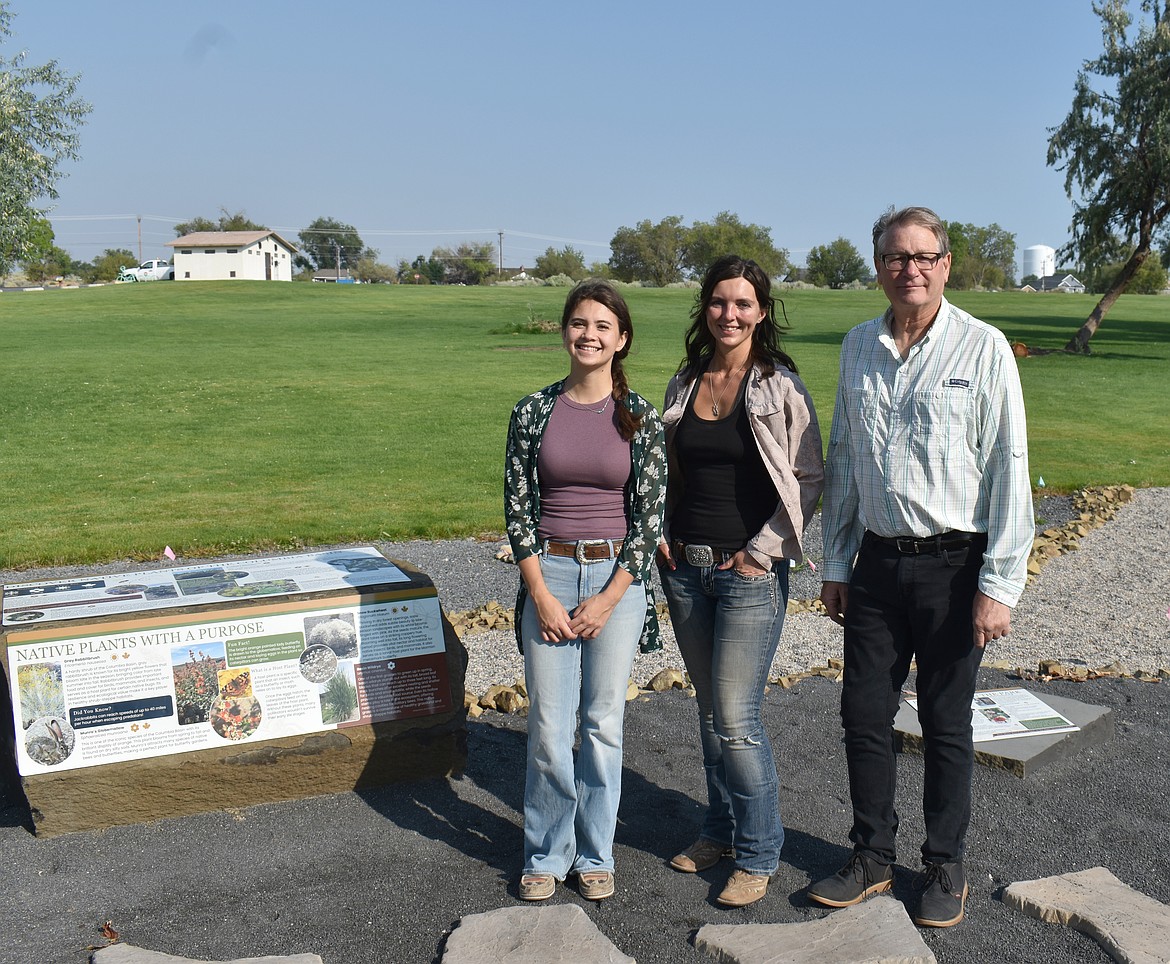
From left: Columbia Basin Conservation District Conservation Director Dinah Rouleau, Education and Outreach Program Manager Kaley Wisher and Conservation Director Ron Sawyer stand in the Heritage Garden at Lower Peninsula Park. The garden has been upgraded with signs explaining the plants and creatures to be found there.
JOEL MARTIN/COLUMBIA BASIN HERALD

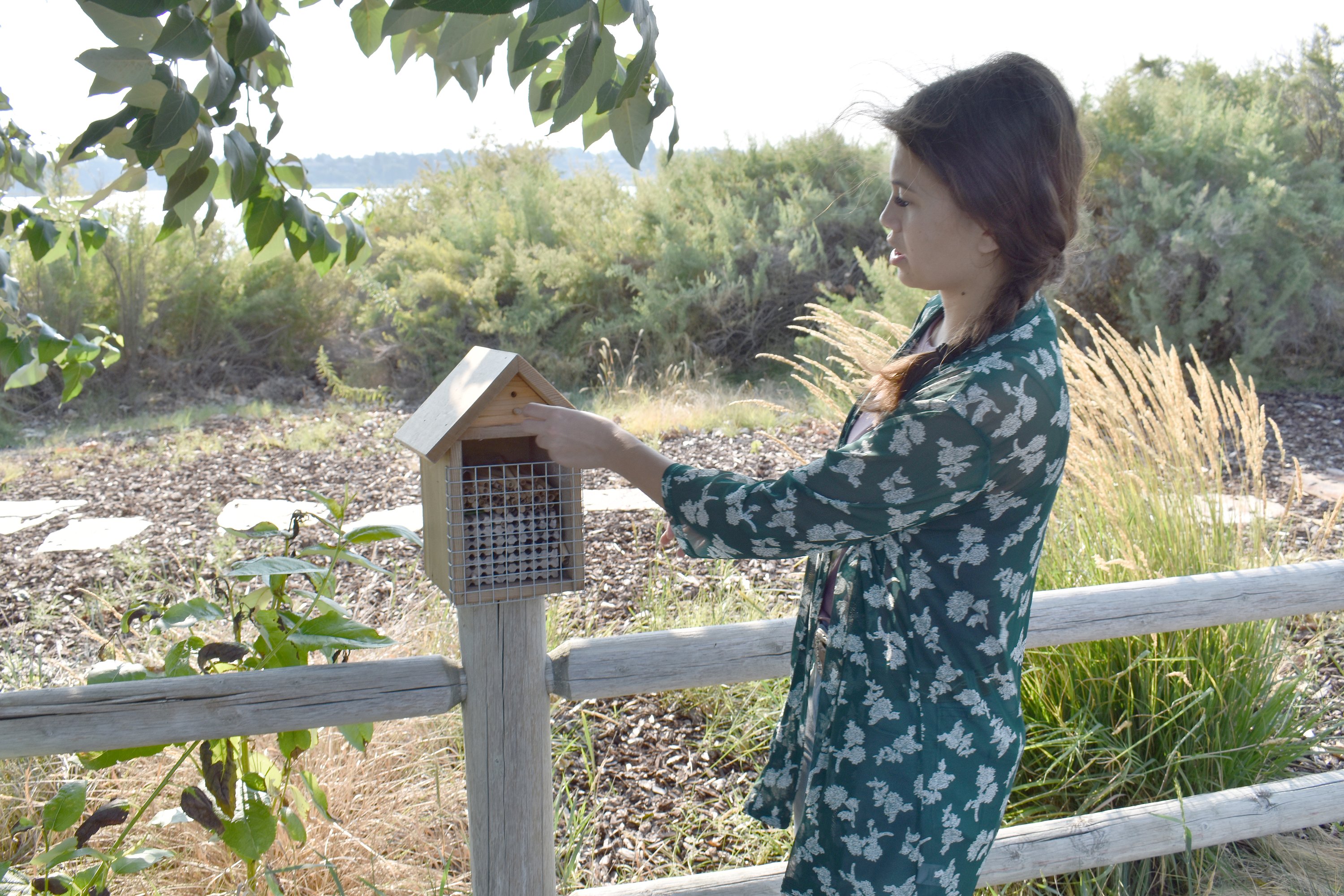
Columbia Basin Conservation District Conservation Director Dinah Rouleau demonstrates the bee box, which will be used to nurture pollinators for the Heritage Garden.

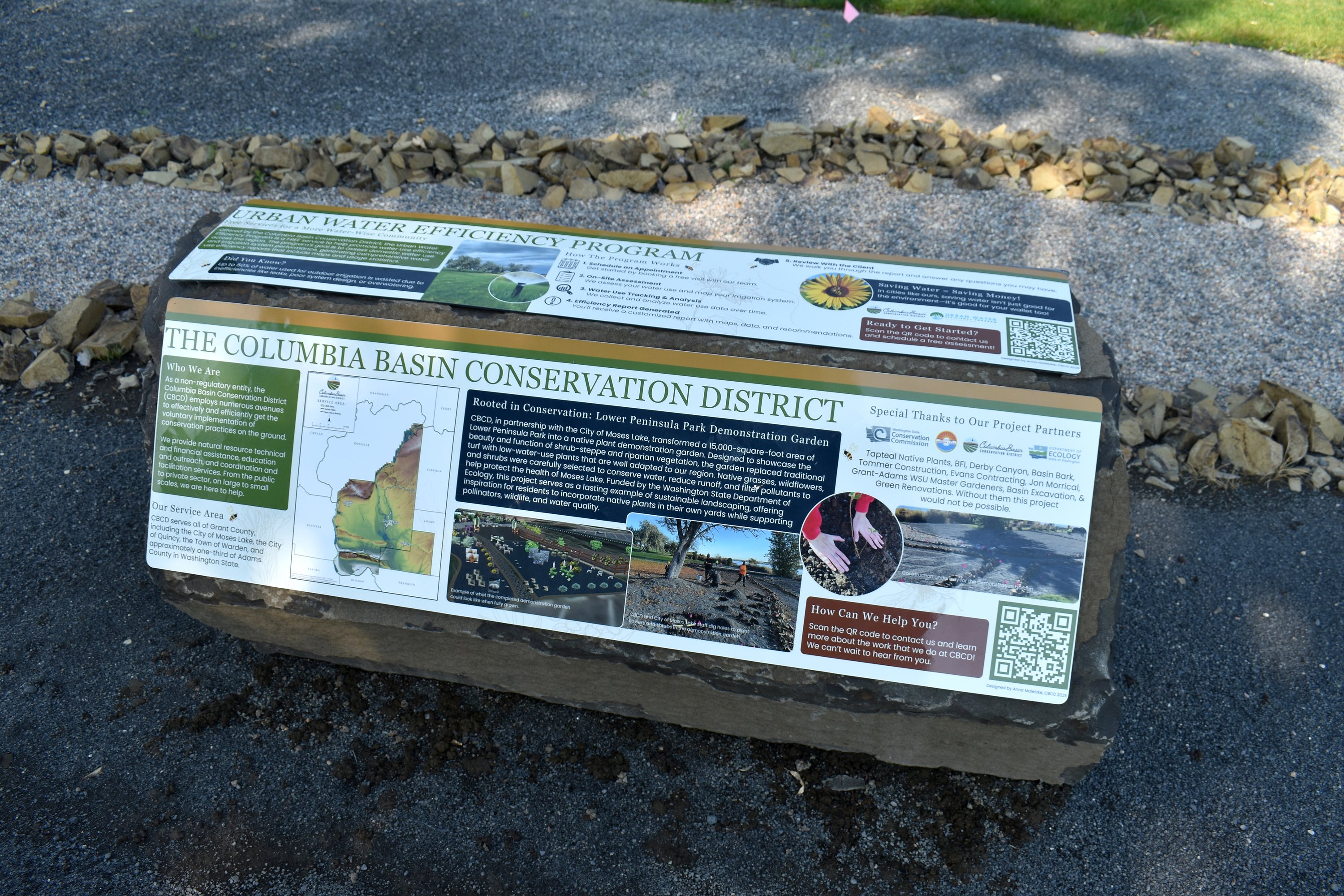
The new signs at Lower Peninsula Park explain to visitors the plants and animals living there, and how they tie into the ecosystem at large.
MOSES LAKE — The Heritage Garden at Lower Peninsula Park, 3519 W. Peninsula Drive in Moses Lake, is beginning to come together, and now there are signs to explain to the public exactly what’s what.
“The first sign has the riparian plants,” said Dinah Rouleau, conservation director for the Columbia Basin Conservation District. “Then (another) honoring the history of the site and the Moses Columbia Tribe, talking about some of their historically used plants. We have a Heritage Program sign, an Urban Water Efficiency Program sign and one about us and why we did this.”
The signs are the latest phase in the Lower Peninsula Park’s Heritage Garden project, which began last October. The CBCD, with a lot of help from the city of Moses Lake and local businesses, removed the grass in a 15,0009-square-foot area of the park and replaced it with plants native to the area, interspersed with gravel beds and stone paths. The signs, designed by CBCD Communications Specialist Anna Maletzke, are affixed to stones and describe the plants in the garden, the animals and insects that live among them, and the history of the area, as well as what to do and what not to do to keep the flora and fauna thriving.
One sign indicates a small birdhouse-shaped box called a bee box, which will house bees to pollinate the garden — as well as the neighborhood around it. The box is filled with hollow sticks that the bees will use to lay eggs in, Rouleau said. The CBCD will help the bees along with the process, she said.
“(We) would pop those reeds open, collect the eggs, put them in the fridge and then set (them) out at the most ideal time, which is later spring after we’re done with the freezes,” Rouleau said. “(We) set the eggs in here, let them hatch and then come out and do it again each year.”
Bees can generally reproduce without human help, Rouleau explained, but CBCD intervention will help the bees resist diseases and parasites as well as the vagaries of Basin weather.
“We’re having very odd springs and falls where (the bees) will emerge early, and then we’ll have that cold snap, and that takes out the generation,” she said. “So we have to baby them a bit.”
Because the park is along the lake shore, many of the plants are riparian, which means they thrive along the water’s edge. The CBCD would like to see those plants become more popular with homeowners who live on the lakefront.
“A lot of the riparian plants that are planted against (the water) are shrub trees,” said CBCD Conservation Biologist Kaley Wisher. “We’re hoping that they’ll get nice and big, and then when we say, ‘You could plant this; it turns into a tree,’ they get a visual sense of how big it is.”
It’s not just the trees that take time. The plants in the garden aren’t showing very much this year, but they will next year, Rouleau said. The spots where they were planted last fall are marked with flags, and some of those have visible plants, but some don’t yet.
“This time of year, a lot of our spring forbs die back, and they almost look dead,” Rouleau said. “Landowners might think, oh, they died already, but there’s a good chance they’ll come back next spring, as long as you keep giving them something. Their roots are alive … they’re just going on vacation until next spring.”
The signs and the garden have been spared the sort of vandalism that often plagues public parks, Rouleau said. A couple of the signs were turned upside down, but nothing has been damaged. The garden remains an example of what can be done with very little water.
“I think (it’s) good for the public to see the growing pains that come with (the garden),” she said. “You plant the first year, the plants are small, some are flowering, you have weeds that you have to manage. It takes time for the public to see that and hopefully see what this becomes in two to three years.”
 Columbia Basin Conservation District Conservation Director Dinah Rouleau demonstrates the bee box, which will be used to nurture pollinators for the Heritage Garden.
 The new signs at Lower Peninsula Park explain to visitors the plants and animals living there, and how they tie into the ecosystem at large.