
Plant clinic offers insights at Grant County Fair
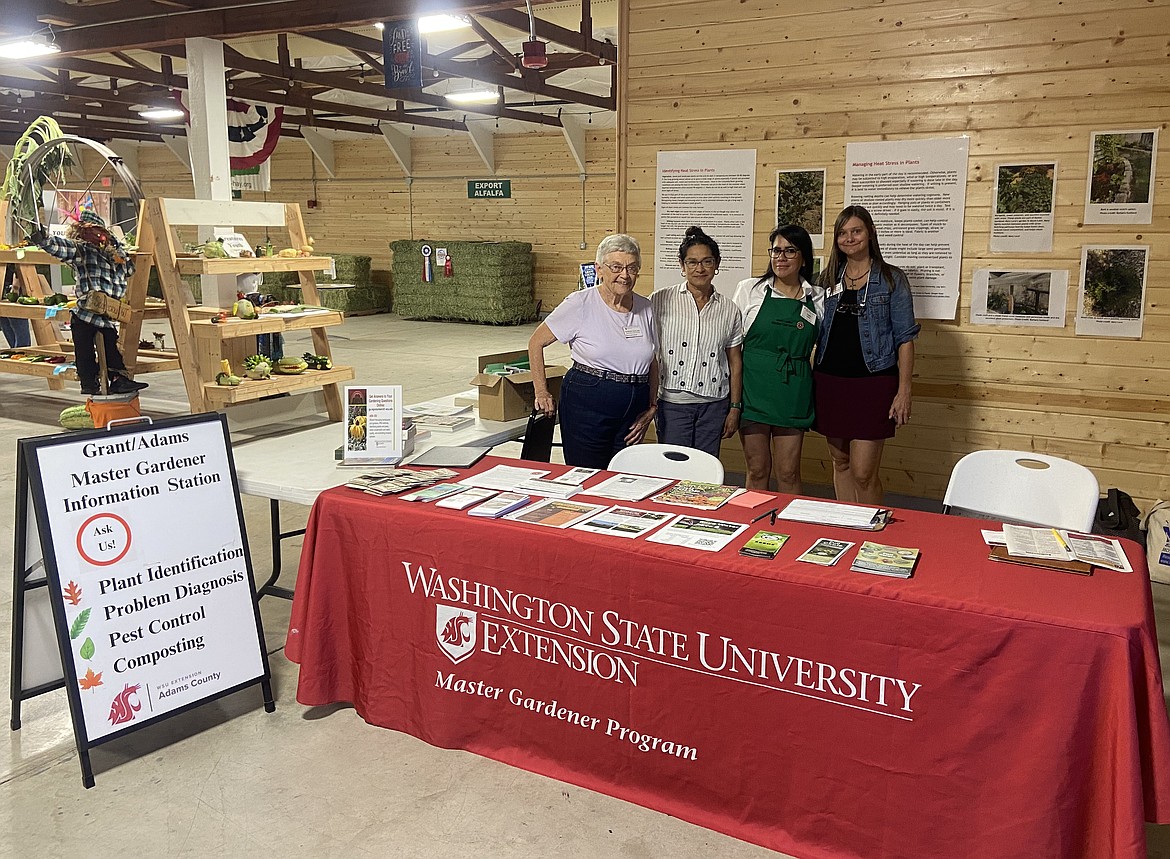
Washington State University’s Master Gardeners program members at their information station. The group offered educational tools for community members at the Grant County Fair’s Master Gardener Clinic.
MIKE MAYNARD/COLUMBIA BASIN HERALD
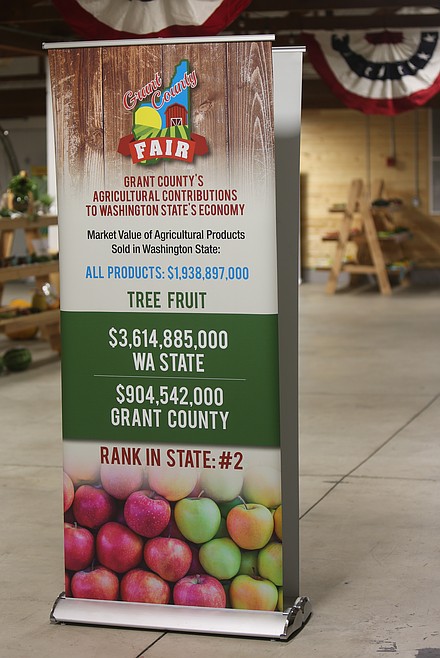
A poster outlines Grant County’s agricultural contributions to Washington state’s economy at the Master Gardeners’ Clinic held during the Grant County Fair.
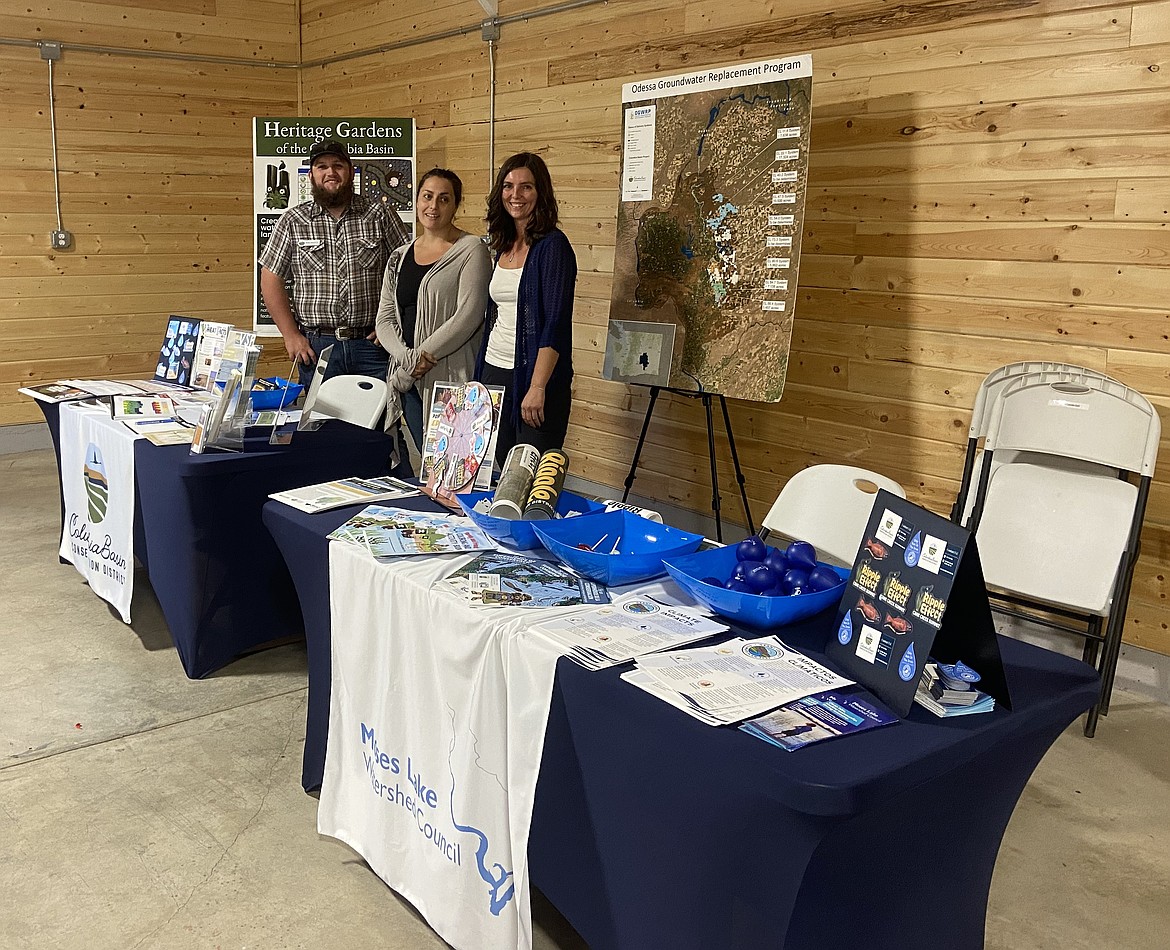
Members of the Columbia Basin Conservation District behind their booth at the Master Gardeners' clinic during the Grant County Fair. Kaley Wisher, the CBCD’s education and program outreach manager, said the group was highlighting several of its programs.
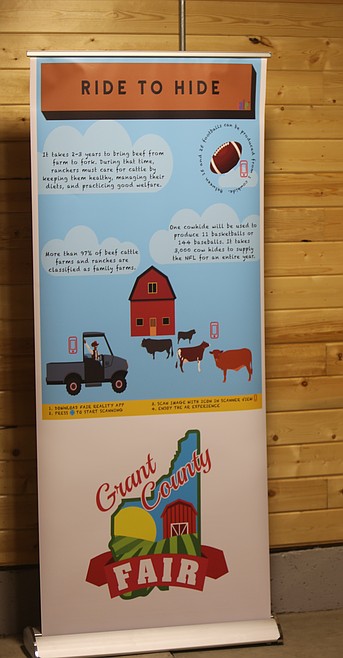
At the Master Gardeners’ Clinic in the agricultural building, informational posters were displayed around the space. This one explains the process of how beef is brought from farm to table.
MOSES LAKE — The Grant County Fair brings a lot of interactive experiences for the community to engage with. Sometimes these experiences can be educational, like the Master Gardeners’ clinic.
“Our job here is to provide a plant clinic that is for anybody who comes in and asks a question about what’s what they need, either about watering, gardening or pruning,” said Barbara Guilland, a volunteer for Washington State University’s Master Gardener Program.
WSU’s Master Gardener Program and the Columbia Basin Conservation District had educational booths in the Agriculture Building. WSU had a lot of information about plant care for this time of year.
At this time of year, the hot weather can put plants under a lot of distress, they said.
“The plant wilts or the edges of the plants get dry. If it’s hot for a long period of time, you have the blossoms drop off. So you don’t get as much (growth), especially over 80 degrees,” Guilland said.
She said it is important for plants to get necessary shade in addition to consistent watering when the summer days are at their hottest. That example is a central focus of their efforts to talk about global warming and teaching community members how to protect their plants.
The WSU table said they get a good mix of people who have gardening experience and those who are completely new to it. They also promoted their master gardener course, which runs every other year. The course provides someone with an opportunity to get involved with gardening and apply it to their own community.
According to their website, the course runs for 52 weeks with different requirements, depending on the county a student lives in. First, there is completion of Washington Green School, which is about 120 hours of coursework, then 20 hours of in-person local volunteer training and 40 hours of volunteering as an Extension Master Gardener intern.
“It’s amazing how many people get into it, take the courses, and then that’s where they end, because they got into it to learn those things and then apply them to their own gardens. So we may have, so that’s why we have to keep recruiting, because we have to get those people who are interested in doing it as a community,” a WSU volunteer said.
At the CBCD table, Kaley Wisher, the education and outreach program manager, said their goal was to share what programs they have in Grant and Adams counties.
“This is primarily in Grant County, we serve the irrigated portions of Adams County and all of these programs have to do with conservation of natural resources,” Wisher said.
One program Wisher highlighted was the cost-share program. An example of this would be a farmer switching from real irrigation to a center pivot, which is essentially changing to a watering system that is more efficient for the farmer. This would help them save water and money, she said.
They also have a Voluntary Stewardship Program run by Deanna Elliot, who is the Geographic Information Systems coordinator for CBCD. Elliot said the VSP Program is a non-regulatory, incentive-based program to help landowners and agricultural producers to protect critical area functions and values while still maintaining ag viability.
“We are a special interest district run by grants. We’re here to serve our community through technical assistance, financial assistance, and also connecting folks to other agencies that can help them with either conserving resources, improving overall. If you’re talking about agriculture, improving their ability to earn, to stay agriculturally viable while also meeting regulations,” Elliot said.
Wisher said most of her educational outreach involves working with fourth and fifth grade students in local schools to teach them about their work. She said a lot of what she teaches them can also be passed on to the parents for their own knowledge.
She has come across people in the past who have misconceptions about farming in the county. One misconception is that the size of a farm does not immediately correlate with a successful business. There are several costs related to certain types of farming, such as conservation of natural plants, transporting crops locally or internationally.
“Some of the adults that I work with, if they’re not in the AG field, they don’t know any of that. It’s all brand new information. So it’s really important to know agriculture is a huge part of our community here, and even if you’re not in the agricultural industry, it’s still important to be aware of it and know the work that’s going on,” Wisher said.
These are just a few of the many programs they have running currently. For anyone interested in learning more about these programs, their office is located at 903 W. Third Ave., Moses Lake. They can also be found at their website: www.columbiabasincd.org.
For anyone interested in the WSU Master Gardeners Program, more information on that, their course and the work they do can be found on their website: https://mastergardener.wsu.edu.
The clinic will be ongoing through the rest of the week at the Grant County Fair.
 A poster outlines Grant County’s agricultural contributions to Washington state’s economy at the Master Gardeners’ Clinic held during the Grant County Fair.
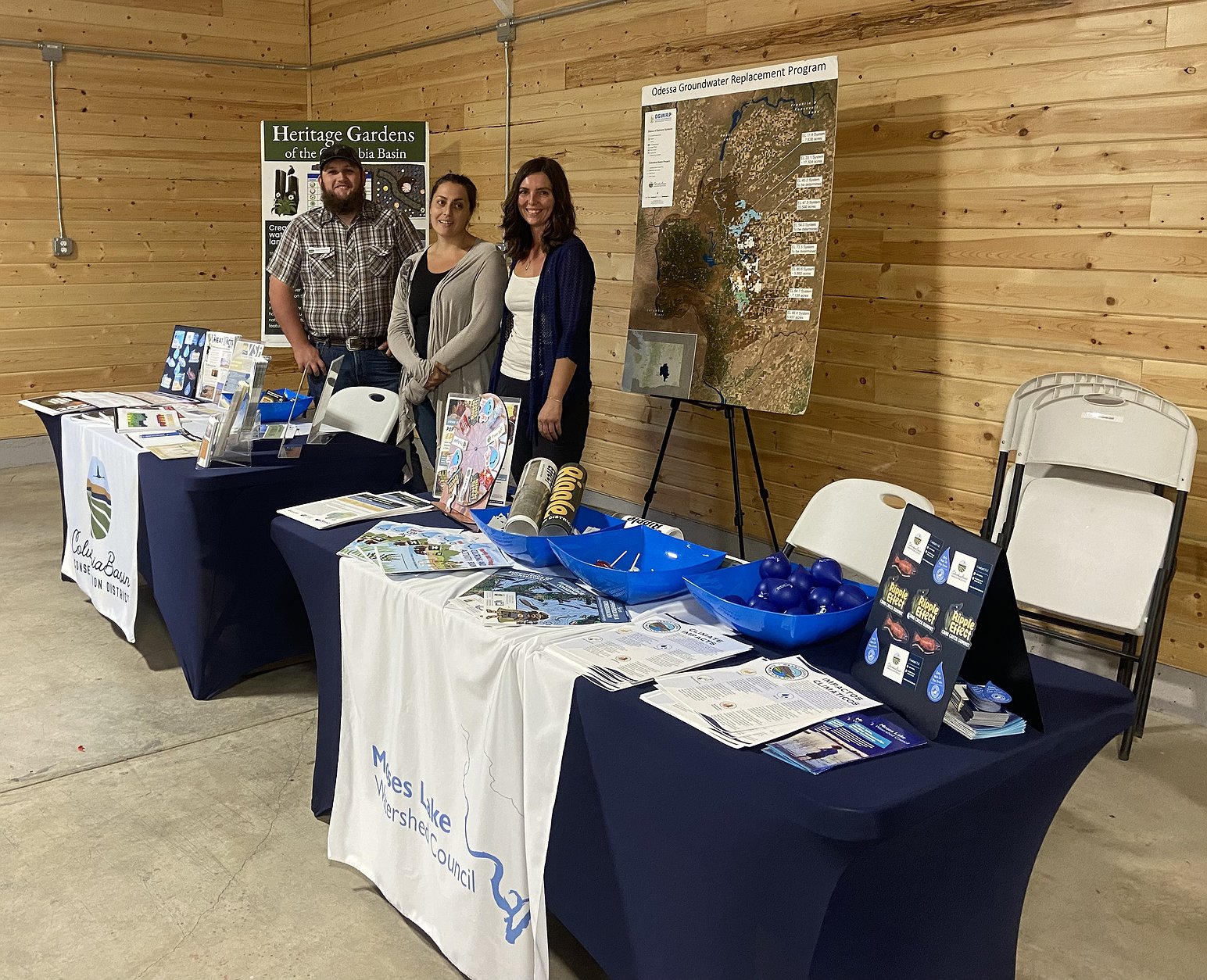 Members of the Columbia Basin Conservation District behind their booth at the Master Gardeners' clinic during the Grant County Fair. Kaley Wisher, the CBCD’s education and program outreach manager, said the group was highlighting several of its programs.
 At the Master Gardeners’ Clinic in the agricultural building, informational posters were displayed around the space. This one explains the process of how beef is brought from farm to table.