
Raising livestock is the tough part of fair competition
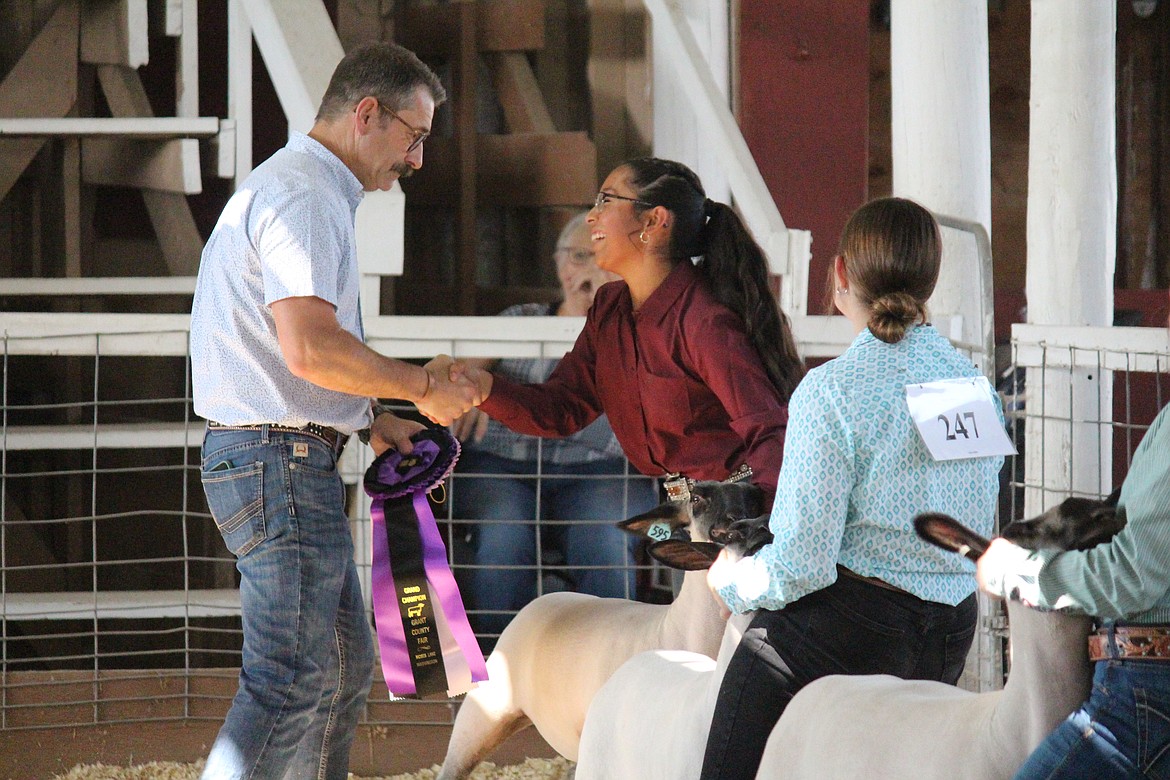
Camila Martinez accepts the grand champion ribbon in intermediate class lamb fitting and showing at the Grant County Fair Wednesday. Fitting and showing is a challenge, but raising the animals is more challenging, she said.
CHERYL SCHWEIZER/COLUMBIA BASIN HERALD
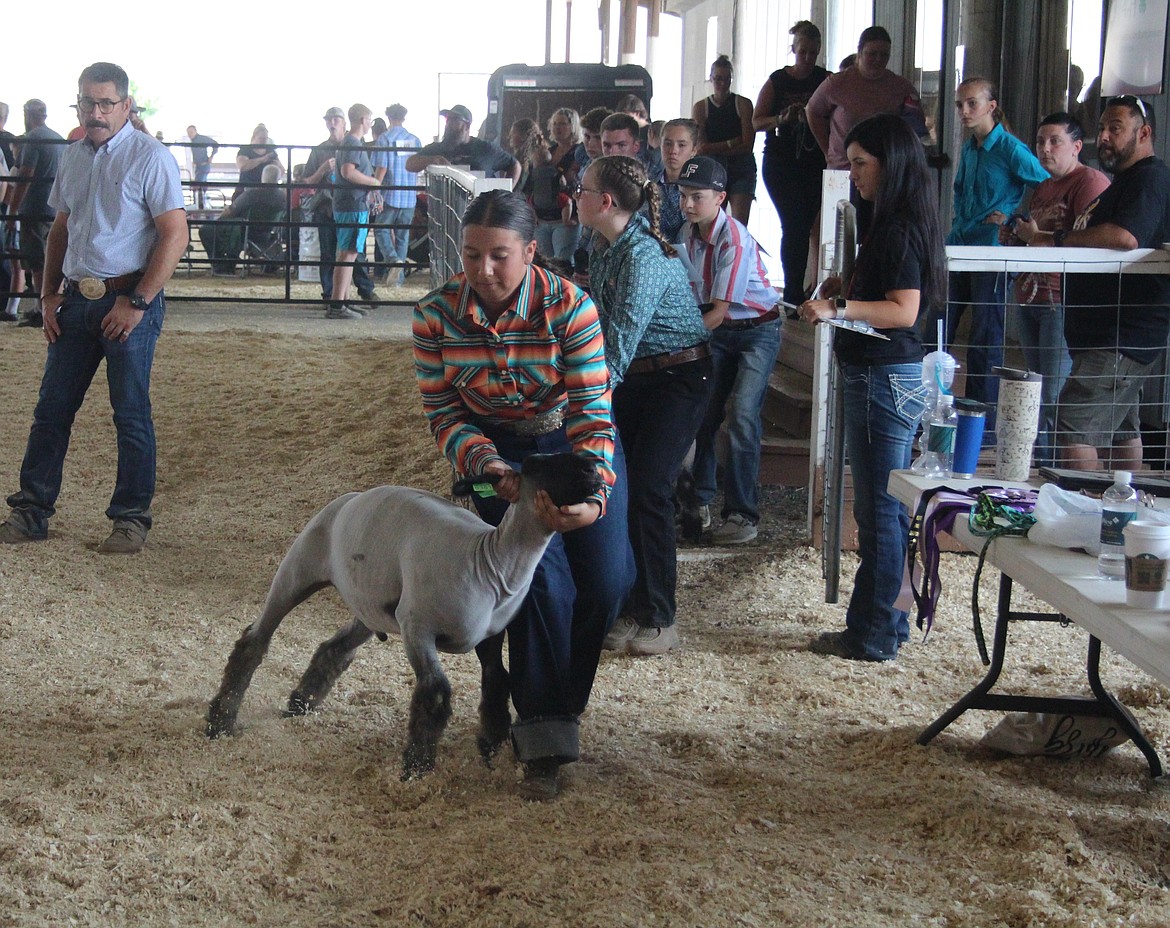
Kaylin Pruneda wrestles with her sheep when entering the showmanship ring at the Grant County Fair Wednesday. Kaylin Pruneda wrestles with her sheep when entering the showmanship ring at the Grant County Fair Wednesday.
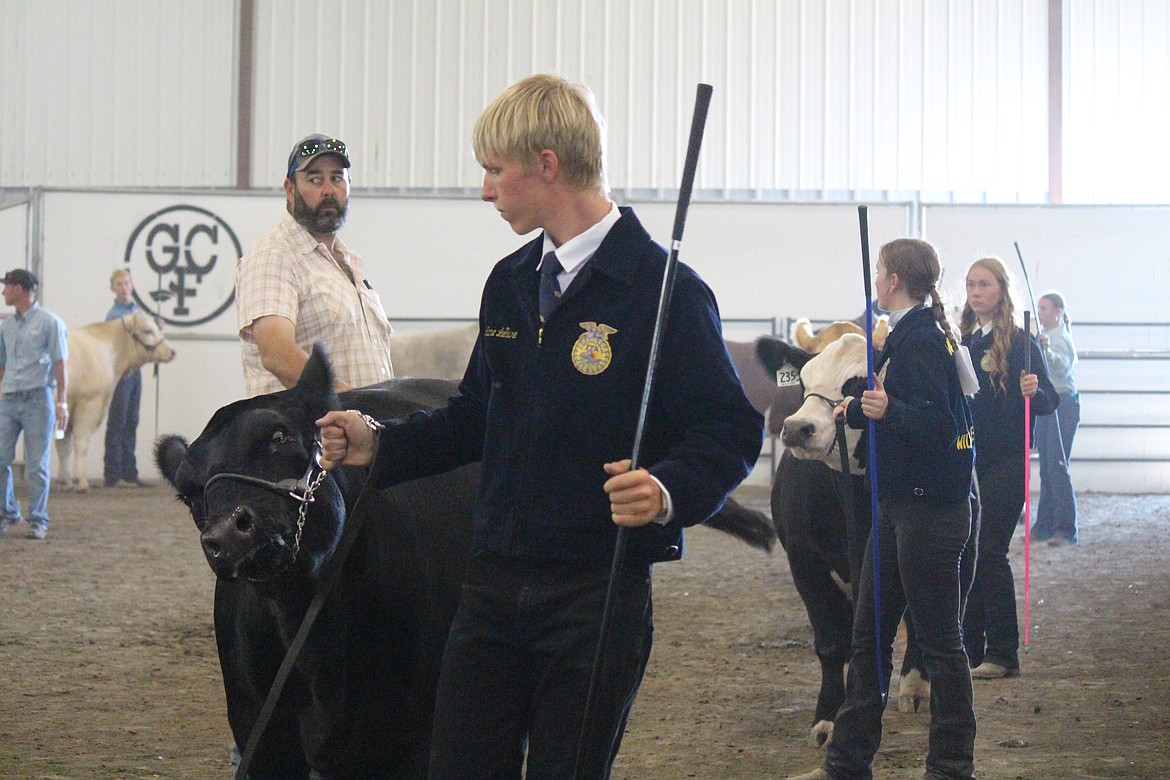
Lane LeSure, Quincy, leads his steer around the ring during showmanship competition at the Grant County Fair Wednesday.
MOSES LAKE — Participants in livestock classes at the Grant County Fair exhibit a diverse range of animals, including steers, chickens and horses; they come from various communities with varying levels of experience. There does seem to be one point of agreement: raising animals is a lot of work. It's even more work than the show ring.
“Definitely raising them, 120%,” said Jack Gilbert, Royal City, who’s showing pigs in the FFA class. “You have to feed them, water them, give them mud, make sure they’re not sick and make sure they’re happy. They're expensive, too.”
The show ring is not that easy either. There are always spectators and the judge is watching every move of animal and exhibitor. Lambs can get loose, pigs start a fight, steers balk and refuse to budge. Even so, that’s a short-term challenge when compared with raising an animal.
Brynlie Ciganda, Moses Lake, a veteran in steer class competition, said experience does help a participant when he or she is getting ready for the fair. But every year is a new challenge because every animal is different, she said.
The real work, said Robert Massart, Moses Lake, is in the training.
“It’s much harder to train them than when they’re showing in the ring,” he said. He shows pigs, and said that if they’re trained properly, they know what to expect by the time they get to the ring.
Camila Martinez and Kaylin Pruneda, both of Moses Lake, have the showmanship part figured out — they were fitting and showing grand champion and reserve champion, respectively, in the lamb intermediate class. Pruneda breeds her own lambs, Martinez doesn’t, but both agreed that raising lambs requires attention to detail.
“It’s very particular what you do with your everyday routine,” Martinez said.
Raising animals requires consistency, she said; feeding, watering and training every day. For owners, it means getting up early to take care of their animals, whether they want to or not, Martinez said.
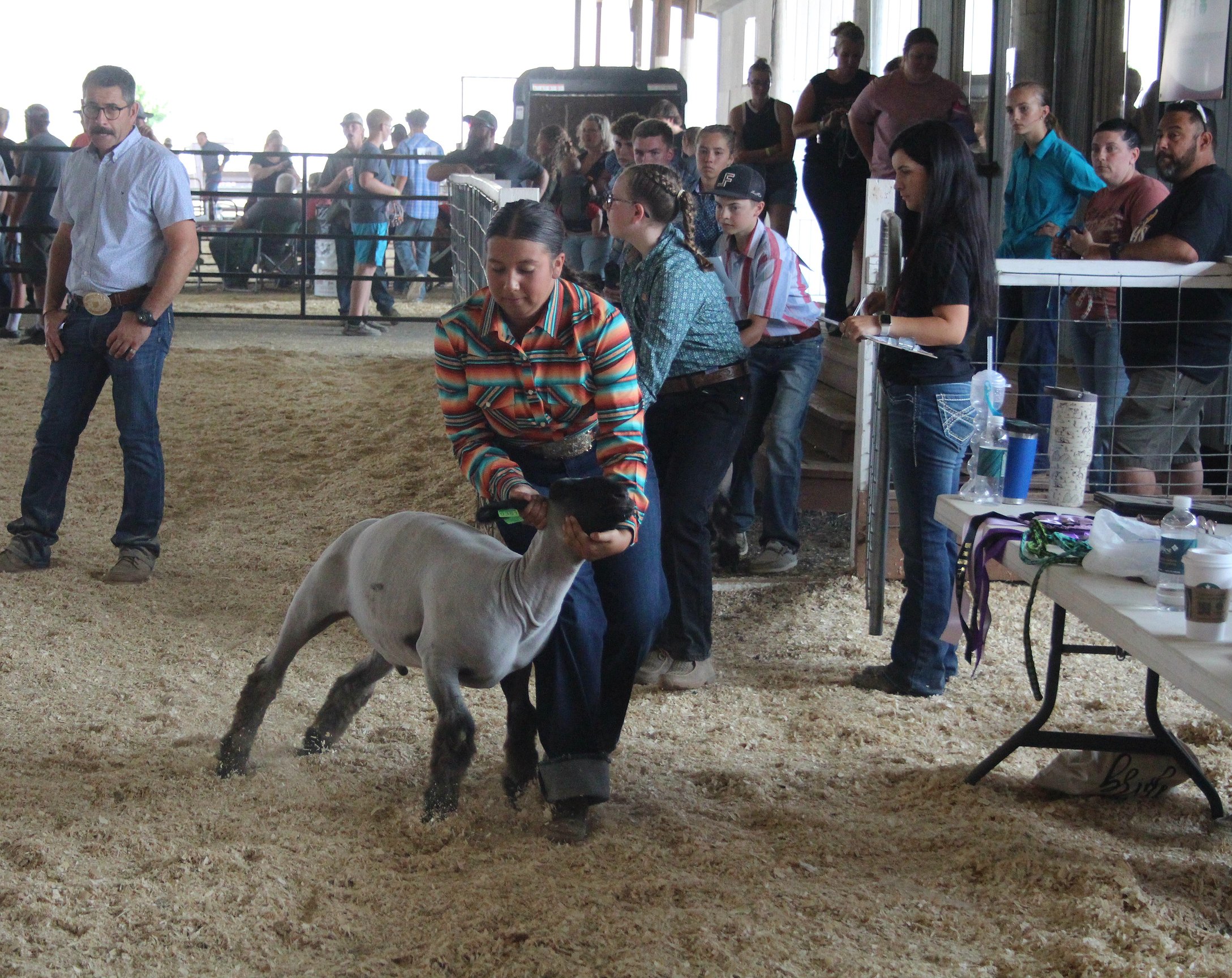 Kaylin Pruneda wrestles with her sheep when entering the showmanship ring at the Grant County Fair Wednesday. Kaylin Pruneda wrestles with her sheep when entering the showmanship ring at the Grant County Fair Wednesday.
 Lane LeSure, Quincy, leads his steer around the ring during showmanship competition at the Grant County Fair Wednesday.