
Healthy Lake Tracker active for 2025
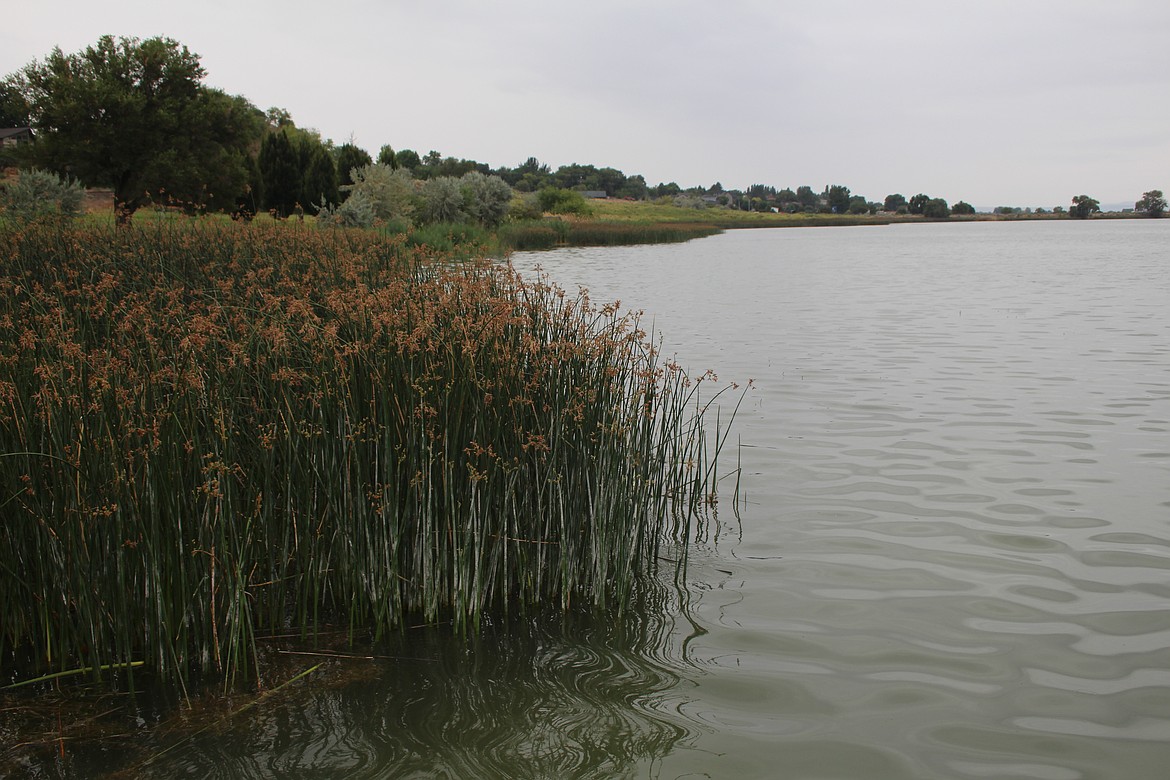
The Grant County Health District is looking for volunteers willing to help monitor water conditions on Moses Lake during the summer.
CHERYL SCHWEIZER/COLUMBIA BASIN HERALD
MOSES LAKE — People who are planning a day out on Moses Lake can check levels of blue-green algae toxins at their destination with the help of a joint project of the Grant County Health District and the Columbia Basin Conservation District. The Healthy Lakes Tracker is an interactive map that measures blue-green algae levels at six points around the lake.
Lexi Smith, GCHD communications coordinator, said blue-green algae is common in lakes across the state.
“But because we have the warm weather, we kind of expect it,” she said.
Stephanie Shopbell, environmental health tracker for GCHD, said hot temperatures are one of several factors that increase Moses Lake’s susceptibility to blue-green algae blooms.
"Moses Lake may experience more blue-green algae blooms than other lakes in our county due to several factors, including higher nutrient levels and the lake’s shallow depth, which contributes to warmer temperatures,” Shopbell wrote in response to an email from the Columbia Basin Herald.
The Healthy Lakes Tracker started in 2023 and broke the lake into six zones, each of which is tested by volunteers. In fact, volunteer help is crucial to the program.
“The program depends on volunteers and cannot continue without it,” Smith wrote in a GCHD press release.
The six zones are the north section of Moses Lake, Lewis Horn, Parker Horn, mid-Moses Lake, Pelican Horn and the south end of the lake around the Sand Dunes. Volunteers monitor the lake and sample the lake water at designated areas in each zone, then submit their results and photos through a phone app.
Before the launch of the Healthy Lake Tracker, warnings about blue-green algae blooms had to be issued for the entire lake, Smith said. With the tracking system, warnings can be targeted for specific areas.
The tracking system will be live until fall, Smith said. It ends when two consecutive weeks of sampling show safe blue-green algae levels for all lake zones.
Smith said more volunteers are needed. People can volunteer online at https://bit.ly/GCHDVLNTR or by contacting GCHD at 509-760-7960.