
Synthetic opioids driving increased overdoses
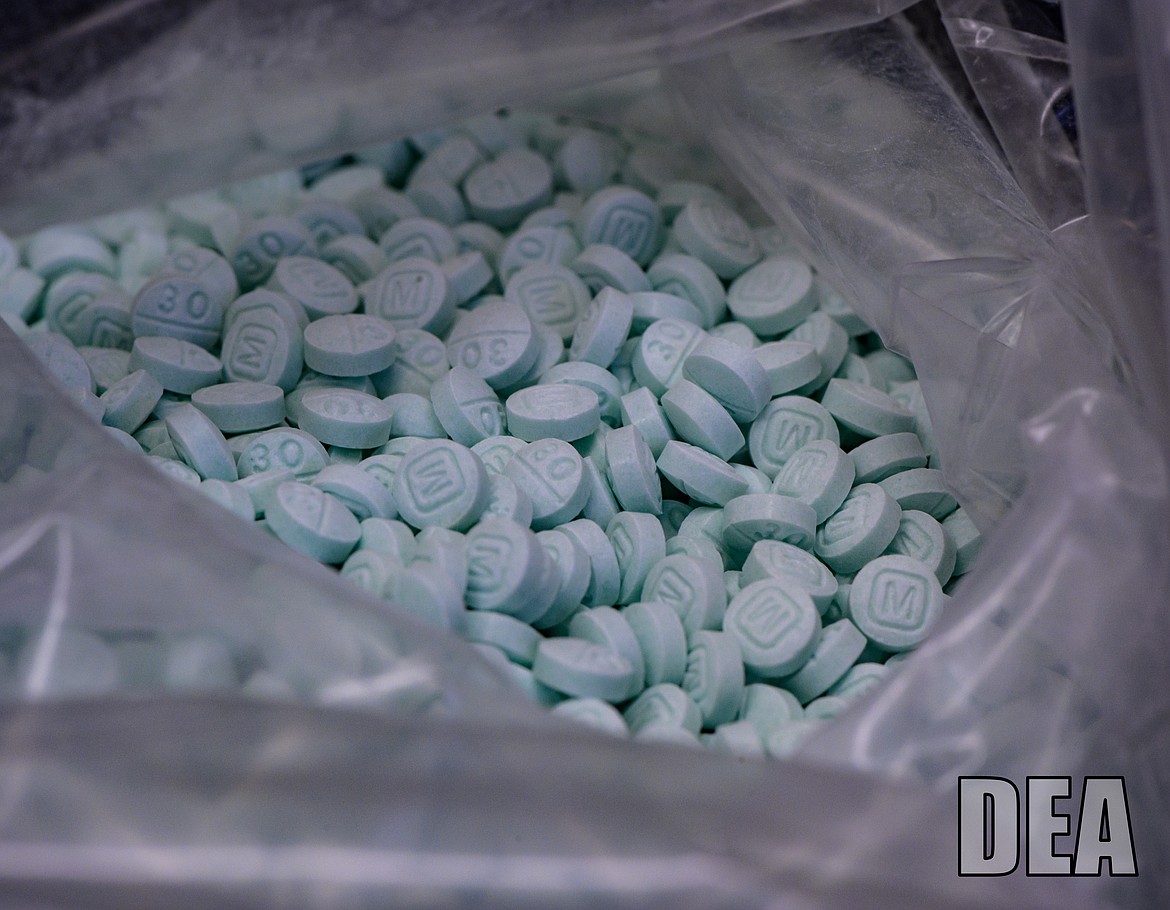
Fentanyl and similar synthetic opioids are important contributors to the surge of overdoses and overdose deaths, in the Columbia Basin and nationwide. Locally, at least 26 overdose deaths have occurred and an unverifiable number of non-lethal overdoses have also occurred.
COURTESY PHOTO/U.S. DRUG ENFORCEMENT AGENCY
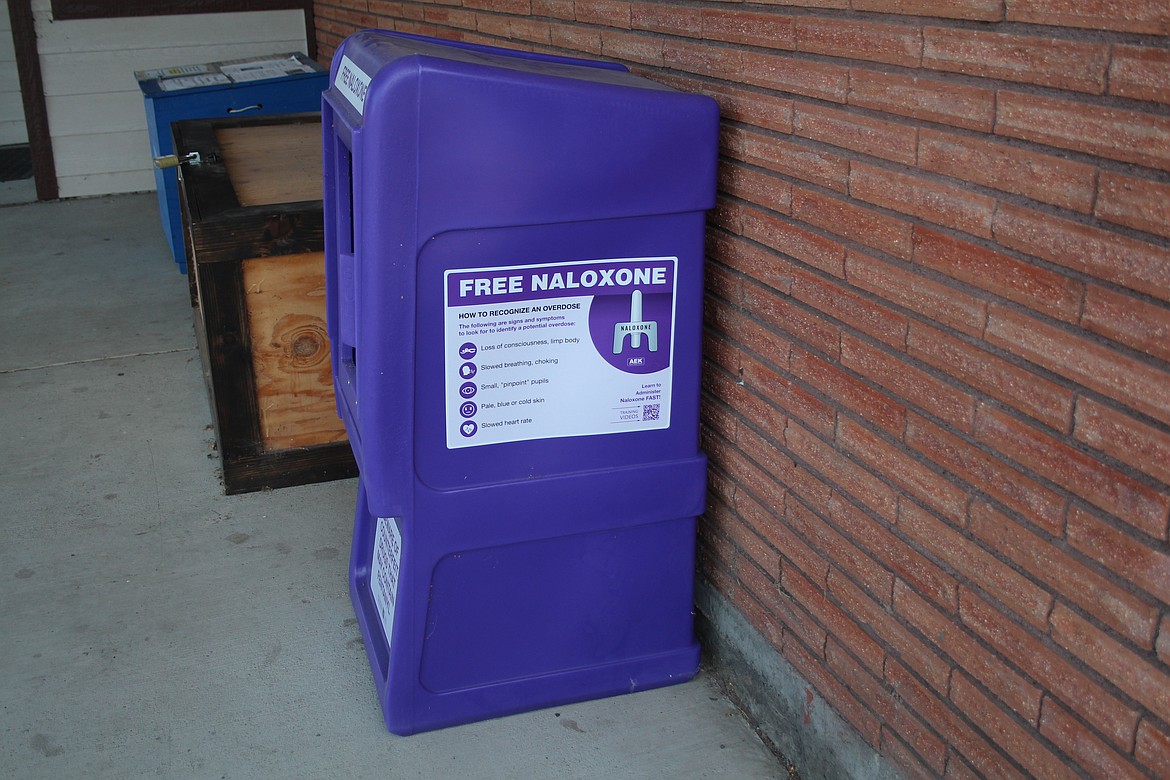
A Narcan dispenser outside the Grant County Health District office. Health district officials are working to expand the number of dispensers countywide.
MOSES LAKE — More – and more powerful – controlled substances are making their way into the Columbia Basin, and that trend is making itself felt in overdose deaths and nonfatal overdoses. Mariah Deleon, harm reduction coordinator for the Grant County Health District, detailed some of the statistics.
“Between 2016 and 2018, there were 19 deaths (in Grant County). Then, between 2021 to 2023, there were 63 deaths,” Deleon said.
Final statistics for 2024 aren’t available, but preliminary statistics indicate 32 overdose deaths in the county last year.
“That is estimated so it could be more, it could be less,” Deleon said.
Kyle Foreman, public information officer for the Grant County Sheriff’s Office, said the upward trend appears to be continuing, with 26 documented overdose deaths to date in 2025.
“That breaks down to about 1.7 deaths every two weeks, so that’s quite a bit,” Foreman said.
Adams County Coroner Tiffany Cutforth said there have been overdose deaths in her county in 2025. The coroner’s office was established in January, and seven months of data isn’t enough to establish a trend, she said.
Opioids, particularly fentanyl and its derivatives, are important factors driving overdoses.
“I wouldn’t say it’s the drug most people are taking. It’s the drug most people are dying from,” Deleon said. “There are a lot of other substances out there, but the majority of deaths that are coming from overdoses are related to fentanyl and fentanyl analogs.”
Fentanyl is a synthetic opioid that’s considerably more potent than organic opioids, according to the U.S. Drug Enforcement Administration.
Foreman said one of its variants, Carfentanil, is making a comeback locally.
“(Carfentanil) is 100 times more potent than fentanyl, and fentanyl is already potent enough,” Foreman said. “One of the most recent toxicology results on an opioid death showed there was Carfentanil as well as fentanyl in the person’s system. We know it has returned – it's reemerging.”
There is an emergency treatment for an opioid overdose; Naloxone, sold under the brand name Narcan among others, can counteract the effects of an overdose.
“The only way to come back from a fentanyl overdose, or opioid overdose, is with Narcan. There is no other way to come back from an overdose without Narcan,” Deleon said.
Rebecca Suarez, emergency department director at Samaritan Healthcare, said Narcan is being administered in the ER at about the same rate as in 2024.
“We have administered Narcan 41 times in the (Emergency Department) and given 80 Narcan take-home packs from the ED since the first of this year. Last year in the same time frame, we administered Narcan 42 times and gave 47 Narcan take-home packs,” Suarez said via email.
Fernando Dietsch, a Quincy physician and medical director of the emergency department at Quincy Valley Medical Center, said the number of overdoses is staying about the same at QVMC.
“The frequency of drug overdose patient visits to our emergency department has not changed significantly; we’re not really seeing an upward trend. The main difference is that the patients we do see are younger – late teens, early 20s. And fentanyl seems to be the prevalent drug with our overdose patients,” he said.
A free Narcan dispenser is available outside the health district's office at 1038 W. Ivy Ave. in Moses Lake.
“It’s accessible 24/7, on the weekends, at night, and it’s stocked with Narcan,” Deleon said. “We are also working on getting (dispensers) such as the one outside (GCHD) in other areas of Grant County.”
A Narcan dispenser is also available in the emergency department at Columbia Basin Hospital in Ephrata. Health district officials have installed a dispenser outside the Mattawa Community Medical Clinc, 210 Government Rd.
While Narcan reverses the effect of an overdose, it doesn’t necessarily change behavior.
“Our experience is that most people don’t turn their lives around just because they had an opioid overdose that was stopped by the use of Narcan,” Foreman said.
There are resources for people who want help ending substance abuse.
“In Grant County, there’s a great program called the Recovery Navigator,” Deleon said. “They are people with lived experience who are now in recovery, who are doing their best to get connected with people who are actively using. They are on a referral basis, so you could randomly see someone, and (say), ‘Hey, can I refer you to the Grant County Recovery Navigator program?’ And if they say yes, you give them a call, and they’re very quick to respond.”
Recovery Navigator staff partner with law enforcement agencies, nonprofits and other community groups, working to help get people to treatment, she said. There are no inpatient treatment programs in Grant County.
Renew, Grant County’s mental health agency, has recovery coaches to support people trying to get off drugs, going into the ER to help people in withdrawal, she said.
“Some of our local clinics do have providers who work with people who are actively using drugs or looking for recovery,” Deleon said.
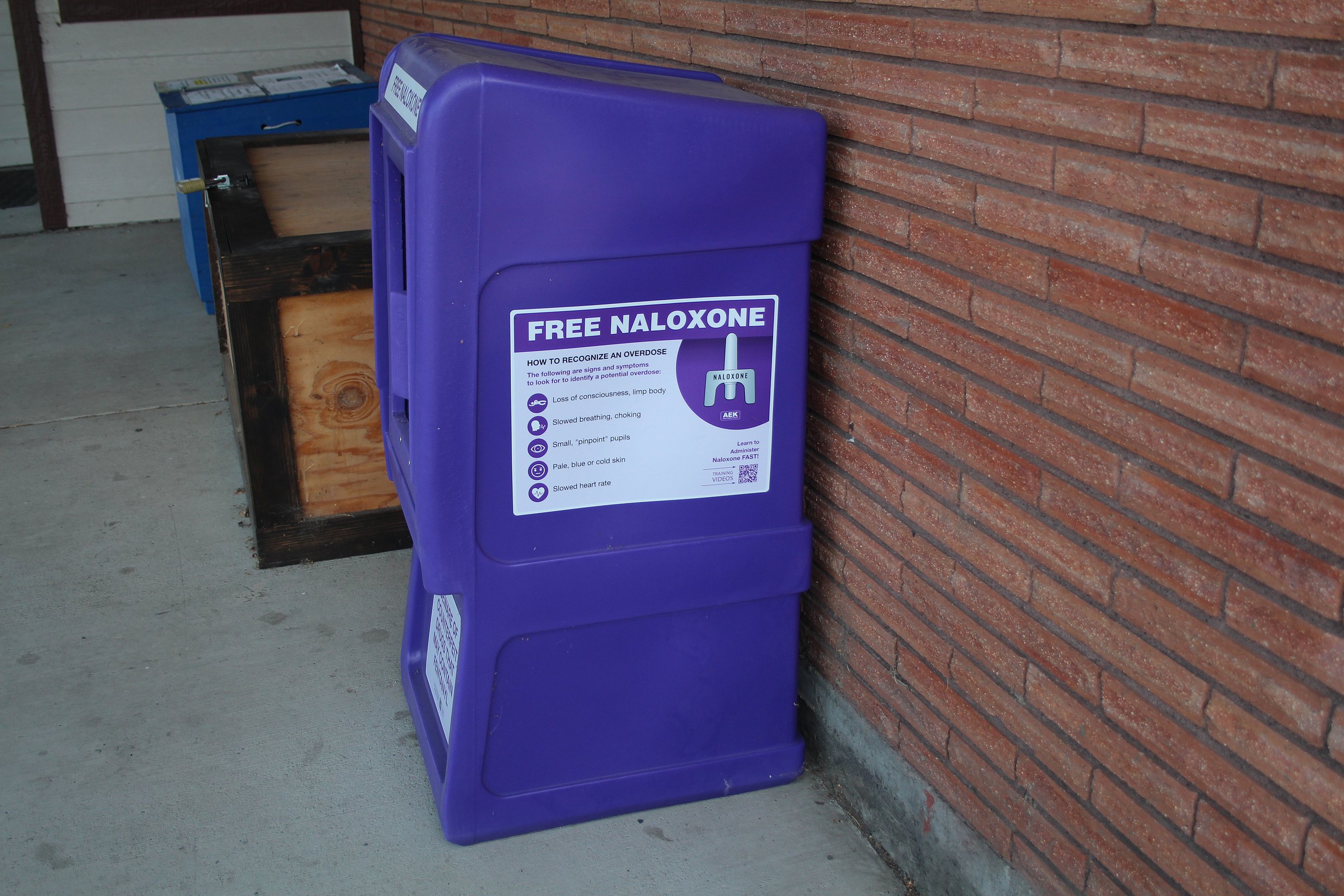 A Narcan dispenser outside the Grant County Health District office. Health district officials are working to expand the number of dispensers countywide.