Number of COVID-19 tests at Samaritan drops in January
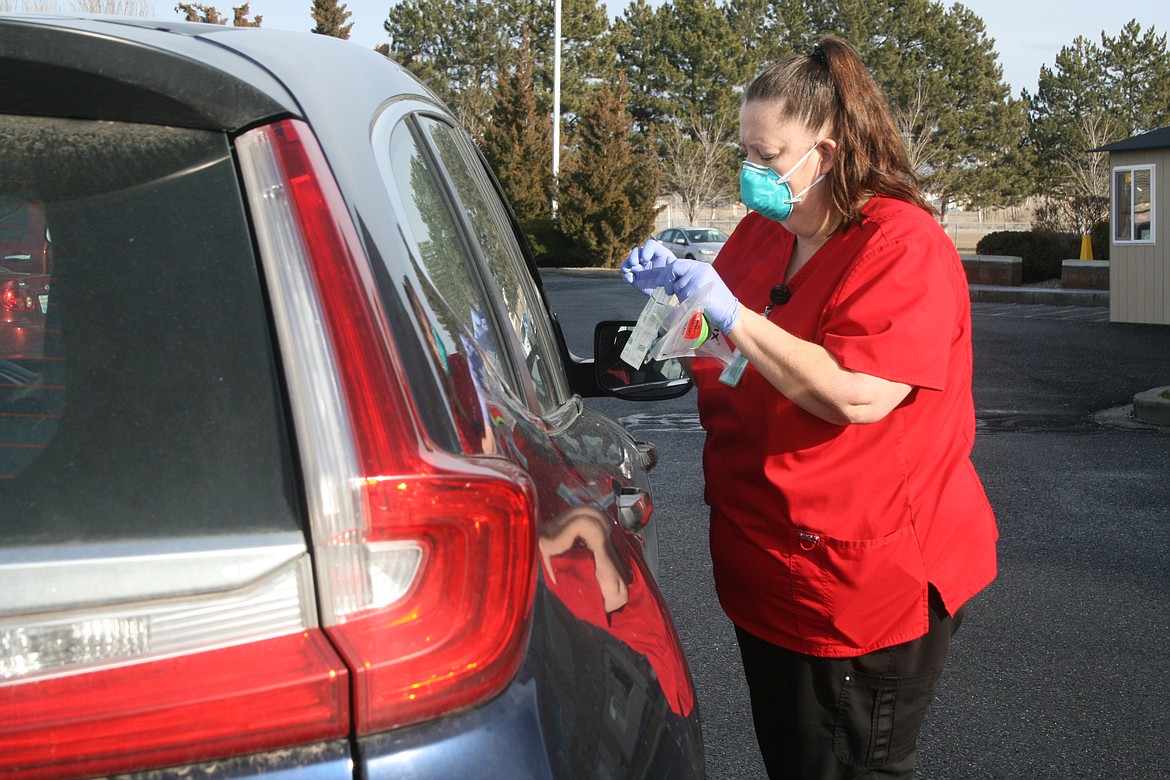
Carrie Pierce administers a COVID-19 test in the drive-up lane at Samaritan Healthcare Pioneer Way clinic. The number of coronavirus tests administered at Samaritan dropped in January.
Cheryl Schweizer/Columbia Basin Herald
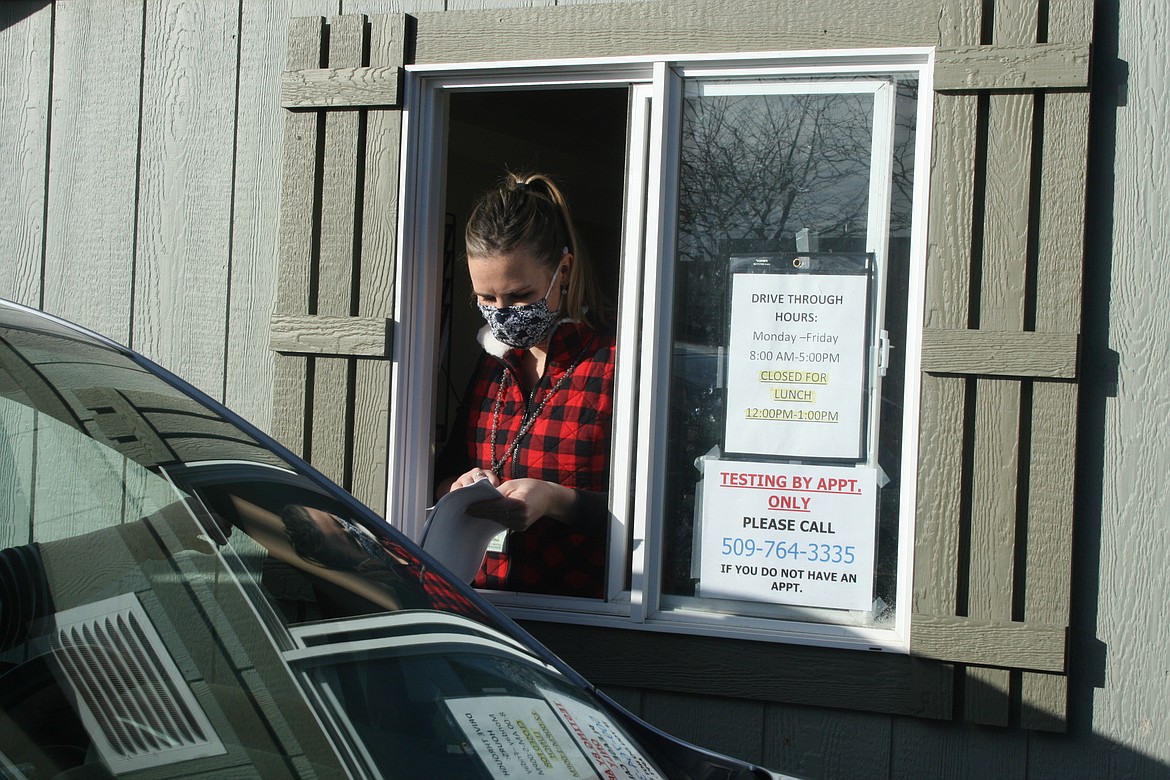
Jenny Ryan helps a patient register in the drive-through COVID-19 testing and vaccination lane at the Samaritan Healthcare Pioneer Way clinic. Coronavirus tests at Samaritan have tapered off in January.
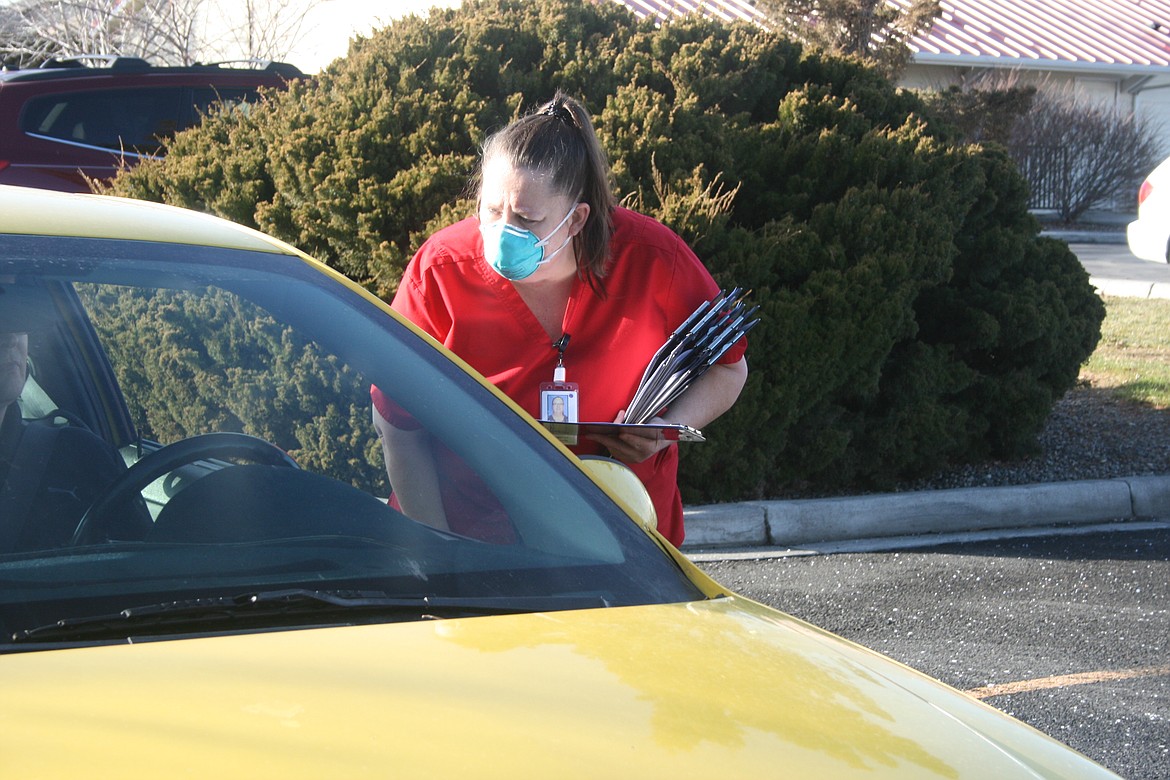
Carrie Pierce of Samaritan Healthcare talks to a patient in the drive-through COVID-19 testing lane the Pioneer Way clinic. Samaritan has administered fewer tests in January than in December.
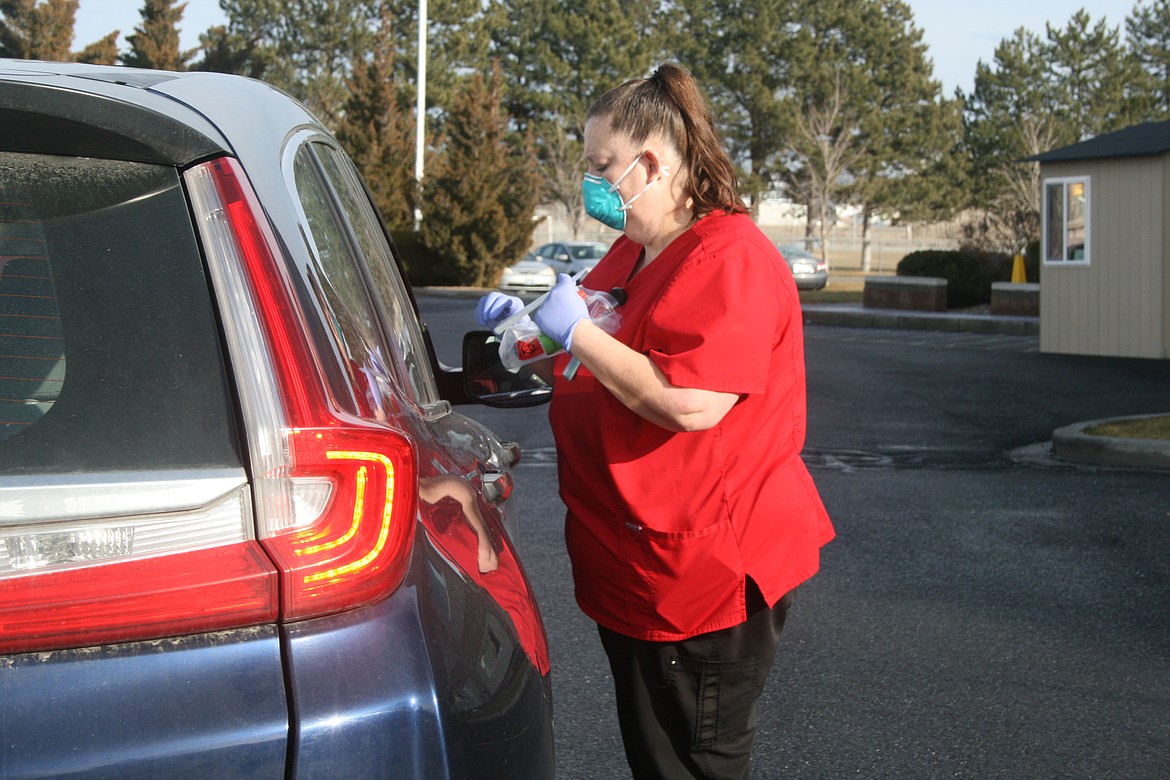
Samaritan Healthcare has reported a drop in the number of people coming in for COID-19 tests in January. Carrie Pierce administers a test in the drive-through lane at Samaritan's Pioneer Way clinic.
MOSES LAKE — The number of people taking COVID-19 tests at Samaritan Healthcare has dropped in January compared to December.
Chief Executive Officer Theresa Sullivan said at the Tuesday commission meeting Samaritan’s walk-in testing site, the Respiratory Virus Evaluation Center at Pioneer Clinic, tested about 41 people per day through Monday. Samaritan also has a drive-thru at the Pioneer Clinic and Sullivan said it tested 407 through Monday, an average of 16 per day, compared to about 41 per day in December.
“I don’t know the exact reason for that,” said physician Jazab Sheikh, chief medical director for Samaritan’s Pioneer and Patton clinics.
Stephanie Melcher, marketing and communications manager for Moses Lake Community Health Center, said testing numbers at MLCH seem to be steady. As of Tuesday, “data doesn’t indicate that we have seen a significant drop in testing,” Melcher said.
Sheikh urged people to get tested, especially if they have symptoms related to the coronavirus.
“The message is, if you have symptoms, please, please, please get tested,” Sheikh said.
People who were exposed, or who think they were exposed, to someone with coronavirus also should get tested, he said. People who may have been exposed to the disease should get tested even if they don’t feel sick, Sheikh added.
Testing is occurring at locations around the region, including Quincy Valley Medical Center, Columbia Basin Hospital in Ephrata and Moses Lake and Quincy community health centers. Confluence Health also is testing.
Samaritan, Confluence and the Moses Lake and Quincy community health centers all offer drive-up testing. Samaritan and Confluence require advance appointments for the drive-up test. The community health centers ask patients to call ahead to determine availability, Melcher said.
Samaritan’s RVEC does not require appointments, and is open seven days per week. People also can get a test weekdays at Samaritan’s urgent care clinic at the Pioneer location.
Vaccines for the coronavirus became available in December, and Sheikh said people may think the disease went away because of that.
“COVID is not gone,” he said. “The more testing we do, the better it is.”
Cheryl Schweizer can be reached via email at [email protected].