First COVID-19 vaccination clinic in Royal City
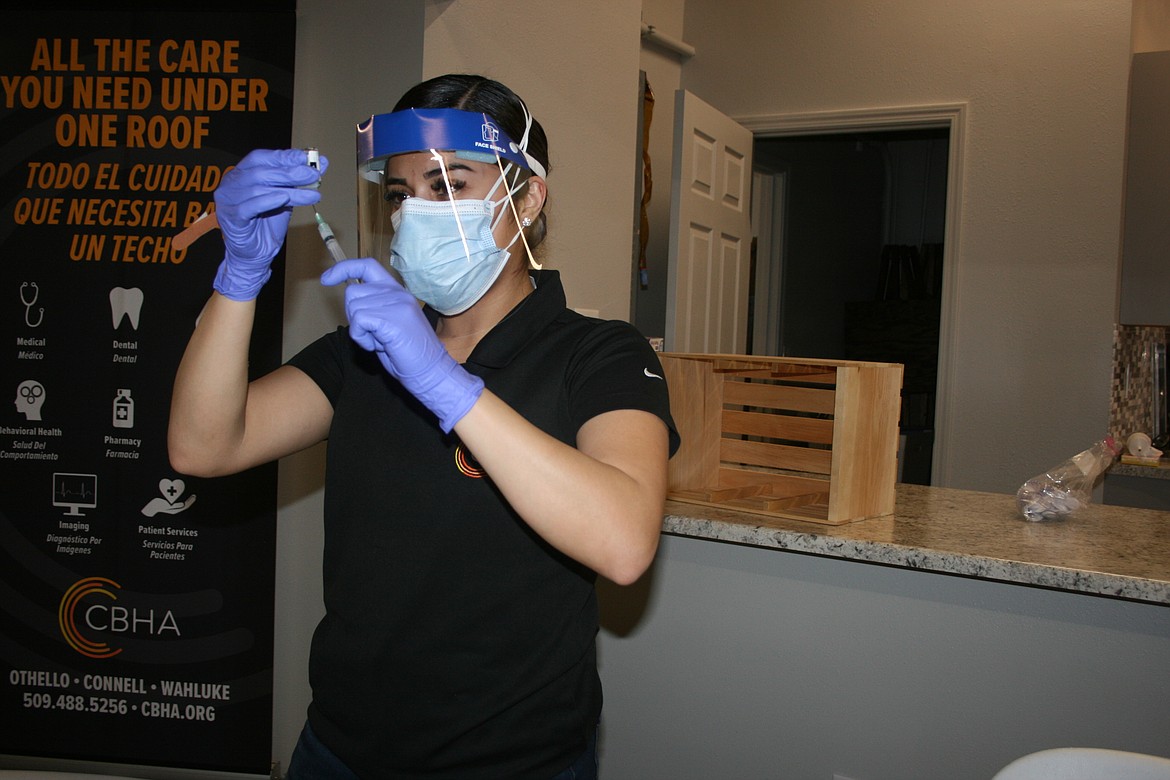
Thalia Ramos, medical assistant for Columbia Basin Health Association, prepares a dose of COVID-19 vaccine during a vaccination clinic in Royal City Feb. 3.
Cheryl Schweizer/Columbia Basin Herald
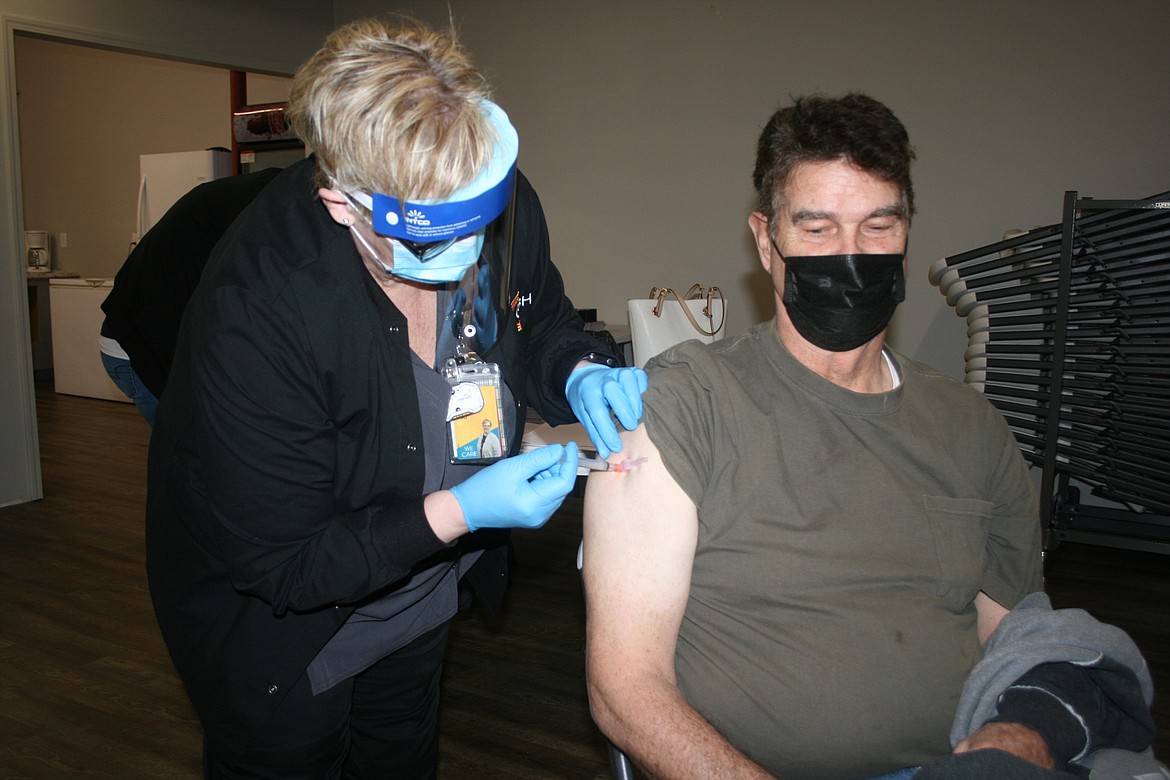
Columbia Basin Health Association nurse Viki Anderson administers the COVID-19 vaccine to Mark Rees of Royal City during a vaccination clinic Feb. 3.
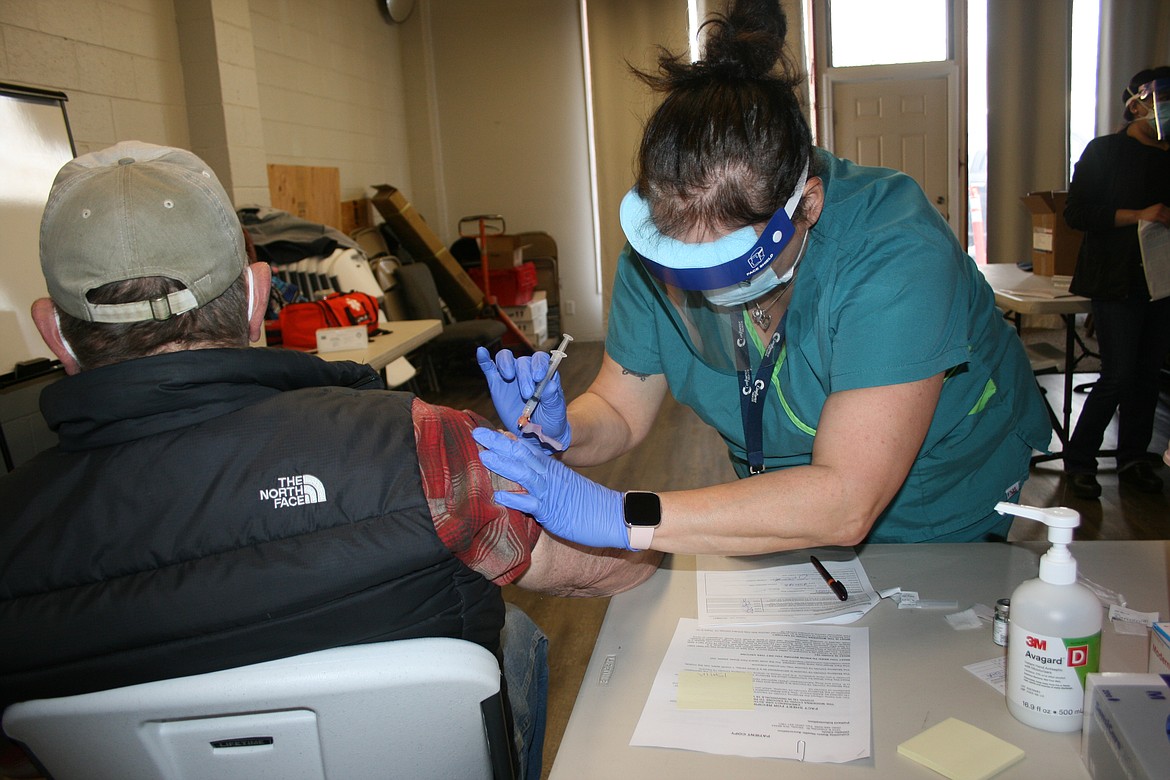
Ken Wiser (left) gets the COVID-19 vaccine from Columbia Basin Health Association nurse Melissa Gonzalez during a vaccine clinic Feb. 3 in Royal City.
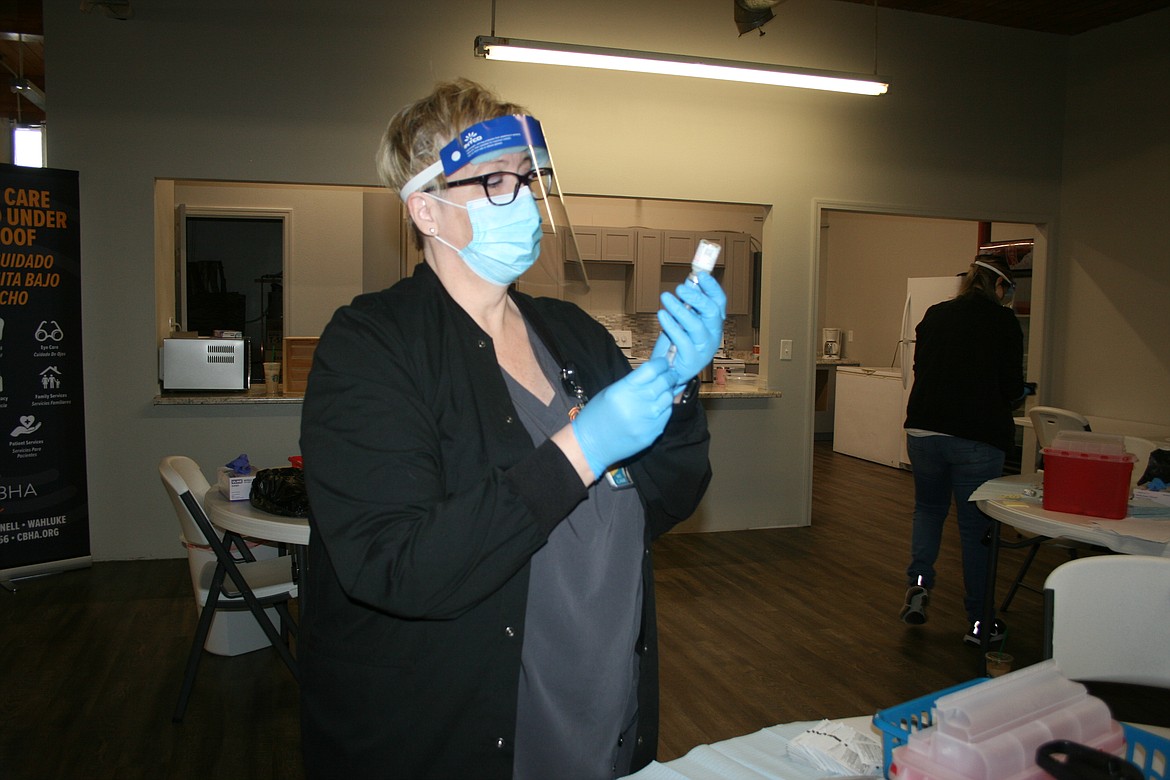
Columbia Basin Health Association nurse Viki Anderson prepares a dose of COVID-19 vaccine during a clinic Feb. 3 in Royal City.
ROYAL CITY — Melissa Gonzalez told her patient the COVID-19 vaccine was a lot like a tetanus shot, as she received the first of the two-shot regimen.
Gonzalez, a nurse with Confluence Health in Moses Lake, was assisting Columbia Basin Health Association staffers with administering vaccinations at the first clinic in Royal City Feb. 3. Jonathan Madera, CBHA director of operations, said it was the first coronavirus vaccination clinic in Royal City, but it was the third vaccination clinic for CBHA. Madera said previous clinics were in Desert Aire and Mattawa.
The Royal Clinic provided the first shot of the two-shot regimen for 100 qualifying patients.
“Our schedule filled up within a few days,” Madera said.
The CBHA team demonstrated they had it down. It took about 15 to 20 minutes to go from registration to getting the shot. Patients were asked to wait in the car for about 15 minutes after receiving the shot to ensure there was no adverse reaction.
Patients will be back in about three weeks to get the second shot.
Vaccine supplies are limited, so the clinic was appointment-only. State officials established a priority system, with only people in specific categories eligible for the vaccine, including high-risk health care workers, high-risk first responders, residents and staff of long-term care facilities, people 65 years of age and older, people 50 years of age and older in multigenerational households and all workers at risk in healthcare facilities.
Vaccine supplies have been inconsistent, Madera said.
Health care facilities are told on Friday of the vaccine deliveries they will receive on Monday, he said. Last week, the supply fell short of the original order.
Health association officials ordered 500 doses for the Othello clinic, but only received 100, he said, and none for the Wahluke clinic in Mattawa, even though 100 were ordered.
As of Feb. 3, “we have 1,000 people on waiting lists,” Madera said.
It sounded like a lot, he said, but the CBHA staff can do them quickly when vaccine supplies are available. He estimated the CBHA staff could vaccinate up to 800 people in one week, if the supplies were available.
Columbia Basin Health Association officials hope to extend the vaccination program, as supplies become available.
“Last year was testing. I did orchards the entire year,” Madera said.
The testing outreach program will provide the blueprint for the vaccination program, when the time comes, he said. He estimated the CBHA team tested about 3,000 people through that program.