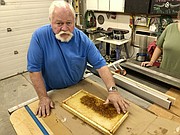
Let it Bee: Ephrata couple has a honey of a hobby
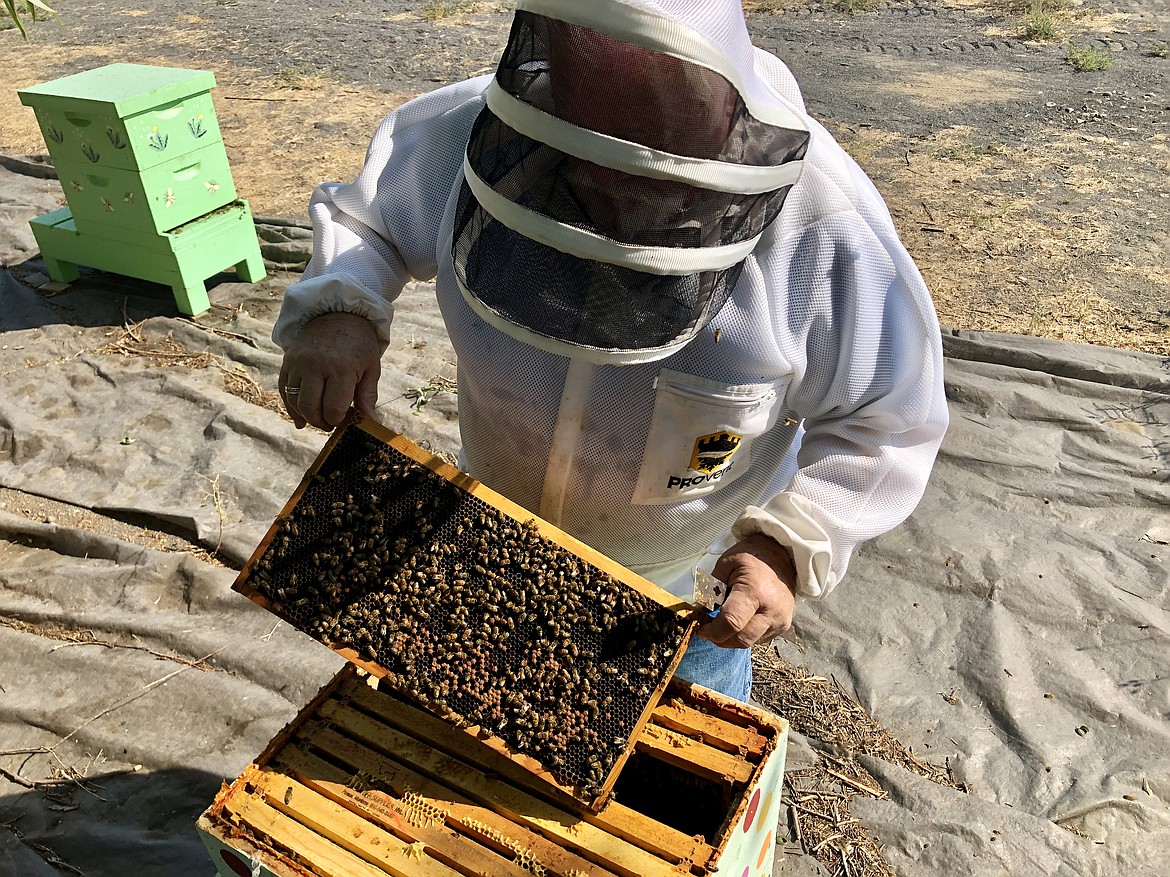
Ephrata-area beekeeper Bob Varah opens one of his hives. Varah wears a protective coat and a bee veil over his head, but does not wear gloves because he said gloves risk hurting or killing bees. Because of that, Varah said his hands get stung a lot.
Charles H. Featherstone
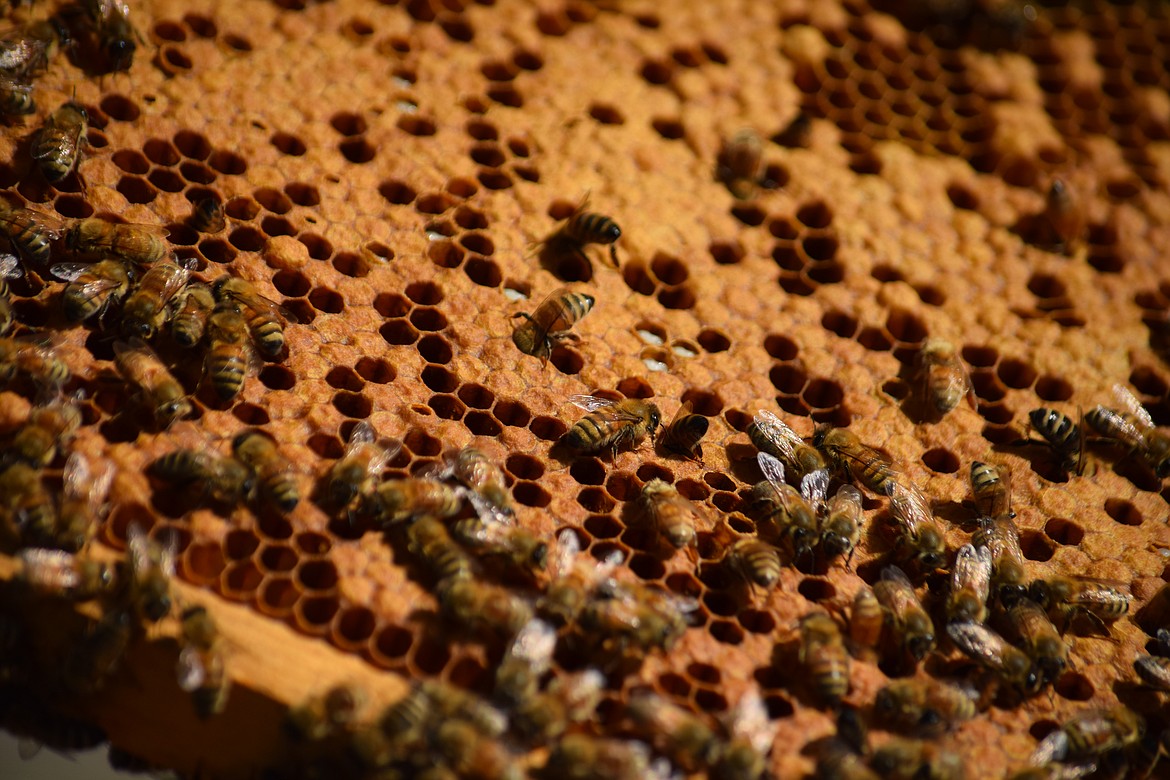
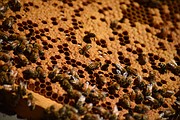
Bees on a cell full of larvae and pupae ready to emerge as adult honeybees.
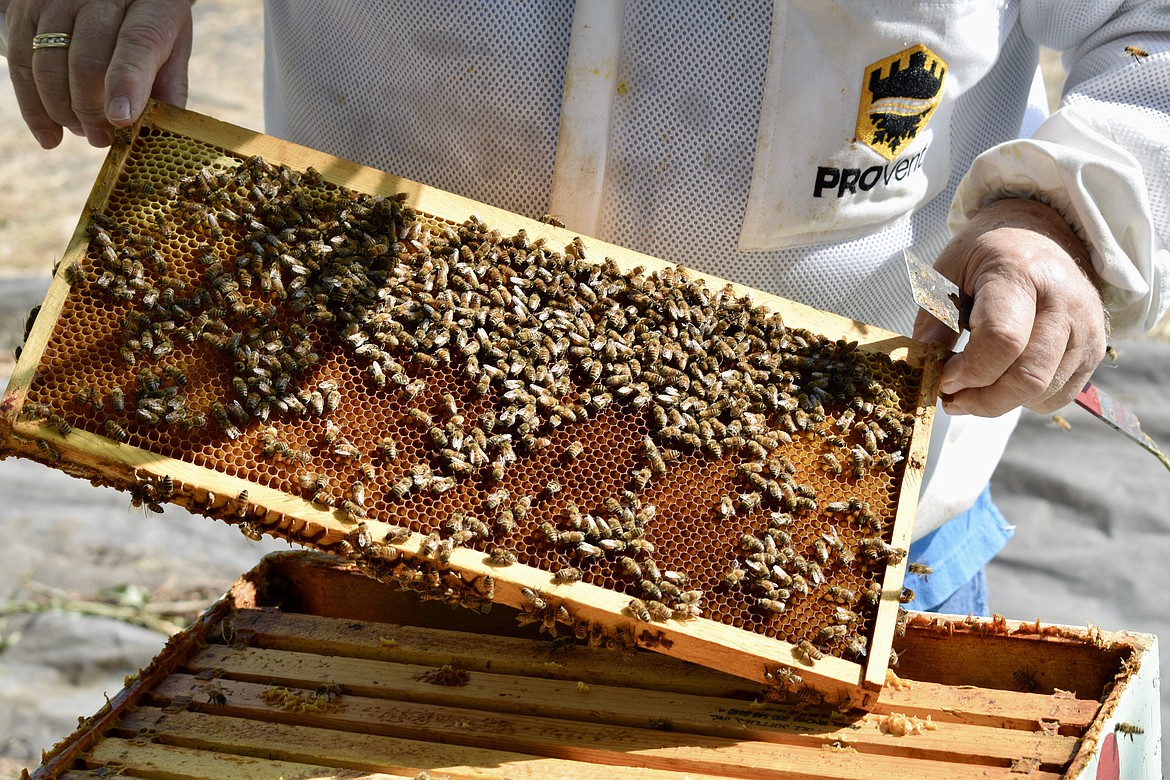
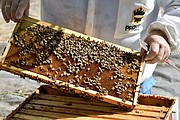
Ephrata-area beekeeper Bob Varah shows off a frame from a hive. Frames must be taken out carefully and put back in a hive in exactly the same position they were pull out of, Varah said.
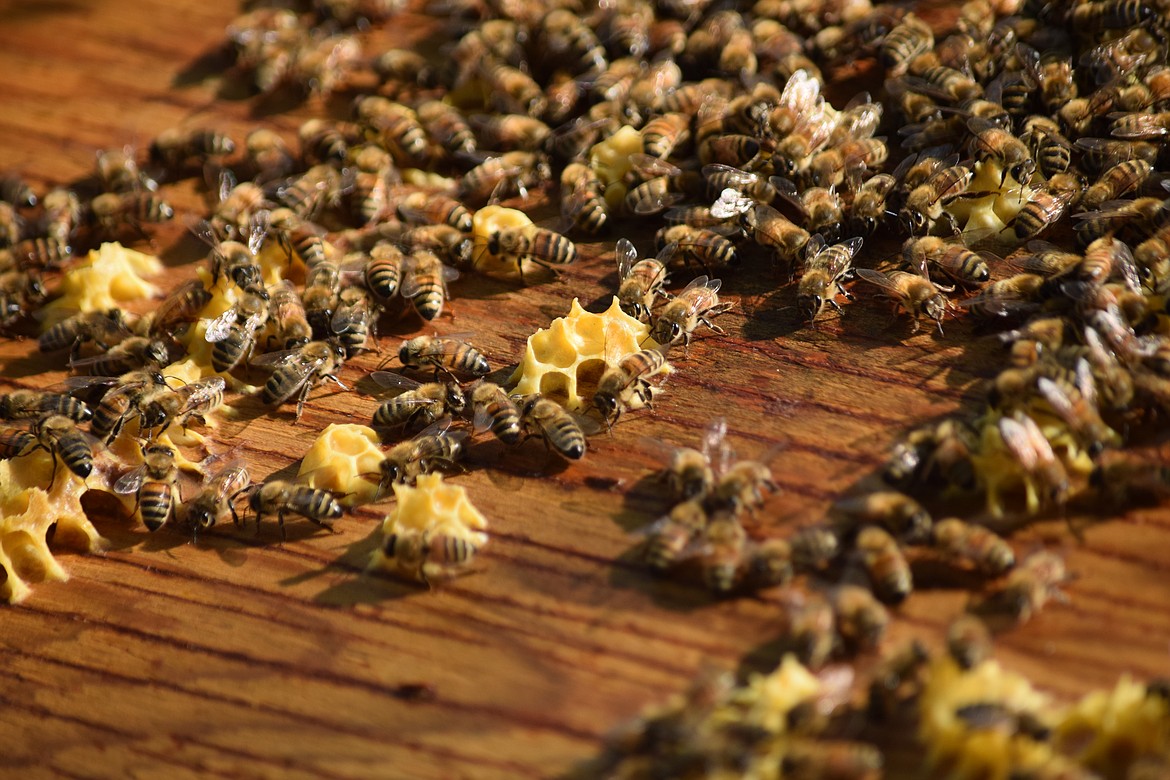
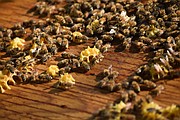
Bees on the upturned lid of a beehive.
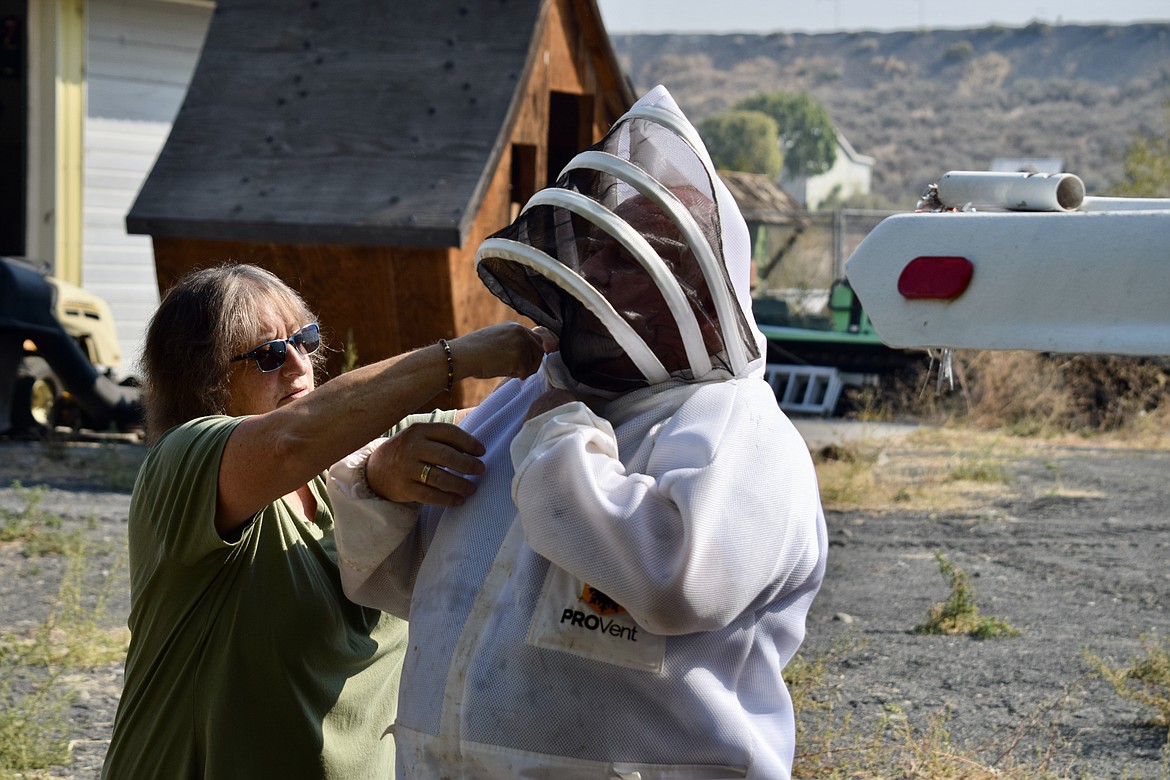
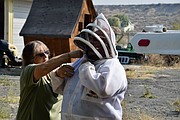
Ephrata-area beekeeper Bob Varah is helped into his bee jacket by his wife, Connie.
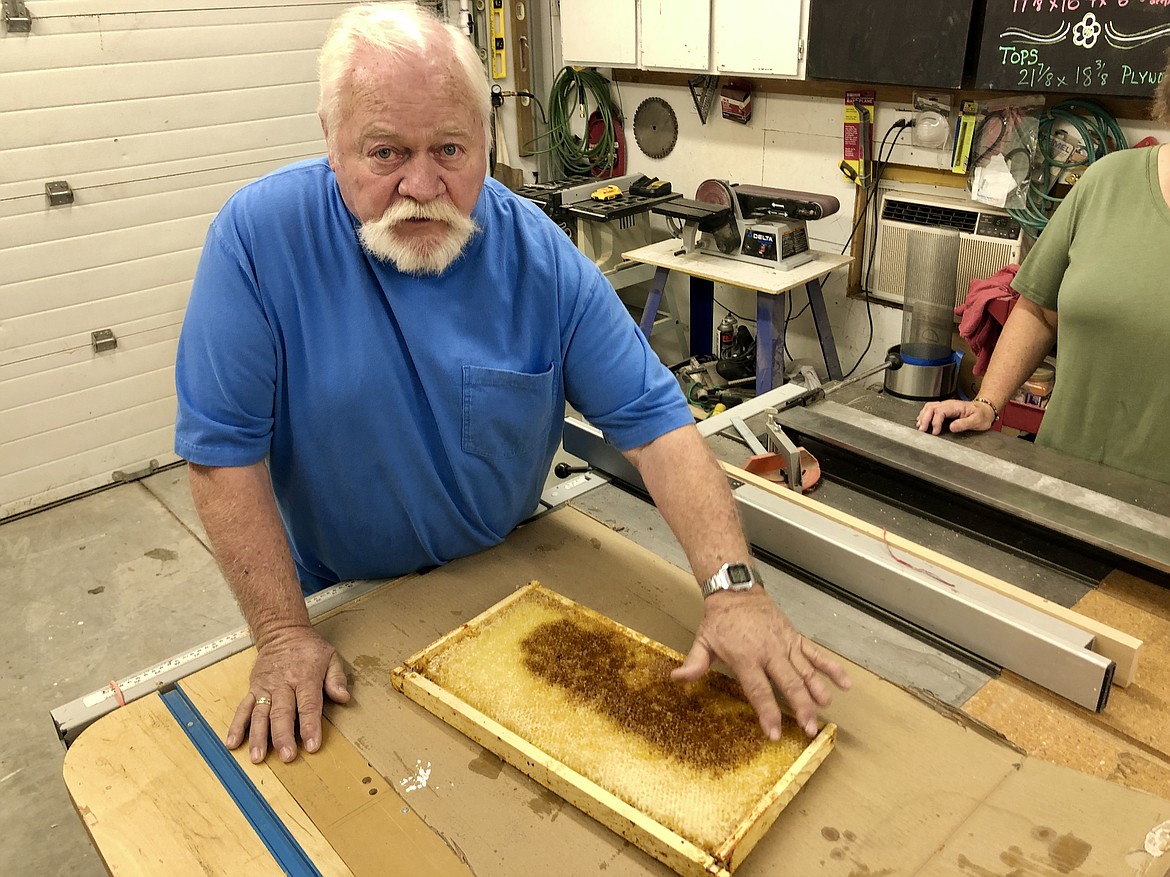
Ephrata-area beekeeper Bob Varah shows a damaged frame from one of his beehives that he said he needs to fix.
EPHRATA — Bob and Connie Varah have always been a little interested in bees.
“We had a guy come here, maybe seven years ago, and he wanted to raise queens on our back lot,” Connie said one bright but very smoky morning last week as she and her husband sat on their back porch.
“There were no other beekeepers around here, and he was trying to create a pure strain of bee queens,” she explained. “He did that for two years, and we were just intrigued by what he was doing. So we decided to keep bees.”
“That was the day we caught the swarm,” Bob added.
Because, like most people who end up keeping bees, the Varahs didn’t so much choose to keep them as they were chosen when a swarm of bees alighted in one of their willow trees.
Bob said he called their friend who was raising the queens on their property, whose name he didn’t exactly remember, and asked for his help.
“He said, ‘I’m in Spokane, can you catch them for me?’” Bob said.
“I don’t know,” Connie answered as the Varahs related the story. “Can we?”
Bees swarm when a hive gets too big. A normal hive might contain 50,000 or more bees, but can only have one queen. As worker bees in an overcrowded hive prepare a second queen, the first queen departs with somewhere between 10,000 and 20,000 bees to look for another place to live.
“We caught them in a cardboard box,” Bob said, noting that the bees swarmed from one of their friend’s hives. “We started out with one hive, and it kind of exploded from there.”
The Varahs now have six brightly painted hives on their sprawling “Make Believe Farm” along Dodson Road just south of Ephrata. They sell honey at farmers markets in Quincy and Ephrata, while Connie also makes pottery and Bob makes sausage in a kitchen full of stainless steel equipment, including a huge centrifuge to extract honey from honeycomb. At 77, Bob is a retired merchant seaman who commuted to his Puget Sound tugboat job from Ephrata and does just enough in retirement to stay busy without having to work too hard.
“The most we’ve had is nine hives, and that actually became work,” Bob said. “We wanted to do this as a hobby. You have to do what your bees want to do or you’ll lose your bees.”
Bob describes a hive of bees “as the most perfect organism” and “the ultimate socialists.” They all work for the queen, who controls the hive with her pheromones — chemicals bees use to communicate — right down to the overall mood of the bees, Bob said.
“They’re all working like an organism; all of them compromise one thing,” he said.
Bob said a typical worker bee lives maybe six weeks, and begins her life by caring for the queen, then doing the work of hive maintenance — creating beeswax and honey, packing cells with honey and pollen, clearing out dead bees and other debris — before spending the last portion of her life foraging flowers for nectar and pollen.
They make honey to have something to eat over the winter, only they are so good at it a typical hive will make far more than it will ever use.
In fact, they make more honey than even the Varahs can give away or sell most years, Bob said.
“It seems like anymore, we never sell all the honey,” he said.
Bob and Connie said their hives are beginning to get ready for winter. They’ve kicked out the few male bees — drones — that exist solely to eat and fertilize the queen, who normally lays around 1,500 eggs per day to replace a hive’s daily losses.
“They are bringing in what they need for winter food,” Connie, 62, said. “A hive should weigh 70 to 80 pounds going into the winter. If we need to, we give them back some of their honey.”
Once winter hits in full, the remaining bees will form a ball around the queen and move around the hive to try and stay warm, keeping to the top of the hive to avoid the cold ground.
“They always go where the warmth is,” Bob said.
The Varahs will check their hives a time or two over the winter, picking a sunny day to make sure their bees are still alive and still have enough to eat. Bob said he will make something called candyboard — mostly sugar and water, though Bob said he adds essential oils — to give bees something to eat if they run out of honey.
“They’ll eat their own food first,” Connie said. “They aren’t stupid.”
But it wasn’t the honey that got them involved. It was the bees themselves, the Varahs said, because they believe it is important to help keep honeybees given the threats of varolla mites and colony collapse disorder to an insect so valuable to agriculture.
“We got in it for the love of the bees. Saving the species,” Connie said.
“They’re fun to watch,” Bob added. “They’re pretty amazing.”
Charles H. Featherstone can be reached at [email protected]