


Working with bulbs for a spring explosion of color
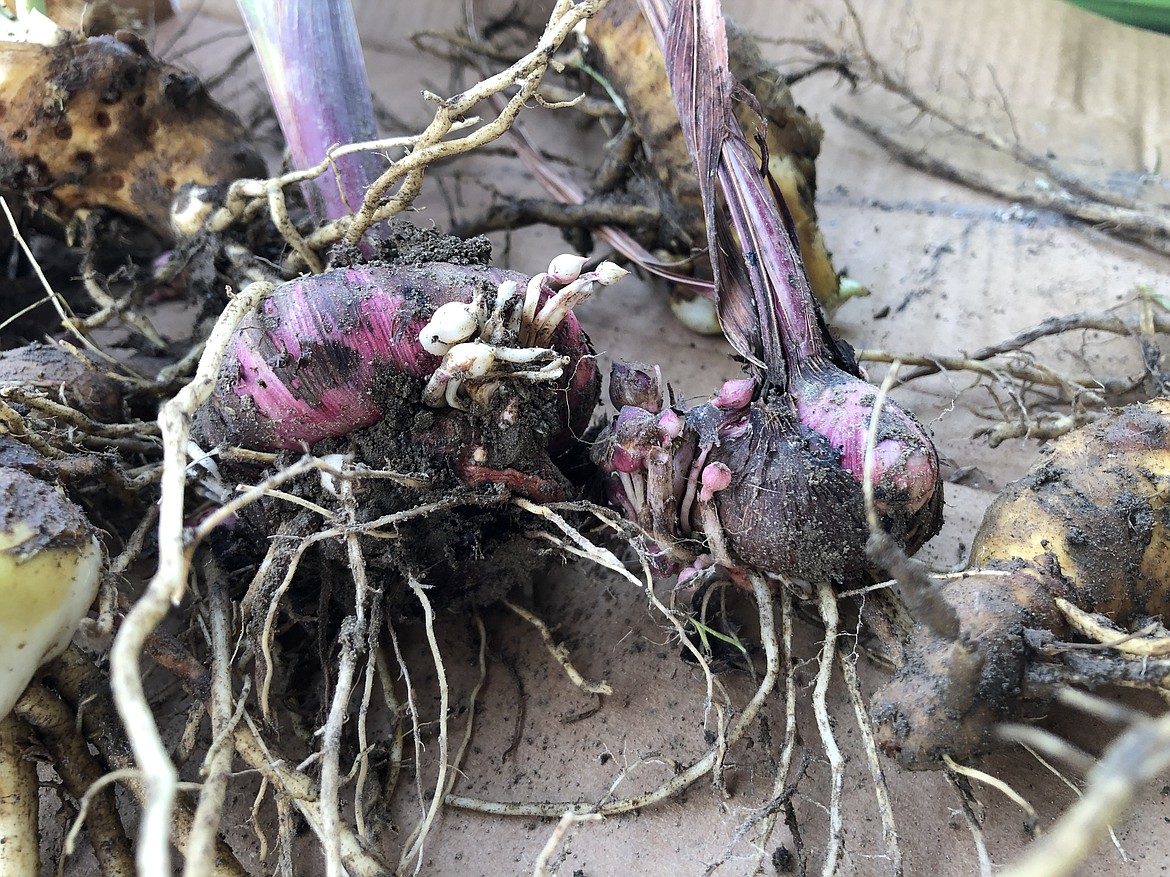
A pair of gladiolus bulbs, complete with roots and sprouting tiny little bulbs themselves, carefully dug up recently by Moses Lake-area master gardener Melody Townsend.
Charles H. Featherstone
MOSES LAKE — Melody Townsend doesn’t normally dig up her irises, gladioluses, tulips and lilies in the autumn.
“I just leave them in over the winter time, and I let them just do their thing,” she said.
A master gardener who lives south of Moses Lake, Townsend stands next to an outdoor table covered in muddy bulbs she carefully dug up from her garden. Several have long, thin roots trailing down from bulbs, most of which are not even remotely “bulb” shaped.
“My mom, she digs them up and she puts them in the garage over the wintertime in Seattle,” Townsend said. “I’ve never found that I’ve needed to here in Moses Lake. It seems like the soil just kind of keeps them alive during the wintertime around here. It’s really quite interesting.”
There aren’t many species of bulb plants, and we eat a few of them — onions, garlic, shallots. But mostly when people think of bulbs, they think of tulips, daffodils and lilies, flowers that bloom in the very early spring when there’s still a bit of chill in the air.
Townsend said that she rescued many of her bulbs a few years ago from a local golf course, which was going to throw them out after redoing the clubhouse landscaping.
“Now they grow all around the house, and they grow beautiful, and they’re strong and they grow back every year,” she said.
Townsend said it’s probably best initially to plant bulbs in March, so as it gets warmer, they have time to put down roots. But she said many of these bulbs could be planted right now, it’s not too cold and they have a little time before the ground freezes and it gets too cool.
“I’m not going to say you can’t. The dirt is still moist, it’s still wet, the temp is not too cold out, so you could get away with them growing a little bit,” she said. “But you need them to root in order to get through the winter. If they’re not rooted, they’re going to have a hard time getting through the winter.”
Townsend said she will clean these bulbs, taking extra care to pick out the thin filaments of grass roots, dry them, and wrap them — she suggests towels — and then carefully pack them away. They’ll dry out and go dormant over the course of the winter. Once they’re in the ground again, watered and warm, they sprout back to life.
“They take a lot of water,” she said. “They love water.”
Even though most people plant bulbs either in the fall or spring, Townsend said that bulb plants also produce seeds, some of which can be hard to find otherwise.
“Irises produce seed pods every two or three years. If you don’t catch them in time they will open up on their own and seed the ground,” she said. But if you catch them before they open — they have to turn hard first before you take them off — you get about 20 seeds out of one pod.
Whether she plants seeds or bulbs, Townsend said she likes knowing there will be an explosion of color around her house come next spring.
“It’s covered in purple and yellow and red around here, it turns into the quite the scenery — I love it,” she said.
Charles H. Featherstone can be reached at [email protected].