

Tech expert: Parents need to model good phone, internet behavior
MOSES LAKE — Just because kids have been raised in a digital world doesn’t mean they actually know very much about it.
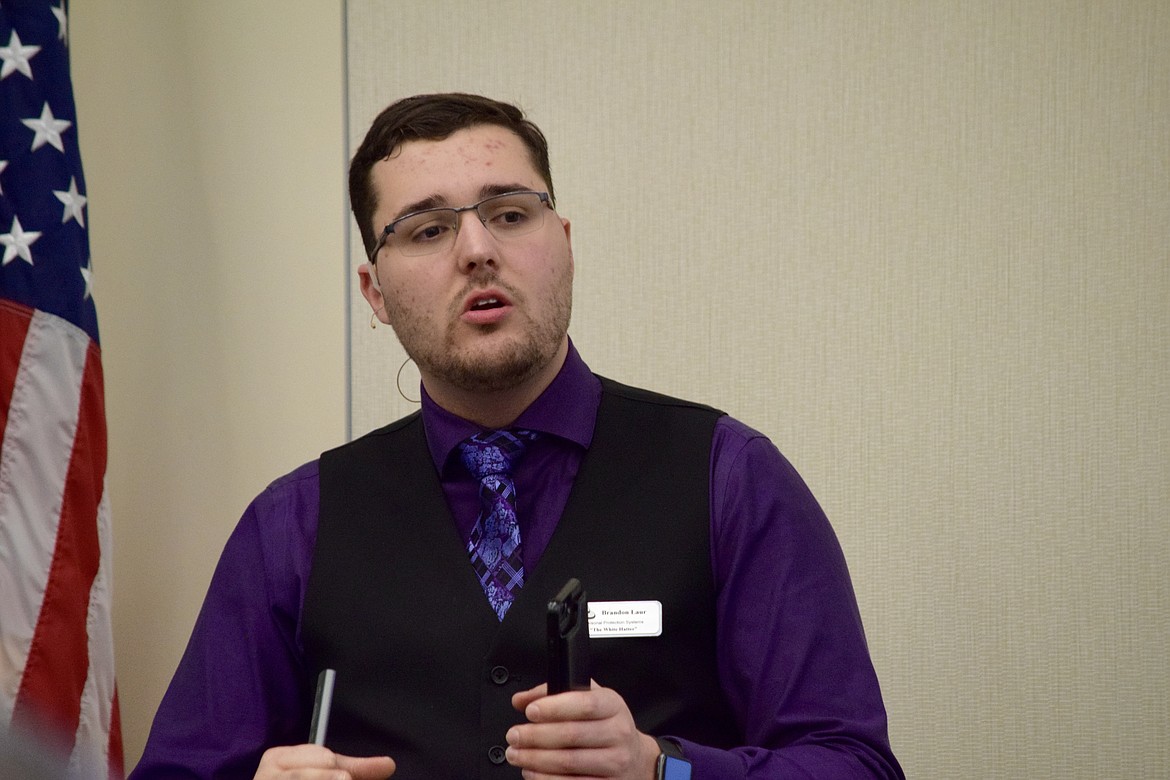
That was the first and possibly best piece of advice Brandon Laur, a member of the British Columbia-based White Hatter Team, gave parents last Tuesday evening during a presentation at the Columbia Basin Technical Skills Center.
“It doesn’t mean they’re digitally literate,” Laur said.
Laur was in Moses Lake for two weeks to visit each of the district’s 10 elementary schools and two middle schools to talk to fourth-, fifth- and sixth-graders about online safety. Laur’s father, Darren, a former police investigator, founded the White Hatter to help kids and adults develop the digital literacy they need to stay safe online.
Computers and cellphones are tools, Laur said March 3, no different from scissors or hammers.
“What makes a hammer good or bad are the choices someone makes while using that hammer,” he said.
However, parents do have a responsibility to ensure their kids use devices wisely and well, Laur said. That means monitoring how much time they spend online, ensuring they don’t take their devices to bed, and modeling good online behavior and device use themselves.
“The number one thing to do is get the computer, internet and phone out of the bedroom,” Laur said.
Laur said parents should be concerned if their kids spend a lot of time online at night, they change the screen or close their laptop quickly, are secretive about their online activity, are “always doing homework but getting behind in school,” have unexplained content or messages from unknown people, become withdrawn from family or their behavior changes.
“Set boundaries, enforce those boundaries, and if rules are broken, enforce those sanctions,” Laur said. “Kids have no right to privacy from their parents online, but older teens should have some if they can earn it.”
Being a “good digital role model” means not doing anything “you don’t want your kids doing,” Laur said. That includes behaving well online and not texting your kids while they are in class.
“Be your kid’s best parent, not their best friend,” he said.
Laur said studies show a little less than one in five middle schoolers and high schoolers have received “nude or semi-nude images,” most of them “in the context of a romantic relationship.”
“It is a challenge to navigate relationships with technology,” he said.
The law in Washington regarding minors who take pictures of themselves naked and send them to other people has changed, Laur said, effectively decriminalizing the practice among consenting minors. It is now legal in Washington for someone under the age of 18 but over the age of 13 to possess a nude photo of themselves or someone else, or to send a copy of their own picture to someone under 18, Laur said.
But it is still against the law for minors to sell images of themselves nude, or to send a naked picture of a third person to someone else.
These laws were enacted because some teenagers were being prosecuted as felons and put on sex offender registries for having naked pictures of themselves on their phones.
Laur also said that while he tells all of the young people he meets not to send nude or partly nude photos of themselves to anyone, he knows some will, no matter what, and so advises them to minimize the risk — keep their face out of the picture, take the picture with a neutral background with no identifiable objects or articles of clothing, and delete all metadata from the photo.
“Studies show 11 percent will do it no matter how hard you try to stop them,” he said.
Charles H. Featherstone can be reached at [email protected].