
‘Privacy is like a toothbrush’: White Hatter helps grade schoolers stay safe online
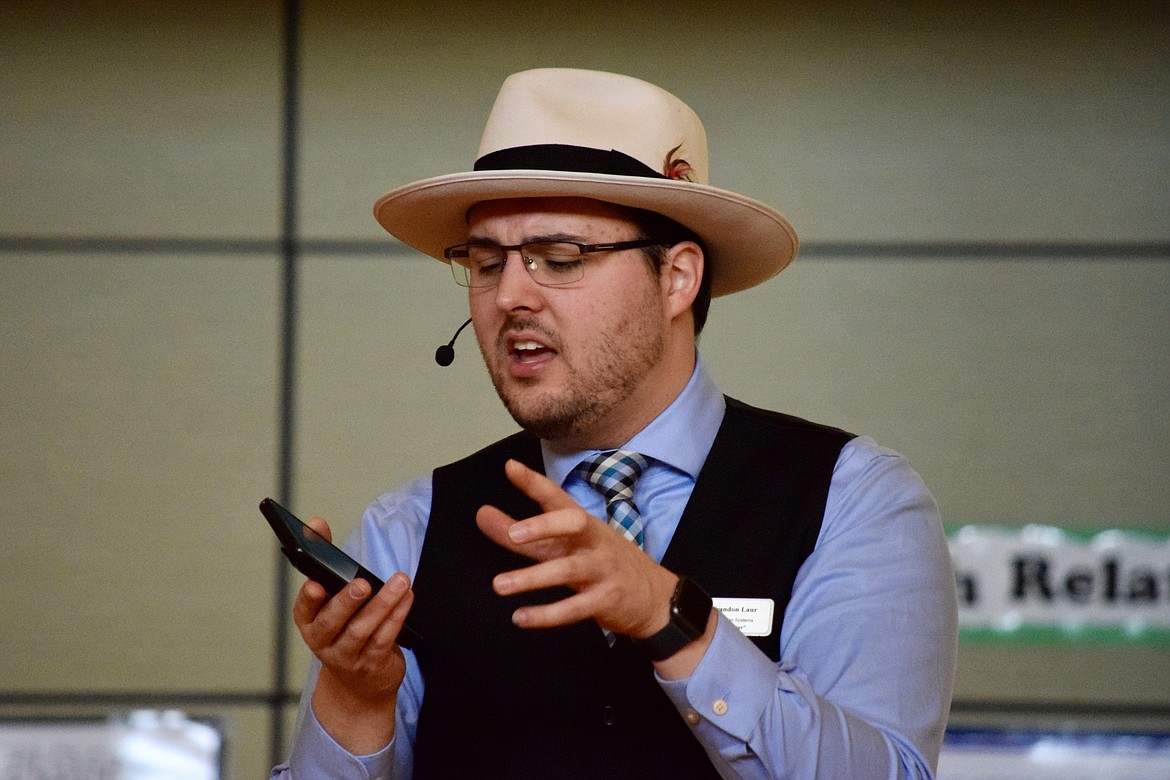
Brandon Laur, a member of the British Columbia-based White Hatter team ,at Park Orchard Elementary School on Friday.
Charles H. Featherstone/Columbia Basin Herald
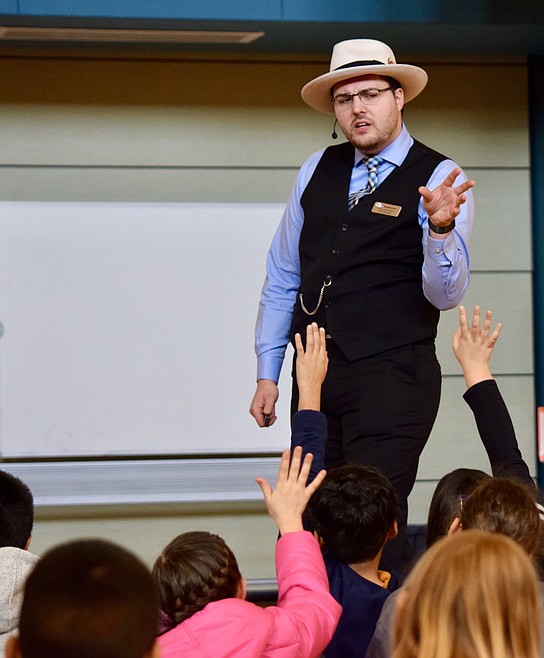
Brandon Laur, a member of the British Columbia-based White Hatter team, talked to a group of Park Orchard fourth-graders on Friday about internet safety.
Charles H. Featherstone/Columbia Basin Herald
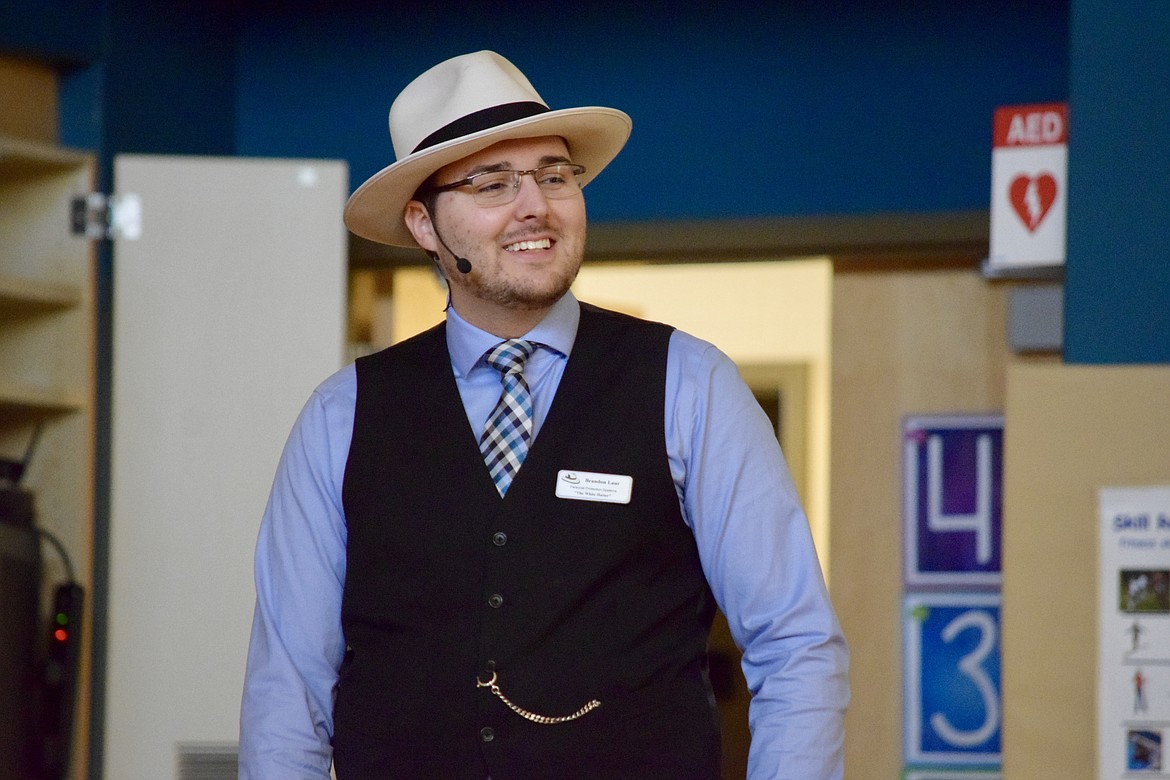
Brandon Laur, a member of the British Columbia-based White Hatter team, talked to a group of Park Orchard fourth-graders on Friday on Internet safety.
Charles H. Featherstone/Columbia Basin Herald
MOSES LAKE — There are just some things you don’t want to share with other people.
“Privacy is like a toothbrush. Do people share toothbrushes?” Brandon Laur asked a group of fourth-graders at Park Orchard Elementary School. “Most of us don’t feel comfortable with that.”
Being online is much the same, he said. There are just things — name, address, phone number, where you go to school — that young users should not share with people they don’t know when they use the internet. Because the computer code that makes the internet work, which makes it possible for so many people to do “awesome and amazing things” online, also makes it possible for people to do “evil, ugly, terrible things” and even hurt other people, Laur said.
Laur is a member of the Victoria, British Columbia, White Hatter Team, which advises children and parents on internet safety. The group takes its name from so-called “white hat” hackers who examine computer systems in order to point out their vulnerabilities, rather than to take advantage of them.
He’s also the son of White Hatter founder and former police investigator Darren Laur, and according to the White Hatter website, the younger Laur has been helping his father with presentations on internet safety and security since he was 10 years old.
Now he’s in Moses Lake until the end of the week, making the rounds of all 10 of the Moses Lake School District’s elementary schools and two middle schools to talk to fourth-, fifth- and sixth-graders about how to be safe when they go online.
“Twelve schools, 21 sessions, and having a blast!” Laur said before the morning’s first session at Park Orchard.
Laur is attempting to demystify the internet a bit, let kids know it’s OK to go online and have fun but also to remember to be careful. Because most everything done online is recorded and saved somewhere, and the online world is full of people who don’t do what they should be doing.
“Everything we do online is all based on code, but you don’t get to see it,” Laur said. “You see colors, pictures, boxes and text, but no code. It’s there, but we can’t see it.”
“We think what we do online is personal and private, but you cannot guarantee privacy,” he said. “Modern code is incredibly powerful, like a permanent marker. Copies and recordings are made and searchable.”
Even on apps that promise to delete photos after a few seconds, he added. Even in allegedly private chat rooms.
Laur told students that their email accounts are the most important single account any of them will ever have. They need to guard the login information and make sure their passwords are not obvious and “safe and secure.”
He also told students they should have screen names in chat rooms or other places that reveal “nothing about you.” “MichaelinMosesLake” is a bad screen name, he said, and “KoolGirl_12” is better but not great. Even better would be “I_Like_Dorritos!” which says absolutely nothing about the person behind it.
“When you finish school today and you go online, change that screen name,” he said.
But he also advised students to look at the screen names of anyone they don’t know who contacts them, because that name might tell them something important. In fact, looking at someone’s social media profile — who they follow, and who follows them — can tell you a lot about someone, Laur said.
“We do this all the time at the White Hatter,” he said.
Laur also told students that the White Hatter team also deals with cyberbullying, and he wanted to give students the tools to hold responsible those who try to hurt them.
“If someone is trying to hurt you, here’s what I want you to do,” he told students. “Block people. You are within your right to block whoever you want.”
He also said if people are being “more than a little rude,” are asking for naked pictures, or are saying “evil, ugly, terrible things,” they can take screenshots and make recordings of things.
“That’s called evidence, and it allows you to hold people accountable,” Laur said. “You can show it to someone who can help make it stop.”
“Let’s hold them accountable for the evil, ugly things they do,” Laur added.
Laur will be at the Columbia Basin Technical Skills Center on Tuesday, March 3, at 5:30 p.m. to talk to parents about the things they can do to help their kids and their families be safe online.
Charles H. Featherstone can be reached at [email protected].