Potato pioneer Sam Driggs looked ahead, got it right
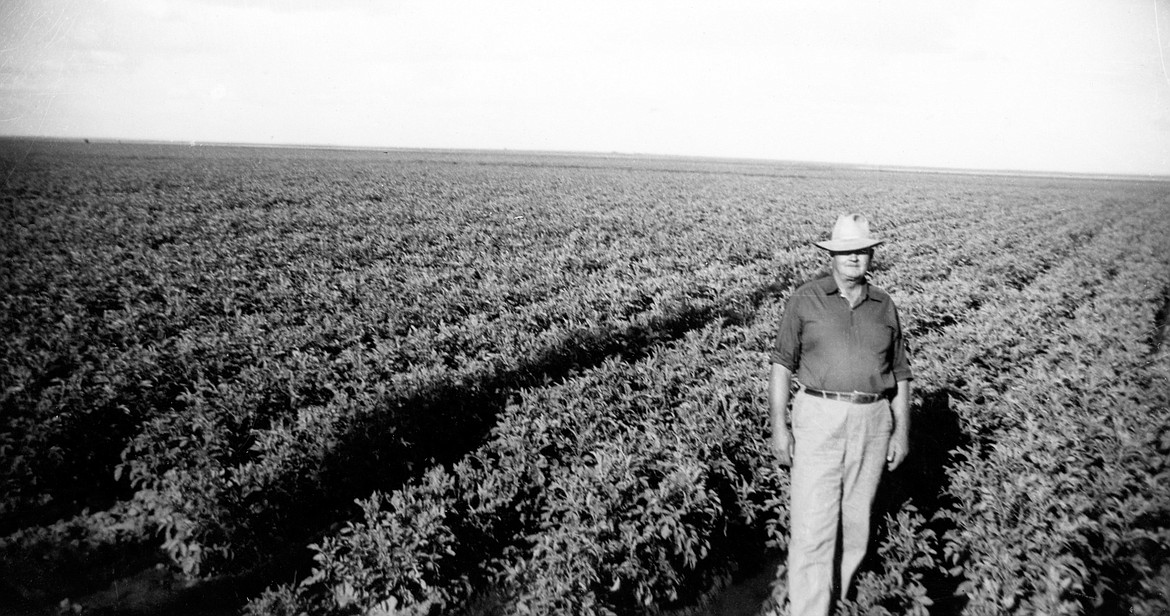
Sam Driggs shows off the fruits of his labor, a potato field on his farm on Potato Hill Road. Driggs was the first person to plant potatoes in the Moses Lake area.
Courtesy photo
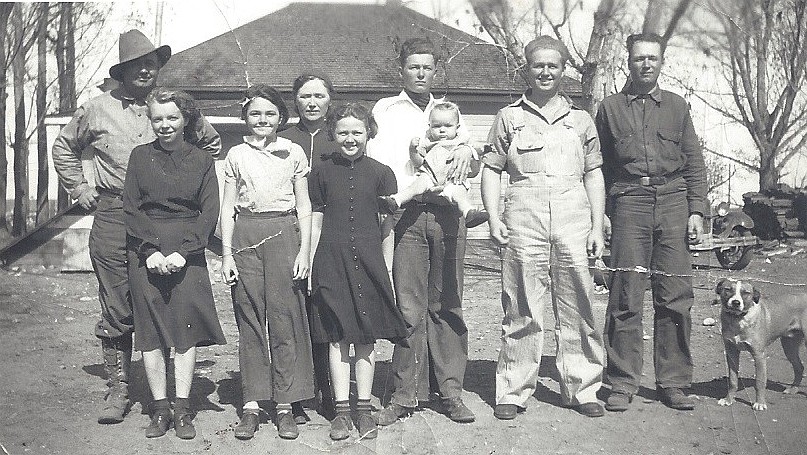
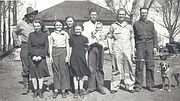
Sam Driggs and most of the family in 1937. From left, Sam Driggs, daughters Leah and Betty, wife Lottie, daughter Mary, son Delbert with granddaughter Bonnie, sons Harvey and Forbes.
Courtesy photo
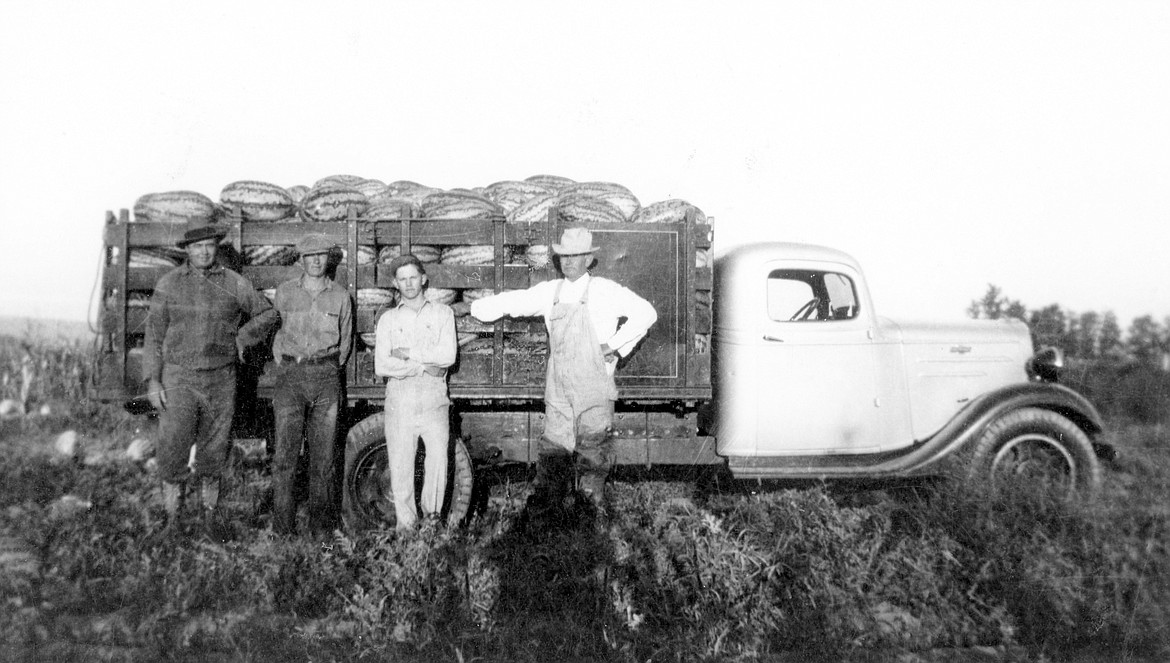
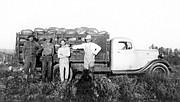
They didn’t just grow potatoes on Potato Hill – (from left) Sam Driggs, Delbert Driggs and two unidentified workers show off the results of watermelon harvest.
Courtesy photo
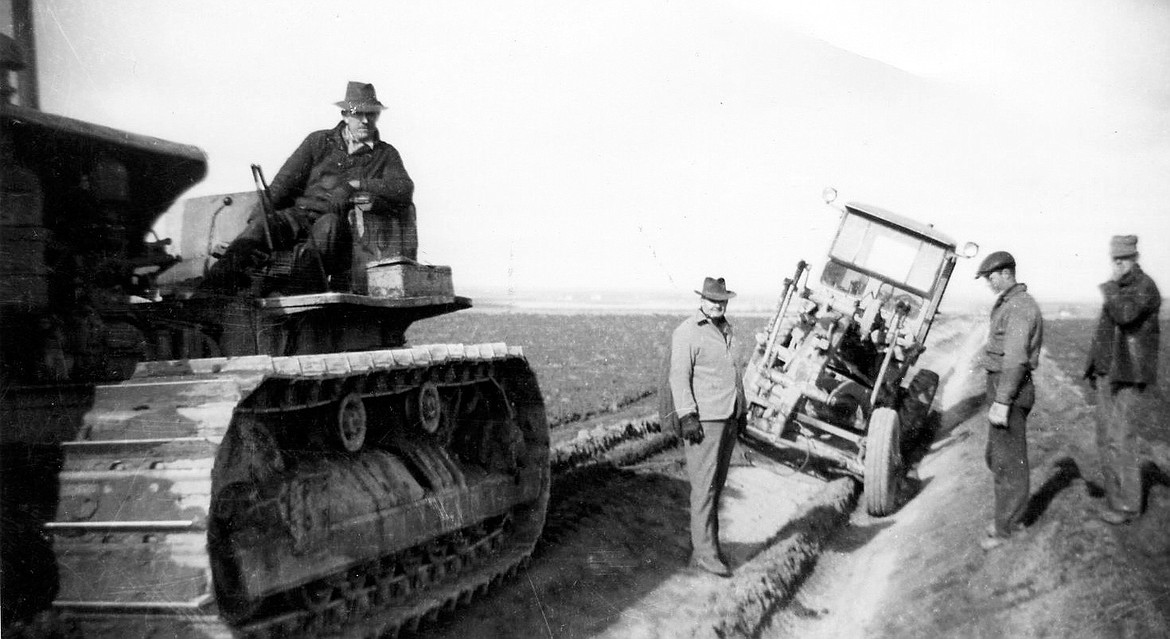
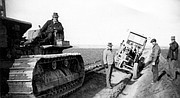
Sam Driggs (second from left), son Percy (second from right) and two unidentified workers dig a ditch for the redwood pipe that would bring irrigation water from Moses Lake.
Courtesy photo
MOSES LAKE — Sam Driggs was one of those guys who looked ahead – and when he did, he was right about what was going to happen.
Driggs was interested in property right outside a little town in central Washington in the spring of 1940. The town – Moses Lake? Neppel? No, Moses Lake; the name was changed in 1938. A reporter coming through Moses Lake in 1945 called it “a sand-coated little town.”
Anyway, Moses Lake was really tiny, about 500 people, and the things that would shape its future were still out of sight.
Sure, somewhere in the War Department, as the Department of Defense was then called, somebody was compiling a list of locations with lots of sunshine that would be good for flight training. (That training base eventually became the Grant County International Airport.)
And there were big plans for the electrical generation and irrigation water that would come from Grand Coulee Dam, although the dam itself wasn’t quite finished. (The official completion date is June 1, 1942.)
Sam Driggs, a native of Utah, and his sons Delbert and Forbes broke ground on a farm in Mae Valley, then called the Mae desert, in 1940. A couple years later Sam and Delbert decided to try something completely new – growing potatoes.
They started with about 44 acres. The first potatoes went in on Potato Hill in 1943.
Delbert’s son, also named Samuel, wrote a history of the family’s pioneering efforts, which are commemorated in the name of the place they built their farm – Potato Hill. “Potato Hill had not always been called Potato Hill,” Driggs wrote. “Its original name was MacDonald Hill until shortly after 1943, when Driggs and Sons planted potatoes on the hill.”
The Driggs home place was right at the edge of town at the time, just past the current intersection of Ivy Street and West Third Avenue. “This property had a house, milking barn, two small cabins and a pasture,” Driggs wrote.
People had been trying to find some form of sustainable livelihood in the drylands of central Washington for decades. Over time it proved to be good farm ground, but it lacked an essential element – reliable water.
There were orchards around Moses Lake in the early 1900s.
“The apple orchards died out in the early 1930s due to drought or (were) abandoned due to the high cost of obtaining water,” Driggs wrote.
Undaunted, Sam and Delbert Driggs started growing potatoes with the closest available water source, which was Moses Lake. They installed two pumps at the edge of the lake, and pumped the water uphill in pipes made of redwood. The lake provided water for the farm for more than five years.
“I remember standing under the redwood pipes that went from the lake to the top of the hill,” Driggs wrote. “I recall watching the drilling rig drill for water so our family could discontinue using water from the lake.”
While Driggs and Sons concentrated on potatoes, they raised other crops. “I remember the wonderful smell of mint growing in the fields and the harvesting of very large watermelons. During harvest time my dad would ‘accidentally’ drop a melon from the back of the truck so my sister Bonnie and I could eat the heart of the melon. ‘Oops, I dropped one,’ he would say. On a hot day the melons really tasted delicious,” Driggs wrote.
Crops, and most freight in fact, moved by rail during World War II and the immediate postwar years. “Blocks of ice were packed into bins at the end of the rail cars for refrigeration. I would chip pieces of ice from the blocks to suck on and eat,” Driggs wrote.
Technology and mechanization have had a big impact on farming, and nowhere is that more obvious than during harvest.
“Potatoes were sacked in 100-pound gunnysacks and set aside in straight rows to be loaded into the truck for transport to the potato warehouse for cleaning (and) sorting by grade,” Driggs wrote.
The Driggs family built its own sorting and shipping facility in 1944.
“I remember watching my aunts sorting potatoes in this warehouse, men using hand trucks (to move) five 100-pound sacks of potatoes into the rail cars to be shipped to eastern markets and seeing the blocks of ice packed in each end of the cars for refrigeration,” Driggs wrote.
But farming and distribution had their challenges. The Driggs warehouse was destroyed by fire in September 1947.
“Delbert Driggs was one of the first to reach the scene. He and other members of the Veterans of Foreign Wars post were laying the cornerstone for the post’s new clubhouse across the lake when they noticed smoke billowing from the warehouse,” according to a story in the Sept. 19, 1947, edition of the Columbia Basin Herald.
It was too late to save the warehouse by the time Delbert got to the scene. “Just as he drove up, he said, the cupola blew off the top, the walls bent outward and a strong rush of air swept past him,” the CBH reported.
Volunteers did manage to save two rail cars full of onions parked near the warehouse – by pushing them out of the way.
The Driggs family tried again. Delbert Driggs took the lead in building a new warehouse, the “newest and shiniest in Moses Lake,” according to a CBH story in the Sept. 3, 1948, edition. “The new steel and concrete building, 100 feet long by 40 feet wide, houses what is probably the most modern sorting machine in the area.”
But the facility was in use only about 18 months before it too was destroyed by fire. Delbert Driggs always believed both fires were arson, his son said. Delbert got out of farming entirely and moved away from Moses Lake.
Sam Driggs, who had been the first to take a chance on potatoes, sold his place in 1950.
“Sam Driggs admitted this week he had been advised not to try and farm the hill land,” according to a story in the Feb. 24, 1950, edition of the CBH. “Today, the Driggs property is considered a showplace for progressive and profitable irrigated farming.
“Transaction was reported in the $150,000 class,” the CBH added.
Sam died later that year at 61 years of age. “A true pioneer of the west, Sam paved the way for irrigated farming on a large scale in the Moses Lake area by breaking out raw land in 1943,” said his obituary in the Oct. 5, 1950, CBH.
The original Driggs property was developed, mostly for housing, in the 70 years since Sam sold it. It’s remembered in the name of Potato Hill Road, on the south side of Interstate 90.
Cheryl Schweizer can be reached via email at [email protected].