
Pandemic doesn’t keep Serve Moses Lake from doing its job
MOSES LAKE — The coronavirus outbreak required Serve Moses Lake, like most other organizations, to get creative.
Its office, at 422 West Third Ave., was forced to close in March, along with many other agencies and businesses, as part of the state’s effort to fight the outbreak. But only the building is closed. Serve Moses Lake is still working, and is partnering with other organizations to provide services.
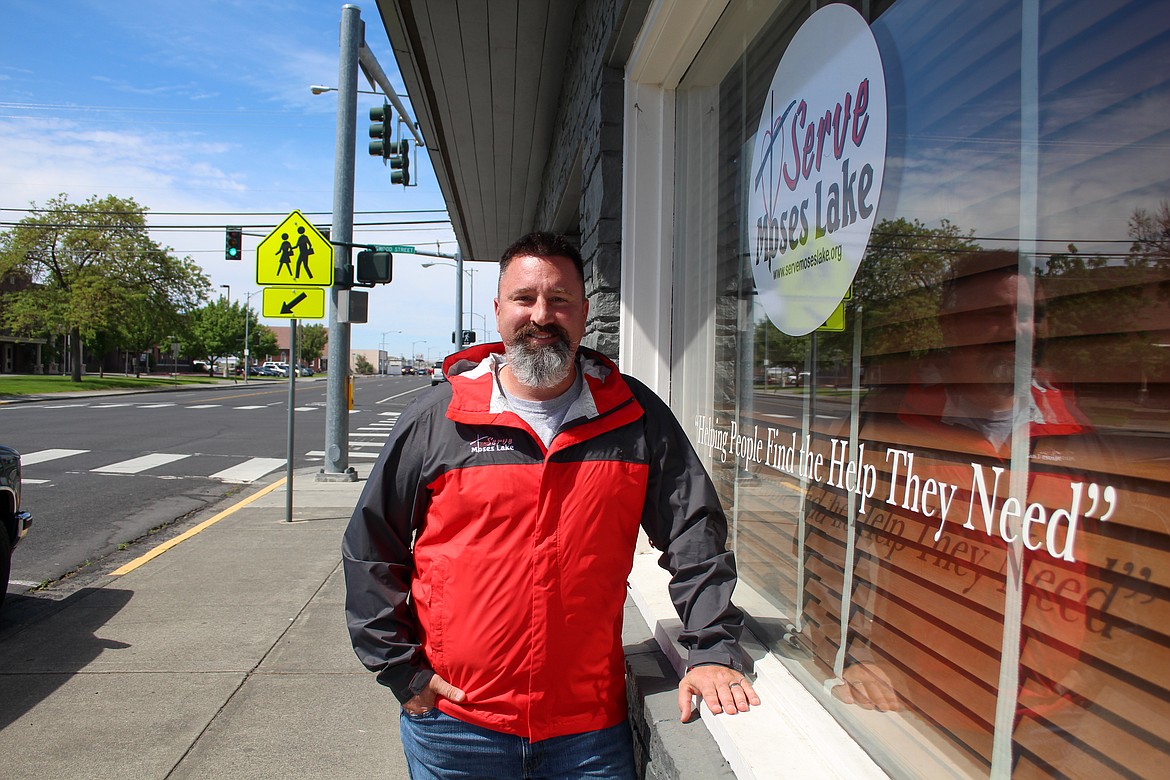
Currently Grant County is in the second phase of the state’s reopening plan, but SML director Brandon LaBonte said the organization probably won’t reopen until the third phase.
“Serve Moses Lake, most likely, is going to follow suit with New Hope, OIC, the (Grant County) Housing Authority, a lot of these agencies that are not going to be opening their doors under Phase 2. It looks like the end of Phase 2 or Phase 3,” he said.
Some of the services that had been offered in the office are now happening over the phone, and that has caused some confusion. “A lot of people just don’t know where to go, what to do, when they hear that certain agencies are still closed. And we just have to inform them and remind them, ‘Look – if you’re getting a busy signal, keep calling. Keep trying, don’t give up. They’re there, but they’re overwhelmed with everything that’s going on as well,’” he said.
Operation is different for the clients – and the staff. “The fundamental kernel of helping people is still there,” LaBonte said. But inquiries are all conducted over the phone, and the office is almost empty. “It looks and feels different,” LaBonte said.
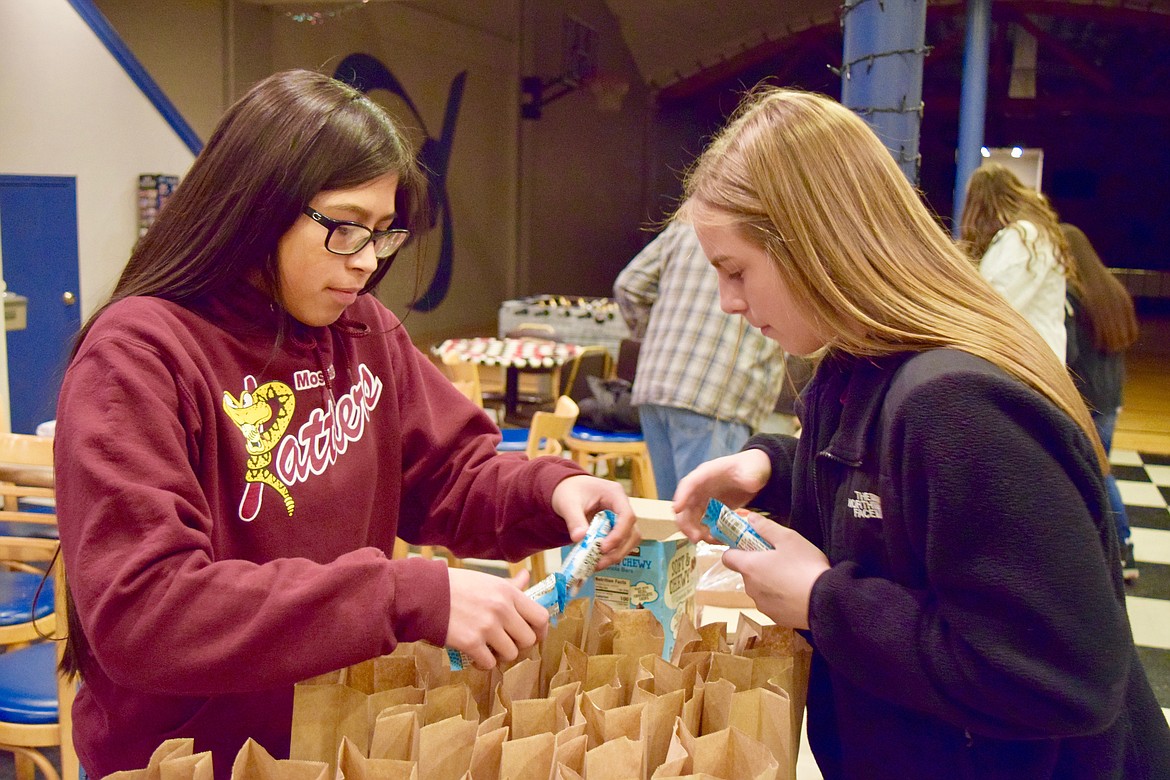
Providing services has required some creativity in the time of the outbreak. Serve Moses Lake has a program to provide lunches, which were distributed at its offices. With that option closed off, SML is working with the Moses Lake Food Bank.
“What’s great about that is, a lot of our homeless that have applied for housing and have been granted housing can now get regular food through the food bank,” he said. People with an address can sign up with the food bank, “and we can deliver that food to your door if you don’t have transportation.”
Delivery has been important during the outbreak, with volunteers delivering food, hygiene products, even prescription medications in some cases. With the office closed the number of people seeking help has declined, LaBonte said.
He estimated that the volunteers were working on 50 to 60 appointments per month when the office was open. Fewer people are contacting SML by phone. “We’re doing more counseling over the phone, and door-to-door deliveries.”
Serve Moses Lake’s mission hasn’t changed. “We help people find the help they need,” LaBonte said.
It sounds pretty simple, but it can get complicated, depending on what people are seeking. Sometimes people ask for more than SML can give. “I’ve learned that Serve Moses Lake’s mission is not ‘yes,’” he said. “We have our boundaries, we have our parameters.”
Whatever crisis brings the client to SML, recovery is the goal, LaBonte said. Some short-term help isn’t all that helpful – a short stay in a motel doesn’t help if the person goes back onto the streets, he said. “Relief is one thing, but recovery is another. You can feed relief until you go broke. And relief gets you nowhere,” he said.
“But then there’s the rehabilitation phase, and then there’s what’s called development. You get people into the developmental phase, they’re pretty close to being contributing members of society. The rehabilitation is the most difficult phase,” he said.
Each community is different and each community’s ability to help struggling citizens will be different. “But the daunting reality of ministry like this, social services and agencies, when you try to help people, you can’t help them all,” he said.
The job of Serve Moses Lake is to help people make connections that give them a better chance at recovering. “When you speak truth to (people) and you do it in love, you have some who will receive it. And those who receive it, and get it, they work a little harder,” he said.
Connecting with clients, helping people get to recovery, takes time, he said. “My first month, I learned really quickly this is all about relationships,” he said. Giving money to someone on the street doesn’t build the relationship, he added.
The organization’s goal is to expand its facility, which will help expand its services. Its board of directors wants a building big enough to include a laundry, an eating area and a place for people to have a shower. “When you’re clean from head to toe, and you’ve been fed, you’ll probably have a better attitude when you go into an intake. You’re going to feel like you’ve been cared for.”
That facility also would have a place for other organizations and agencies to provide information about the services available.
And it would be a place for church. “A lot of the homeless actually want to be able to go to church,” he said. But many of them don’t feel comfortable at church. “They’ve got their own insecurities,” he said. A place with enough room for services would help overcome that, he said.
LaBonte is a military veteran and has been a firefighter, a jail chaplain and a youth group leader. “I’ve had leadership positions. But the low-income family and homeless community in a referral-based nonprofit like this, I had zero experience,” he said.
Still, his background in emergency services has been helpful at SML. “What’s different, but also similar, is that people come in here with their emergencies,” he said. “You have to unpack that and find out how you can help them. ”
Cheryl Schweizer can be reached via email at [email protected].