Raising fair animals: A bigger gamble than usual
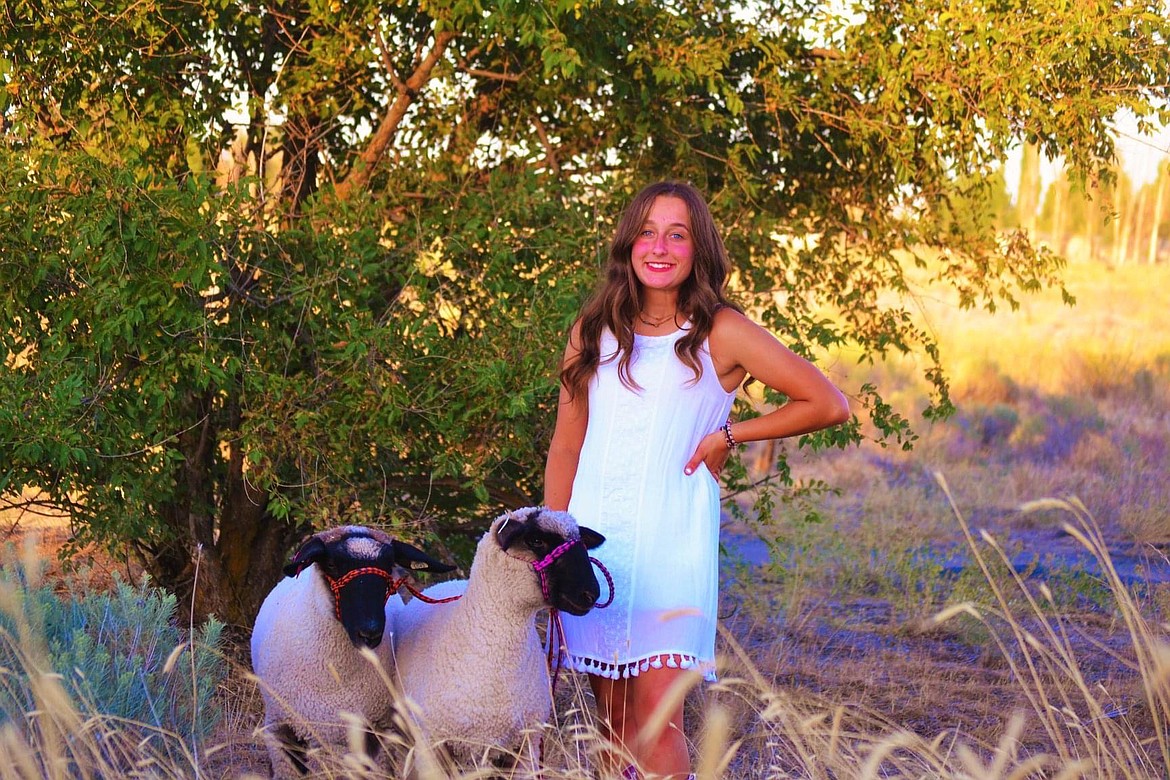
Kyia Hunter-Kanoff said she didn’t think the coronavirus would have an effect on the Grant County Fair when she chose her fair animals, but things turned out differently.
Courtesy photo
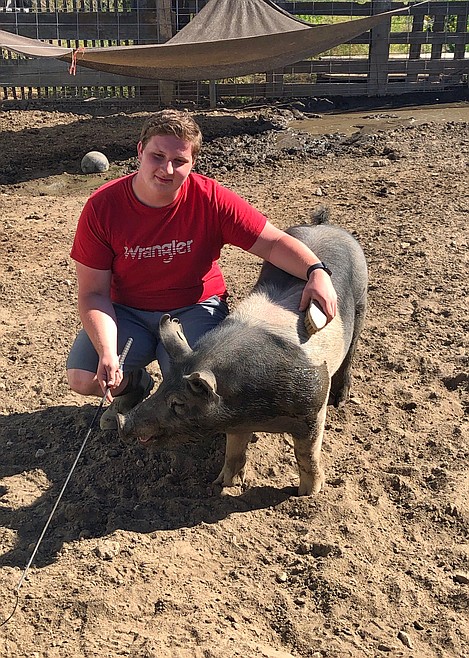
Courtesy photo Samuel Otey said he knew raising pigs for the Grant County Fair would be a bigger gamble than usual, but he decided to go ahead.
MOSES LAKE — Part of the calculation that goes into raising an animal to exhibit at the Grant County Fair is that it’s a gamble.
The animal might not make the qualifying weight or it might be hard to train. And even if the exhibitor does everything right, the animal might have a bad day in the show ring.
Or there might be a worldwide pandemic that cancels the fair and replaces it with an online auction. That one is uncommon, but that’s the situation in 2020.
Fairgrounds officials and the committee that oversees the livestock show have written a plan for the auction, but the plan must be approved by state officials. As of July 28, fairgrounds director Jim McKiernan said local officials hadn’t received an answer.
Some kids had already chosen an animal for fair by the time the COVID-19 outbreak became a general problem in March. Others had to take the outbreak into consideration when deciding whether to buy an animal.
Kyia Hunter-Kanoff, a sophomore at Moses Lake High School, said she chose her lambs with the thought that the coronavirus would have little, if any, impact on the fair.
“I thought, ‘This will all clear up and we’ll go back to normal.’ But it didn’t happen,” she said.
Samuel Otey, a MLHS senior, said he bought his pigs with the knowledge the fair might be canceled.
“We knew it was going to be more of a risk this year,” he said.
Nevertheless, he didn’t want to skip it.
“It will be my last year,” he said, and it’s something he enjoys doing.
Exhibitors usually buy an animal in late winter or early spring and raise it through the summer. To the purchase price is added the cost of feed and medical care. The goal is to make that money back — and more, with any luck — during the annual livestock sale.
Sam and his cousin purchased four pigs, and the uncertainty surrounding county fairs statewide had an effect on the market.
“Prices were definitely a lot lower,” he said. He and his cousin paid $150 to $175 for each animal, and he estimated the animals would have cost about $300 in 2019.
Kyia plans to enter the lamb competition, if there is competition.
“This is my first year raising lambs, but in the past I’ve raised pigs,” she said. “I just wanted to step outside the box and try something new.”
Like the swine class, judges in the lamb class are looking for specific characteristics. But as an experienced exhibitor, Kyia said picking an animal is more than just conforming to a list of standards.
“Most of the time, there will be one (animal) that’ll catch your eye,” she said. “That’s what I was looking for.” Since she was new to raising lambs, she got some help selecting her animals from a friend.
There are options for exhibitors to recoup their investment. Kyia said other groups are looking at sponsoring an online auction if the fair auction falls through. Kids can find private buyers, which is the route Sam and his cousin are taking if the auction doesn’t pan out.
“We have a safety net if we need it,” he said.
Some kids are opting to keep the animal and butcher it for their own family. Kyia said.
Even with the challenges, Kyia said raising fair animals has provided her with some valuable lessons. “I have learned so much about myself and my ability to do things,” she said.
Along with learning to handle responsibility, she has made friends. “I’ve met a lot of really cool people.”