
Inslee extends restaurant closure by one week
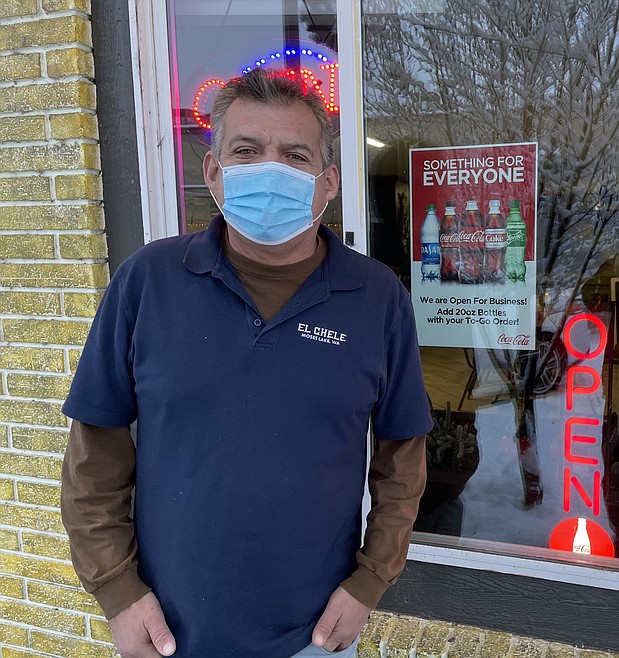
Oscar Saucedo, one of the co-owners of El Chele, an El Salvadoran restaurant in downtown Moses Lake, says things have been "very slow" since Gov. Jay Inslee ordered restaurants closed to indoor dining in mid-November.
Charles H. Featherstone
MOSES LAKE — Gov. Jay Inslee on Wednesday extended to Jan. 11 his order closing restaurants and bars to indoor dining and limiting the size of indoor and outdoor social gatherings in an attempt to limit the spread of COVID-19.
And it’s not being well received by the region’s restaurant owners.
“I hate it, I think we should be opening,” said Oscar Saucedo, one of the owners of El Chele, a Salvadoran restaurant in downtown Moses Lake. “We have the vaccine, I don’t know what we’re waiting for. We should be open.”
The proclamation, originally issued in mid-November and set to expire on Jan. 4, also closed gyms, fitness centers, bowling alleys and movie theaters.
Saucedo said El Chele, which opened just as the pandemic hit in early 2020, has been doing just enough take-out business over the last six weeks to get by. But if the closure continues on much longer, he’s not sure how they will manage to stay open.
“Very slow. We haven’t been paying ourselves for so long now. We barely make it every month just to pay our bills,” he said. “If we are closed one more month, I don’t know what we’re going to do. We’ll probably have to find another job or something.”
Inslee said while he understands problems the closures and the pandemic itself are having on families and businesses, he believes it is his job as governor to keep the people of Washington safe and ensure there is enough hospital capacity.
“If we continue distancing from others, wearing facial coverings and avoiding social gatherings, we will make it to the other side of this pandemic together,” the governor added.
Republican legislators were dubious about the continued restrictions, which have led to the permanent closure of one-fifth of the state’s 15,000 restaurants and bars and put a number of people out of work.
“The governor says we will get through this together, but he is arbitrarily, without apparent regard for science or data, leaving behind our restaurants and gyms,” said state Senate Republican Leader John Braun, R-Centralia, in a statement issued Wednesday. “He’s making these decisions from the comfort of a state salary that hasn’t skipped a paycheck during his shutdowns.”
Braun noted while it’s too late to “do no harm” to the state’s small business owners, it’s not too late to stop making matters worse.
“We can prevent further harm by ending these unwarranted and cruel restrictions. The governor should work with, rather than against, these businesses, many of which are family owned,” Braun added. “He should trust them to do the right thing — none of them want their customers to get sick.”
State Sen. Lynda Wilson, R-Vancouver, has submitted a bill to be considered during the upcoming legislative session that would require the governor to seek legislative approval for all emergency orders after 30 days.
“This legislation would simply include lawmakers in the decision-making process and ensure that voices from across our state are heard,” Wilson said in a statement. “As the governor announces another extension of his stay-home order today, it shows why we must enact these protections now.”
Anthony Anton, president of the Washington Hospitality Association, said Inslee needs to offer a plan that will pull Main Street businesses “back from the brink.”
“When the governor substantially shut down the hospitality industry in November, he indicated cases would level off and we expected to see a detailed path to reopening,” Anton said in a statement. “Seven weeks later, neither of those things are true. Hospitality operators are falling deeper in the red, hospitality workers remain out of work, businesses are closing, and household bills are going unpaid.”
According to a report from the Washington State Department of Health published just before Christmas, while COVID-19 cases in both the eastern and western halves of the state flattened and even began declining in early December, the situation in the state remains “precarious,” especially with the emergence of a new and “potentially more infectious” strain of the SARS-CoV-2 virus.
Charles H. Featherstone can be reached at [email protected].