After more than 20 years, PUD shoreline plan completed, accepted
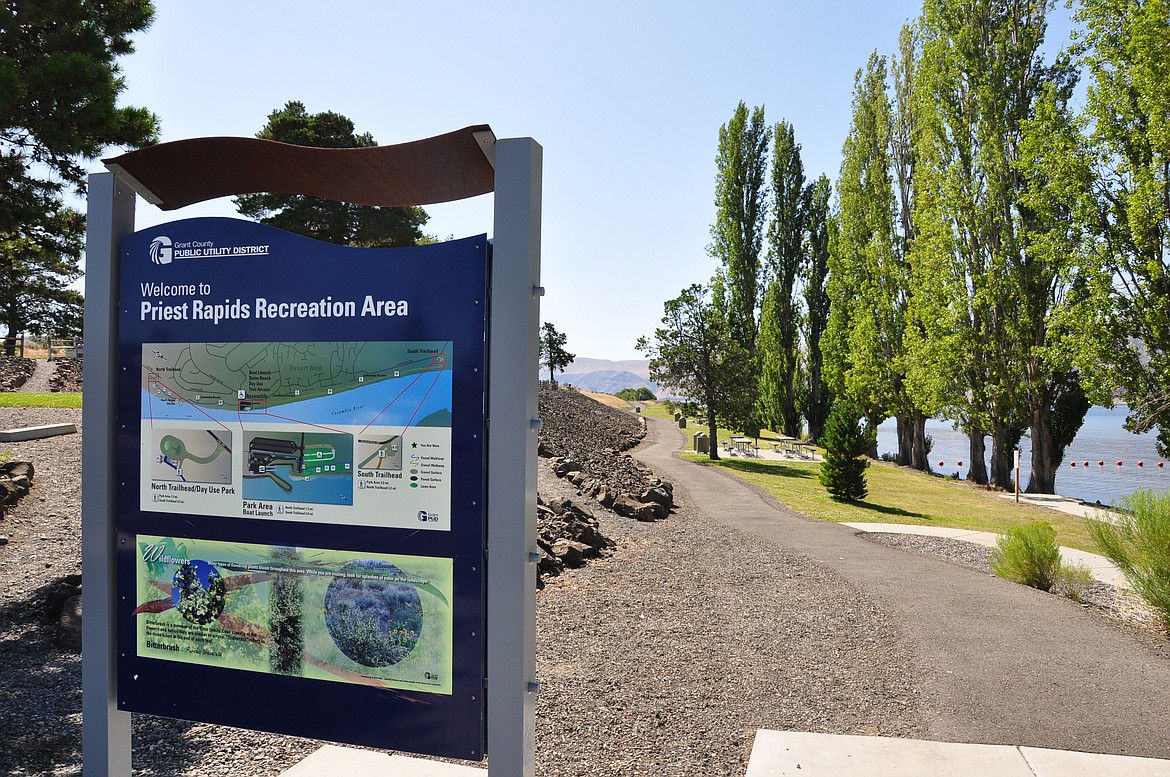
Grant PUD/courtesy photo The Priest Rapids Recreation Area is among the public recreation sites the PUD is required to build and maintain. Recreation is among the subjects covered in the PUD's shoreline master plan, just finished after almost 20 years.
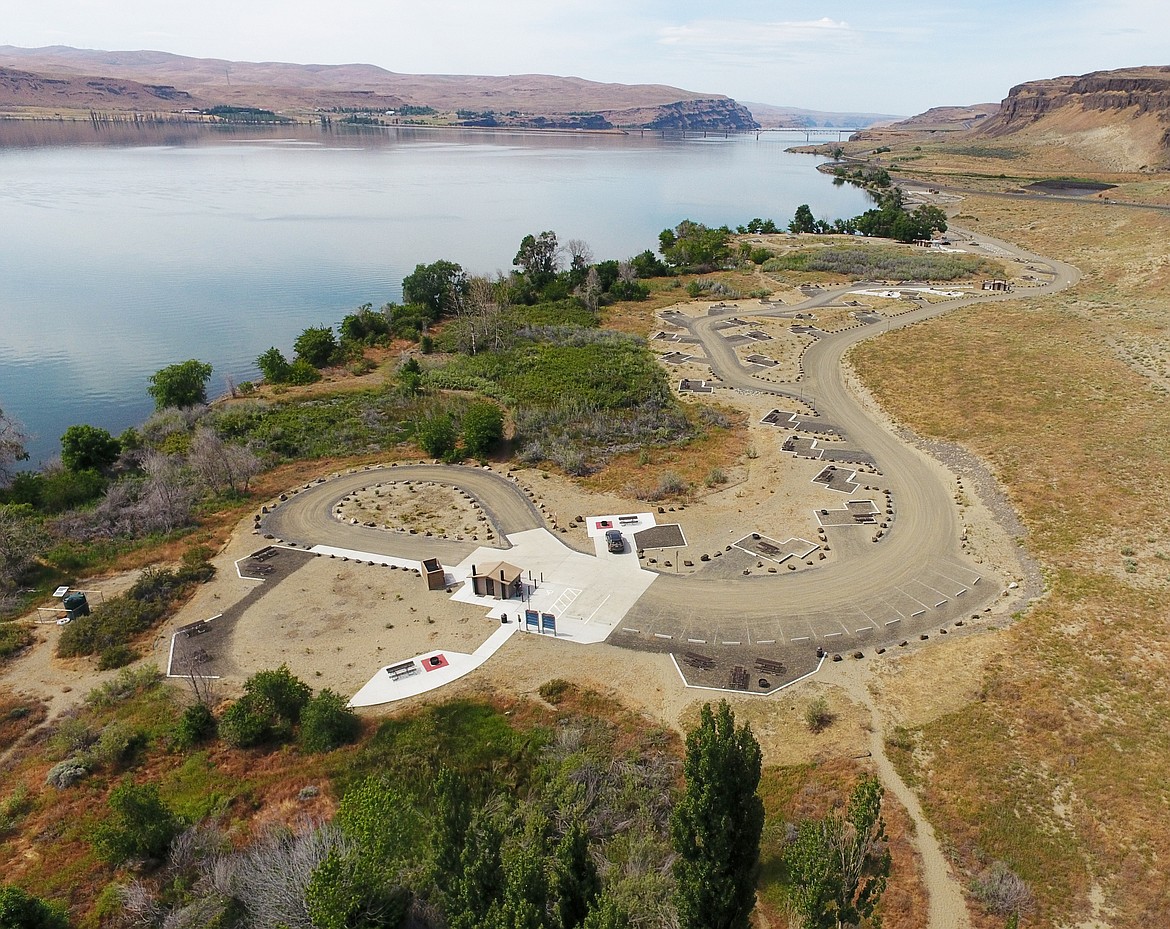
Grant PUD/courtesy photo Sand Hollow campground was built and is maintained by the Grant County PUD, part of the public recreation access it's required to provide. Recreation is part of the PUD's shoreline master plan, finished after almost 20 years in preparation.
EPHRATA — After writing multiple submissions, revisions, evaluations and updates, the Grant County PUD river shoreline master plan is done. It was a process that took more than 20 years.
Utility district commissioners approved land use regulations April 14 for the Columbia Cliffs area west of Quincy. It was the last section of a plan that PUD officials first submitted to the Federal Energy Regulatory Commission, or FERC, in 2003.
But Shannon Lowry, PUD public lands and recreation manager, said the process started long before that.
“It all kicked off in the mid-1990s,” she said.
The shoreline master plan governs how PUD-owned Columbia River shoreline is used. It sets standards for managing what’s already there and governs how land is used now and how it will be used in the future.
The PUD is required to protect natural resources and cultural resources along its shoreline, Lowry said.
“The shoreline master plan does just that,” she said.
The plan affects about 4,600 acres along the Columbia River. Other government agencies also own property along the river, the U.S. Bureau of Land Management and the Washington Department of Fish and Wildlife among them. So do Native American tribes. There are also some private landowners. The PUD plan is required to take all involved parties into account.
The PUD and federal and state agencies are not the only entities managing the shoreline — counties also are required to have shoreline plans. The PUD’s plan has to be compatible with the counties’ plans, Lowry said.
The plan also governs development of public recreation sites along the river. Access for public recreation is a requirement under the PUD’s license to operate Wanapum and Priest Rapids dams.
The PUD’s original license did not include provisions for land use management. Those started being added in the 1970s and 1980s, Lowry said. The process for the current shoreline master plan began with meetings among the landowners and groups with an interest in river management in the mid-1990s, she said.
The PUD submitted a draft plan in 2003 as part of the relicensing process.
“And then we sat back and waited for our license, which didn’t come until 2008,” Lowry said.
But the shoreline master plan needed further review, which lasted until 2010.
“And then we had a three-year waiting period,” Lowry said.
Additional revisions and updates were needed, which began in earnest in 2014.
A copy of the completed shoreline master plan, the recreation plan and supporting documents can be found on the PUD’s website, www.grantpud.org/shoreline-management.
The planning process came with some controversy, including a lawsuit against the PUD filed by leaseholders at Crescent Bar. The two sides came to an agreement in 2015, with a settlement extending the leases but adding some new provisions. Among other things, the three Crescent Bar homeowner associations agreed to pay 90 percent of the cost of new water and sewer systems.
In other cases elsewhere along the river, some improvements that extended on to PUD property were removed, such as sprinkler systems and lawns. Lowry said those removals and changes to agreements with property owners and leaseholders were required to meet the expectations in the PUD’s operating license.
Now that the plan is finished, yet more regular reviews and updates will be required. The first recreation plan update is scheduled for 2027 and the first shoreline plan update in 2028.